Executive Overview
Half a decade ago, the global landscape was defined by profound uncertainty, pandemic lockdowns, and a tech ecosystem on the brink of a generative AI revolution. ChatGPT was yet to be born, artificial intelligence was barely a whisper in mainstream discourse, and Mark Zuckerberg remained a perennial fixture of internet satire.
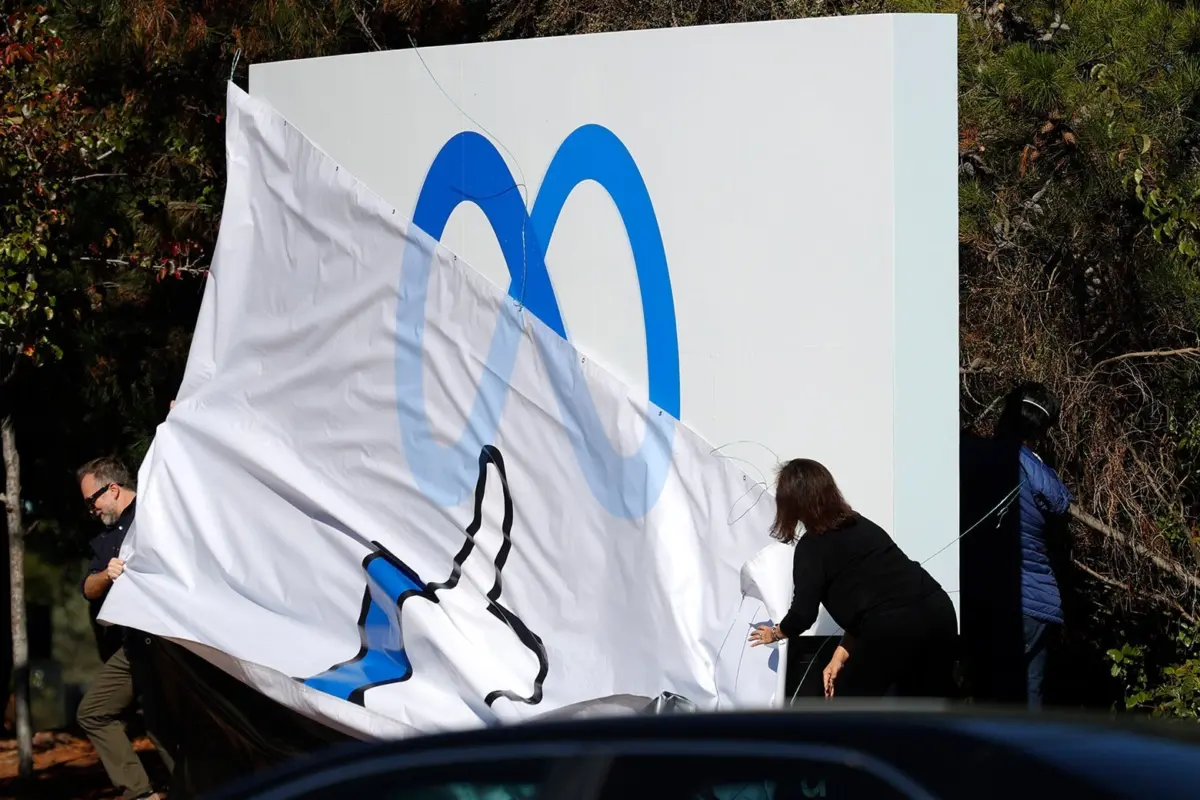
Yet, on Oct. 28, 2021, the world was handed fresh ammunition for its favorite pastime. In an abrupt and sweeping pivot, the Facebook Company announced it was officially rebranding to Meta, betting its immense financial and intellectual capital entirely on the "metaverse." At the time, Zuckerberg declared that the firm would transition from being "Facebook-first" to "metaverse-first."
The vision offered to the public was a bizarre, blocky pastiche—a cross between The Sims and Nintendo’s Wii Universe, plagued by technical limitations that infamously left avatars completely devoid of legs. Critics panned the maneuver mercilessly. It was widely viewed as a desperate, superficial smokescreen designed to deflect intense regulatory scrutiny, toxic internal whistleblowing, and declining public trust.
Looking back, however, the much-ridiculed decision to pivot a multibillion-dollar empire toward a technology that failed to immediately deliver on its promises may have been the right move after all—even if it was executed for entirely different reasons than initially advertised. While the metaverse as originally envisioned has largely floundered, the Meta umbrella successfully insulated the company, providing a flexible corporate scaffolding for the subsequent AI boom, hardware surges, and ecosystem expansions that defined the mid-2020s.
Detailed Chronology: From the Facebook Files to the Meta Era
To understand the mechanics of the 2021 rebrand, one must examine the perilous landscape the company was navigating at the time.
2021: Scandals, Whistleblowers, and the Birth of Meta
In the months leading up to the October announcement, Facebook was battered by one of the most severe public relations crises in corporate history. Frances Haugen, a former employee turned whistleblower, leaked tens of thousands of internal documents—dubbed the "Facebook Files." These files revealed that the tech giant knowingly prioritized algorithmic engagement and corporate profits over user safety, teen mental health moderation, and the containment of toxic online content.
Simultaneously, the firm’s strategic focus was shifting heavily toward virtual reality via its Oculus acquisition. Maintaining a singular corporate moniker—"Facebook"—created severe operational friction. Internally, employees struggled to communicate whether they were referencing the core social media application or the overarching corporate parent developing hardware and virtual reality spaces.
2022–2024: The Hardware Reality Check and Apple’s Blow
The subsequent years brought harsh financial checks on Zuckerberg’s metaverse obsession. Meta’s Reality Labs—the division housing its VR and augmented-reality ambitions—racked up staggering operating losses, bleeding billions of dollars quarterly. Consumers proved largely uninterested in lingering in virtual worlds populated by legless avatars, forcing the company to continually recalibrate.
Compounding these struggles were external shocks. In 2021, Apple introduced App Tracking Transparency (ATT) privacy rules, fundamentally disrupting how third-party apps tracked users. The policy crippled Meta’s ad-targeting capabilities, costing the company an estimated $10 billion in lost revenue in 2022 alone.
2025–2026: The Pivot to AI and Smart Glasses
By the mid-2020s, the definition of Meta had quietly shifted. Rather than sinking exclusively into virtual reality worlds, the company capitalized on its hardware pipeline. Collaborating with EssilorLuxottica, Meta sold millions of Ray-Ban smart glasses, eventually capturing an astonishing 94 percent of worldwide shipments for display-less AI glasses by early 2026.
Concurrently, the launch of generative AI agents like Meta Muse in late 2026 rapidly accumulated millions of weekly users. The company had successfully bridged the gap between its legacy social media roots and next-generation ambient computing—a feat made smoother by shedding the singular "Facebook" identity.
Supporting Context & Metrics: The Reality Beneath the Brand
Despite the grand rhetoric surrounding the metaverse, the underlying financial engine of Meta has remained remarkably consistent.
- The Core Ad Machine: In the third quarter of 2026, over 99 percent of Meta’s $64.6 billion in quarterly revenue still originated from its traditional family of apps (Facebook, Instagram, WhatsApp) and targeted advertising directed at its 3.64 billion daily active users.
- Reality Labs Losses: The financial toll of the company’s hardware ambitions remains massive. Meta’s Reality Labs division recorded an operating loss of $12.8 billion in the first nine months of 2026 alone, underscoring the immense cost of subsidizing future tech horizons.
- Hardware Domination: Conversely, the pivot away from pure software virtual worlds toward physical AI integrations yielded historic wins. Meta sold over 7 million pairs of smart glasses in 2025, anchoring its dominance in the burgeoning wearable AI market.
- Horizon Worlds Retreat: Illustrating the limits of the initial metaverse bet, Meta briefly announced plans to shut down its Horizon Worlds social platform on VR headsets entirely in March 2026, pivoting exclusively to mobile access before partially reversing the decision days later to keep existing VR experiences online.
Official Statements & Industry Perspectives
Industry analysts, former insiders, and brand experts offer varied interpretations of the rebrand’s true utility.
Avi Greengart, a technology analyst at Techsponential, noted that while critics were justified in mocking the initial execution, the corporate evolution was unavoidable.
"The critics weren’t wrong, but at the same time, I do think a rebrand was necessary," Greengart explained, pointing out the imperative to control an ecosystem without relying entirely on third-party operating systems like Apple’s iOS.
Katie Harbath, who spent a decade at Facebook—including a stint as director of public policy for global elections—observed that the name change cleanly demarcated internal complexities.
"It was getting a little complicated internally," Harbath said regarding the confusion between the app and the corporate entity. Though she personally maintains an identity tied closer to the Facebook era, she acknowledges that the rebrand marked a genuine institutional turning point. "I do think it is a new chapter."
Meanwhile, NYU Stern School of Business marketing professor Priya Raghubir pointed out a generational branding reality: a company heavily associated with an aging demographic could never successfully market cutting-edge youth-centric lifestyle products like Ray-Ban smart glasses under its legacy moniker.
Other experts, however, remain skeptical that the name itself carried any substantive weight. Denise Lee Yohn, brand leadership expert and author of What Great Brands Do, argued that market performance and user loyalty were entirely divorced from the linguistic label.
"I think the performance that we’ve seen by the company in the markets, as well as among users, really has nothing to do with the name," Yohn stated, noting that consumers frequently utilize Meta products regardless of public trust in the corporate parent.
University of Toronto platform economy professor David Nieborg summarized the ultimate ambitions of the rebrand:
"They want to be utilities like your water company, like your electricity company, and Facebook wanted to be the operating system of your life."
Future Outlook: Beyond Meta
Five years after Mark Zuckerberg stood before a virtual backdrop to unveil a new corporate identity, the landscape of technology has shifted beneath Meta’s feet once more. The original dream of an all-encompassing, legless virtual reality metaverse has largely receded into the background of tech history, supplanted by the rapid acceleration of artificial intelligence, multimodal models, and wearable ambient computing.
Yet, the rebrand provided the necessary psychological and structural breathing room for the company to pivot toward these emerging paradigms. By detaching cutting-edge research, smart hardware, and AI agents from the reputational baggage of the legacy "Facebook" brand, Meta successfully positioned itself to weather regulatory storms and technological revolutions alike.
As Meta continues to sink billions into next-generation computing, the ultimate question facing the tech giant is not whether the name change was a mistake, but whether Zuckerberg’s ambitions will outgrow the moniker once again. As former insider Katie Harbath mused:
"I have wondered if Mark would try to rename it again. I wouldn’t put it past him."