Executive Overview
In an era dominated by hyper-complex software synthesizers, artificial intelligence-generated soundscapes, and digital audio workstations with thousands of plugins, simplicity is making a defiant comeback. The iconic British instrument maker behind the quirky, stylus-operated Stylophone has officially revived one of its most charmingly pocket-sized products: the Stylophone Mini. Measuring roughly the size of a standard credit card and priced at an accessible $30, this ultra-portable instrument packs the distinctive retro-futuristic analog buzz that once captured the imagination of rock royalty into a keychain-friendly chassis.
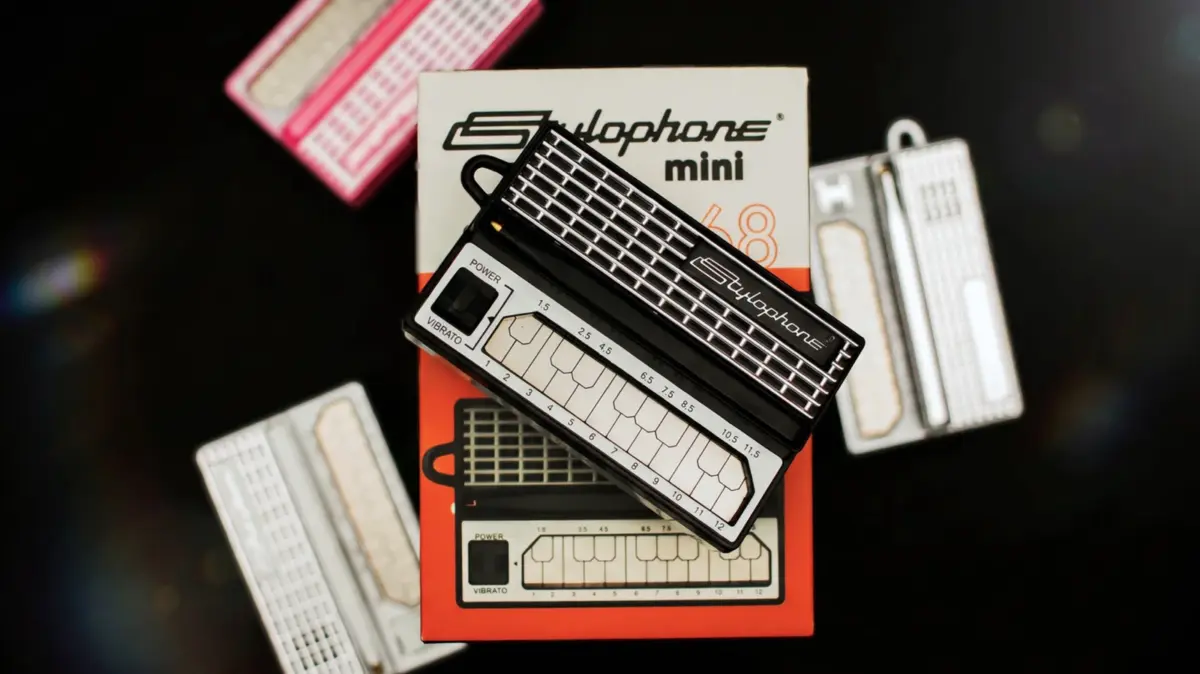
Originally introduced in 2010 before quietly slipping out of production years ago, the refreshed Stylophone Mini arrives at a fascinating cultural juncture. As modern musicians experience fatigue from infinite digital choices, tactile, lo-fi, and analog hardware is enjoying a massive resurgence. The new Mini preserves everything that made the original 1960s invention a pop-culture touchstone—complete with its nickel-plated metal keyboard, included stylus, and built-in speaker—while introducing a fresh aesthetic update, including an eye-catching new pink colorway alongside traditional variants.
Far from being a mere novelty, the Stylophone lineage holds a proud and storied place in music history. Immortalized by David Bowie on his seminal 1969 track "Space Oddity" (and reportedly used to write much of the song), the Stylophone has found its way into the sonic DNA of legendary acts ranging from Kraftwerk and Blondie to The White Stripes and Pulp. By relaunching the Mini for $30, the company is not only opening a gateway for a new generation of hobbyists and bedroom producers but also offering a refreshing antidote to the over-digitalization of modern music creation.
Detailed Chronology: From 1960s Novelty to Modern Pocket Icon
To fully understand the significance of the Stylophone Mini’s return, one must trace the fascinating trajectory of the instrument across more than half a century of popular music history.
The Genesis: The 1960s and the Birth of the Stylophone
The Stylophone was invented in 1967 by Brian Jarvis and manufactured by Dubreq, a British company. Designed as an electronic musical instrument that anyone could learn to play instantly, it featured a unique interface: a printed circuit board containing a keyboard of nickel-plated metal contacts. Players used an attached stylus—essentially a plastic pen with a metal tip—to complete an electrical circuit, triggering a distinctively reedy, buzzing oscillator tone.
Initially marketed as an educational toy and novelty instrument, the Stylophone quickly transcended its humble origins. Its compact design, affordability, and bizarrely charming sound caught the attention of forward-thinking producers and musicians navigating the burgeoning psychedelic and early electronic music movements.
The Bowie Era and Mainstream Immortality
The defining moment for the Stylophone arrived in 1969, when a rising British singer-songwriter named David Bowie used the instrument to help compose and record his breakthrough masterwork, "Space Oddity." The otherworldly, theremin-adjacent timbre of the Stylophone provided the perfect textural backdrop for a song about space exploration and isolation.
Bowie’s endorsement permanently elevated the instrument from a toy to a legitimate creative tool. Throughout the 1970s and beyond, the Stylophone’s footprint in rock and electronic music expanded dramatically:
- Kraftwerk: The pioneering German electronic outfit incorporated the unique buzzing tones of the instrument into their early aesthetic explorations.
- The Beatles: During the tumultuous Let It Be sessions in 1969, John, Paul, George, and Ringo famously messed around with a Stylophone while recording George Harrison’s track "Old Brown Shoe," though the instrument ultimately did not make the final album mix.
- Blondie and Pulp: New wave and Britpop icons alike embraced the Stylophone’s distinct lo-fi texture to inject a sense of ironic retro-futurism into their arrangements.
The 2010s: The Birth of the "Mini" and Modern Revivals
As digital production took over the turn of the millennium, Dubreq experienced periods of dormancy and revival. In 2010, the company recognized the demand for an even more portable iteration of its classic instrument and released the original Stylophone Mini. Designed to be ultra-compact, the Mini stripped away the bulk of the standard model while retaining the core stylus-and-pad playing experience.
However, changing market conditions and shifts in manufacturing led to the discontinuation of the Mini, turning surviving units into sought-after collector’s items among chiptune artists and gear nerds. Over the next decade, Dubreq tested the waters with more robust, professional-grade releases, such as the full-sized Stylophone Gen X-1 (2017) and the analog powerhouse Stylophone Gen R-8 (2019). These instruments proved that there was a thriving appetite not just for nostalgia, but for hands-on, analog sound generation.
The 2024 Revival
Now, the circle is complete. By bringing back the Stylophone Mini with updated color options and a rock-bottom $30 price point, Dubreq is bridging the gap between historical reverence and modern accessibility. The device is currently available worldwide, positioned as the ultimate impulse buy for musicians, gadget collectors, and curious novices alike.
Supporting Context & Metrics: Technical Specifications and Cultural Footprint
While the Stylophone Mini is undeniably charming, its enduring appeal relies on a delicate balance of pocket-sized engineering and nostalgic novelty.
Specifications and Physical Design
The engineering philosophy behind the Stylophone Mini can be summed up in one word: reduction. While a standard-sized Stylophone is already relatively portable—easily sliding into a backpack or a deep pants pocket—the Mini shrinks the physical footprint down to the dimensions of a credit card.
- Dimensions & Portability: Small enough to be attached directly to a keychain via an integrated loop, the Mini can be hung from a backpack zipper, a belt loop, or even a car dashboard. It is engineered for instantaneous, on-the-go music creation.
- The Interface: True to its lineage, the Mini features the iconic nickel-plated touch keyboard. Players use the tethered stylus to tap out melodies note by note. Despite its diminutive size, it retains the same number of active keys as its larger counterparts.
- Audio Output: Equipped with a built-in miniature speaker, the device requires no external amplification to produce sound, making it truly self-contained.
- Color Variations: Moving beyond the utilitarian grey and silver of historical iterations, the refreshed Mini is available in three distinct colorways, including a vibrant, brand-new pink variant that nods to modern pop-art aesthetics.
Economic and Market Metrics
Priced at exactly $30, the Stylophone Mini occupies a rare sweet spot in the modern musical instrument market. In an ecosystem where a single guitar pedal or hardware synthesizer can easily cost between $300 and $2,000, the Stylophone represents peak democratization.
| Metric / Feature | Original 1967 Stylophone | 2010 Stylophone Mini | Refreshed 2024 Stylophone Mini |
|---|---|---|---|
| Price Point (Adjusted) | Budget-friendly novelty | Low-cost consumer gadget | $30 Ultra-accessible impulse buy |
| Portability | Handheld (requires box/case) | Credit-card sized keychain | Credit-card sized keychain + loop |
| Color Options | Silver / Brushed Metal | Standard Silver | Silver, Black, and New Pink |
| Target Audience | Hobbyists & students | Casual fans & collectors | Gen Z creators, lo-fi producers, nostalgists |
The economics of the $30 price tag are deliberate. By keeping the barrier to entry virtually non-existent, Dubreq ensures that the Stylophone Mini functions not only as a functional instrument for bedroom beatmakers and chiptune musicians, but also as a universal stocking stuffer, impulse gift, and collectible artifact.
Official Statements: The Philosophy of Analog in an AI Era
In a press release accompanying the launch, the leadership at Dubreq offered profound insights into why an analog toy from the 1960s matters more today than ever before.
Reflecting on the motivations behind bringing back the Mini, the company’s CEO emphasized the philosophical contrast between contemporary technological trends and tactile instrument design:
"In the age of AI, we wanted to make something simple, fun, and real."
This sentiment strikes at the heart of modern creative anxiety. As artificial intelligence systems encroach upon artistic domains—generating algorithmic melodies, synthesized vocal tracks, and automated compositions—human creators are increasingly seeking refuge in tangible, imperfect, and human-driven tools.
The Stylophone Mini does not utilize machine learning, complex wavetable synthesis, or cloud connectivity. It relies entirely on rudimentary electronic circuitry, metal contacts, and the physical hand-eye coordination of a human holding a plastic stylus. There is no screen to menu-dive through, no firmware updates to install, and no latency to troubleshoot. It is an instrument in its purest, most primordial form: you touch the metal, current flows, and sound is produced.
Furthermore, representatives from Starscream Communications, handling the rollout, emphasized the cultural legacy embedded within the hardware: "The Stylophone Mini keychain puts the iconic synth sound in your pocket, allowing a new generation to connect directly with a piece of rock history without breaking the bank."
Future Outlook: The Lo-Fi Renaissance and the Next Generation
As the Stylophone Mini rolls out to global audiences, its re-entry into the market signals broader cultural shifts in how we consume, create, and interact with technology.
The Counter-Movement to Over-Digitization
We are currently witnessing a massive counter-movement against frictionless digital environments. Vinyl records have outsold CDs for consecutive years; film photography (specifically point-and-shoots and disposable cameras) is experiencing an unprecedented boom among Generation Z; and hardware-based grooveboxes and cassette recorders are dominating producer forums.
The Stylophone Mini fits neatly into this "lo-fi renaissance." Younger generations, who grew up entirely in touchscreen environments, exhibit a deep psychological craving for tactile feedback. The physical act of dragging a metal stylus across a printed circuit board offers a sensory satisfaction that a glass smartphone screen simply cannot replicate.
Integration into Modern Production
While purists will enjoy playing the Stylophone Mini as a standalone acoustic novelty, modern producers are already finding innovative ways to integrate its distinct buzzing timbre into contemporary music production:
- Sampling & Resampling: Producers are running the Mini’s built-in speaker output through guitar pedals, tape delays, and granular reverbs to create lush, atmospheric ambient pads and glitchy leads.
- Chiptune & Lo-Fi Hip Hop: The reedy, monophonic oscillator tone sits perfectly within the mix of lo-fi beat tapes and 8-bit chiptune compositions, providing an organic analog grit that software emulators struggle to replicate authentically.
- Live Performance: Its pocket-sized nature makes it an ideal prop and performance tool for indie bands looking to inject a dose of spontaneous theatricality into their live shows—much like David Bowie did half a century ago.
Conclusion
The revival of the Stylophone Mini is a triumph of charm over complexity. By refusing to chase modern technological trends, Dubreq has managed to create a product that feels timeless. At $30, it invites experimentation without financial risk, connects modern creators to the legacy of David Bowie and Kraftwerk, and offers a quiet, buzzing rebellion against the sterile perfection of the digital age. Whether clipped to a keychain, tossed into a gig bag, or plugged into a pedalboard, the Stylophone Mini proves that great things truly do come in small, nickel-plated packages.