Executive Overview
In the rapidly evolving landscape of wearable technology and ambient computing, the boundary between personal utility and corporate data collection has never been more contentious. Meta—the parent company of Facebook, Instagram, and WhatsApp—has begun rolling out a vital privacy control mechanism for users of its AI-powered smart glasses. This new feature allows consumers to officially opt out of having the visual data captured by their devices utilized for training Meta’s expanding suite of artificial intelligence models.
For months, privacy advocates and tech-savvy consumers have raised concerns regarding the passive and active ingestion of personal environments by connected wearables. When users interact with Meta’s smart glasses—whether asking the built-in assistant to translate a foreign menu, identify a rare plant, or analyze a live scene—the camera and supporting sensors capture snapshots of the physical world. Historically, the default pipeline routed this telemetry back to corporate servers for continuous model training and product refinement.
The introduction of this opt-out toggle marks a significant, albeit reactive, shift toward user agency. However, claiming this privacy safeguard is not entirely frictionless. As Meta outlines in its updated documentation, disabling data storage comes with specific functional trade-offs, disabling advanced contextual capabilities like visual reminders. Furthermore, newly clarified disclosures reveal a reality that many consumers overlook: human reviewers may manually analyze captured imagery to grade and improve the AI’s accuracy.
This comprehensive report explores the mechanics of Meta’s new privacy setting, details step-by-step instructions for disabling visual data logging, examines the broader implications for consumer privacy in the wearable tech sector, and analyzes what this means for the future of human-AI collaboration.
Detailed Chronology: The Evolution of Meta’s Smart Glasses Privacy Policy
To understand the current state of Meta’s smart glasses privacy infrastructure, one must examine the timeline of how these devices transitioned from basic capture tools to complex, ambient AI terminals.
1. The Genesis of Camera-Equipped Eyewear
When Meta initially entered the smart glasses market—first through partnerships with legacy eyewear brands like Ray-Ban—the primary value proposition was convenience. Users could snap photos, record short video clips, and take phone calls hands-free. During this early phase, privacy concerns primarily revolved around the physical capture LED light, designed to alert bystanders that recording was underway. Data governance largely mirrored traditional smartphone photo storage policies: content stayed local unless explicitly uploaded by the user to social media platforms.
2. The Integration of Multimodal AI
The paradigm shifted drastically with the integration of multimodal artificial intelligence. Meta upgraded its eyewear from simple capture devices to active conversational agents capable of "seeing" through the user’s perspective. Features such as Meta AI, "Live AI," and visual contextual analysis meant that the glasses were no longer just recording static media; they were streaming live visual streams to the cloud for real-time interpretation, translation, and identification.
With this advanced capability came an exponential increase in data collection. Every time a user asked their glasses to evaluate a storefront, read a sign, or identify a landmark, high-resolution visual data left the local device and entered Meta’s data processing pipeline.
3. Regulatory Pressure and User Backlash
As these features gained widespread adoption, scrutiny from privacy watchdogs, regulatory bodies, and consumer advocacy groups intensified. Questions regarding consent—particularly concerning bystanders caught in the field of view during active AI queries—prompted calls for greater transparency. Users increasingly demanded to know whether their private moments, home interiors, and workplaces were being absorbed into the training sets of proprietary large language and vision models.
4. The Rollout of the Opt-Out Setting
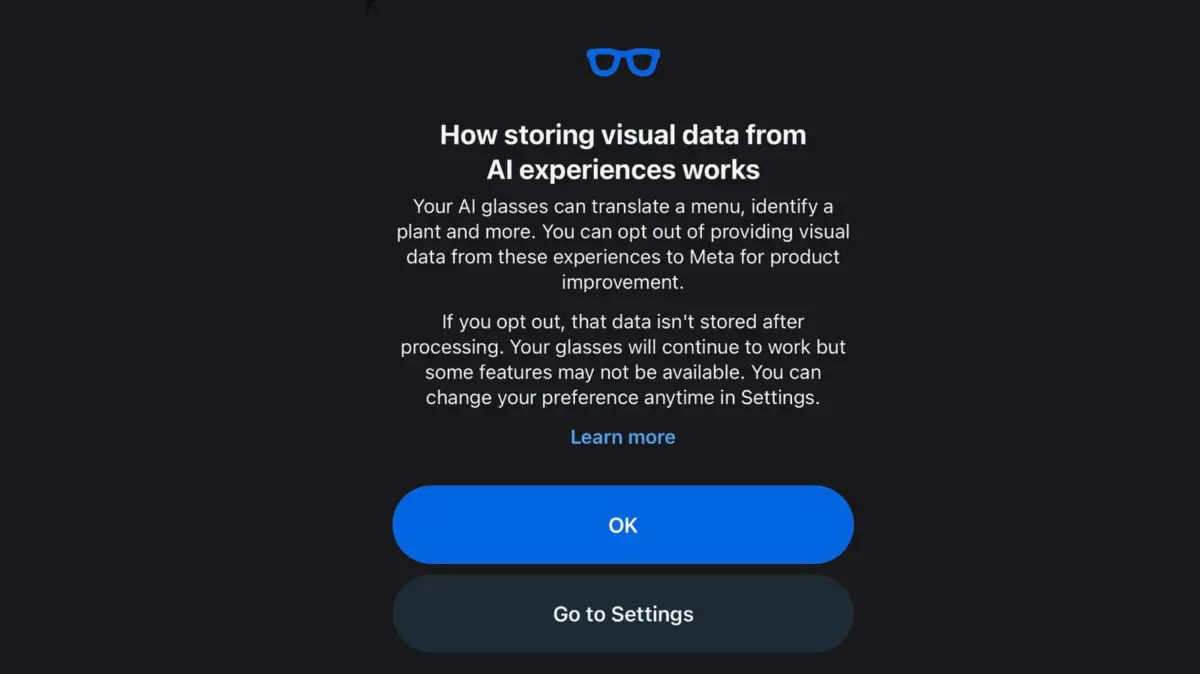
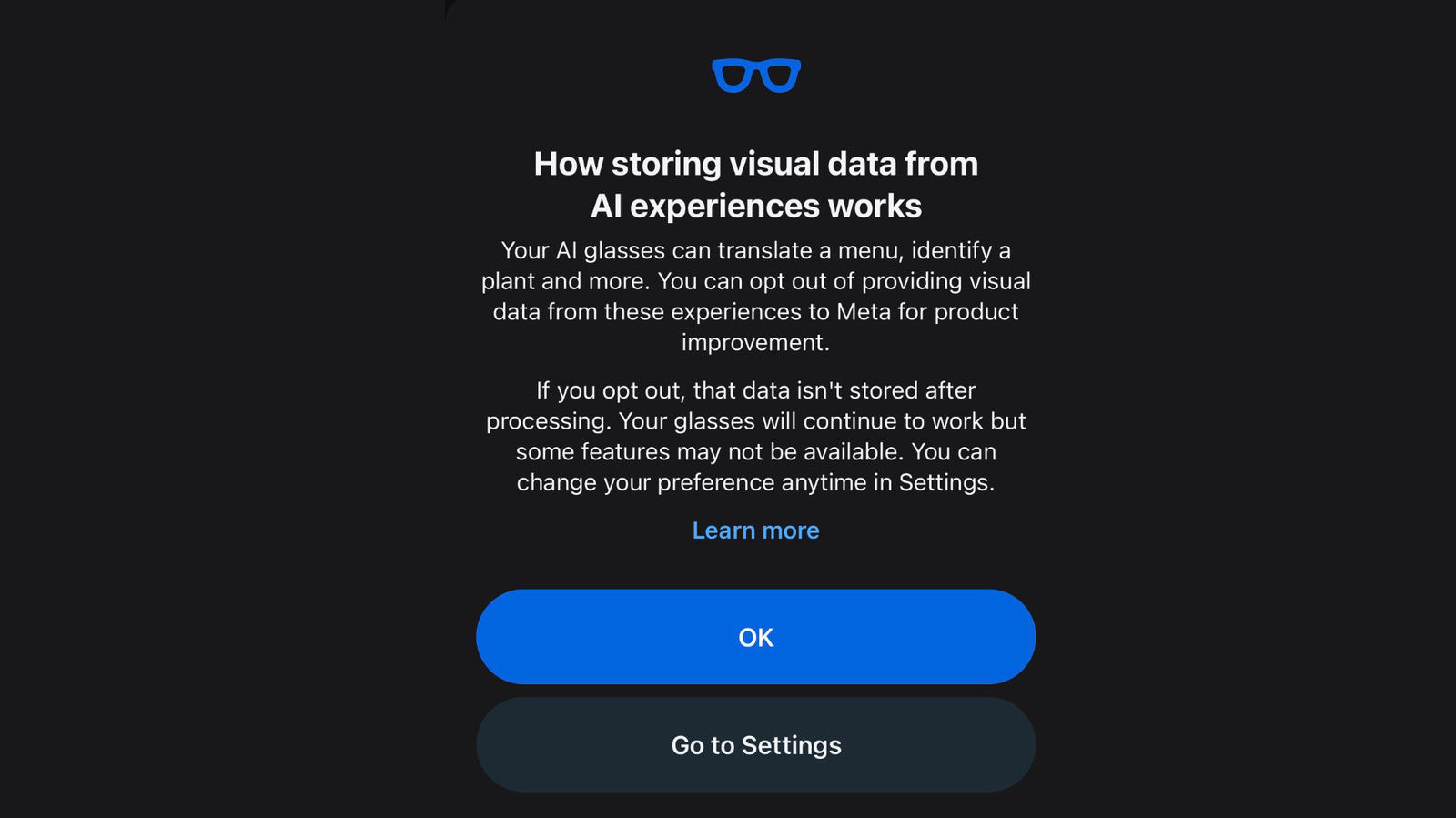
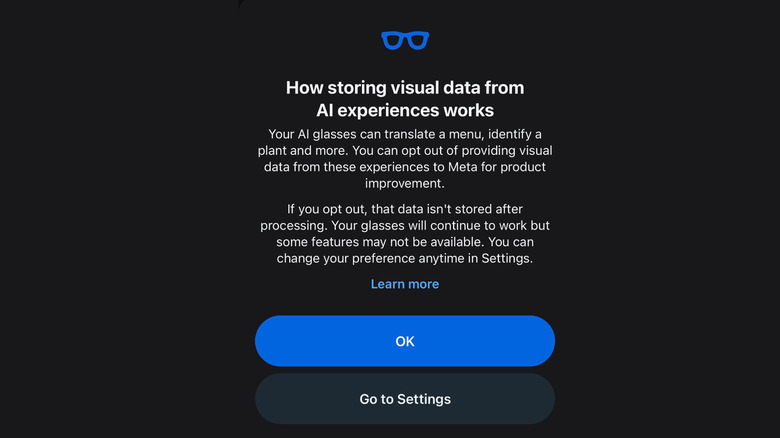
Responding to mounting pressure, Meta initiated the deployment of a dedicated privacy toggle within the Meta AI companion application. Accompanied by in-app notifications and updated help center documentation, this rollout represents the company’s attempt to balance aggressive AI development with compliance-driven user choice. Users are now being prompted via pop-up alerts to review their data-sharing preferences, establishing a formalized framework for opting out of AI model training.
Step-by-Step Guide: How to Opt Out of Visual Data Training
Configuring your Meta smart glasses to stop storing and utilizing visual data for AI training requires navigating specific menus within the companion ecosystem. Because the setting operates at the device level, users who own multiple pairs of smart glasses must repeat the process for each individual device.
Prerequisites Before You Begin
- Ensure your smart glasses are removed from their charging case and powered on.
- Verify that your glasses maintain an active Bluetooth connection to your smartphone.
- Update your Meta AI / Meta View application to the latest available version via the Apple App Store or Google Play Store to ensure the privacy toggle is accessible.
Navigation Instructions
- Open the Meta AI (or Meta View) app on your mobile device.
- Navigate to the Settings menu associated with your specific wearable hardware.
- Select the Meta AI configuration tab.
- Scroll down until you locate the option labeled "Store visual data from AI experiences."
- Toggle this setting to Off.
Once disabled, Meta states that visual data processed during AI interactions will no longer be retained after the immediate processing phase is complete, nor will it be routed into the machine learning pipelines used to train future AI models.
Supporting Context & Metrics: The Reality of "Visual Data" and Human Review
While the toggle provides a pathway to enhanced privacy, consumers must understand the precise definitions, limitations, and operational realities governing Meta’s data handling practices.
What Constitutes "Visual Data"?
Meta draws a clear legal and operational distinction between traditional media capture and AI-driven visual data:
- Captured Media: Photos and videos actively recorded by pressing the physical capture button on the glasses (signaled by the activation of the physical LED light) are generally handled under standard media storage guidelines.
- Visual Data: This specifically refers to the imagery, video feeds, and contextual frames captured while actively using AI features—such as asking the assistant a question about an object in your field of view or engaging in Live AI sessions.
The Human-in-the-Loop Element
Perhaps the most eye-opening revelation accompanying the new setting is Meta’s formal confirmation regarding human data review. In its updated help center documentation, the company explicitly notes that training and improving its AI models involves both automated processes and manual (human) review.
This means that under default settings, human contractors or employees may review the visual data captured by your smart glasses to grade AI performance, correct errors, and tune computer vision algorithms. While companies routinely utilize human annotators to refine machine learning models across the tech industry, the realization that an AI assistant’s visual query of a living room or office desk could end up on a human reviewer’s screen underscores the profound privacy stakes of ambient wearable tech.
Functional Trade-Offs: What Do You Lose?
Privacy rarely comes without compromise. Meta has confirmed that opting out of visual data storage will directly impact the functionality of certain advanced features. Specifically, users who disable the setting will lose access to visual reminders—a feature that allows a user to look at an object (such as a grocery item or a book) and instruct Meta AI to issue a reminder about it at a later date.
Because generating and maintaining these spatial-temporal associations requires retaining visual context over time, turning off data storage makes such persistent features technically impossible. As of publication, Meta has not indicated whether additional features will be restricted for users who enable the opt-out toggle.
Official Statements and Industry Implications
The rollout of Meta’s opt-out mechanism has ignited broader discussions across the technology sector regarding ethics in AI development, informed consent, and regulatory compliance.
Industry analysts point out that while Meta is taking a positive step by offering an opt-in/opt-out mechanism rather than forcing mandatory data sharing, the burden of protection still falls squarely on the consumer. The setting is hidden several layers deep within the application menus, and users who fail to notice the initial pop-up notification will remain opted into AI training by default.
Digital rights organizations have reiterated calls for "privacy by design" standards, arguing that data collection for AI training should require explicit, proactive opt-in consent rather than passive opt-out structures. Critics also highlight the persistent challenge regarding third-party consent: individuals who interact with a smart glasses wearer in public spaces rarely have a practical way to opt out of having their likeness captured by an active AI camera feed.
In official statements released alongside the feature rollout, Meta emphasized its commitment to user transparency and control. The company maintains that allowing users to disable visual data storage demonstrates a responsive approach to privacy concerns, ensuring that consumers retain the autonomy to decide how their personal interactions contribute to the evolution of generative AI.
Future Outlook: The Road Ahead for Wearable AI Privacy
As augmented reality (AR), mixed reality (MR), and ambient AI devices become increasingly ubiquitous, the tension between hyper-personalized utility and absolute data privacy will only intensify. The launch of Meta’s opt-out toggle is merely a foundational milestone in a much larger, ongoing battle for digital sovereignty.
1. Regulatory Scrutiny Will Accelerate
Governments worldwide—particularly within the European Union under the stringent frameworks of the General Data Protection Regulation (GDPR) and the newly enacted Artificial Intelligence Act—are casting a critical eye on multimodal wearable devices. Future regulatory frameworks may mandate stricter default privacy settings, prohibiting companies from utilizing ambient visual feeds for training without prior, unambiguous affirmative consent.
2. Technological Counter-Measures and Privacy Shields
As smart glasses normalize continuous environmental scanning, the demand for privacy-enhancing technologies will skyrocket. We can anticipate the development of consumer-grade countermeasures, ranging from automated detection software that alerts individuals to active smart lenses, to cryptographic masking tools designed to obscure facial features and private data in public spaces.
3. The Shift Toward On-Device Processing
To alleviate consumer privacy anxieties, the industry is gradually shifting toward edge computing—processing AI queries locally on the device’s microchips rather than transmitting raw visual data to remote cloud servers. While current limitations in battery life and processing power make fully local multimodal AI challenging, advancements in silicon engineering will eventually allow smart glasses to "see" and "think" without ever broadcasting personal environments to corporate servers.
Conclusion
Meta’s introduction of a visual data opt-out setting for its smart glasses is a welcome development for privacy-conscious consumers, offering a tangible way to halt the extraction of personal environments for corporate AI training. However, the requirement to navigate hidden menus, accept the loss of specific features like visual reminders, and acknowledge the possibility of human data review highlights the hidden costs of early adoption in the age of ambient artificial intelligence. As wearables continue to redefine human perception, users must remain vigilant, informed, and proactive in defending their digital boundaries.