Executive Overview
For decades, the mention of measles in modern American healthcare facilities was largely relegated to medical textbooks and historical retrospectives. Declared eliminated from the United States in 2000 due to high nationwide vaccination rates, the highly contagious viral infection was treated as a relic of the past by a generation of practicing clinicians.
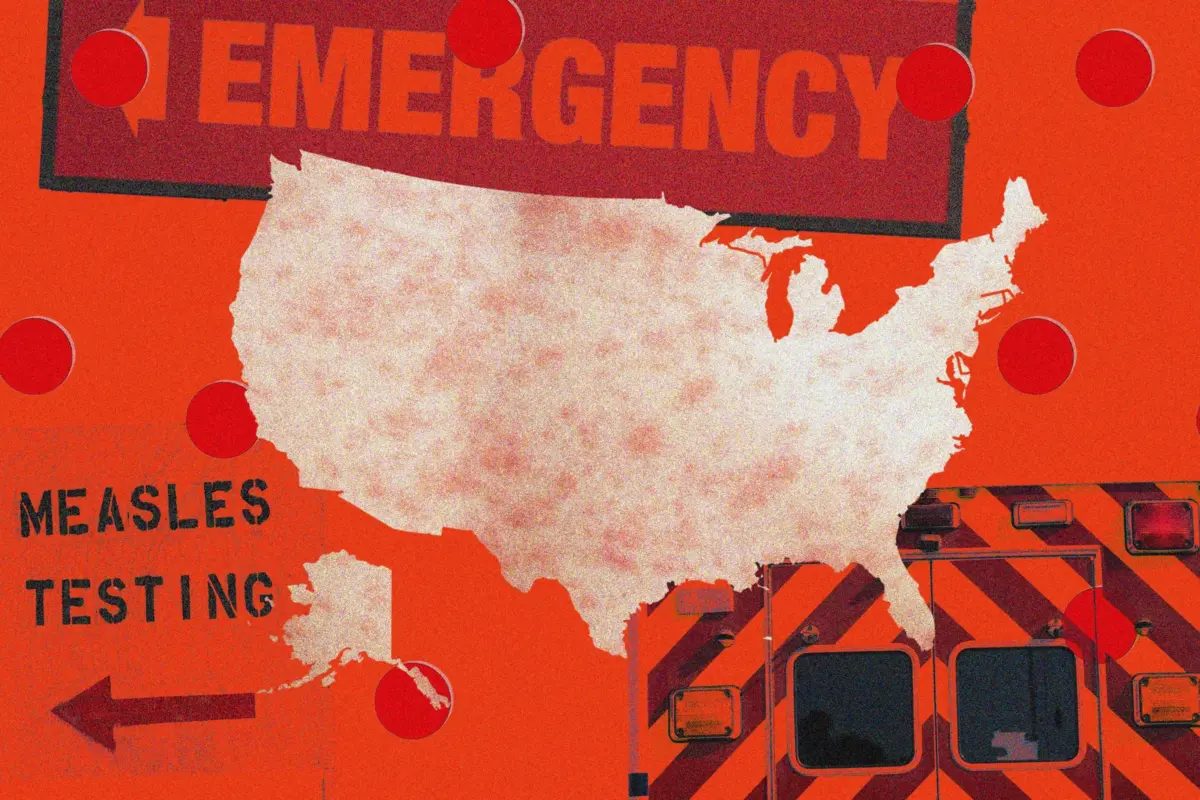
That paradigm has fundamentally shattered. Across the country, infectious disease specialists, pediatricians, and hospital administrators are grappling with a dramatic resurgence of the virus. With national cases surpassing 3,600—marking the highest yearly total recorded since 1991—the American healthcare infrastructure is facing an unprecedented operational stress test.
Driven by declining vaccination rates and widening immunity gaps, the resurgence has forced hospitals from Pennsylvania to South Carolina to fundamentally re-engineer their infection control protocols. Facilities are dusting off decades-old containment strategies, retrofitting ventilation systems, rethinking patient flow dynamics, and deploying aggressive telemedicine interventions. This report examines how major healthcare systems are adapting to this new normal, the immense logistical hurdles of containing an airborne pathogen in modern facilities, and the high-stakes strategies being deployed to protect the nation’s most vulnerable populations.
Detailed Chronology
The current wave of measles activity did not emerge overnight; rather, it represents the culmination of years of declining immunization coverage exacerbated by post-pandemic public health fatigue.
Fall 2025: Early Warnings and Regional Spark Points
The warning signs began to flash late last year. In the autumn of 2025, health officials in South Carolina began tracking a cluster of cases centered around Spartanburg County and the broader upstate region. As the virus began to circulate through under-vaccinated communities, healthcare providers at Prisma Health in nearby Greenville recognized the impending threat.
Infections disease experts at Prisma Health initiated emergency planning sessions, noting that the healthcare landscape had fundamentally shifted since the COVID-19 pandemic. Hospitals had largely relaxed their rigid, systemic patient-flow protocols and isolation management frameworks. The sudden threat of measles forced a rapid pivot back to strict airborne isolation methodologies.
Winter 2025–Spring 2026: The Outbreak Peaks
By early 2026, the outbreak in South Carolina swelled, ultimately accounting for 997 cases tied to the upstate cluster. Simultaneously, Pennsylvania emerged as a massive epicenter. Statewide figures recorded by the Pennsylvania Department of Health documented 943 cases by late September, resulting in 176 hospitalizations and five tragic, measles-related deaths.
At the University of Pittsburgh Medical Center’s (UPMC) community hospital in Lititz—located squarely within Lancaster County, the heart of Pennsylvania’s outbreak—infectious disease specialist Dr. John Goldman confronted a stark reality. Having not seen a single case of measles in 30 years of practice, Goldman and his colleagues watched in dismay as dozens of patients flooded their facility. The Lititz hospital alone evaluated roughly 50 patients, with approximately 20 requiring inpatient hospitalization.
Summer 2026: Spreading Footprint and Systemic Adaptations
As the spring bled into summer, the geographic footprint of the outbreak widened, drawing in neighboring states like New Jersey. In late July, St. Luke’s University Health Network, serving eastern Pennsylvania and New Jersey, treated two unvaccinated siblings for measles. Recognizing the explosive potential for nosocomial (hospital-acquired) spread, health networks rapidly deployed countermeasures, stocking up on critical medical interventions including the Measles, Mumps, and Rubella (MMR) vaccine and immune globulin.
By August and September 2026, major institutions were forced to institute sweeping policy changes. Geisinger Medical Center in Danville, Pennsylvania, updated its Neonatal Intensive Care Unit (NICU) visitation policies following a potential exposure from a hospital visitor, restricting access exclusively to parents and legal guardians who screened negative for measles symptoms.
Supporting Context & Metrics
The operational strain of managing measles stems directly from the virus’s biological nature. Measles is one of the most contagious infectious agents known to science. It spreads through the air when an infected person coughs or sneezes, and the virus can remain suspended and infectious in an indoor airspace for up to two hours after the infected individual has departed.
Key Epidemiological Metrics
- National Impact: Total U.S. cases have topped 3,600, representing the highest annual burden since 1991.
- Pennsylvania Epicenter: 943 confirmed cases, 176 hospitalizations, and 5 deaths recorded as of September 30.
- South Carolina Cluster: 997 cases tied to the Spartanburg County and upstate outbreak spanning October 2025 through March 2026.
- Clinical Severity at UPMC Lititz: ~50 patients evaluated; ~20 requiring inpatient hospital admission.
- Diagnostic Bottleneck: Standard commercial and public health laboratory turnaround times for throat or nasal swab RT-PCR results range from one to three days.
The Engineering Challenge: Negative-Pressure Rooms and Air Scrubbers
Because measles is airborne, standard examination rooms and emergency department waiting areas pose a catastrophic exposure risk. Hospitals require negative-pressure rooms—specialized isolation spaces engineered with lower air pressure than adjacent hallways. This pressure differential ensures that air flows into the room when doors are opened, trapping airborne pathogens inside rather than allowing them to drift into common corridors.
During the height of the South Carolina outbreak, Prisma Health’s Greenville Memorial Hospital—which tested 400 patients and cared for 13 hospitalized individuals—faced a severe deficit of negative-pressure rooms. Engineering teams were forced to rapidly retrofit standard patient rooms. This complex intervention required:
- Deploying portable air scrubbers and High-Efficiency Particulate Air (HEPA) filters.
- Re-evaluating facility HVAC maps to identify rooms operating on isolated air-handling units.
- Measuring airflow dynamics to ensure exhaust did not recirculate into areas housing vulnerable, non-infected patients.
In outpatient clinics and urgent care facilities lacking negative-pressure capabilities, a single suspected measles case could paralyze operations. Because rooms had to remain vacant for two hours post-exposure to clear suspended viral particles, clinics suffered severe backup, bottlenecking patient flow and delaying urgent care for other medical needs.
Official Statements and Expert Perspectives
Public health leaders and frontline clinicians have been outspoken regarding the immense resource strain and the cultural shift required to manage a disease many believed was permanently conquered.
Dr. John Goldman of UPMC reflected on the psychological shift among veteran physicians:
"I never thought I would see this come back… We are really trying to prevent people from coming to the hospital with measles, because once they’re in the hospital, it’s very easy for them to expose other people."
To circumvent this risk, UPMC instituted strict triage protocols. Patients exhibiting early prodromal symptoms—such as high fever, cough, coryza (runny nose), conjunctivitis (red eyes), and sore throat (which manifest 3 to 5 days before the classic maculopapular rash)—are instructed to call ahead. Rather than entering the waiting room, they are met in the parking lot by masked personnel and escorted directly into isolation.
Dr. Jennifer Janco, chair of pediatrics for St. Luke’s University Health Network, emphasized that the current crisis was entirely predictable given eroding vaccination coverage:
"It was only a matter of time before we started seeing cases… There’s a narrow window of time to offer prevention for exposed, vulnerable people."
Janco highlighted the race against the clock required to deploy prophylactic measures. For unimmunized individuals exposed to the virus, the MMR vaccine can prevent infection or blunt disease severity if administered within 72 hours. For high-risk populations, immune globulin—a plasma-derived antibody concentration—can be administered up to six days post-exposure. However, because most hospitals lack in-house testing capabilities for measles, clinicians must rely on external reference laboratories, creating a tense 24-to-72-hour waiting period while swabs are processed.
Dr. Robin LaCroix, a pediatric infectious disease physician at Prisma Health, underscored the operational exhaustion felt by healthcare personnel attempting to manage post-pandemic workflows alongside a virulent airborne pathogen:
"Since Covid, we haven’t really had to think a lot about how we flow patients through a system, or the special things that we need to have in place to really protect not only the health care givers but also the other patients who are susceptible."
To protect newborns—who cannot receive their first MMR dose until 12 months of age—Prisma Health instituted modified arrival protocols, directing parents to call upon arrival and enter through dedicated, segregated doors. When in-person evaluation wasn’t strictly necessary, health networks leaned heavily on telemedicine, with pediatricians conducting remote check-ins twice daily to monitor disease progression and determine if hospital-level intervention was truly warranted.
Summarizing the pervasive exhaustion across the healthcare sector, Dr. Janco noted:
"It is a resource strain. There are so many pieces that have to fall into place to make sure that we’re doing everything we can to contain this."
Future Outlook
The resurgence of measles in the United States serves as an alarming harbinger of the fragility of public health gains. As vaccination hesitancy and exemptions continue to chip away at community-wide herd immunity, healthcare institutions are forced to pivot from episodic crisis response to permanent vigilance.
Looking ahead, hospital systems are actively auditing their physical infrastructure and supply chains. Investments in modular negative-pressure filtration units, enhanced HVAC zoning, and rapid in-house molecular testing platforms are moving to the top of capital expenditure priority lists. Furthermore, public health authorities stress that clinical protocols alone cannot stem the tide; rebuilding robust immunization baselines remains the only definitive defense against future outbreaks.
Until community-level protection is restored, America’s emergency departments, pediatric wards, and outpatient clinics must maintain their guard. The era of treating measles as a historical footnote has definitively ended, replaced by an ongoing, resource-intensive operational defense to protect the most vulnerable among us from a entirely preventable disease.