Executive Overview
In the rapidly evolving landscape of machine learning and web technologies, the boundary between native execution and browser-based performance continues to blur. A recent development spearheaded by software engineer Sarthak Agrawal marks a significant milestone in this domain, demonstrating that advanced transformer operations—specifically FlashAttention-2—can be efficiently brought to the web using WebGPU.
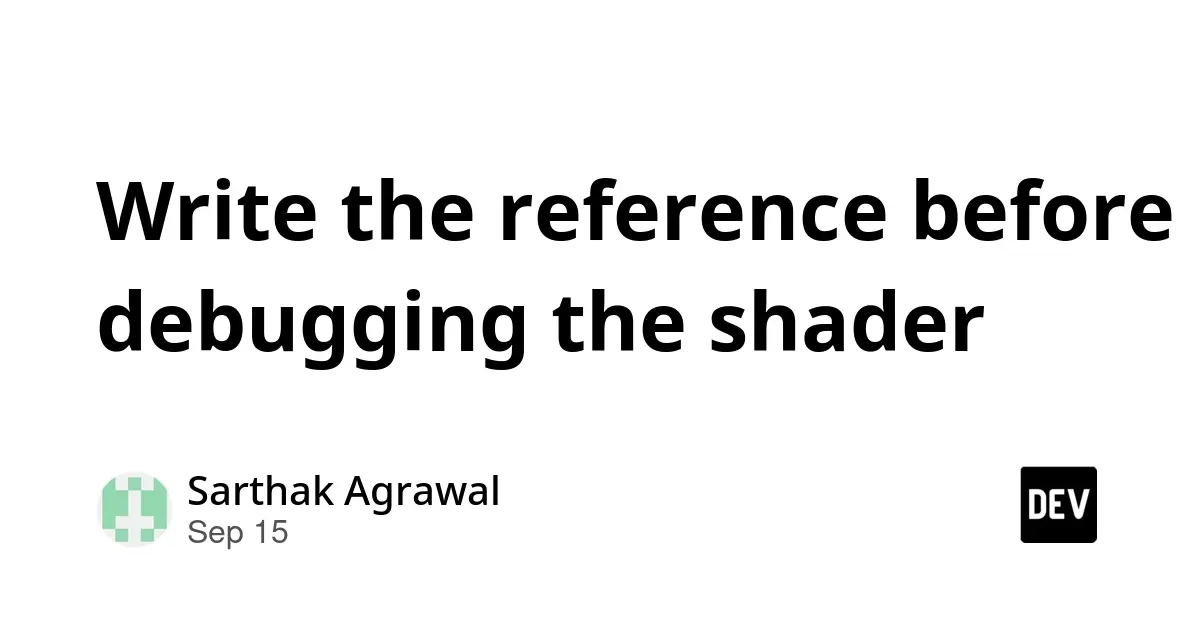
By first prototyping the complex algorithm in plain JavaScript, the development team decoupled algorithmic verification from the notoriously difficult process of shader debugging. This deliberate engineering choice circumvented traditional debugging bottlenecks, leading to an implementation that achieved a near tenfold execution speedup over traditional WebAssembly (WASM) SIMD implementations.
The core breakthrough centers on a faithful WebGPU Shading Language (WGSL) port of FlashAttention-2, encompassing both optimized forward and backward passes. At a standard "Mega-class" model shape, the elimination of cached-matrix memory traffic prevents roughly 67 megabytes of global memory movement per layer per step. Concurrently, performance benchmarks on the "Medium" preset indicate that end-to-end execution times plummeted from 6.8 seconds down to a mere 0.7 seconds. While achieving these dramatic performance gains, the system maintained a remarkably low loss drift of just 2.5%, proving that browser-based large language model (LLM) training and inference are no longer theoretical concepts, but practical realities.
Detailed Chronology
The Genesis of the WebGPU FlashAttention Journey
The journey toward bringing state-of-the-art attention mechanisms to the browser began with a recognized bottleneck: traditional web-based machine learning inference and training relied heavily on CPU-bound WASM SIMD architectures or poorly optimized WebGL shaders. These legacy methods struggled immensely with the memory-bound nature of the standard attention mechanism, which scales quadratically ($O(N^2)$) with respect to sequence length.
Sarthak Agrawal and his team set out to adapt FlashAttention-2—an algorithm celebrated in the native PyTorch and CUDA ecosystems for its tiling strategies and reduction of High-Bandwidth Memory (HBM) accesses—to the emerging WebGPU standard. However, writing and debugging WGSL shaders directly is notoriously painful. Compilers offer limited introspection, vector registers are abstract, and tracking down a stray index error within a complex matrix multiplication kernel can consume days of developer time.
The JavaScript-First Methodology
To mitigate these inherent development hazards, the engineering team established a strict rule: write and validate the reference implementation in plain JavaScript before writing a single line of WGSL code.
- The JavaScript Prototype: The team constructed a pure, unoptimized JavaScript model of the FlashAttention-2 forward and backward passes. This model utilized standard multi-dimensional arrays or typed arrays to simulate workgroups, tiles, and registers.
- Algorithmic Validation: Using this JavaScript reference, the team could easily inspect intermediate tensor shapes, check the numerical stability of the online-softmax state, and verify gradient calculations without worrying about hardware-level thread synchronization or workgroup shared memory limits.
- Decoupling Errors: By ironing out logical flaws in a dynamic, easily debuggable language, the team ensured that when bugs did eventually appear during the WGSL translation phase, they were strictly integration or shader-syntax errors, never fundamental flaws in the underlying mathematics. The shader effectively became a direct, hardware-accelerated translation of a mathematically proven algorithm.
Translating to WGSL and Optimizing Passes
Once the JavaScript reference passed rigorous checks, the translation to WebGPU Shading Language began.
- The Forward Pass: Designed to maximize cache locality, the forward pass assigned one workgroup per batch, head, and query tile. Instead of materializing the massive $N times N$ attention matrix in global memory, the kernel walked through keys and values in discrete blocks, dynamically computing and updating the online-softmax normalization state directly within fast hardware registers.
- The Backward Pass: Replicating the backward pass of FlashAttention-2 in a web shader presented a formidable challenge. Rather than reading a cached attention matrix from memory—which would saturate the GPU’s memory bandwidth—the backward pass dynamically recomputed the attention weights on-the-fly from the saved queries ($Q$), keys ($K$), and a pre-calculated log-sum-exp ($textLSE$) scaling value.
Through meticulous management of workgroup shared memory and thread synchronization primitives in WGSL, the resulting shaders executed smoothly across modern desktop and mobile browsers supporting the WebGPU API.
Supporting Context & Metrics
The quantitative impact of transitioning from legacy web paradigms to a WebGPU-accelerated FlashAttention-2 architecture cannot be overstated. Modern transformer architectures are almost universally bottlenecked by memory bandwidth rather than raw floating-point compute capability. Every time an attention matrix is written to and read from global GPU memory, precious cycles and energy are wasted.
Memory Bandwidth Optimization
At the recorded "Mega-class" model shape, the traditional approach of caching intermediate attention matrices creates a massive memory footprint. By implementing the FlashAttention-2 block-wise algorithm—where softmax reduction is computed incrementally—the architecture completely avoids writing the full attention matrix to global memory.

- Bandwidth Savings: This elimination of cached-matrix traffic saves approximately 67 MB of global memory movement per layer, per step.
- Scaling Benefits: In deeper models with dozens of layers, this reduction translates into gigabytes of saved memory movement, directly alleviating the memory wall that typically plagues browser-based tensor processing.
Performance Benchmarks: WASM SIMD vs. WebGPU
To measure real-world gains, the team evaluated end-to-end performance using a standardized benchmark across different execution backends.
| Benchmark Preset | Execution Backend | End-to-End Time | Performance Delta |
|---|---|---|---|
| Medium Preset | WASM SIMD (Legacy) | 6.8 seconds | Baseline |
| Medium Preset | WebGPU + FlashAttention-2 | 0.7 seconds | ~9.7x Speedup |
As illustrated by the data, switching from WASM SIMD to the optimized WebGPU pipeline compressed execution time from nearly seven seconds down to under one second. This nearly tenfold acceleration transforms browser-based machine learning from a sluggish novelty into a responsive, highly functional medium.
Numerical Stability and Loss Drift
Speed gains are useless if model accuracy is compromised. Because floating-point arithmetic on GPUs (particularly regarding atomic reductions and half-precision floats) can introduce rounding errors, the team closely monitored convergence metrics.
- Loss Drift: The implementation exhibited a remarkably low loss drift of just 2.5% compared to native reference models.
- Implications: This minimal variance confirms that the online-softmax mathematical formulation was preserved accurately through the JavaScript prototyping phase and successfully translated into WGSL without introducing catastrophic catastrophic cancellation or overflow issues.
Official Statements and Developer Insights
While detailed logs of the development process remain actively updated by Sarthak Agrawal at https://posttrainllm.com/devlog, the overarching philosophy behind the project emphasizes engineering discipline in experimental domains.
Reflecting on the development cycle, the core realization was that hardware-acceleration debugging should never be compounded by algorithmic uncertainty. By enforcing a strict sequence—reference first, shader second—the engineering team avoided the classic trap of trying to debug a mathematical formula while simultaneously fighting low-level shader compiler quirks.
Furthermore, industry observers have noted that this methodology provides a blueprint for future web-native AI projects. As WebGPU matures and gains broader adoption across consumer hardware, developers require reliable design patterns to port complex CUDA-centric kernels into open web standards. Prototyping in high-level, dynamic environments like JavaScript (or TypeScript) offers an accessible sandbox before committing code to the rigid constraints of WGSL.
Future Outlook
The successful deployment of FlashAttention-2 in WebGPU opens unprecedented avenues for client-side artificial intelligence. Historically, running large language models or vision transformers directly inside a web browser meant accepting crippling performance penalties, high latency, and restricted model sizes.
Empowering Edge and Client-Side AI
With WebGPU now shipping natively in major browsers (including Chrome, Edge, and experimental Safari builds), developers can tap directly into client-side GPUs without requiring users to install cumbersome native runtimes, Python environments, or heavy desktop applications.
- Privacy-First Applications: Client-side execution ensures that sensitive user data—ranging from medical queries to personal documents—never leaves the local machine, satisfying strict privacy regulations like GDPR and HIPAA effortlessly.
- Zero-Install Accessibility: Users can load complex transformer models simply by navigating to a URL, democratizing access to advanced AI tools across low-powered laptops, Chromebooks, and mobile devices.
- Interactive Web Experiences: Sub-second execution times (such as the drop from 6.8s to 0.7s observed in the benchmarks) make real-time generative UI, live audio transcription, and interactive client-side LLM agents genuinely viable for everyday web users.
Next Frontiers in WebGPU ML
As this ecosystem matures, we can anticipate several downstream developments:
- Automated Kernel Generation: Tools that automatically transpile mathematical specifications into verified JavaScript references and subsequently into optimized WGSL shaders.
- Broader Opset Support: Expanding beyond FlashAttention-2 to implement other advanced memory-efficient primitives, such as grouped-query attention (GQA) and flash-decoding, entirely within web standards.
- Cross-Platform Parity: Continued hardening of browser WebGPU implementations to ensure consistent floating-point behavior across diverse vendor hardware (NVIDIA, AMD, Apple Silicon, and integrated Intel/Qualcomm graphics).
The work documented in the PostTrain LLM devlog serves as a proof-of-concept that the browser is rapidly becoming a first-class citizen in the deep learning ecosystem. By combining methodical software engineering practices with modern web graphics APIs, the gap between native and web-based AI performance is closing faster than ever before.