Executive Overview
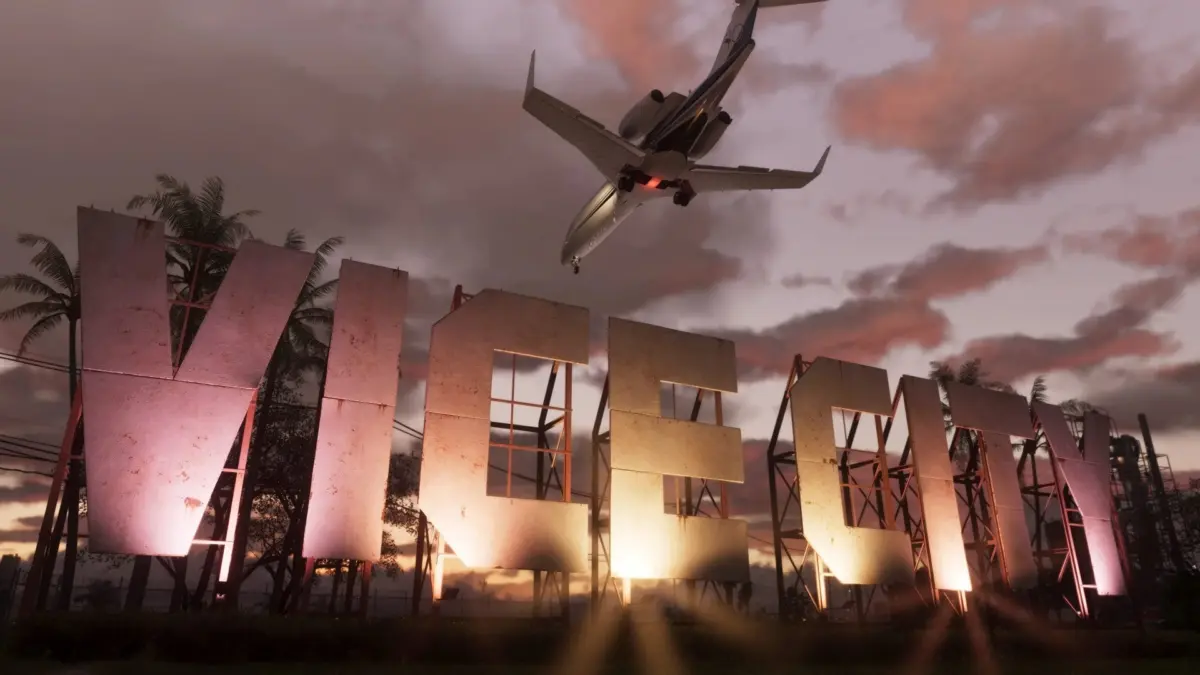
As the video game industry prepares for what is arguably the most anticipated entertainment launch in history, Rockstar Games has kicked its multi-million-dollar marketing apparatus into high gear. Blurring the boundaries between virtual fiction and real-world infrastructure, the publisher has reportedly invested close to $1 million to install a massive "Welcome to Vice City" sign atop the iconic Kaseya Center in downtown Miami.
The installation marks a dramatic escalation in real-world promotional campaigns for Grand Theft Auto 6 (GTA 6), set to launch on November 19, 2026, for PlayStation 5 and Xbox Series X|S. While fans across social media have spent days tracking the complex logistical puzzle of lifting the massive signage via helicopter, local government records and investigative reporting have revealed a deeper story. The installation is the culmination of months of tense negotiations, bureaucratic hurdles, and public debates between Miami-Dade officials and corporate representatives over how the city’s image should be leveraged for a franchise historically defined by satirical depictions of crime, corruption, and sun-drenched chaos.
With the sign now firmly anchored against the Miami skyline, the stage is set for an aggressive, mainstream-focused campaign that could reshape how blockbuster video games market themselves to the general public. This report explores the timeline of the installation, the financial and political friction behind the scenes, and what this monumental marketing push signals for the final countdown to release day.
Detailed Chronology: From Concept to the Miami Skyline
The journey of the "Welcome to Vice City" sign from a corporate boardroom concept to a physical landmark towering over Biscayne Bay has been closely watched by eager fans and local residents alike.
The Rumors and Initial Construction
For days leading up to its grand reveal, rumors circulated across local forums and social media platforms as construction materials were spotted arriving at the Kaseya Center—home to the NBA’s Miami Heat. Enthusiasts armed with cameras and drones began monitoring the arena, quickly piecing together that Rockstar Games was preparing a massive physical tribute to the fictional metropolis that inspired Grand Theft Auto: Vice City (2002) and serves as the primary setting for the upcoming GTA 6.
The Helicopter Lift
The climax of the installation occurred on an unseasonably clear afternoon, drawing crowds of onlookers and a flurry of smartphone cameras. In a meticulously choreographed heavy-lift operation, a commercial helicopter hoisted the structural components of the sign high above downtown Miami. Precision-guided by ground crews working against ocean winds, the structure was safely landed and bolted onto the roof of the Kaseya Center.
Aerial passengers flying into Miami International Airport or tracking routes over the downtown core can now look out their windows and read the unmistakable greeting. The visual is an intentional echo of classic pop culture imagery associated with Miami’s 1980s aesthetic, immediately recognizable to millions of gamers worldwide. Local independent media and spotters, such as aviation and news enthusiast Ryan RC Rea, quickly flooded social media with photos and video footage of the finished product, instantly driving global engagement.
Supporting Context & Metrics: The Financials and Bureaucracy of Real-World Takeovers
While the visual spectacle of the sign is striking, the administrative details paint a fascinating picture of how modern municipal governments interact with multi-billion-dollar entertainment conglomerates.
The $975,000 Agreement
According to public records and insights shared by Miami Herald journalist Doug Hanks, Rockstar Games did not simply erect the sign on a whim; the installation is part of a formalized municipal marketing agreement. Financial disclosures reveal that Miami-Dade County is set to collect $975,000 from Rockstar Games for the placement, bringing the total cost of the physical campaign just shy of the $1 million mark.
This financial arrangement represents a mutually beneficial transaction: the local government secures a substantial influx of non-tax revenue—earmarked in part to assist with local municipal projects, such as athletic field restorations—while Rockstar gains high-visibility, real estate prime for global press coverage.

Beyond the Sign: The Ambitions of an IRL Takeover
The Kaseya Center sign is merely the tip of the iceberg. Investigative reports dating back to August revealed that Rockstar engaged in extensive, high-level conversations with Miami city officials regarding an even more aggressive "IRL Vice City" conversion. Pitches floated during these closed-door sessions reportedly included:
- Partial or themed takeovers of local transportation hubs, including Miami International Airport.
- Pop-up experiential events mimicking in-game locations and brands.
- Immersive public art installations across high-traffic tourist zones.
While the feasibility and ultimate approval status of these wider conceptual pitches remain fluid, the successful installation of the Kaseya Center signage proves that Rockstar is willing to spend heavily to anchor its fictional world firmly within its real-world muse.
Official Statements and Friction: Navigating Crime, Culture, and Public Perception
Bringing Grand Theft Auto into the physical streets of Miami was never going to be a frictionless process. The franchise’s satirical, unapologetic embrace of criminal syndicates, corruption, and chaotic lawlessness has historically drawn the ire of conservative commentators, politicians, and civic leaders.
The Political Pushback
When word leaked that the city was entertaining proposals to let Rockstar rebrand portions of Miami for the GTA 6 marketing campaign, the backlash was swift. Several prominent local figures, including the Miami-Dade Sheriff and high-ranking city commissioners, publicly slammed the initiative. Critics argued that partnering with an entertainment property that prominently features player-driven violence—allowing users to gun down police officers and virtual civilians—sends the wrong message to the community. Opponents expressed deep concern over endorsing a fictional narrative that paints Miami as a lawless playground defined strictly by crime, vice, and moral decay.
The Compromise
Despite the vocal opposition, pragmatic economic and administrative arguments ultimately won the day. Following intense debates and closed-door revisions, Miami-Dade officials ultimately approved a more discreet, targeted marketing campaign. The strategy allowed the city to secure valuable corporate funding—reportedly utilized to help fix and upgrade local public infrastructure, such as community football fields—while mitigating the risk of overwhelming public safety concerns or complete municipal disruption.
This delicate compromise highlights the modern tension between civic dignity and the undeniable economic gravity of the video game industry. As Grand Theft Auto V stands as one of the most financially lucrative entertainment products in human history, city leaders are increasingly finding it difficult to turn down the cash infusions offered by mega-publishers, even when those publishers deal in provocative subject matter.
Future Outlook: The Final Countdown to November 19
With the "Welcome to Vice City" sign now casting its shadow over downtown Miami, industry analysts are looking ahead to see how Rockstar plans to leverage this landmark as the release date approaches.
The NBA Season and Mainstream Reach
The Kaseya Center is famously the home arena of the Miami Heat. The team’s first regular-season home game is scheduled for October 21—just under a month before GTA 6 hits store shelves on November 19.
This timing creates an unprecedented cross-promotional opportunity. When national television broadcasts zoom in on the arena during the NBA season opener, millions of sports fans who may not actively follow gaming news will be greeted by the towering "Vice City" sign. Industry insiders anticipate that Rockstar will utilize this window to debut high-impact television spots, digital trailers, and mainstream advertising campaigns designed to capture the broader pop-culture zeitgeist.
A Historic Launch Beckons
As the clock ticks down toward November 19, 2026, the physical transformation of Miami serves as a tangible reminder of the cultural monolith Grand Theft Auto has become. By physically planting its flag in the real-world city that inspired its digital empire, Rockstar Games has transcended the traditional boundaries of software marketing. Whether through rooftop signage, multimillion-dollar municipal agreements, or upcoming NBA broadcasts, GTA 6 is no longer just a game coming out later this year—it is rapidly becoming an inescapable part of the cultural landscape.