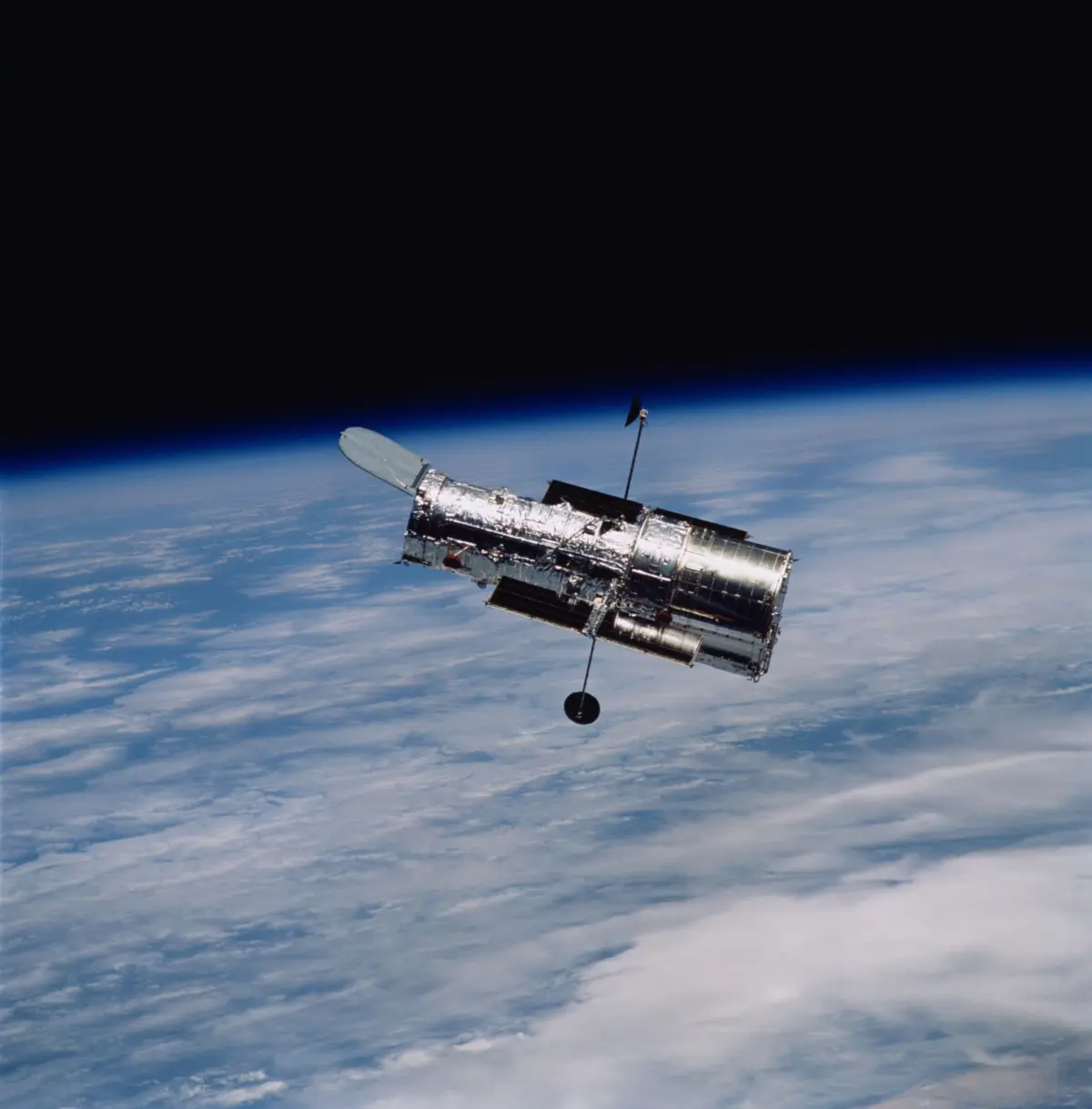
For over three decades, the Hubble Space Telescope has served as humanity’s eye on the cosmos, revolutionizing our understanding of the universe through breathtaking imagery and ground-breaking astronomical discoveries. However, this legendary observatory is now facing a twilight crisis. Caught in the relentless pull of low Earth orbit (LEO) atmospheric drag, and burdened by failing onboard hardware—most notably its aging gyroscopes—Hubble is steadily descending toward an inevitable fiery doom. NASA estimates that without intervention, the telescope will re-enter Earth’s atmosphere and break apart between 2033 and 2034.
Determined to prevent the premature loss of one of science’s greatest instruments, NASA has formally turned to the commercial space sector. Through a newly issued Request for Information (RFI), the space agency is canvassing private aerospace companies for innovative proposals regarding "in-space servicing." These proposals range from bold mechanical missions to reboost Hubble into a higher, more stable orbit, to advanced concepts for managing a controlled reentry or executing mid-flight technological upgrades.
This strategic pivot reflects a broader paradigm shift within modern space exploration: leveraging agile private industry to maintain and maximize legacy public assets. Yet, the path forward is fraught with technical hurdles, financial questions, and sobering reminders of recent orbital failures. As NASA balances the development of flagship successors like the Nancy Grace Roman Space Telescope, the agency’s leaders argue that preserving Hubble’s operational lifespan is an imperative duty to both science and the American taxpayer.
Detailed Chronology: Hubble’s Orbital Decay and Interventions
The Legacy of Space Shuttle Servicing (1990–2009)
From its inception, Hubble was engineered with a unique architectural philosophy: it was built to be repaired, maintained, and upgraded directly in space by human hands. Following its deployment in April 1990 aboard the Space Shuttle Discovery—and the subsequent urgent fix for its flawed primary mirror—astronauts visited the observatory five times to swap out instruments, install corrective optics, and replace degraded components.
The final of these servicing missions, STS-125 in May 2009, was nearly canceled in the wake of the 2003 Columbia disaster. However, NASA ultimately concluded that the scientific returns outweighed the inherent risks. Astronauts installed new batteries, gyroscopes, and two new scientific instruments—the Cosmic Origins Spectrograph and the Wide Field Camera 3—effectively granting the telescope a new lease on life.
The Post-Shuttle Era and the SpaceX Feasibility Study (2022)
With the retirement of the Space Shuttle fleet in 2011, human servicing of Hubble ceased entirely, leaving the telescope entirely dependent on its ground-based command teams and increasingly exhausted hardware.
By September 2022, the reality of orbital decay prompted NASA to take a proactive, albeit cautious, step. The agency signed a non-funding Space Act Agreement with SpaceX to investigate the feasibility of using a Dragon spacecraft to dock with and reboost Hubble to a higher, safer orbit. While the study concluded that a commercial reboost was technically possible, NASA declined to finance or execute the mission immediately, establishing the baseline framework for future private-sector partnerships.
The Swift Observatory Precedent (2025–2026)
NASA’s ambitions regarding commercial in-space intervention suffered a stark reality check in late 2025 and 2026. The agency commissioned private startup Katalyst Space Technologies to perform an orbital rescue and raise the altitude of the rapidly decaying Swift Observatory.
The mission encountered catastrophic difficulties after the rescue spacecraft launched in July 2026, suffering an insurmountable attitude control malfunction. With the rescue mission formally abandoned, the Swift Observatory succumbed to atmospheric drag, ultimately burning up and reentering over Indonesia on November 4, 2026. This incident has cast a long shadow over current plans, underscoring the severe technical risks inherent in servicing uncrewed legacy hardware.
Hardware Failures and the One-Gyro Transition (2024)
Compounding its orbital drop, Hubble’s internal mechanics have deteriorated significantly. Originally equipped with six reaction-wheel gyroscopes used to precisely point and stabilize the telescope, Hubble has watched its gyros fail one by one over its 30+ year career.
In June 2024, NASA announced a major operational pivot: Hubble would transition to a "one-gyro" mode. At the time of the transition, only three gyros remained functional, and one of those was delivering erratic, abnormal telemetry data. By shifting to a single-gyro configuration—while keeping the final healthy gyro in reserve—NASA successfully preserved the telescope’s ability to conduct science, though at the cost of reduced observation efficiency and altered scheduling flexibilities.
Supporting Context & Metrics
To fully understand the urgency of NASA’s RFI, one must examine the hard physics and operational metrics governing Hubble’s environment:
Orbital Altitude: Hubble currently orbits at approximately 540 kilometers (335 miles) above Earth. At this altitude, trace amounts of Earth’s atmosphere still exert a continuous drag force, pulling the spacecraft downward over time.
Reentry Window: Mathematical models project that without a propulsive reboost, atmospheric drag will drag Hubble past the point of no return by 2033, with complete atmospheric reentry anticipated between 2033 and 2034.
The Critical Deadline: NASA engineering assessments indicate that any operational reboost mission must be successfully executed by 2032 to alter the spacecraft’s trajectory safely before control margins become dangerously narrow.
Servicing Statistics: Over its lifetime, Hubble has received five dedicated human servicing missions, had dozens of components replaced, and generated hundreds of terabytes of transformative astronomical data utilized by thousands of researchers worldwide.
Metric / Milestone
Value / Date
Launch Date
April 24, 1990
Current Orbit
~540 km Low Earth Orbit
Projected Reentry
2033–2034 (Unboosted)
Latest Servicing Mission
May 2009 (STS-125)
Active Gyros
1 operational (+1 reserve)
Official Statements
The decision to solicit commercial proposals has drawn commentary from key figures within NASA’s leadership structure, emphasizing both the sentimental value of the observatory and the practical economic realities of space asset management.
"Hubble is a national icon," Nicky Fox, associate administrator of NASA’s Science Mission Directorate, stated in an official agency release. "Given the time we have until Hubble’s anticipated reentry, we are eager to explore the breadth of possibilities to boost Hubble to a higher orbit while we develop the flagship mission to follow."
Echoing this sentiment, NASA Administrator Jared Isaacman stressed the accountability owed to the public and the scientific community:
"Hubble still has important science ahead of it, and we should be looking at every reasonable opportunity to keep it delivering for as long as possible. If there are innovative and cost-effective ways to extend the life of an asset already in orbit, we owe it to the American taxpayer and the scientific community to explore them. Extending Hubble’s life would mean more discoveries, more science, and more opportunities to expand our understanding of the universe."
Future Outlook: A Race Against Time and Physics
As NASA awaits responses from commercial space entities, the future of the Hubble Space Telescope hangs in a delicate balance. The technical obstacles are formidable. Docking with a spacecraft that was never designed for automated robotic capture—featuring handrails and grapple fixtures built specifically for suited astronauts—requires cutting-edge rendezvous and proximity operations software, precision robotics, and robust failure-mitigation strategies.
Furthermore, the cautionary tale of the Swift Observatory serves as a stark reminder that commercializing orbital servicing is still an emerging and volatile market. Startups and established aerospace giants alike must prove they can safely manipulate, reboost, and potentially upgrade delicate scientific hardware worth billions of dollars without accidentally destroying it.
Time, however, is not on humanity’s side. With the critical 2032 deadline looming, the coming years will determine whether private enterprise can successfully step in where the Space Shuttle left off. If a commercial partner can pull off the unprecedented feat of rescuing Hubble, the veteran telescope could continue probing the deep cosmos well into the 2030s, working in tandem with modern marvels like the James Webb Space Telescope and the forthcoming Nancy Grace Roman Space Telescope to decode the deepest mysteries of the universe.