Published: November 12, 2026, 9:19 AM EST
By: Patricia Hernandez
Specialized reporting on technology, corporate governance, and geopolitics.
Executive Overview
In a seismic shift that has sent shockwaves through Silicon Valley and global financial markets alike, Jensen Huang has stepped down as Chief Executive Officer of Nvidia, bringing an abrupt end to his legendary 33-year tenure at the helm of the multi-trillion-dollar artificial intelligence behemoth.
The announcement, delivered via a corporate press release on Thursday morning, follows a harrowing month of intense media scrutiny and high-stakes geopolitical fallout. Huang’s resignation comes in the wake of explosive allegations regarding his personal relationships and a suspected foreign intelligence operation. Specifically, reports surfaced detailing an alleged affair with Alice Huang—an investor and executive at a partner firm whom investigators suspect to be a Chinese intelligence asset—alongside a secondary investigation into an office romance with a direct subordinate that breached Nvidia’s strict internal code of conduct.
While boardroom scandals at major tech corporations are rarely entirely unprecedented, the intersection of Huang’s personal life, state-level trade maneuvers, and the white-hot geopolitical friction between Washington and Beijing has transformed this corporate shake-up into a matter of national security. As the primary architect of the modern AI revolution, Huang’s departure leaves a massive void at the center of the global semiconductor industry.
Stepping into the breach is Colette Kress, Nvidia’s longtime Executive Vice President and Chief Financial Officer, who has been appointed as interim CEO. Simultaneously, the company’s Board of Directors has elevated Harvey C. Jones to serve as Nvidia’s first-ever independent Chair of the Board, signaling a concerted effort to stabilize operations and reassure skittish investors as the company navigates its most turbulent chapter to date.
Detailed Chronology: From Rumors to Resignation
The unraveling of Jensen Huang’s leadership position did not happen overnight; it is the culmination of a months-long investigative trail that dragged the private lives of tech executives into the crosshairs of federal counterintelligence and geopolitical strategy.
October 2026: The Intelligence Leak
The storm broke in late October 2026, when prominent journalistic investigations—led by reports from The New York Times—revealed that Huang had become the target of an alleged Chinese intelligence influence campaign. At the center of the probe was Alice Huang, an entrepreneur and investor associated with Megaspeed, a technology firm that maintained active business ties with Nvidia.
According to intelligence briefings and public disclosures, Alice Huang had cultivated a close, personal relationship with the Nvidia CEO dating back as far as June 2024. Investigators allege that the purported asset leveraged her proximity to the chief executive to gather sensitive information regarding advanced semiconductor allocations, supply chain frameworks, and corporate strategies. Furthermore, reports indicated that Alice Huang routinely flaunted her connection to the Nvidia boss to bolster her own business ventures and raise capital within investment circles.
When the story initially broke, Nvidia’s public relations apparatus fought fiercely to contain the fallout. Spokespeople downplayed the relationship, framing it as an ordinary, arms-length professional association devoid of any classified or sensitive data exchanges. Crucially, the company noted at the time that federal agencies had not formally warned Nvidia of an imminent national security threat, nor had they provided Huang with the type of formal defensive briefings typically afforded to executives managing critical infrastructure and dual-use technologies. Meanwhile, representatives for the Chinese embassy in Washington, D.C., dismissed the allegations entirely, characterizing them as baseless political smears.
November 2026: Code of Conduct Violations and the Final Blow
As federal scrutiny intensified, internal investigators at Nvidia began untangling the broader web of the CEO’s personal interactions. By early November, fresh reporting uncovered that Huang had engaged in a separate, direct workplace affair with a female executive who reported directly to him.
While consensual office romances are frequently handled as internal human resources matters within corporate America, the dual pressure of the federal counterintelligence probe and a clear violation of Nvidia’s internal code of conduct rendered Huang’s position untenable. The convergence of national security implications—particularly given the United States government’s aggressive legislative and executive agendas aimed at denying China any strategic advantage in advanced computing—proved to be the tipping point.
Recognizing that the ongoing controversy posed an existential threat to the company’s regulatory standing and public trust, the Nvidia Board of Directors initiated succession talks. On the morning of November 12, the inevitable became official: Jensen Huang stepped down.
Supporting Context & Metrics: The Pillar of Modern AI
To fully understand the gravity of Huang’s departure, one must examine the staggering footprint Nvidia occupies in the contemporary global economy. Founded by Huang in 1993 alongside Chris Malachowsky and Curtis Priem, Nvidia began as a pioneer of graphics processing units (GPUs) designed to render complex 3D environments for video games. For decades, the company was primarily celebrated within the PC gaming community for powering the hardware that made high-fidelity interactive entertainment possible.
However, the dawn of the artificial intelligence era fundamentally transformed Nvidia’s trajectory. The proprietary parallel-processing architecture of Nvidia’s GPUs turned out to be the exact technological key required to train massive deep learning models and large language models (LLMs). As tech giants, sovereign states, and academic institutions raced to build out generative AI infrastructure, Nvidia captured an effective monopoly on the high-end hardware market.
- Market Valuation: Bolstered by the AI boom, Nvidia’s valuation skyrocketed, cementing its status as a multi-trillion-dollar entity and placing it shoulder-to-shoulder with Apple and Microsoft as one of the most valuable corporations in human history.
- Geopolitical Leverage: Because Nvidia designs and manufactures the vast majority of the world’s high-performance AI chips, its products are viewed by Western governments as critical national assets. The United States Department of Commerce has imposed stringent export controls, banning the sale of top-tier Nvidia chips to China to curb Beijing’s military and technological modernization.
- The Consumer Impact: The insatiable, enterprise-level demand for AI hardware has fundamentally reshaped the semiconductor manufacturing ecosystem, creating supply chain bottlenecks that have indirectly driven up the costs of consumer electronics, gaming consoles, and PC components across the board.
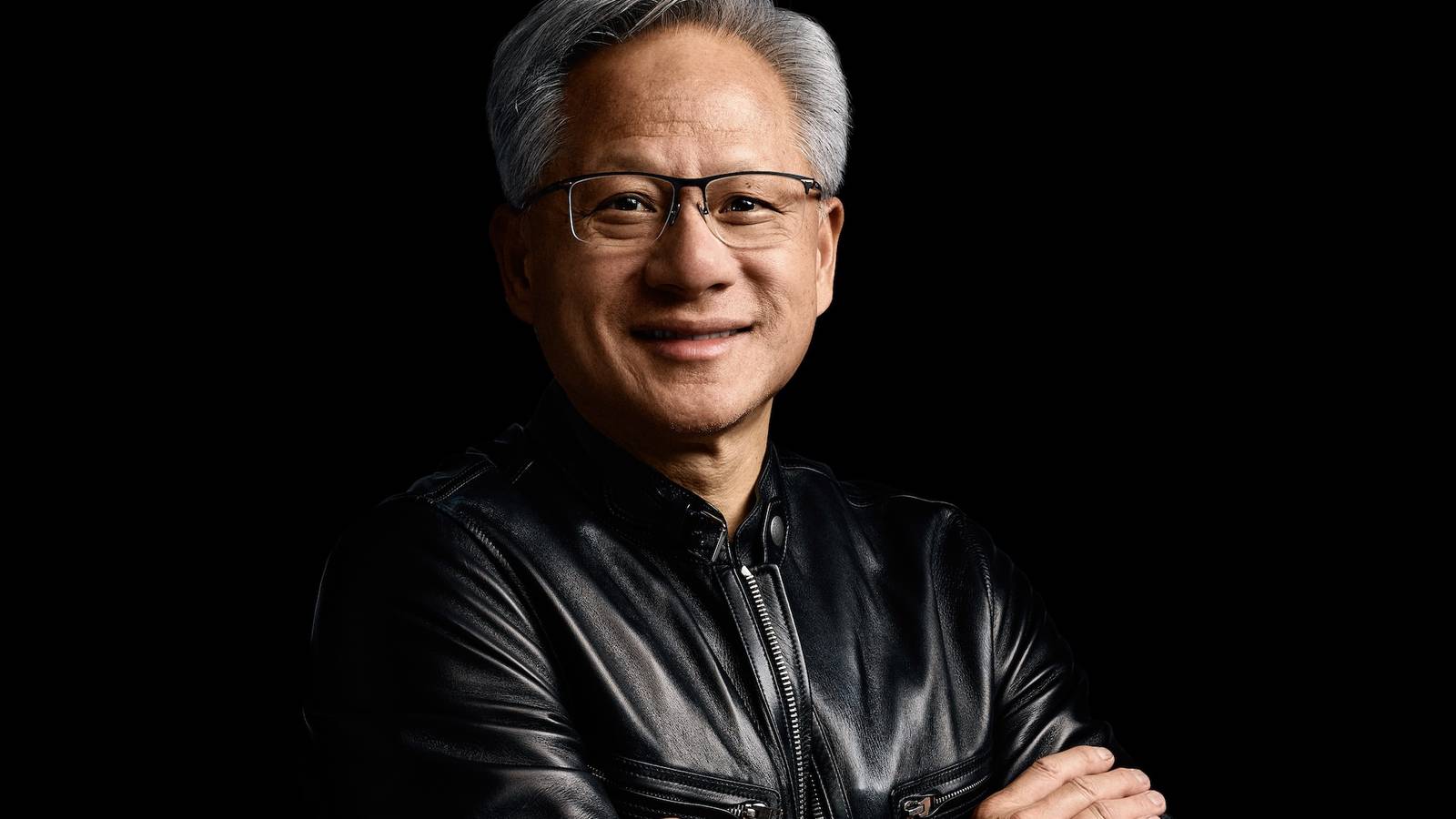
Because Huang was so thoroughly synonymous with Nvidia’s brand identity—famously recognizable in his signature leather jacket and charismatic keynote presentations—his personal missteps carry profound implications for the company’s public relations and market confidence. Furthermore, Huang’s well-documented proximity to high-ranking American political figures, including President Donald Trump, had positioned him as an indispensable lobbyist and strategist for the tech sector’s interests in Washington. Stripping him of his post leaves a leadership vacuum at a time when regulatory oversight of the AI industry is tightening globally.
Official Statements and Leadership Transition
In the wake of Huang’s resignation, Nvidia’s leadership moved swiftly to project stability. The Board of Directors activated a structured contingency plan, appointing Colette Kress as interim CEO while a global search for a permanent successor is conducted.
Kress brings immense institutional knowledge to the role. Having joined Nvidia in September 2013 as Executive Vice President and Chief Financial Officer, she has spent over a decade steering the company’s financial strategy through its most explosive periods of growth. Prior to her tenure at Nvidia, Kress accumulated nearly 25 years of high-level financial experience at premier technology giants, including Cisco and Microsoft.
Alongside Kress’s appointment, the board named Harvey C. Jones as its first-ever independent Chair of the Board. Jones brings decades of entrepreneurial and executive experience to the oversight role, having previously served as CEO and Executive Chairman of Synopsys, in addition to an extensive career as an active technology venture investor.
In the official press release distributed by Nvidia, Harvey Jones expressed absolute confidence in the existing leadership framework:
"Colette has helped lead NVIDIA through a period of extraordinary growth and has a deep understanding of our business, customers, operations and financial position. She is supported by an experienced leadership team that has been instrumental in executing NVIDIA’s strategy and advancing its technology roadmap. The Board has full confidence in Colette and the leadership team, and we expect the company’s operations, customer commitments and product roadmap to continue without interruption."
Interim CEO Colette Kress released a statement acknowledging the profound legacy left by her predecessor while firmly committing the executive team to uninterrupted operations:
"NVIDIA’s strength has always come from its people, and together with our leadership team, I am committed to building on the extraordinary foundation Jensen created over the last 33 years. We will continue advancing the work that has made NVIDIA a leader in accelerated computing and AI, and execute on the opportunities ahead. Our focus remains on serving our customers, partners, developers and shareholders."
Concluding the corporate announcement, the Board of Directors paid homage to the departing founder:
"Jensen’s contributions to NVIDIA are profound. NVIDIA is one of the most consequential technology companies in the world. The Board and the company thank Jensen for his immeasurable contributions to the company and the industry."
Future Outlook: What Lies Ahead for Nvidia?
As the dust begins to settle on one of the most tumultuous corporate scandals of the decade, industry analysts and stakeholders are left pondering the long-term trajectory of Nvidia without its visionary founder at the wheel.
- Operational Continuity: In the immediate term, Nvidia’s supply chains, software ecosystems (such as CUDA), and hardware delivery schedules are expected to remain steady. Colette Kress’s deep familiarity with the company’s financial engine provides a reliable steady hand capable of weathering Wall Street volatility.
- Regulatory and Geopolitical Scrutiny: The federal investigations into corporate espionage, export compliance, and potential leaks of sensitive chip architecture to Chinese entities are ongoing. The new leadership team will need to cooperate transparently with U.S. intelligence and regulatory bodies to ensure that Nvidia remains in good standing with Washington policymakers.
- The Search for a Permanent Successor: Finding a permanent CEO who can match Jensen Huang’s singular combination of technical foresight, charismatic public leadership, and market dominance will be an impossible task. The board may ultimately choose to split the role—dividing technological vision from administrative and financial oversight.
For now, Nvidia enters a brave new world. The era of Jensen Huang—defined by leather jackets, breathtaking keynote reveals, and the dawn of artificial intelligence—has drawn to a sudden, dramatic close. As the company looks toward its next chapter, the primary mandate for Kress and the board will be proving that Nvidia’s foundational strength lies in its technology and its people, rather than any single individual.
Developing…