Executive Overview
For the past several years, the technology sector has been gripped by an unprecedented wave of artificial intelligence fervor. From generative text models to complex multimodal interfaces promising to revolutionize every facet of human labor, the discourse has oscillated wildly between utopian predictions of total automation and dystopian warnings of wholesale industry obsolescence.
For many digital creators, front-end developers, and systems architects, the prevailing emotion is no longer excitement or fear—it is profound exhaustion. "AI fatigue" has become a very real psychological and professional toll, driven largely by relentless noise, sensationalized marketing, and an acute lack of actionable, grounded guidance.
Amidst this deafening cacophony, a critical question remains largely unanswered: Where does artificial intelligence actually fit into a professional development workflow? How can these tools be leveraged to augment, streamline, and elevate design systems without eroding the foundational craftsmanship, accessibility, and human-centric ethos that define modern digital product development?
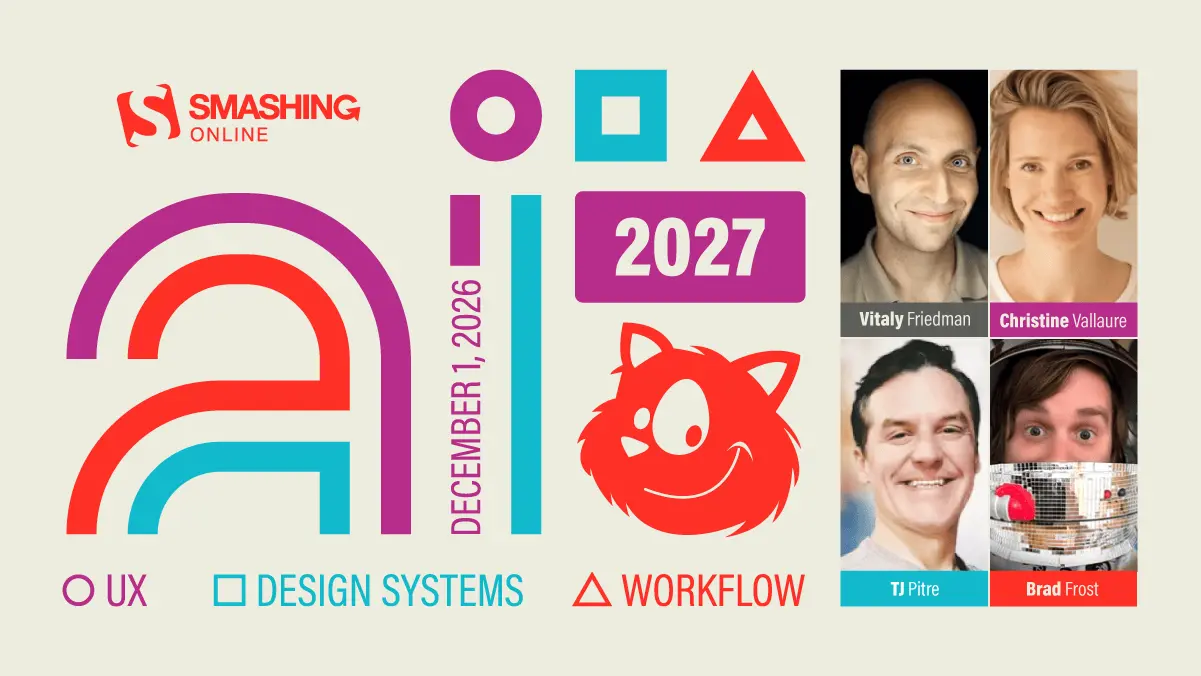
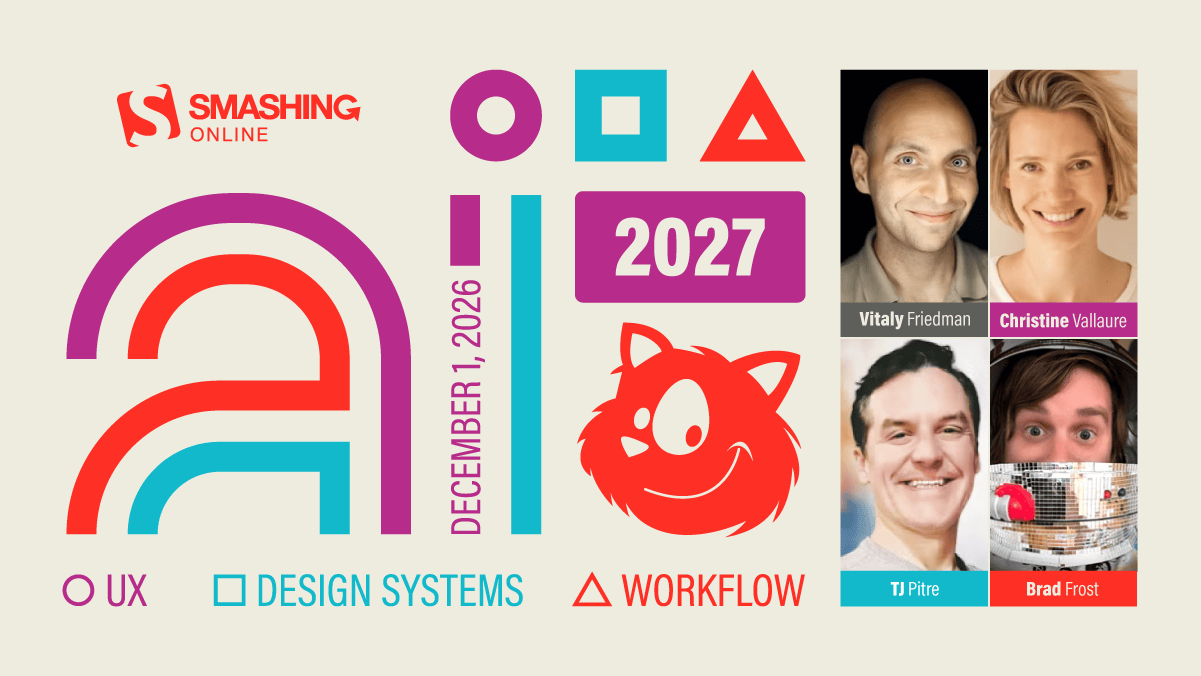
Enter Smashing Magazine and their upcoming live online event: the Smashing AI 2027 Conference, scheduled for December 1. Known throughout the web design and development community for its rigorous, hype-free, and deeply practical educational content, Smashing is sidestepping the superficial trends to tackle the intersection of artificial intelligence and design systems head-on.
By gathering some of the industry’s most respected and experienced practitioners—including Brad Frost, Christine Vallaure, Vitaly Friedman, and TJ Pitre—the conference promises to move past abstract speculation. Instead, it will deliver concrete demonstrations of how AI can genuinely benefit, rather than destroy, daily workflows for designers, front-end engineers, and stakeholders alike.
To help bridge the gap between theory and application, organizers have partnered with digital publications like CSS-Tricks to offer exclusive community incentives, including special registration discounts and ticket giveaways, ensuring that practical knowledge remains accessible to the broader engineering community.
Detailed Chronology: The Evolution of AI in Design Systems
To understand why the upcoming Smashing event represents a vital inflection point for the design systems community, it is necessary to examine how the relationship between artificial intelligence and digital workflows has evolved over recent years.
Phase 1: The Era of Speculative Hype (2022–2023)
When generative AI tools burst into the mainstream consciousness, the initial reaction across the design and engineering sectors was characterized by breathless speculation. Large language models (LLMs) and early image-generation engines were marketed as silver bullets capable of instantly generating production-ready code, comprehensive UI kits, and cohesive brand identities with a single text prompt.
During this phase, design systems were frequently cited as prime targets for complete automation. Tech evangelists claimed that traditional component libraries, token management pipelines, and manual documentation processes would soon become obsolete, replaced entirely by dynamic, AI-driven UI generation on the fly.
However, practitioners quickly discovered the harsh realities of these early implementations. AI-generated code frequently violated core accessibility standards, ignored internal design tokens, introduced massive technical debt, and lacked the contextual coherence required for enterprise-grade digital products. The disconnect between marketing promises and engineering reality sowed the seeds of widespread industry fatigue.
Phase 2: The Backlash and Realignment (Late 2023–2024)
As the initial euphoria subsided, a healthy skepticism took hold. Developers and designers began pushing back against top-down mandates to integrate AI into every facet of production. Industry forums, podcasts, and blogs filled with critical reflections on the hidden costs of AI integration—ranging from copyright and intellectual property concerns to the sheer cognitive load of managing unpredictable tool outputs.
During this period, thought leaders in the design systems space recognized that wholesale replacement was neither desirable nor technically feasible. Instead, the conversation began shifting toward localized utility. Professionals started asking more nuanced questions: Can AI assist with repetitive tasks like generating documentation, writing unit tests for components, or translating design tokens across different platforms?
Phase 3: Pragmatic Integration and the Path to December 2024 and Beyond
This brings the industry to its current juncture. Rather than viewing artificial intelligence as an existential threat or a magical cure-all, forward-thinking teams are beginning to treat AI as a specialized assistant within an established pipeline.
The upcoming Smashing AI Conference on December 1 is structured specifically to capture and codify this current phase of maturity. By focusing strictly on design systems—the structural backbone of modern digital products—the event acknowledges that AI’s greatest value lies not in replacing human creativity, but in reinforcing the systems and standards that empower human teams to build better, faster, and more consistently.
Supporting Context & Metrics: The State of AI Fatigue and Workflow Integration
To contextualize the relevance of specialized events like the Smashing conference, one must examine broader industry sentiments regarding software tooling, productivity, and technological fatigue.
Quantifying "AI Fatigue"
Recent informal developer surveys and community sentiment analyses across platforms like GitHub, Stack Overflow, and designer communities highlight a growing paradox: while enterprise adoption of AI tooling is at an all-time high, developer satisfaction and trust in these tools remain heavily fragmented.
- The Noise-to-Signal Ratio: Over 68% of surveyed front-end developers report feeling overwhelmed by the sheer volume of daily product announcements, plugin releases, and workflow updates claiming to incorporate "revolutionary AI."
- Trust Deficit in Generated Code: Approximately 54% of engineers express skepticism regarding the long-term maintainability of code produced by general-purpose LLMs, citing frequent regressions, poor semantic structure, and lack of integration with proprietary design tokens.
- The Desire for Contextual Guidance: More than 75% of design system managers indicate that their primary operational challenge is not generating more UI variations, but rather maintaining consistency, governance, and synchronization between design files and production codebases.
Where AI Actually Fits: The Design Systems Pipeline
Design systems are notoriously difficult to scale. They require rigorous governance, continuous cross-functional collaboration between designers and developers, and meticulous attention to accessibility (a11y), localization, and performance.
Rather than disrupting this delicate ecosystem, pragmatic AI integration targets specific friction points within the lifecycle of a design system:
- Token Synchronization and Mapping: Automating the translation of design tokens between Figma variables, Style Dictionary, and multi-platform JSON structures.
- Documentation Enhancement: Generating initial drafts of component usage guidelines, accessibility notes, and API documentation based on component codebases.
- Automated QA and Compliance Checking: Scanning pull requests to ensure newly added components adhere to established design system guidelines and contrast ratios.
- Scaffolding and Boilerplate Generation: Assisting junior developers in setting up initial component structures while enforcing organizational coding standards.
By addressing these granular, mechanical bottlenecks, AI moves from being a disruptive, unreliable novelty to a stabilizing force within the workflow.
Official Statements and Industry Perspectives
The philosophy underpinning the Smashing AI conference is rooted in a long-standing tradition of pragmatic, community-driven education. Organizers and speakers have consistently emphasized that mastering these new tools requires looking past the hype cycle and focusing entirely on real-world utility.
"Most of that fatigue is more about the noise surrounding both sides of the hype spectrum. What’s covered way less is context for where it fits best in a development workflow and what sorts of practical uses it might have to benefit—not destroy—our work."
— Community Editorial Perspective
This sentiment is echoed by the lineup of industry veterans scheduled to present at the event.
- Brad Frost, renowned design systems consultant and author of Atomic Design, has long advocated for systems thinking that prioritizes human collaboration over rigid technological dogma. His participation signals a deep dive into how generative and analytical tools can support, rather than fracture, atomic component architectures.
- Christine Vallaure, an expert in design systems and UI architecture, brings a rigorous designer-centric perspective to how AI interacts with visual standards and token governance.
- Vitaly Friedman, co-founder of Smashing Magazine, has built a career curating events and articles that strip away industry fluff to deliver immediate, actionable value to working professionals.
- TJ Pitre, recognized for his deep expertise in front-end architecture and modern tooling, rounds out a roster uniquely positioned to demonstrate—rather than merely lecture on—practical implementation strategies.
The emphasis across all sessions is on live demonstration. Attendees will not be subjected to abstract slide decks predicting the year 2040; instead, they will witness working professionals breaking down their actual toolchains, sharing successes, acknowledging failures, and providing transparent assessments of where AI genuinely moves the needle.
Future Outlook: Navigating the Next Horizon of Digital Craftsmanship
As the digital product landscape looks toward 2027 and beyond, the integration of artificial intelligence into design and development workflows is no longer a speculative scenario—it is an ongoing reality that requires careful navigation.
The Shift from Replacement to Augmentation
The overarching narrative championed by events like the Smashing AI Conference is the definitive burial of the "replacement" myth. Artificial intelligence will not replace human designers, front-end architects, or product managers. However, professionals who effectively leverage AI-assisted workflows will increasingly outperform those who either blindly adopt every new tool without critical evaluation or reject technological advancement entirely out of fatigue.
In the context of design systems, the future belongs to teams that use AI to enforce consistency at scale. By offloading tedious administrative burdens—such as maintaining token parity, updating cross-platform documentation, and running preliminary accessibility audits—human practitioners are freed to focus on higher-order challenges: empathetic user experience design, complex architectural problem-solving, and inclusive, accessible product development.
Accessibility and Ethics in AI-Driven Workflows
A critical frontier for the coming years will be the strict enforcement of ethical standards and accessibility compliance within automated pipelines. As automated generation tools become more deeply embedded in codebases, the industry must remain vigilant. Design systems serve as the ultimate guardians of digital inclusivity; if AI tools are trained on or configured to output inaccessible markup, the societal cost to digital equity could be severe.
Conferences that prioritize peer-reviewed, experienced-based instruction are essential in establishing these ethical guardrails. By fostering open discussions among practitioners who build and maintain real-world systems, the community can collectively set standards that prioritize human dignity, user accessibility, and sustainable engineering practices over rapid, unconsidered deployment.
Community Action and Accessibility of Knowledge
True innovation in the web industry has always relied on the democratization of knowledge. Recognizing the financial and professional pressures facing many developers and designers today, initiatives to keep educational events affordable—such as the nominal €50 registration fee, community discount codes like AITRICKSCSS, and ticket giveaways—ensure that critical insights remain available to independent creators, students, and professionals from diverse economic backgrounds.
Ultimately, the antidote to AI fatigue is not willful ignorance, but grounded, empirical clarity. By gathering to examine what works, discarding what doesn’t, and supporting one another through the transition, the design systems community is proving once again that human craftsmanship remains the irreplaceable anchor of the digital world.
Event Details & Registration
For those interested in cutting through the noise and gaining practical, battle-tested insights on integrating artificial intelligence into modern design systems:
- Event: Smashing AI Conference (Live Online Event)
- Date: December 1
- Featured Speakers: Brad Frost, Christine Vallaure, Vitaly Friedman, TJ Pitre, and more.
- Cost: €50 (Special discount available using code
AITRICKSCSSat checkout). - Direct Registration & Information: Smashing AI 2027 Conference Official Page