The global technology and venture capital ecosystem experienced one of its most tumultuous, high-stakes weeks on record. From seismic leadership shake-ups at the crown jewels of artificial intelligence to structural capitulations among Silicon Valley’s most storied institutions, the market has entered an era defined by aggressive technological acceleration and unforgiving macroeconomic reality.
Markets swung wildly as the NASDAQ 100 shed $2.5 trillion in a single session, driven by hedge fund deleveraging and intensifying scrutiny over infrastructure spend. Simultaneously, the long-standing paradigms of venture capital—championed by firms like Sequoia Capital—underwent radical rewiring, while corporate governance faced an ultimate test with the sudden resignation of Nvidia CEO Jensen Huang.
This comprehensive report details the compounding crises, structural adjustments, and strategic repositioning reshaping the tech landscape heading into 2027.
Detailed Chronology: A Week That Shook Silicon Valley
1. Sequoia Capital Unwinds the Evergreen Experiment
On November 4, venture capital titan Sequoia Capital dropped a bombshell memo to its Limited Partners (LPs), signaling a historic retreat from years of operational expansion. The firm announced it is shuttering its London office, winding down its three-year-old Arc accelerator, and terminating its scout program. More profoundly, Sequoia is merging its early-stage and growth teams into a single cohesive unit and dismantling its much-heralded evergreen structure—a mechanism designed to force LPs into holding generational assets long past their initial public offerings.
The strategic pivot exposes deep internal friction regarding liquidity and asset management in modern venture capital. While the partnership will maintain its brand dominance, the retreat from the evergreen model marks a reluctant acknowledgment of LP liquidity demands and the realities of macro-market corrections following the 2022–2023 downturn.
2. The Jensen Huang Resignation and Nvidia’s Board Investigation
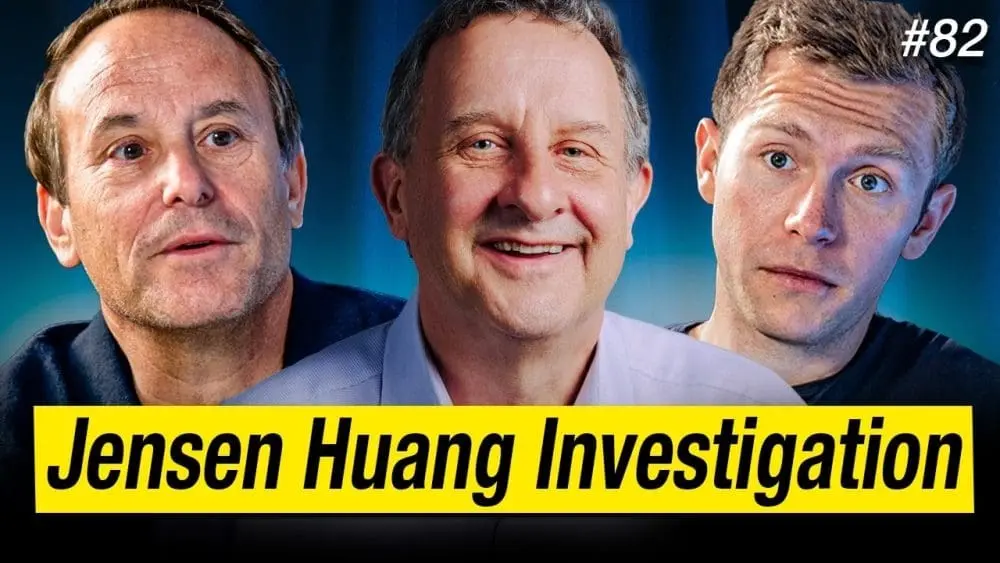
In a development that stunned global markets, Nvidia’s board of directors accepted the resignation of President, CEO, and Director Jensen Huang, effective immediately on November 11. The move followed a hastily convened independent board investigation initiated on November 8 regarding reports that Huang was the target of a foreign intelligence effort tied to Megaspeed, a Singapore-based Nvidia customer.
Despite Huang’s 33-year legacy of building a multi-trillion-dollar empire, the independent directors refused to let the investigation stall. CFO Colette Kress was appointed interim CEO while a permanent search gets underway, and Harvey C. Jones was installed as the board’s first-ever independent chair. The fallout is expected to profoundly disrupt GPU distribution channels and data center deployments into China.
3. Anthropic’s Blockbuster IPO Oversubscription
Anthropic’s public market debut transformed from a speculative exercise into a historic referendum on generative AI enterprise value. Setting an initial conservative price range of $70 to $78 per share, the company secured $26 billion in non-voting stock commitments from seven major compute suppliers prior to pricing.
Driven by insatiable public and institutional demand, the offering’s order book was reported roughly six times oversubscribed. This immense appetite challenges the prevailing narrative of market fatigue, cementing Anthropic—alongside its staggering projected cash reserves—as a primary pure-play giant in the generative AI space.
Supporting Context & Metrics: The Numbers Behind the Chaos
The financial and operational metrics underpinning this week’s news highlight an ecosystem under intense pressure:
- $2.5 Trillion: The staggering amount erased from the NASDAQ 100 in a single trading session, largely driven by hedge fund pods getting stopped out amid strict 5% to 7.5% risk drawdown limits.
- 6x Oversubscription: The order book depth for Anthropic’s highly anticipated public offering, signaling robust institutional demand despite private-market valuation debates.
- $430 Million: The valuation of conversational AI pioneer Ada in its all-share acquisition by Dialpad—a sobering outcome for a company that commanded a $1.2 billion price tag in its 2021 Series C round.
- 39% YoY Growth: Cloudflare’s Q3 revenue surge to $782.5 million, fueled directly by enterprise agentic AI deployments following a 20% workforce reduction.
- $102 Million: The war chest deployed by Sergey Brin and opposing tech leaders to successfully defeat California’s Proposition 40, a proposed wealth tax targeting state billionaires.
Official Statements and Industry Insights
The week’s developments triggered sharp, unfiltered commentary from leading venture capitalists, founders, and market analysts.
-
On Sequoia’s Structural Shift:
"The partner moves and London are the least interesting part. What I want to know is what happened to the evergreen idea… That was the best idea in venture, and they’re walking away from it." — Jason Lemkin
Rory O’Driscoll added perspective on why the model faltered: "You can hope for a pass, but you can’t assume it… forcing LPs to hold amounts to ‘giving the LPs their vitamins’ when partners clearing their own carry can hold stock forever."
-
On the AI Market and Infrastructure Demand:
"The AI trade doesn’t crack on supply. It cracks only if demand cracks, and the demand will show up in OpenAI’s and Anthropic’s ARR." — Rory O’Driscoll
-
On Stolen AI API Keys as an Enterprise Threat:
"This is better than selling Rolexes you steal off someone’s wrist in London. Bot swarms are going after every Anthropic and OpenAI key they can find, and a stolen key can burn through a $100,000 limit in minutes." — Jason Lemkin
Future Outlook: Navigating the Agentic Era
As the technology sector digests these historic events, the roadmap for the remainder of the decade has crystallized around a few non-negotiable realities.
The Death of Seat-Based Software
The transition from human-centric SaaS models to autonomous agentic operations is accelerating. Companies like Cloudflare are scaling revenues while shrinking headcounts, while legacy seat-based B2B firms face severe valuation contractions. Investors increasingly view traditional user licenses as a terminal model, as software workflows are aggressively re-engineered around autonomous agents that do not require UI-bound human interaction.
Governance and Regulatory Compliance
The abrupt exit of Jensen Huang serves as a watershed moment for corporate governance in high-tech. Boards can no longer offer indefinite leeway to visionary founders when national security, geopolitical trade restrictions, and regulatory compliance intersect. Scrutiny from the DOJ and Congress will permanently alter how tech monopolies manage international distribution and executive conduct.
The Venture Capitalist’s Dilemma
With institutional behemoths like Sequoia pulling back from geographic over-extension and experimental fund structures, early-stage investing is returning to core fundamentals: high-conviction bets, rapid pruning of underperforming assets, and ruthless concentration of capital. As the market pivots toward pure-play AI equities and agentic infrastructure, survival demands absolute operational agility—for VCs and founders alike.