In a strategic development that bridges the ecosystems of hyperscale cloud computing and advanced generative artificial intelligence, Amazon Web Services (AWS) has announced the public preview of Amazon Bedrock Managed Agents powered by OpenAI. Revealed in a late-September 2026 product rollout, this capability introduces a customized, AWS-native implementation of OpenAI’s Agents API directly into the Amazon Bedrock framework.
For enterprise architects, developers, and IT leadership, this release represents a powerful merging of capabilities. Historically, organizations utilizing OpenAI’s sophisticated agentic architectures often had to navigate complex, fragmented, or cross-cloud pipelines to integrate those capabilities with enterprise-grade data stores, security protocols, and IAM (Identity and Access Management) systems. With Amazon Bedrock Managed Agents, developers can now construct, deploy, and scale advanced AI agents optimized for OpenAI models that operate entirely within the secure perimeters of their existing AWS environments.
This development is accompanied by a continuous expansion of Amazon Bedrock’s frontier model catalog, giving enterprise builders unprecedented flexibility in selecting the foundational engines that power their mission-critical applications. Alongside these transformative product announcements, AWS has updated its product lifecycle governance frameworks—outlining scheduled maintenance windows, sunset trajectories, and end-of-support timelines to help engineering teams proactively manage technical debt and operational continuity.
As enterprises increasingly transition from experimental generative AI pilots to deeply embedded autonomous workflows, this briefing provides a comprehensive analysis of the Bedrock Managed Agents integration, architectural deployment options, foundational model catalog expansions, and the broader governance updates shaping the AWS landscape.
Detailed Chronology: The Evolution of Bedrock Managed Agents and Ecosystem Updates
The introduction of OpenAI-powered managed agents within Amazon Bedrock marks a significant milestone in a multi-year trajectory of hybrid model availability on AWS. To understand the gravity of this release, it is necessary to examine the chronological progression of announcements that have shaped the generative AI landscape on the platform.
The Integration Blueprint: Bringing OpenAI’s Agents API to AWS
Building intelligent, autonomous agents capable of executing multi-step workflows, invoking external APIs, and querying internal data repositories has traditionally required extensive custom boilerplate code. OpenAI’s Agents API streamlined much of this complexity for developers operating within its native ecosystem. However, enterprise adoption often hit roadblocks due to strict compliance, data sovereignty, and security governance requirements that mandate data processing and storage inside proprietary cloud perimeters.
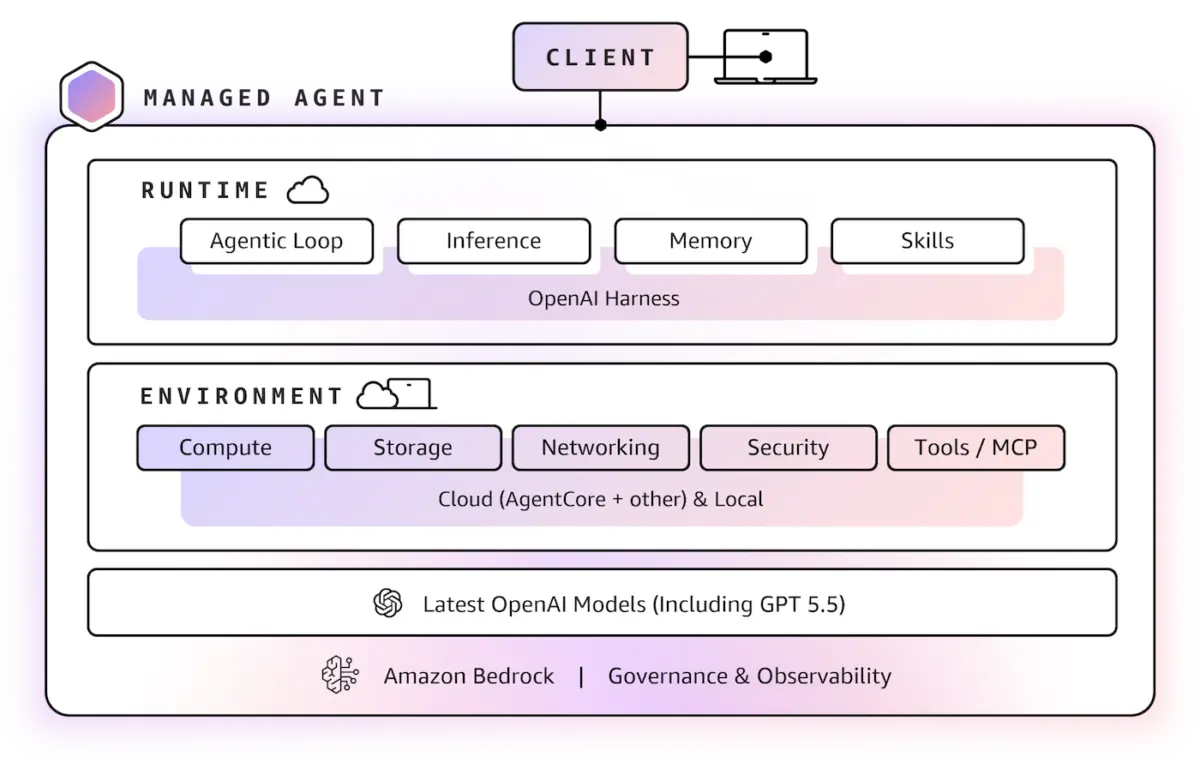
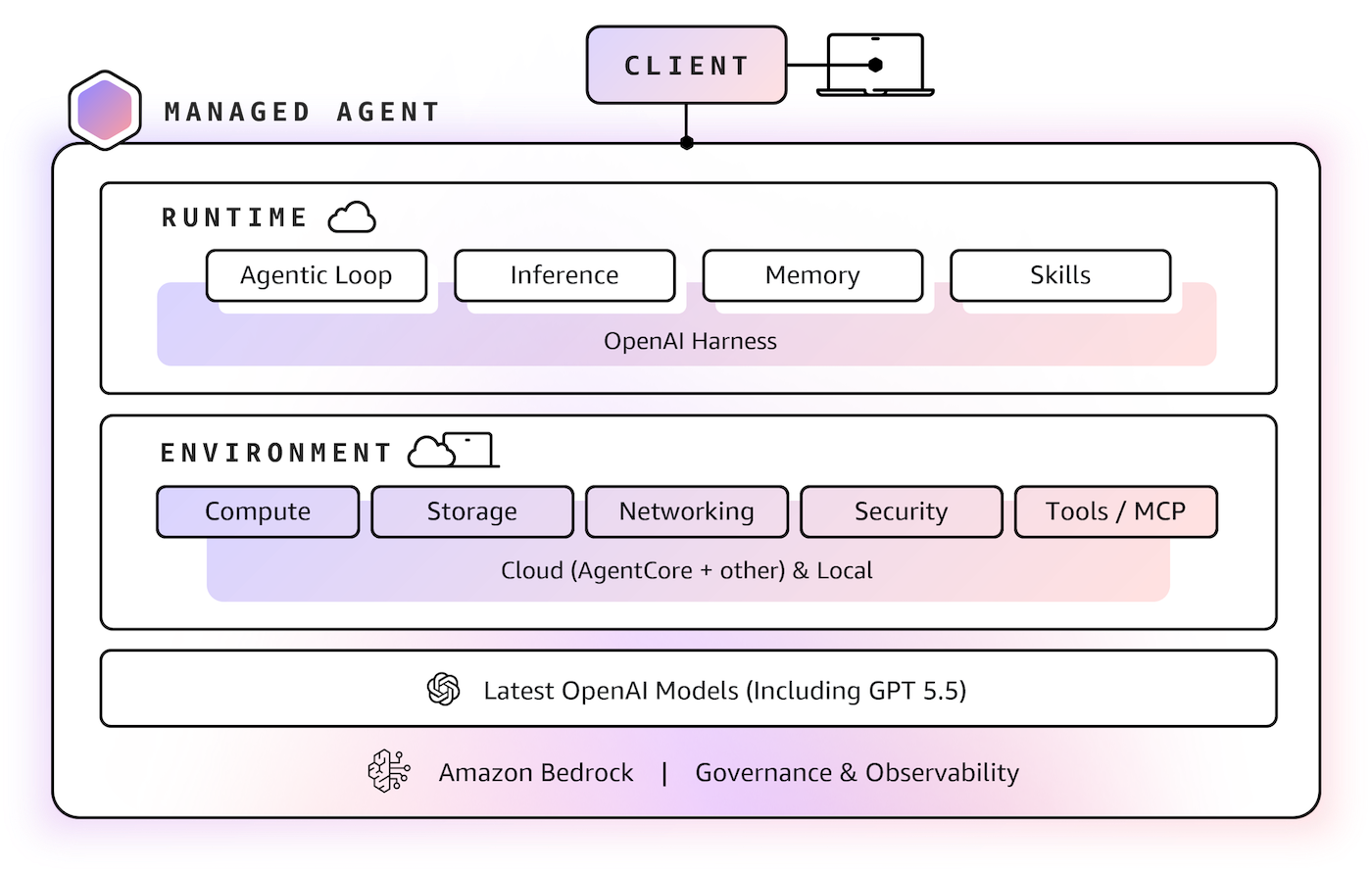
Recognizing these enterprise frictions, AWS engineered a custom variant of OpenAI’s Agents API designed to be deeply native to Amazon Bedrock. Announced in late September 2026, the public preview of Amazon Bedrock Managed Agents allows development teams to harness the conversational and reasoning strengths of OpenAI models while inheriting the robust security infrastructure of AWS.
Unified Governance: Agents built through this integration leverage the exact same AWS IAM identities, permission boundaries, and compliance controls that secure standard cloud infrastructure workloads.
Seamless Resource Binding: Developers can connect agents to AWS-native data stores, serverless compute functions, and enterprise applications without constructing convoluted middleware bridges.
Architectural Flexibility: Execution Environments
To accommodate diverse organizational architectures—ranging from agile startups to highly regulated financial institutions—AWS has introduced dual execution environments for managing these agents:
Self-Hosted Compute: For organizations with specialized compliance needs, edge requirements, or existing containerized pipelines, builders can utilize self-hosted compute. This allows teams to run and test agent workloads on existing development machines, custom container platforms, or localized compute environments while maintaining connectivity to Bedrock services.
Amazon Bedrock AgentCore Runtime: For teams seeking a fully managed, serverless operational model, the Bedrock AgentCore Runtime provides fully managed runtime sessions. This environment handles orchestration, scaling, and configurable persistent storage directly within the user’s designated AWS account, minimizing operational overhead and ensuring optimal performance under heavy transactional loads.
Expanding the Frontier Model Ecosystem
In tandem with the managed agents preview, AWS continues to diversify its model garden on Amazon Bedrock. Recognizing that no single artificial intelligence model serves every enterprise use case optimally, AWS has rolled out continuous additions to its frontier model catalog. By integrating models with specialized strengths in coding, mathematical reasoning, long-context analysis, and multilingual processing, AWS empowers organizations to perform rigorous benchmarking and select the exact neural architecture that aligns with their cost, latency, and performance Key Performance Indicators (KPIs).
Supporting Context & Metrics: Navigating Lifecycle Changes and Enterprise Operations
Enterprise cloud adoption relies heavily on predictable infrastructure lifecycles. While groundbreaking feature releases capture headlines, IT governance teams must continuously monitor product lifecycle updates to ensure operational stability, mitigate security vulnerabilities, and plan timely workload migrations.
The AWS Product Lifecycle Framework
AWS implements a structured lifecycle policy for its services and features, moving them through distinct phases:
Active: Fully supported features and services receiving regular updates, new capabilities, and continuous security patching.
Maintenance: Services transitioning out of active development. During this phase, critical security updates are maintained, but new customer onboarding is restricted or halted.
Sunset: Services approaching permanent retirement, during which active users must migrate remaining workloads to recommended modern alternatives.
End of Support: The final stage where the service is completely decommissioned, and all backend access is terminated.
Late-September 2026 Lifecycle Adjustments
As part of its ongoing platform optimization and modernization strategy, AWS issued comprehensive service availability updates. Organizations utilizing legacy configurations must take immediate note of these scheduled adjustments to prevent production disruptions:
Moving to Maintenance: Services transitioning into this phase will officially block new customer accessibility. Engineering teams currently utilizing these services must audit their dependencies and initiate migration planning.
Entering Sunset: Services placed on the sunset trajectory are operating on borrowed time. Comprehensive migration paths and alternative AWS-native replacements are documented within the AWS Product Lifecycle Changes portal to guide technical leads.
End of Support Enforcement: Services reaching final end-of-support status have had their operational lifecycles concluded. Continued reliance on these unmaintained endpoints introduces severe security vulnerabilities and compliance non-conformities.
Operational Best Practice: AWS strongly advises cloud administrators to consult the official AWS Product Lifecycle documentation or engage directly with AWS Support channels to formulate customized migration roadmaps tailored to their specific architectural footprints.
Official Statements and Industry Perspective
The release of Amazon Bedrock Managed Agents powered by OpenAI has elicited significant commentary from industry analysts, cloud architects, and enterprise technology leaders. By effectively breaking down silos between traditionally competing AI ecosystems, AWS is signaling a pragmatic, customer-first approach to generative artificial intelligence.
"Enterprise customers do not want to be forced into artificial silos when building modern AI applications," noted a prominent cloud architecture analyst following the announcement. "By bringing customized, native support for OpenAI’s agentic frameworks directly into Amazon Bedrock—backed by AWS identity management and security governance—Amazon is acknowledging that enterprise AI strategies are inherently multi-model and multi-ecosystem. Organizations can now leverage the best reasoning engines available while keeping their security and compliance teams entirely comfortable."
Furthermore, leadership within the AWS Builder Community has emphasized the reduction in friction for developers. Historically, building production-grade agents required stitching together disparate API endpoints, managing custom token-bucket rate limiters, and writing bespoke authentication layers. The introduction of the Amazon Bedrock AgentCore Runtime abstracts this heavy lifting, allowing developers to focus strictly on business logic, prompt engineering, and domain-specific tool integration.
Future Outlook: The Road Ahead for Generative AI on AWS
As the generative artificial intelligence market matures from proof-of-concept deployments to core enterprise infrastructure, the strategic direction of platforms like Amazon Bedrock will focus heavily on three core pillars: autonomous execution, cross-ecosverse interoperability, and governed autonomy.
The Shift Toward Autonomous Multi-Agent Systems
The public preview of Bedrock Managed Agents powered by OpenAI represents an early glimpse into the future of enterprise software: systems where AI agents do not merely answer prompts, but actively execute complex, multi-step business processes across disparate software-as-a-service (SaaS) platforms and internal databases. Looking forward over the next 12 to 24 months, we can expect:
Deep Tool Calling: Enhanced ability for agents to dynamically discover and invoke internal microservices, Lambda functions, and enterprise APIs safely.
Collaborative Agent Swarms: Multiple specialized agents—some powered by OpenAI models, others by Anthropic Claude or Amazon Nova models—collaborating within a single governed workflow to solve multifaceted enterprise challenges.
Upcoming Events and Community Engagement
To help builders navigate these rapid advancements, AWS maintains an active calendar of educational and collaborative events. Technical leads and developers are encouraged to engage with upcoming opportunities:
AWS re:Invent and Regional Summits: The definitive gatherings for deep-dive technical sessions, architectural chalk talks, and hands-on workshops exploring the latest features in Amazon Bedrock and agentic computing.
AWS Community Days: Grassroots, developer-led conferences offering peer-to-peer knowledge sharing and real-world implementation case studies.
The AWS Builder Center: An evolving digital hub designed for developers to connect, share open-source solutions, and access comprehensive documentation supporting modern cloud-native development.
As Channy and the AWS engineering teams continue to roll out weekly updates, developers and enterprise architects must remain agile—balancing the rapid adoption of cutting-edge AI capabilities with rigorous lifecycle governance and security best practices.