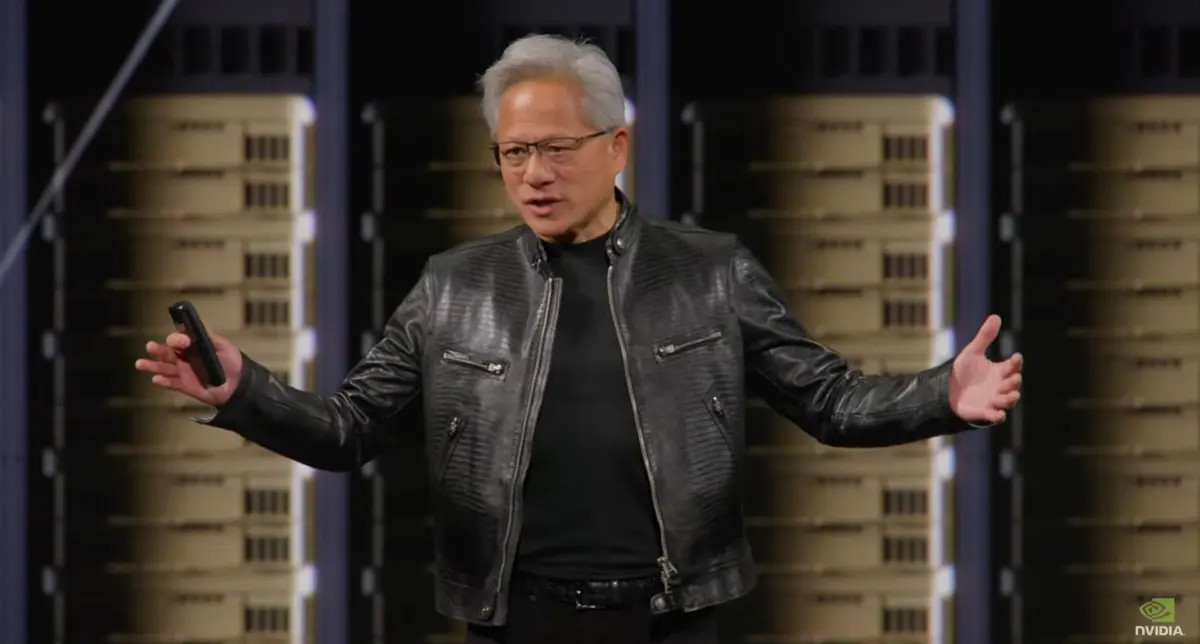
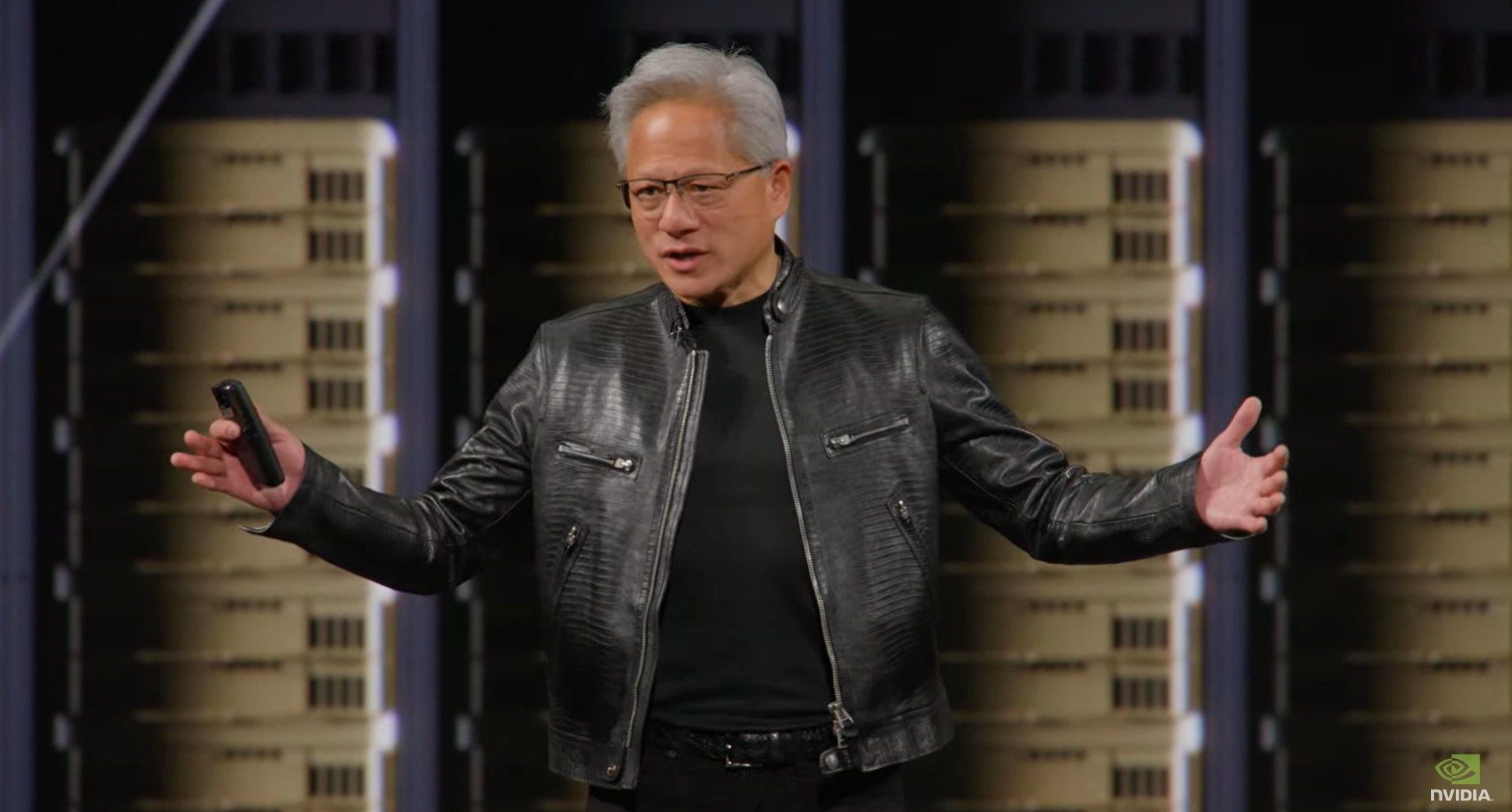
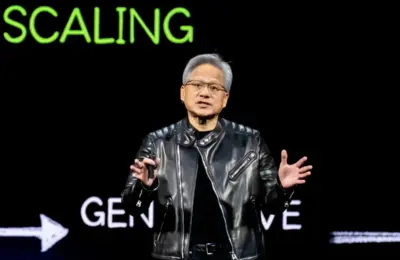
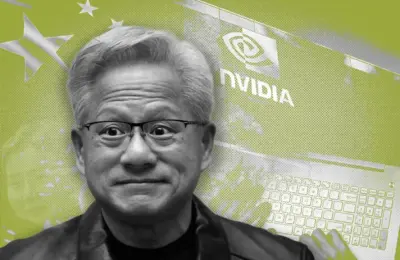
In a dramatic escalation of geopolitical tech policy tensions, former Nvidia CEO and co-founder Jensen Huang has been summoned to Capitol Hill for a series of high-stakes congressional hearings and closed-door transcribed interviews. The escalating inquiry centers on severe national security implications, unauthorized technology transfers, and the tech giant’s complex commercial relationships with MegaSpeed—a Singapore-registered entity currently at the epicentre of an international investigation into illicit Chinese access to high-performance graphic processing units (GPUs).
The political crossfire involves multiple powerful House and Senate committees. Lawmakers are aggressively scrutinizing whether Nvidia exerted undue influence over U.S. export control investigations and allowed advanced semiconductor technology to slip past federal guardrails into the hands of foreign adversaries and military actors. With bipartisan pressure mounting and threats of legal subpoenas hanging in the balance, the upcoming proceedings promise to permanently alter the landscape of U.S. technology regulation, corporate compliance, and executive accountability.
Detailed Chronology of the Congressional Summons
The journey from quiet trade concerns to aggressive congressional oversight has been swift and contentious. What began as formal inquiries into corporate governance has rapidly morphed into a multifaceted national security investigation.
The Shift from Invitations to Subpoena Threats
Earlier committee correspondence sent to Jensen Huang maintained a relatively diplomatic tone, offering flexibility regarding scheduling and focusing largely on his professional proximity to Alice Huang—a former managing director of MegaSpeed and a suspected Chinese intelligence asset. However, as public reporting intensified and new evidence emerged regarding chip smuggling channels, the tenor of congressional leadership shifted dramatically.
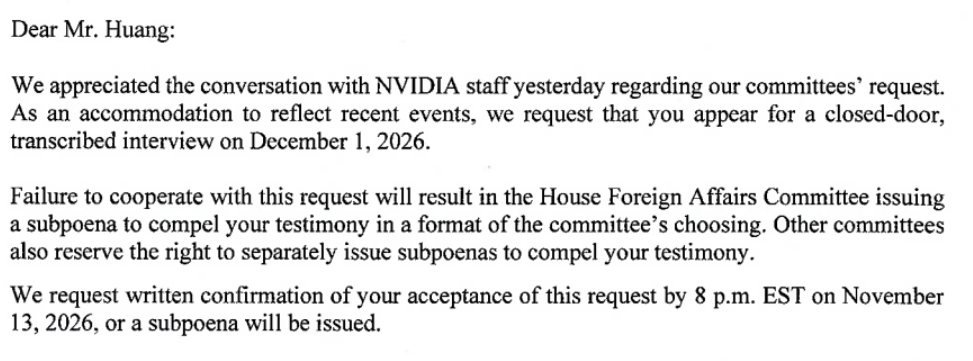
Led by prominent House committee chairmen—including Representatives Mast, Moolenaar, and Crawford—lawmakers issued a hardline ultimatum. The updated schedule demands the physical presence of key Nvidia leadership for intensive interrogations:
December 1, 2026: Jensen Huang is scheduled for a closed-door, transcribed interview with congressional investigators.
December 2, 2026: Nvidia General Counsel Tim Teter is slated for a similar closed-door interview addressing legal compliance, policy interference, and export controls.
Crucially, these sessions are backed by direct threats of formal congressional subpoenas should compliance falter. The committees have made it clear that cooperation is mandatory, reflecting deep-seated frustration within the legislative branch over how sensitive U.S. technology has been managed abroad.
Senate Banking Committee Steps In
Compounding Nvidia’s legislative headaches, the U.S. Senate Committee on Banking, Housing, and Urban Affairs, under the leadership of Chairman Senator Tim Scott, has stepped directly into the fray. Senator Scott formally requested testimony from both Jensen Huang and Commerce Secretary Howard Lutnick.
While Under Secretary of Commerce Jeffrey Kessler faces a comparatively amicable public hearing setup, Secretary Lutnick has found himself under intense scrutiny. Lawmakers are questioning whether the Department of Commerce under his watch adopted an overly lenient stance toward Nvidia or actively insulated the semiconductor titan from rigorous oversight during export licensing evaluations.
Following these developments, reports confirm that Huang has expressed a willingness to cooperate and appear before Congress, setting the stage for a dramatic public reckoning on December 3, 2026, when the Senate Banking Committee convenes its public hearing on the matter.
The Core Controversies: MegaSpeed, Smuggling, and Alleged Interference
The legislative and intelligence communities are focusing their investigations on several critical pillars of the unfolding scandal. These issues bridge corporate strategy, international espionage, and the rigid enforcement of national export controls.
The MegaSpeed Enigma and Alice Huang
At the center of the controversy is MegaSpeed, a seemingly unassuming Singapore-registered firm that federal investigators now suspect served as a sophisticated front organization. The company is accused of facilitating the diversion of advanced Nvidia hardware—specifically high-performance AI chips critical for developing military-grade large language models and autonomous weapons systems—into restricted jurisdictions, primarily China.
The entanglement deepens with the role of Alice Huang, MegaSpeed’s former managing director, who has been flagged by intelligence reports as a suspected Chinese intelligence asset. Lawmakers want to know the exact nature of the professional and personal relationships between Nvidia executives and figures associated with MegaSpeed. Specifically, investigators are probing whether Jensen Huang or other high-ranking corporate insiders were aware that hardware routed through Singapore was ultimately destined for restricted end-users in mainland China.
Allegations of Export Control Interference
Beyond chip diversion, the inquiry targets troubling allegations that Nvidia actively interfered with federal investigations into its overseas distribution networks. Recent public reports suggest that corporate lobbyists and legal representatives may have exerted pressure on regulatory bodies to water down enforcement actions or delay investigations involving MegaSpeed and related third-party distributors.
Congressional letters delivered to Nvidia’s legal team explicitly outline these concerns, noting that the interviews will cover:
AI Chip Smuggling Networks: How advanced accelerators bypassed customs and trade restrictions.
Adversary Military Application: Documented instances of Nvidia products being integrated into foreign military infrastructure.
Regulatory Obstruction: Active attempts by corporate actors to impede U.S. export control investigations and policy enforcement.
Supporting Context, Metrics, and Geopolitical Stakes
To understand why Capitol Hill is reacting with such ferocious intensity, one must examine the broader geopolitical and economic context governing the artificial intelligence revolution.
The Semiconductor Chokepoint
Semiconductors have justifiably been described as the "oil of the 21st century." High-performance GPUs are the foundational building blocks required to train state-of-the-art artificial intelligence models. Recognizing this, successive U.S. administrations have implemented stringent export controls designed to starve geopolitical rivals—most notably China—of the computational power required to achieve military and economic dominance in AI.
Nvidia, as the undisputed market leader in AI hardware architecture, sits precisely at the center of this technological tug-of-war. Every high-end Blackwell or Hopper architecture chip represents millions of dollars in corporate revenue, but from a national security perspective, each unit represents a strategic asset capable of shifting the global balance of power.
The Bipartisan Pressure Cooker
The political fallout transcends traditional partisan divides. While Republican committee chairs are currently leading the charge with formal investigative letters and subpoena threats, incoming Democratic congressional leaders have made it abundantly clear that they intend to maintain relentless pressure when they assume full congressional control.
Public statements from key political figures emphasize that waiting for the next legislative session is not an option. Lawmakers from both sides of the aisle argue that systemic vulnerabilities in technology supply chains pose an immediate, existential threat to American security. The demand for a "full accounting" of corporate actions during the previous administration’s tenure highlights a pervasive fear that commercial greed was allowed to override national defense priorities.
Official Statements and Political Reactions
The war of words surrounding the Nvidia scandal has played out across press releases, official correspondence, and public platforms like social media.
In a joint statement released by the House Committee on Foreign Affairs, House Select Committee on the CCP, and House Permanent Select Committee on the Intensive, the chairmen laid bare the gravity of the situation:
"As reports continue to continue to come to light regarding Jensen Huang, Nvidia, and Megaspeed, there are clear national security concerns that need to be addressed immediately. We need to know the full extent to which our national security has been put at risk."
Senate leadership has echoed these sentiments. Announcing his committee’s formal invitations, Senator Tim Scott stated via social media:
"Recent reports raise serious concerns about our national security and the protection of sensitive U.S. technology. I am requesting that NVIDIA CEO Jensen Huang and Commerce Secretary Howard Lutnick testify before the Senate Banking Committee. The American people deserve answers."
Simultaneously, progressive and Democratic lawmakers have pressed for accelerated timelines, asserting that the executive branch’s prior handling of commerce policy must be audited thoroughly. They argue that transparency cannot wait, demanding immediate briefings to ensure that ongoing loopholes in export enforcement are closed permanently.
Future Outlook: What the Hearings Mean for Big Tech and National Security
As the calendar ticks down to the December hearings, the implications for Nvidia and the broader technology sector are profound.
1. A Paradigm Shift in Corporate Compliance
For decades, Silicon Valley operated under a philosophy of "move fast and break things," with globalization and unfettered market expansion treated as unmitigated goods. The Jensen Huang inquiry signals the definitive end of that era. Technology companies dealing in dual-use technologies—hardware with both commercial and military applications—will face unprecedented compliance burdens, mandatory supply-chain transparency, and severe criminal liabilities for circumventing export controls.
2. The Future of Export Control Enforcement
The testimony of Commerce Secretary Howard Lutnick and Under Secretary Jeffrey Kessler will determine how aggressively the federal government polices its own trade policies. If lawmakers conclude that the Department of Commerce was complicit or negligent in enforcing restrictions against entities like MegaSpeed, sweeping legislative overhauls could strip executive agencies of their discretionary waiver powers, tying trade policy directly to rigid statutory mandates.
3. Executive Accountability
For Jensen Huang, long celebrated as a visionary architect of the modern AI boom, his upcoming appearances before the House intelligence and Senate banking panels represent the ultimate test of his career. Walking the fine line between defending his company’s commercial imperatives and satisfying skeptical, hostile lawmakers will require immense diplomatic skill. Should investigators uncover direct complicity in export evasion, the fallout could result in historic corporate fines, sweeping structural reforms at Nvidia, and lasting damage to the legacy of one of tech’s most iconic leaders.
As Washington braces for a tumultuous December, the world will be watching to see how the tension between corporate innovation and national sovereignty is ultimately resolved.