Executive Overview
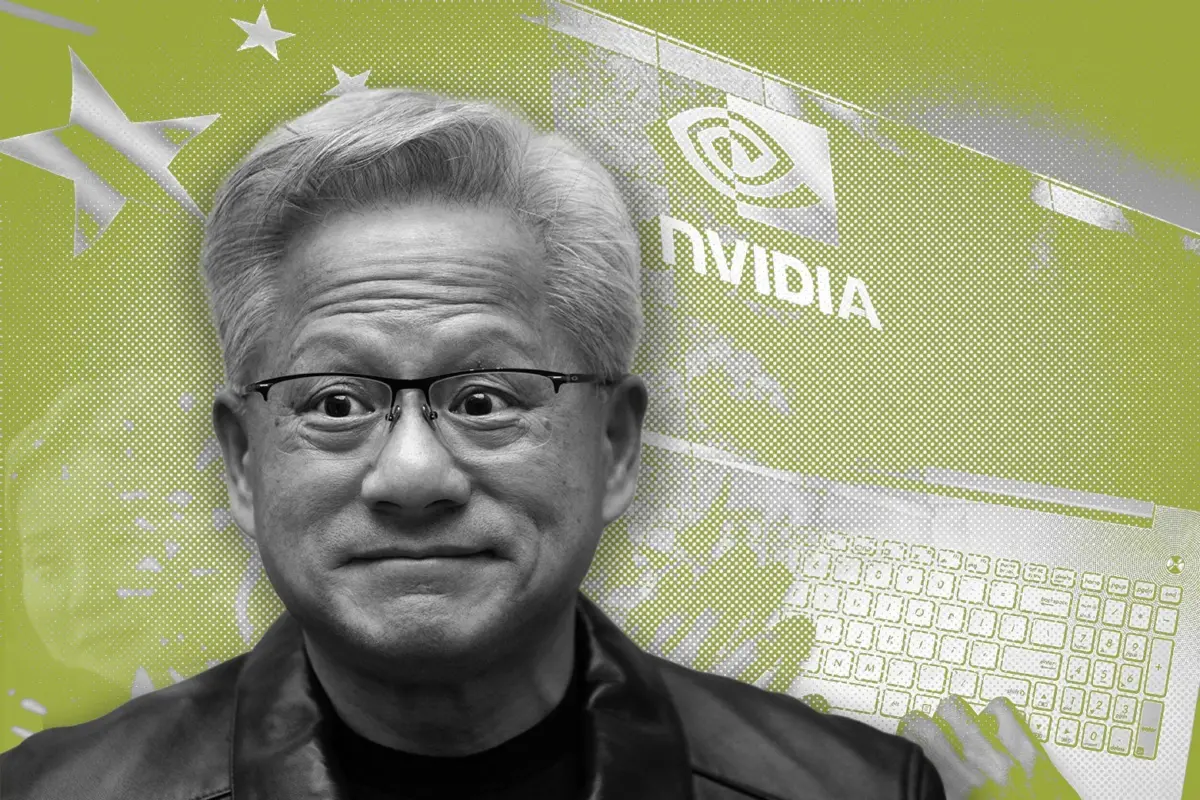
In the high-stakes theater of modern technology, few corporate figures have commanded the kind of monolithic influence held by Jensen Huang. As the leather-jacketed co-founder and longtime CEO of Nvidia, Huang was not merely the head of a chipmaking enterprise; he was the primary architect and cult-of-personality standard-bearer for the global artificial intelligence boom. Under his stewardship, Nvidia transformed from a specialized gaming hardware supplier into a historic trillion-dollar titan, capturing the vital infrastructure of the modern digital age.
Yet, in a matter of days in November 2026, the seemingly untouchable edifice Huang built crumbled under the weight of compounding personal scandals, national security failures, and massive corporate governance shocks.
The crisis began with revelations of an extramarital affair with an alleged Chinese intelligence asset—a relationship reportedly shielded by an accommodating political apparatus. Before the dust could settle, further investigative reporting exposed additional workplace misconduct, including concurrent relationships with direct reports and secondary Nvidia employees. Within hours of the public disclosures, Nvidia’s board of directors convened in emergency sessions, leading to Huang’s swift resignation.
The fallout has sent violent tremors through the global stock market, exposed profound vulnerabilities in international trade and export controls, and shattered the foundational narrative of the American AI crusade against China. With global markets and major economies inextricably dependent on Nvidia’s hardware pipeline, the ousting of Jensen Huang marks a watershed moment: the definitive end of the tech industry’s unbridled AI gold rush and the dawn of a deeply uncertain economic future.
Detailed Chronology: The Fall of a Tech Titan
The unraveling of Jensen Huang’s leadership occurred with breathtaking speed, transforming from whispered insider rumors into a full-scale geopolitical and corporate emergency within a single week.
The Initial Breach: The Spy Scandal and Cover-Up
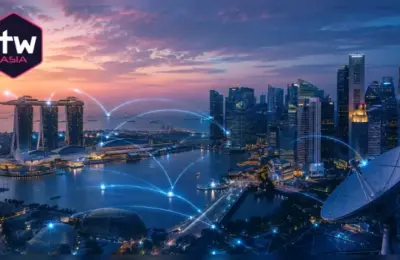
The foundation cracked when investigative reports revealed that Huang had been involved in an extramarital relationship with a woman named Alice Huang (no relation), who possessed documented ties to Chinese intelligence agencies. Compounding the gravity of the tryst, evidence emerged that the federal government—specifically operating within the orbit of the returning Trump administration—had actively worked to cover up the security implications. Despite federal awareness of the paramour’s intelligence connections, the administration permitted Nvidia’s CEO to maintain lucrative business channels, notably routing advanced chip sales through a Singaporean front company, Megaspeed International.
The Deluge: Additional Affairs and Board Panic
As the national security apparatus scrambled to manage the fallout of the intelligence breach, the New York Times published a separate bombshell report: Huang had engaged in an affair with a direct report within Nvidia.
The revelation of internal workplace misconduct shattered the company’s carefully cultivated corporate image. Mere hours after the story broke, Nvidia’s board of directors hastily convened an emergency meeting to evaluate the liability of their philandering chief executive. Recognizing that regulatory scrutiny and compliance investigations would inevitably paralyze corporate operations, the board forced Huang’s hand. On Thursday morning, Nvidia announced that Huang was stepping down as CEO, with Chief Financial Officer Colette Kress appointed immediately as his interim replacement.
The Final Blow: A Third Revelation
Even as the ink dried on the executive transition press release, the crisis deepened further. Reuters published reporting confirming that Huang had engaged in yet a third relationship with another Nvidia employee. The cascading revelations confirmed what insiders had begun to suspect: Huang’s personal conduct was not a matter of a single isolated misstep, but part of a pervasive pattern of compromised professional boundaries at the highest level of the world’s most critical hardware vendor.
Supporting Context & Metrics: The Man, the Monopoly, and the Geopolitical Chessboard
To understand why Huang’s resignation has destabilized global markets, one must examine the extraordinary singularity of his position within the technology ecosystem.
The Genesis of an AI Monopoly
Born in Taiwan and trained as a microchip engineer during the personal computer revolution of the 1980s, Jen-Hsun "Jensen" Huang co-founded Nvidia in 1993. Initially focused on graphics processing units (GPUs) designed to render complex, lifelike environments for PC video games, Nvidia spent decades perfecting parallel computing architectures.
When generative AI exploded into public consciousness following the 2022 release of ChatGPT, those exact gaming GPUs proved to be the singular technological key required to train massive language models. Demand for Nvidia’s hardware escalated exponentially. By mid-2023, Nvidia crossed the $1 trillion market capitalization threshold, eventually ballooning into an economic juggernaut whose supply chain bottlenecks, chip shortages, and delivery schedules served as macroeconomic indicators for the entire tech sector. As biographer Stephen Witt aptly noted during a recent podcast interview, "Nvidia is Jensen, to a degree that I’ve almost never seen in any other corporation."
The China Factor and Political Expediency
For years, American trade policy toward China has been framed as a zero-sum technological cold war. Under successive administrations, Washington implemented sweeping export controls designed to starve Beijing of advanced computing power. Yet Huang walked a delicate tightrope. While acknowledging his Taiwanese heritage and business dependencies on the Taiwan Semiconductor Manufacturing Company (TSMC), Huang routinely criticized U.S. and Chinese trade restrictions, openly lobbying against bans on shipping premium chips like the H200 to Chinese markets.
The scandal surrounding Alice Huang and Megaspeed International blew the lid off the hollow rhetoric of Washington’s purported China hawkism. Records indicated that approximately one-fifth of Nvidia’s global revenue had at one point been attributed to Singapore—a figure that mysteriously vanished from subsequent earnings disclosures after the Department of Commerce initiated, and subsequently wound down, an investigation into Megaspeed at Nvidia’s behest. By trading financial support and political alignment—including substantial donations to presidential fundraising efforts—Huang had leveraged presidential leniency to keep lucrative pipeline channels open, compromising national security in the pursuit of uninterrupted market dominance.
Official Statements and Industry Reactions
The swift nature of the corporate ouster drew sharp commentary from legal experts, market analysts, and the Nvidia board itself.
In its official press release announcing the leadership change, Nvidia’s board sought to balance reverence for its founder with the harsh realities of corporate governance:
"Jensen’s contributions to NVIDIA are profound," the board wrote. "NVIDIA is one of the most consequential technology companies in the world."
However, legal and regulatory experts pointed out that Huang’s continued presence had become an untenable liability for ongoing federal contracting and licensing renewals. Prominent tech lawyer Eugene Rome articulated the gravity of the compliance crisis in a statement to the press:
"Once Congress started asking whether a suspected Chinese intelligence asset had access to the CEO, Huang could no longer walk into a meeting with regulators or contracting officers without that question walking in with him. Every license application and contract renewal would have become about him and his relationship with the spy—and any other compromising personal relationships—instead of the company."
International reactions were similarly stark. In Taiwan, where citizens had long celebrated Huang as a national hero who bridged Western innovation with Taiwanese manufacturing prowess, a profound sense of betrayal set in. Critics argued that Huang had willingly compromised the security and economic sovereignty of his ancestral home to appease geopolitical forces and personal ambitions.
Future Outlook: Navigating the Post-Huang Era
The departure of Jensen Huang portends a fundamental restructuring of the global artificial intelligence landscape. The implications of this crisis stretch far beyond the executive suites of Silicon Valley:
- Market Instability and the AI Bubble: Global tech stocks have experienced sharp sell-offs as investors process the fragility of an industry propped up by a single corporate entity. Without Huang’s distinct brand of market showmanship and visionary hype, speculative momentum in the AI sector faces a severe reality check.
- Regulatory Overhaul: The cozy relationship between Big Tech executives and political administrations will face aggressive congressional oversight. The exposure of compromised export controls regarding Chinese intelligence assets guarantees a stricter, more adversarial regulatory environment for semiconductor trade.
- The Succession Crisis: Nvidia enters an unprecedented era under interim CEO Colette Kress. Unlike Huang, who possessed deep engineering intuition and a magnetic, cult-like authority over his workforce, the company now lacks a clear, visionary successor capable of simultaneously inspiring internal talent, managing volatile geopolitical relationships, and keeping Wall Street consistently enthralled.
The era of unchecked, personality-driven AI expansion has officially drawn to a close. As the dust settles on the ruins of Jensen Huang’s career, the global economy is left to reckon with a sobering truth: an industry upon which the future of human productivity was staked was built on foundations far more fragile than anyone dared to imagine.