Executive Overview
In a dramatic convergence of international law enforcement and the secretive world of cyber extortion, federal agents have arrested a high-profile Canadian cybersecurity executive in connection with the notorious ShinyHunters hacking collective. The arrest comes on the heels of one of the most embarrassing breaches in modern intelligence history: a cyberattack that relieved the Federal Bureau of Investigation (FBI) of sensitive personal and professional data belonging to thousands of its agents.
The suspect, identified in federal court records as Edward Dubrovsky—a 54-year-old security professional, author, and executive associated with Canadian cybersecurity firms—was taken into custody in Pennsylvania. Dubrovsky’s arrest exposes a dark and murky intersection within the multi-billion-dollar ransomware ecosystem: the thin, often legally hazardous boundary between advisory negotiation, risk mitigation, and alleged criminal conspiracy.
While federal prosecutors and the FBI have kept core investigative documents tightly sealed, unsealed court dockets, industry sources, and international investigative threads reveal a sprawling, high-stakes dragnet. This dragnet spans from the Netherlands to Pennsylvania, and now concentrates its legal fire in the Eastern District of Texas. As federal authorities piece together digital evidence seized from international raids, the case threatens to upend the corporate ransomware-negotiation industry, raising uncomfortable questions about how private security firms interact with cyber extortionists.
Detailed Chronology: From the Cyber Summit to Federal Custody
The Arrest in Pennsylvania
The sequence of events leading to Dubrovsky’s capture unfolded in early October against the backdrop of a major industry gathering. According to sources close to the investigation, Dubrovsky had traveled to Philadelphia, Pennsylvania, to attend the Cyber Risk Summit, held at the Loews Philadelphia Hotel from October 5 to October 7.
The summit, sponsored by various cyber insurance and risk-management organizations, listed a Canadian security firm named Cypfer as its premier sponsor. Dubrovsky, a prominent figure in the Canadian cybersecurity landscape, had publicly expressed enthusiasm on professional networking platforms about attending the conference alongside team members from another security firm, CyberSteward.
However, what was meant to be a professional networking event turned into a federal sting. On October 8, federal agents arrested Dubrovsky. Court records filed in the Eastern District of Pennsylvania—bearing a minor spelling variation of his last name as Dobrovsky—charged him with cyber extortion and conspiracy. Specifically, the summary of the complaint filed on CourtListener.com charges the defendant with:
- Conspiracy to threaten to impair the confidentiality of information with the intent to extort money.
- Interference with commerce by threats.
Following his arrest, Dubrovsky was temporarily processed and held at a federal detention facility in Philadelphia. Swiftly thereafter, on October 9, legal notices indicated that the case had been formally transferred to the Eastern District of Texas, which sources confirm has now become the central command hub for the comprehensive federal investigation into the ShinyHunters organization.
Corporate Clarifications and Background
In the wake of the arrest, public relations fallout rippled across the Canadian cybersecurity sector. Dubrovsky’s digital footprint previously identified him as a co-founder of Cypfer. However, a corporate spokesperson for Cypfer issued a clarifying statement noting that Dubrovsky was never a founder or co-founder, but rather served in the capacity of managing director before tendering his resignation in November 2025.

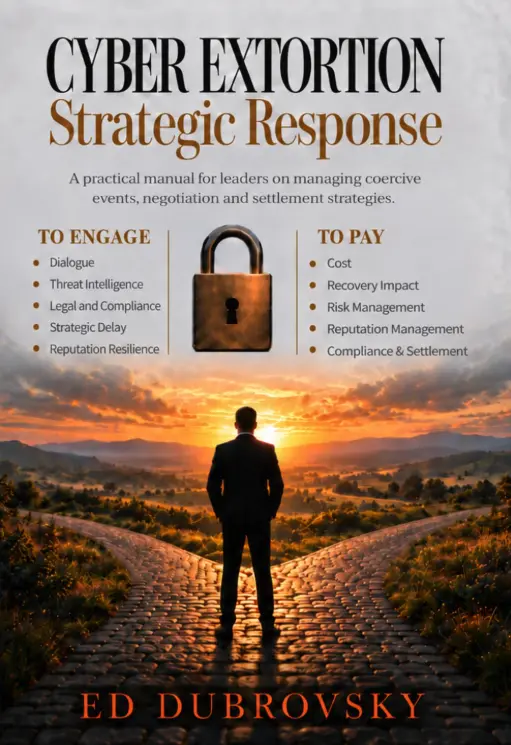
Furthermore, Dubrovsky’s professional profile highlights his deep entrenchment in the niche discipline of ransomware incident response. He is the author of Cyber Extortion Strategic Response, a 252-page textbook ostensibly designed to guide corporations through the labyrinth of cyber extortion demands. An excerpt from the book’s promotional material underscores the delicate psychological and tactical games played by negotiators:
"At the heart of the book is a critical distinction: communicating with a criminal is not the same as negotiating a payment, and negotiating is not a commitment to pay. Engagement can serve other objectives, including testing claims, gathering information, creating time, and preserving options while the organization evaluates its next move."
Yet, federal investigators are now tasked with determining whether Dubrovsky crossed the line from theoretical advisory and strategic information-gathering into active criminal facilitation and conspiracy on behalf of groups like ShinyHunters. At the time of reporting, Dubrovsky had not yet retained legal counsel or been assigned a public defender in court proceedings.
Supporting Context & Metrics: The Anatomy of the ShinyHunters Threat
Who is ShinyHunters?
To understand the gravity of the federal crackdown, one must examine the operational footprint of ShinyHunters. The syndicate has established itself as one of the most disruptive and destructive cybercrime operations of the decade.
Operating primarily by exploiting vulnerabilities, executing sophisticated phishing campaigns, and harvesting stolen credentials from Software-as-a-Service (SaaS) providers, the group systematically siphons massive repositories of corporate and governmental data. Once the data is secured, ShinyHunters leverages it as leverage, extorting victim organizations with the threat of public data leaks on underground forums and extortion portals unless exorbitant cryptocurrency ransoms are satisfied.
According to preliminary intelligence metrics released by the FBI:
- Financial Extraction: ShinyHunters has successfully extorted over $70 million from corporate and institutional victims globally in the current calendar year alone.
- The FBI Breach: In an unprecedented blow to federal law enforcement, the group successfully infiltrated the FBI’s own online recruitment portal. The stolen cache included sensitive personal files, medical and psychiatric histories, unit assignments, and specialized operational credentials of thousands of federal agents.
The Global Dragnet: International Cooperation
Dubrovsky’s arrest does not occur in a vacuum; it is the latest node in an aggressive international law enforcement campaign aimed at dismantling the infrastructure supporting ShinyHunters.
- The Dutch Raid: Last month, tactical units within the Dutch police executed a high-profile raid resulting in the arrest of Pepijn van der Stap, a reformed hacker suspected of playing a foundational role in the ShinyHunters ecosystem. Federal investigators have spent the subsequent weeks aggressively poring over electronic devices and forensic images seized during van der Stap’s apprehension.
- The Rise and Fall of "Rey": Following van der Stap’s arrest, a prominent operative within ShinyHunters operating under the alias "Rey" seized operational control of the collective. Rey immediately adopted an aggressive posture, publicly taunting federal authorities over the massive theft of FBI personnel data.
- The Teenage Mastermind: Investigative reporting by Reuters and subsequent security disclosures revealed that "Rey" was actually a teenager named Saif Al-din Khader. Khader was swiftly tracked, detained, and—according to unfolding reports—is currently cooperating with federal investigators. His apprehension culminated as the group attempted a high-stakes extortion campaign targeting a navigation and digital aviation unit recently divested by aerospace giant Boeing in late 2025.
Industry insiders note that federal prosecutors are examining the financial conduits and communication channels used by various third-party incident response firms. Speculation is rife within cybersecurity circles that additional criminal charges against principals at other ransomware negotiation firms may be imminent.

Official Statements and Institutional Silence
The official posture from federal leadership regarding the specifics of Dubrovsky’s indictment has been tightly controlled.
- FBI Director Kash Patel: In the immediate aftermath of the arrest, FBI Director Kash Patel released a brief statement via social media acknowledging the apprehension of a Canadian national linked to the ShinyHunters investigation, though initially withholding specific identities while procedural motions were processed.
- The FBI Field Office: Representatives for the FBI have formally declined to comment on ongoing investigative specifics, citing the active, fluid nature of the multi-jurisdictional case now centralized in Texas.
- Private Sector Reaction: Executives at CyberSteward and associated firms have largely remained silent as legal counsel evaluates the fallout of the indictment. Communication channels with Dubrovsky himself have yielded no responses as he sits detained in federal custody pending further judicial hearings.
Future Outlook: Industry Shockwaves and Legal Precedents
The arrest of Edward Dubrovsky marks a watershed moment that will send seismic shockwaves through the global cybersecurity, cyber insurance, and incident response industries.
The Gray Area of Ransomware Negotiations
For years, the multi-million-dollar industry of ransomware mediation has operated in a regulatory twilight zone. When corporations are hit by catastrophic data-wiping or extortion attacks, they routinely retain specialized negotiation firms to lower ransom demands, vet the threat actors, and facilitate cryptocurrency payments.
However, federal authorities are increasingly scrutinizing the financial flows inherent in these settlements. Investigators are tasked with drawing a razor-sharp legal distinction between legitimate crisis management and actions that inadvertently—or intentionally—funnel illicit funds to sanctioned entities, violate international counter-terrorism or extortion statutes, or cross into active collaboration with cyber syndicates. If prosecutors can prove that a security executive used their position not merely to negotiate, but to actively conspire with threat actors like ShinyHunters to maximize extortion leverage, the legal precedent could fundamentally criminalize standard operating procedures within the private negotiation sector.
What Lies Ahead
As the case moves forward in the Eastern District of Texas, legal experts predict a rapid succession of developments. Key milestones to watch in the coming weeks include:
- Unsealing of Indictments: The formal unsealing of core federal complaints will shed light on the exact digital trails, communications, and financial transactions that led investigators from Pepijn van der Stap and Saif Al-din Khader straight to a Canadian security executive in a Philadelphia hotel.
- Potential Collateral Charges: Sources suggest that federal investigators are expanding their aperture. Additional arrests or subpoenas targeting other third-party ransomware mediation firms could follow as cooperating witnesses hand over decryption keys, chat logs, and financial ledgers.
- Reforms in Cyber Insurance and Incident Response: Insurance providers and corporate boards will likely mandate stricter compliance protocols, fundamentally altering how companies engage third-party intermediaries during a live cyber crisis.
As this fast-moving story continues to develop, the outcome of the United States v. Dubrovsky proceedings will undoubtedly redefine the rules of engagement in the perpetual war against global cyber extortion.