Executive Overview
For nearly three decades, Trey Parker and Matt Stone’s groundbreaking animated creation has served as an unfiltered, razor-sharp cultural mirror for modern society. Yet, when the curtain rose on Season 29 of the legendary Comedy Central series, audiences were greeted with an unprecedented twist that sent shockwaves through the television landscape: South Park had officially been rebranded.
In a bold, high-stakes act of satirical protest, the iconic Colorado mountain town was renamed South America.
The season opener, titled "South American Biker Gangs," immediately dominated global discourse. By turning geopolitical absurdities and corporate compliance on their heads, Parker and Stone once again proved that they possess an unmatched knack for hijacking the news cycle. The episode serves as a direct, uncompromising jab at real-world political decisions—specifically targeting a controversial governmental directive to alter geographical landmarks, alongside the rapid, frictionless compliance of tech giants Apple and Google.
Far from alienating its core demographic, this high-risk creative gamble paid off instantly. Within 24 hours of hitting streaming platforms, the newly minted South America shattered viewing records, rocketing to the top of global streaming charts and cementing its status as the most-watched sitcom worldwide on Paramount Plus. This comprehensive report explores the anatomy of the Season 29 premiere, the political catalysts that sparked the name change, global viewership data, and what this explosive narrative direction means for the future of satirical television.
Detailed Chronology: The Birth of South America
The Lead-Up to Season 29
As South Park entered its late-2020s run, industry analysts and die-hard fans alike wondered how creators Trey Parker and Matt Stone would continue to push boundaries. Having already skewered everything from global pandemics and cryptocurrency booms to deepfakes and the entertainment industry itself, the bar for shock value was exceptionally high.
Over the past few seasons, former U.S. President Donald Trump has increasingly occupied a central role in the show’s satirical crosshairs. Parker and Stone have historically favored an equal-opportunity approach to political ridicule, but the political climate of the mid-2020s offered a wellspring of surreal administrative policies that begged for the South Park treatment.
The Real-World Catalyst
The direct inspiration for Season 29’s rebranding stems from a series of controversial geopolitical re-designation policies. Recently, political discussions surrounding the renaming of major geographical features—most notably proposals and subsequent administrative pushes to rebrand historical water bodies like the Gulf of Mexico and Lake Ontario with the blanket moniker of "America"—sparked widespread public debate.
Even more alarming to Parker and Stone was the speed with which multinational technology conglomerates like Apple and Google updated their native mapping software and digital ecosystems to reflect these politically motivated nomenclature shifts. To the creators, this corporate compliance represented a dangerous erosion of cultural history in favor of nationalistic branding.
Rather than running a standard multi-episode arc mocking the phenomenon, Parker and Stone opted for a structural subversion: they permanently (at least for the duration of the season) altered the core identity of their flagship product. The show itself became the punchline and the protest.

The Premiere: "South American Biker Gangs"
Airing on Comedy Central and dropping the next day on Paramount Plus across the United States, Canada, and Australia, the Season 29 premiere wasted no time addressing the elephant in the room.
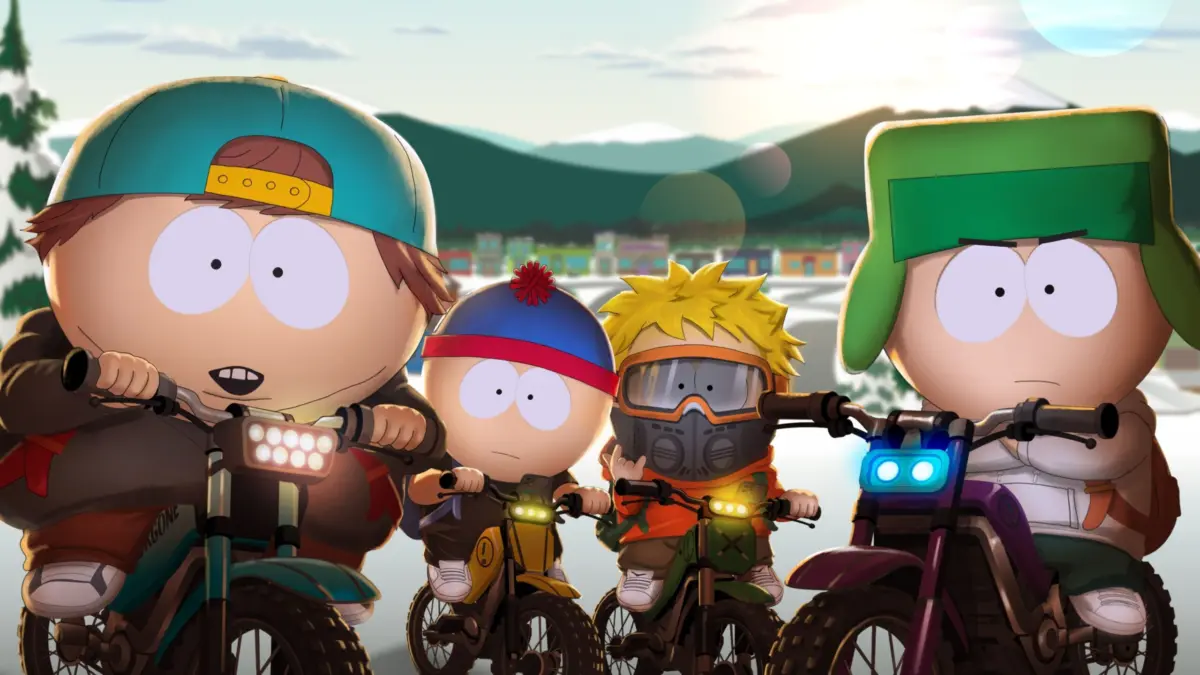
The episode opens in the familiar, snow-covered landscape of the town, but the title card and opening theme song aggressively affirm the new reality: South America. The plot of "South American Biker Gangs" revolves around an absurd influx of eco-friendly e-bike riders—hailed humorously in the episode as "the bee’s knees"—who form aggressive, territorial gangs terrorizing the suburban streets.
As Stan, Kyle, Cartman, and Kenny navigate this localized crisis, the background details continuously reinforce the overarching geopolitical gag. Street signs, local businesses, and municipal buildings bear altered names, mimicking the real-world absurdity of top-down name changes. The juxtaposition of hyper-local suburban petty crime against macro-level geopolitical commentary vintage South Park storytelling at its absolute finest.
Supporting Context & Metrics: Global Stardom in the Streaming Era
The decision to rebrand could easily have backfired if the execution felt forced or petty. Instead, the gambit triggered a massive wave of curiosity and engagement, translating into historic metrics for Paramount Global.
Global Streaming Dominance
According to comprehensive aggregator data compiled by platforms like FlixPatrol, the Season 29 premiere propelled the show to the summit of international streaming rankings. Within a single day of its Paramount Plus release, South America captured the crown as the most-watched sitcom on a global scale.
While the series has always maintained a resilient, fiercely loyal international fan base, the sheer velocity of the premiere’s reach caught industry analysts off guard. Thousands of viewers rushed to digital platforms simultaneously, crashing regional servers in some territories as fans scrambled to witness how the show would handle its audacious makeover.
Platform Performance Within Paramount Plus
Within the domestic and international ecosystems of Paramount Plus, South America instantly positioned itself as a titan of the platform’s library. It nearly eclipsed every scripted drama and reality juggernaut on the service, trailing only Taylor Sheridan’s sprawling universe anchor, Lioness, in overall daily active viewership.
| Metric Category | Data Point / Performance Indicator |
|---|---|
| Premiere Window | September 16, 2026 |
| Global Ranking | #1 Most-Watched Sitcom Worldwide (Day 1) |
| Platform Position | Top 2 overall on Paramount Plus (surpassed only by Lioness) |
| Primary Markets | United States, Canada, Australia (Streaming day-after release) |
| Linear Broadcast | Comedy Central (10:00 PM EDT/PDT) |
The E-Bike Socio-Cultural Subplot
Beyond the political rebranding, the episode’s focus on "South American Biker Gangs"—specifically centered around the explosive rise of e-bikes—tapped into a very real, highly polarized urban debate. In major metropolitan areas across the Americas and Europe, the proliferation of high-speed electric bicycles, delivery couriers on sidewalks, and pedestrian safety conflicts have become a daily flashpoint. By lampooning the cultural obsession with e-bikes through the lens of hardened, leather-clad biker gangs, Parker and Stone successfully grounded their surreal geopolitical satire in relatable, everyday modern frustrations.
Official Statements and Industry Reactions
As expected, the premiere unleashed a torrent of commentary across entertainment media, political talk shows, and social media networks.

Creators’ Silence Speaks Volumes
True to form, Trey Parker and Matt Stone largely let the work speak for itself, offering minimal pre-release press tours or explanatory interviews. This deliberate silence has long been part of the duo’s strategy, allowing the cultural shockwave of the episode to unfold organically without corporate filtering or defensive posturing.
However, sources close to South Park Studios indicate that the decision to rename the show was finalized late in the production cycle of Season 29, born out of mounting frustration over corporate tech compliance.
Executive and Platform Response
Executives at Paramount Global and Comedy Central have embraced the controversy, recognizing that cultural relevance is the ultimate currency in the modern streaming wars. By leaning into the rebrand—updating thumbnails, metadata, and promotional materials to read South America—the network signaled total solidarity with its creative anchors.
Industry critics have lauded the move as a masterclass in longevity. Variety’s chief television critic noted:
"Most animated series twenty-nine seasons deep are content to coast on legacy and recycled character dynamics. Trey Parker and Matt Stone, by contrast, weaponize their own institutional permanence to mock real-world absurdity in real-time. Renaming the show is a brilliant, disruptive middle finger to institutional cowardice."
Social media platforms were similarly flooded with memes, deep-dives into the e-bike subculture references, and endless debates over how long the South America moniker will stick throughout the remainder of Season 29.
Future Outlook: What Lies Ahead for South America?
As Season 29 continues its weekly rollout on Comedy Central and Paramount Plus, several burning questions remain for the creative team and their global audience:
- How Permanent Is the Rebrand?
Will the title South America persist for the entirety of the 10-episode run, or will the town of South Park eventually "win back" its historical name via a chaotic municipal resolution? Given Parker and Stone’s penchant for serialised chaos within loose episodic frameworks, viewers should expect the geopolitical joke to evolve—and likely escalate—before the season finale. - The Tech and Political Backlash
With Apple, Google, and political figures directly or indirectly targeted by the season’s framing, media pundits are watching closely to see if any official responses or corporate statements emerge. Historically, attempts to censor or push back against South Park only serve to fuel the fires of its creators, making any external pushback unlikely to yield results. - The Global Expansion of Satire
By expanding their narrative scope beyond the borders of Colorado—both literally through the new title and thematically through international supply chains, e-bike manufacturing origins, and global tech policies—Parker and Stone have signaled that South Park (or South America) is thinking on a macro-global scale for its late-era run.
Conclusion
The premiere of South Park Season 29—or rather, South America—will be remembered as a watershed moment in contemporary television history. By merging micro-level suburban absurdity with macro-level geopolitical critique, Trey Parker and Matt Stone have once again demonstrated why their satirical institution remains peerless.
As the e-bike gangs continue to patrol the streets and the global streaming numbers climb to unprecedented heights, one thing is abundantly clear: whether you call it South Park or South America, the cultural pulse of modern society is still being written, week by week, in the most fearless writers’ room in Hollywood.