Executive Overview
The video game industry is frequently criticized for creative stagnation, with many AAA studios leaning heavily into iterative sequels, homogeneous open-world templates, and risk-averse design philosophies. However, Finland-based developer Remedy Entertainment has consistently charted an eccentric, visionary path entirely its own. From the noir-soaked poetry of Max Payne and the psychological meta-fiction of Alan Wake to the surreal Bureaucratic weirdness of 2019’s Control, the studio has carved out a distinct corner of interactive storytelling known affectionately as the Remedy Connected Universe.
Now, Remedy is expanding its horizons far beyond the brutalist architecture of the Federal Bureau of Control’s headquarters, the Oldest House. In Control Resonant, the studio is pivoting from a linear, metroidvania-inspired action-adventure into an open-world Action RPG (ARPG) set against the surreal, shifting backdrop of Manhattan, New York. Stepping into the shoes of Dylan Faden—the troubled brother of newly appointed FBC Director Jesse Faden—players will experience a reality unraveled by both the residual menace of the Hiss and a terrifying new otherworldly phenomenon known as the Patterning.
Following an exclusive, behind-the-scenes visit to Remedy’s Finnish headquarters by the PC Gaming Show team, unprecedented declassified details have emerged regarding the game’s development, design philosophies, and artistic inspirations. Featuring non-linear progression, avant-garde boss encounters, and a mathematical musical score inspired by the Fibonacci sequence, Control Resonant aims to redefine what an ARPG can achieve when a studio refuses to play it safe. Scheduled for release on September 24, with pre-orders live now on Steam, the title represents Remedy’s most daring technical and creative leap to date.
Detailed Chronology: From Cell Confinement to Manhattan Chaos
To understand the volatile premise of Control Resonant, one must look back at the events of the original 2019 title. For the majority of Control, Dylan Faden remained locked away deep within the containment cells of the Oldest House. Burdened by dangerously powerful paranormal abilities and ultimately possessed by the parasitic, reality-warping entity known as the Hiss, Dylan served as a tragic, ticking time bomb at the heart of the narrative.
When the dust settled on the original game, Dylan had slipped into a deep coma. Control Resonant picks up with his awakening, plunging players immediately into a state of profound disorientation. Upon opening his eyes, Dylan discovers that the containment breach was far worse than anyone anticipated: the Hiss have successfully escaped the confines of the Oldest House and are now running rampant across the sprawling, concrete canyons of Manhattan, New York.
Yet, the Hiss are not the only threat choking the life out of New York City. Simultaneously—or perhaps triggered by the Hiss’s violent incursion—a separate, even stranger dimensional anomaly has blanketed the island. Referred to by the developers as the Patterning, this otherworldly algorithmic threat is actively warping reality itself. The Patterning mutates innocent civilians into grotesque, monstrous entities, rewrites the laws of physics, and fundamentally alters the visual and structural fabric of Manhattan.
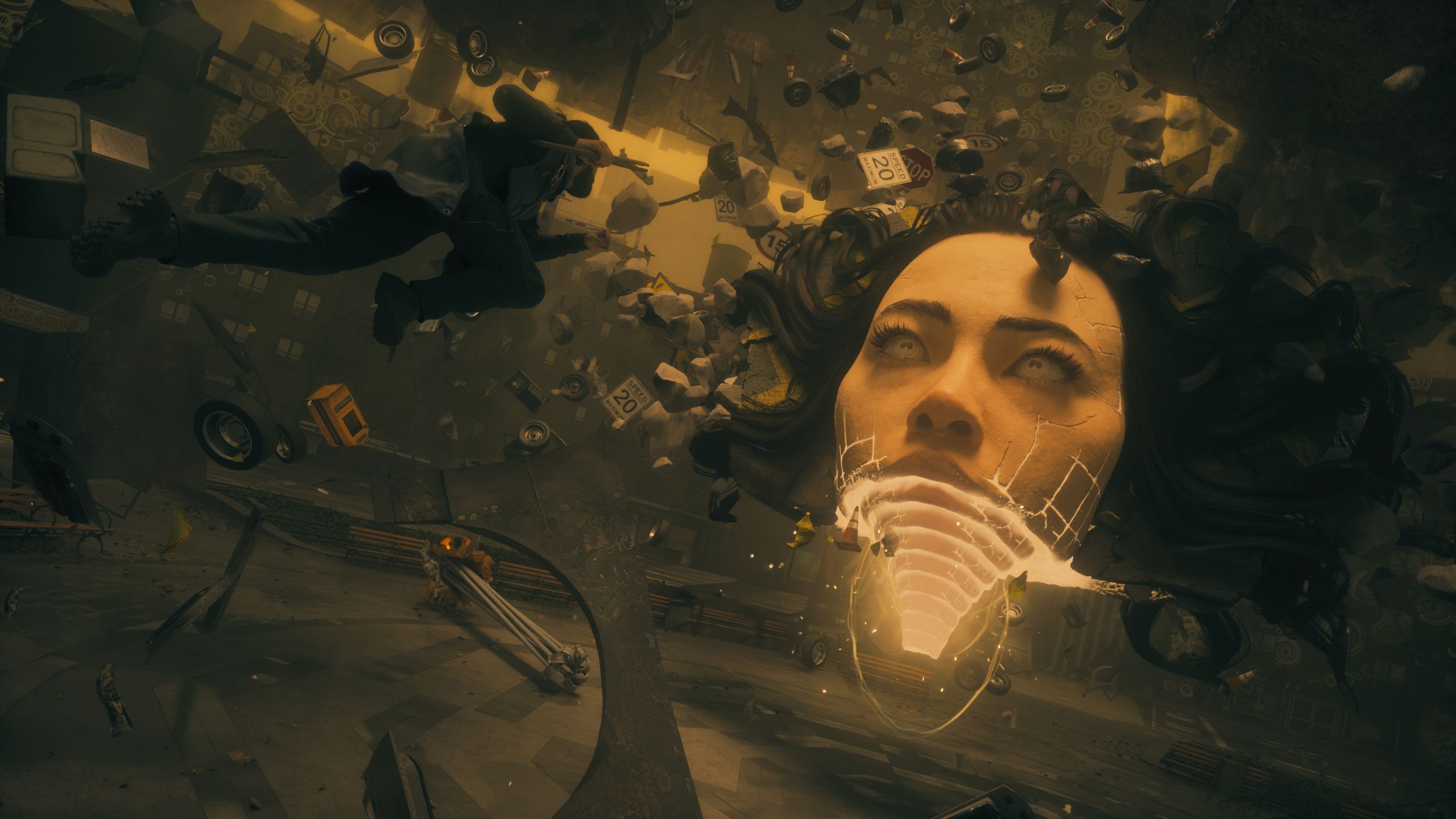
Creative Director Mikael Kasurinen notes that the anomaly’s effects go far deeper than simple environmental destruction. "It’s not simply a matter of ordering things in a predictable way, it’s affecting the people," Kasurinen explains. "It affects time, it affects light."
As a result, Manhattan has become a dizzying, topsy-turvy nightmare where up is down and east is west. Fortunately, Dylan’s awakened state grants him extraordinary new abilities, chief among them the power to manipulate gravity. Players can seamlessly flip gravitational vectors, allowing Dylan to sprint across walls and ceilings. This verticality transforms exploration into a disorienting, exhilarating puzzle, where navigating a standard city block requires constantly re-evaluating which surface constitutes the floor.
Supporting Context & Metrics: Breaking the Mold with Non-Linear ARPG Design
Transitioning Control from a tightly controlled, room-by-room atmospheric shooter into a dynamic open-world ARPG required Remedy to completely overhaul its design methodology. Rather than looking to contemporary blockbuster video games for mechanical inspiration—a trap that Creative and Art directors believe leads to creative homogenization—the development team drew heavily from avant-garde external art forms.
Art Director Elmeri Raitanen points out that the team intentionally avoided the echo chamber of modern game design. "There’s this tendency of people not taking risks, and games start to resemble each other quite a lot," Raitanen remarks. Instead, the visual and spatial distortions of Control Resonant were directly inspired by the impossible geometries of M.C. Escher’s lithographs, the surreal psychological horror anime film Paprika, and Ben Wheatley’s hallucinogenic folk-horror film A Field in England.
This philosophy of unconventional risk-taking extends directly into the game’s structural design, particularly concerning its boss encounters and player progression. In Control Resonant, players encounter "Resonants"—former humans who have been horribly twisted by the Patterning into monstrous, god-like boss entities.
Lead Level Designer Anne-Marie Grönroos explains that unlike traditional RPGs that force a linear sequence of boss defeats, Control Resonant offers unprecedented player freedom. While the open-world structure requires players to defeat a specific threshold of Resonants to progress the main campaign, the total number of available bosses scattered across Manhattan far exceeds that requirement. Furthermore, because players can approach these encounters in almost any order, the developers cannot predict what specific powers or upgrades a player will possess at any given time.
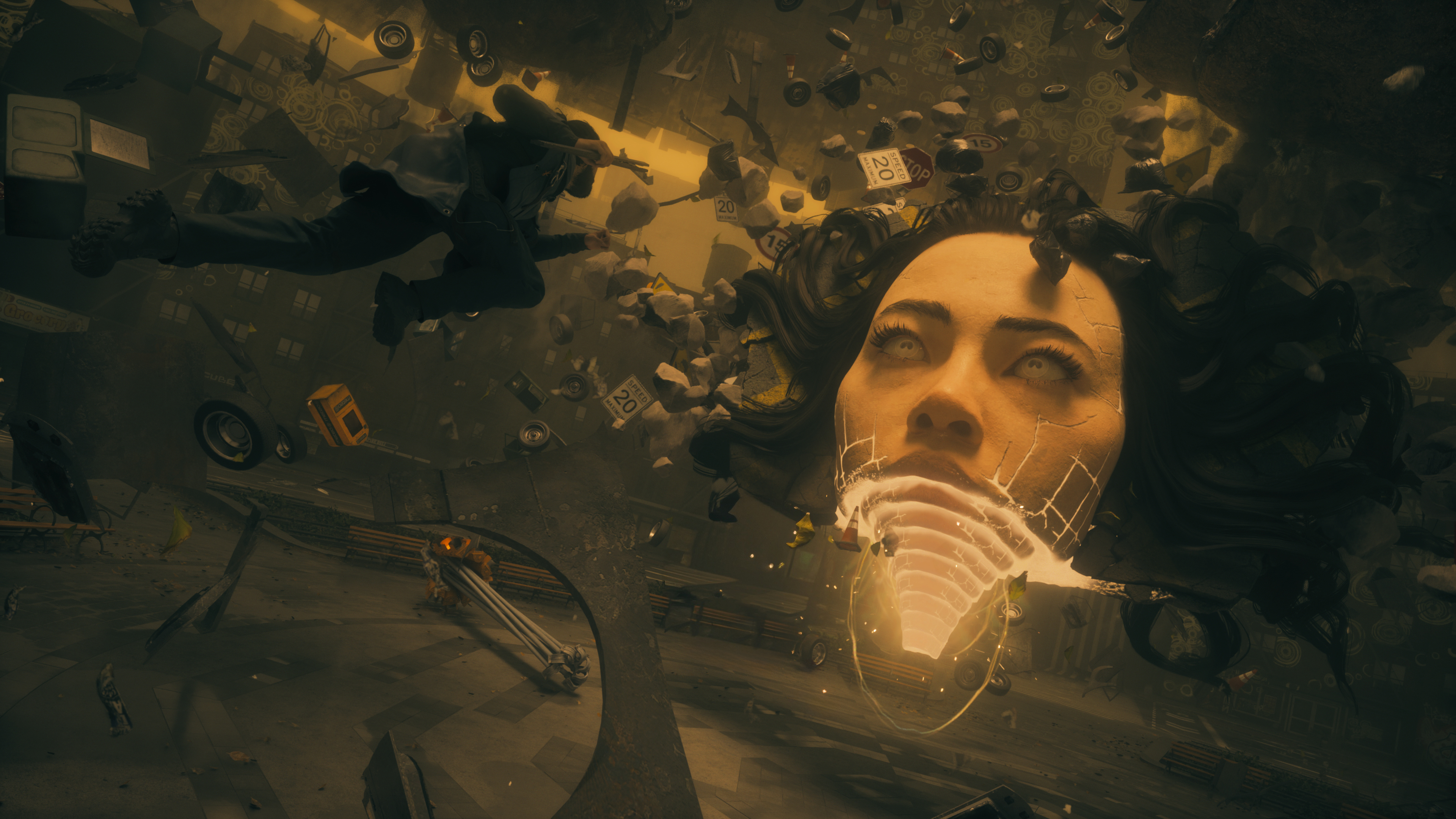
This design choice introduces a chaotic, highly replayable variable into the game ecosystem. During early internal playtesting, the developers observed a player who failed to acquire the gravity-shifting ability until deep into the late-game—forcing them to invent entirely improvised strategies to overcome vertical obstacles. Such emergent unpredictability guarantees that when Control Resonant launches, speedrunners and challenge-run creators will discover wildly disparate ways to conquer the game.
Among the standout boss encounters teased by Remedy is a colossal giant capable of spitting liquefied magma, a towering floating disembodied head hanging ominously over city intersections, and a tragic, elegant Resonant who was once a professional dancer performing in Manhattan when the Patterning struck. To bring this dancer-turned-monster to life, Remedy collaborated with real-world professional dancers to capture authentic, haunting choreography.
Official Statements: The Mathematics of Sound and Universe Building
The meticulous attention to detail in Control Resonant extends far beyond visual design, embedding itself deeply into the game’s sonic landscape. Composer Petri Alanko shared extraordinary insights into how the audio engineering mirrors Dylan Faden’s psychological journey and the overarching mathematical themes of the Patterning.
For the ballet-inspired Resonant boss fight, Alanko crafted a rhythm derived entirely from the natural world’s mathematical architecture. "I went through quite a lot of my kitchenware and built a rhythm based on Fibonacci numbers," Alanko reveals. The musical beats follow the legendary sequence—1, 1, 2, 3, 5, 8, 13, 21, and beyond—where each subsequent number is generated by adding the two preceding figures together. This mathematical heartbeat provides an eerie, hypnotic cadence to the combat encounters.
Alanko also utilized sonic evolution to reflect Dylan’s rebirth. Because Dylan spends the early portions of the game freeing his mind from the lingering possession of the Hiss, he is effectively a newborn soul trying to understand his own identity. "In the beginning, almost all the sounds that are related to him, they are formed of sine waves, which is basically the simplest form of sound," Alanko explains. As Dylan evolves both as a person and as a living weapon, the soundscapes grow increasingly complex, introducing intricate frequencies, textures, and tonal layers that mirror his expanding consciousness.
Addressing narrative scope, Creative Director Mikael Kasurinen emphasized that while Dylan and Jesse share a sibling bond, Remedy has no intention of turning the Remedy Connected Universe into a insular, family-centric soap opera akin to Star Wars. Kasurinen envisions a vast, breathing cosmos populated by diverse characters, overlapping lore, and independent storylines. Drawing direct inspiration from tabletop pen-and-paper roleplaying games, Remedy’s goal is to construct a universe governed by strict internal rules while allowing players to examine those rules from multiple unique perspectives.
Future Outlook & Conclusion
As the September 24 release date approaches, anticipation for Control Resonant has reached a fever pitch. Pre-orders are currently live on Steam, offering PC players a direct route into the surreal, algorithmically fractured streets of Manhattan.
Furthermore, Remedy fans and industry observers have another major milestone on the horizon. The PC Gaming Show Tokyo Direct is scheduled to air on September 20, promising even deeper looks into international developer visions and potentially more declassified insights into Remedy’s expanding universe.
Control Resonant stands as a testament to what happens when a AAA studio treats video games not merely as commercial products, but as canvases for high art, mathematical composition, and unbridled creative experimentation. By abandoning safe design templates in favor of M.C. Escher-inspired architecture, Fibonacci-driven musical scores, and non-linear open-world player agency, Remedy Entertainment is once again poised to prove that the most thrilling frontiers in gaming lie just past the boundaries of conventional reality.