Executive Overview
Apple has officially pushed its long-awaited, deeply redesigned Health app into the hands of developers with the rollout of the iOS 27.2 developer beta. Initially teased earlier in the year alongside announcements leveraging Apple Intelligence for next-generation wellness tracking, this update represents a paradigm shift in how the tech giant handles biometric information. Historically, the Apple Health ecosystem functioned primarily as a secure, centralized digital ledger—a sophisticated passive repository collecting endless streams of raw data from the Apple Watch, third-party fitness trackers, and connected scales. While robust in data aggregation, the platform traditionally left the heavy lifting of interpretation, trend analysis, and actionable coaching to the user or specialized third-party applications.
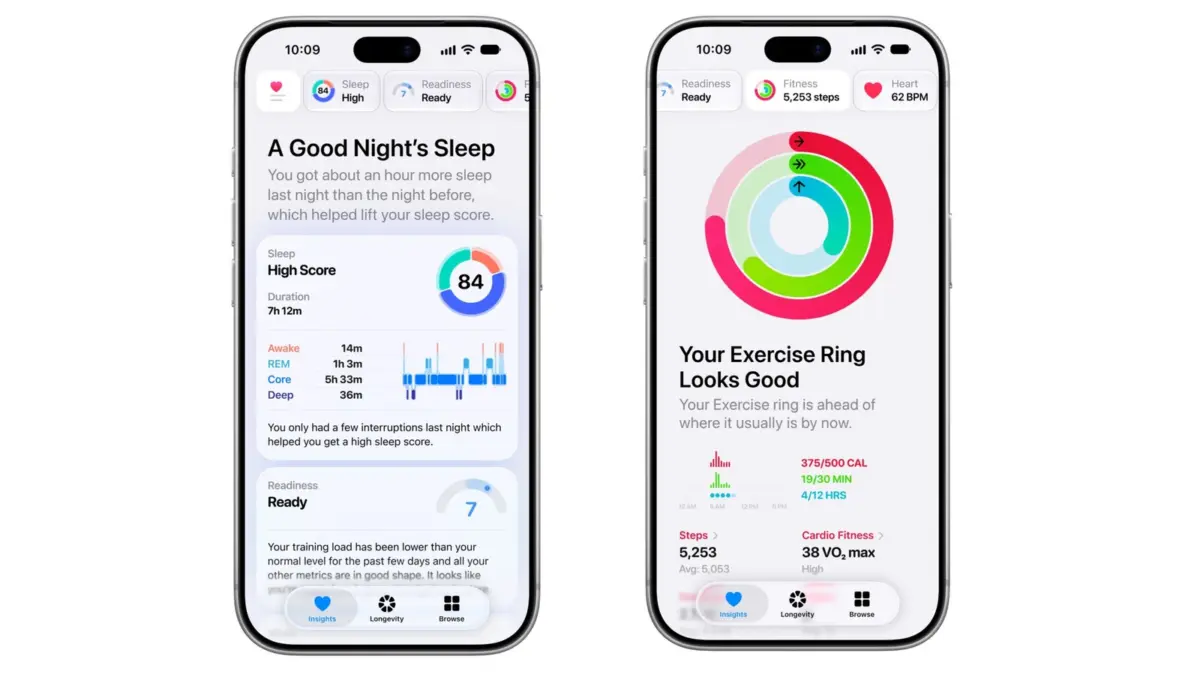
The iOS 27.2 developer beta fundamentally alters this dynamic. By introducing dynamic, AI-powered interpretation layers such as the newly minted Insights and Longevity tabs, Apple is transforming its ecosystem from a passive archive into an active, analytical health coach. Among the standout features making their debut is "Health Age," a metric designed to evaluate biological function relative to chronological age, along with structured movement assessments targeting flexibility, strength, and balance.
This strategic pivot brings Apple into direct, head-to-head competition with specialized wellness titans like Whoop, Oura, and Google’s Fitbit ecosystem. For years, these dedicated competitors carved out loyal market shares by packaging raw biometric signals—such as heart rate variability (HRV), resting heart rate, and sleep staging—into digestible scores like "Recovery," "Readiness," or "Sleep Scores." With the integration of hardware-locked features exclusive to the Apple Watch Series 12 and Apple Watch Ultra 4, coupled with expert-backed video and written commentary generated dynamically in response to user metrics, Apple is no longer just tracking your health—it is interpreting, contextualizing, and advising on it. While a definitive public release date remains officially pinned to "later this year," the early arrival in developer hands signals that a broader public rollout is imminent.
Detailed Chronology of the Redesign
The evolutionary path leading to the iOS 27.2 health overhaul has been meticulously paced by Apple, reflecting the company’s stringent approach to clinical validation, software stability, and privacy compliance in the health sector.
The Foundation: Years of Passive Data Collection
For over a decade, the Apple Health app—introduced initially with iOS 8 in 2014—served as the gold standard for aggregating personal health records, clinical data, and fitness metrics. However, its core user interface remained largely utilitarian. Users could view sprawling, granular graphs of their daily step counts, active energy burn, ECG readings, and blood oxygen levels, but synthesizing this data into cohesive daily behavioral adjustments required external apps or personal clinical oversight. The wearable hardware advanced rapidly—introducing fall detection, crash detection, skin temperature sensing, and advanced sleep stages—yet the software experience inside the Health app remained largely that of a data warehouse.
The Turning Point: Apple Intelligence and the 2026 Roadmap
The catalyst for the current redesign began taking shape when Apple integrated its proprietary AI framework, Apple Intelligence, deeper into its mobile and wearable operating systems. In mid-2026, Apple formally previewed a sweeping architectural overhaul of its health and fitness capabilities, promising that machine learning would finally be deployed to decode the massive troves of data gathered by its hardware ecosystem.
The Developer Beta Breakthrough (iOS 27.2)
True to its roadmap, Apple has now deployed the redesigned experience directly into the iOS 27.2 developer beta channel. This initial release gives software engineers and early adopters their first interactive look at the structural layout of the new platform. Key milestones within this current beta deployment include:
- The Debut of the Insights Tab: Replacing fragmented views, this centralized dashboard aggregates daily metrics and highlights emerging lifestyle and wellness trends across sleep quality, physical exertion, and recovery readiness.
- The Launch of the Longevity Tab: A dedicated sanctuary for long-term health tracking, housing entirely new diagnostic metrics such as Health Age and targeted functional movement assessments.
- Dynamic Expert Integration: The introduction of algorithmic and expert-curated commentary that adapts dynamically on screen based on incoming biometric spikes or deficits.
As Apple refines the software through successive beta iterations leading up to the public release, additional promised features—such as hyper-personalized summary views, individualized behavioral recommendations, and direct integration for ordering lab work through diagnostic providers like Quest—are expected to drop into the build.
Supporting Context & Metrics: Closing the Gap with Oura, Whoop, and Google
To understand the industry significance of Apple’s software pivot, one must examine the competitive landscape of modern digital health tracking. Over the past five years, consumer expectations regarding wearable technology have shifted dramatically. Users no longer simply want to know what their body did; they want to know what it means and what they should do next.
The Competitor Ecosystem: Whoop, Oura, and Fitbit
Companies like Whoop and Oura achieved massive commercial success by addressing this exact psychological and physiological need.
- Whoop built an empire around the "Strain" and "Recovery" model, using continuous heart rate variability (HRV) monitoring and sleep tracking to assign a daily readiness score from 0 to 100 percent, telling the user whether to push hard or take a rest day.
- Oura Ring similarly captured the wellness market by emphasizing sleep architecture, temperature trends, and a daily "Readiness Score," positioning its ring as an unobtrusive nighttime recovery monitor.
- Google (via Fitbit and Pixel wearables) has similarly leaned into daily readiness scores and AI-driven coaching insights powered by Gemini integrations.
Apple, by contrast, historically resisted assigning a single proprietary "readiness score," wary of user anxiety or over-simplification of complex physiological data. However, market pressures and user demand won out. With the iOS 27.2 update, Apple is adopting a parallel philosophy, though supercharged by its massive hardware footprint and proprietary processing power.
Deep Dive Into the New Metrics
1. The Readiness Metric (Hardware-Locked to Series 12 and Ultra 4)
One of the most consequential inclusions in the iOS 27.2 beta is the introduction of a comprehensive "Readiness" score. However, Apple has chosen to gate this specific feature behind its latest hardware releases: the Apple Watch Series 12 and the Apple Watch Ultra 4. By leveraging the upgraded biometric sensors, faster neural engines, and enhanced thermal and optical tracking capabilities native to these new devices, the Health app can evaluate overnight recovery metrics—such as resting heart rate, respiratory rate, wrist temperature, and HRV—to output a holistic daily readiness evaluation. This directly matches the core value proposition offered by Whoop and Oura.
2. Health Age
Moving beyond chronological age, the new Health Age feature uses longitudinal data collected continuously by the Apple Watch to estimate how efficiently an individual’s physiological systems are functioning relative to their actual age. By analyzing cardiovascular fitness (VO2 max), recovery rates, metabolic health indicators, and movement patterns, the app provides a dynamic biological benchmark that can improve or regress based on lifestyle modifications.
3. Movement Assessments and Functional Biomarkers
The Longevity tab also introduces structured movement assessments. Utilizing the iPhone’s spatial sensors and the Apple Watch’s accelerometer and gyroscope, the app can measure and track critical functional fitness markers, including:
- Flexibility: Evaluating range of motion across key kinetic chains.
- Strength: Tracking explosive output and muscular endurance trends over time.
- Balance: Measuring postural stability and gait metrics, which serve as crucial indicators of long-term mobility and fall prevention, particularly as users age.
4. Dynamic Expert Commentary
In an innovative fusion of technology and human expertise, the app now dynamically serves written and video commentary from vetted health and fitness professionals. Rather than static articles, these multimedia insights populate the user’s dashboard in real-time response to their personal data trends—offering actionable advice when sleep scores dip or praising sustained improvements in cardiovascular efficiency.
Official Statements and Industry Implications
While Apple has maintained its characteristic corporate discretion regarding the granular engineering milestones of the update, the broader implications of the redesigned Health app have sent ripples through the digital health sector.
Industry analysts point out that Apple’s move is a masterclass in platform maturation. By evolving the Health app from a passive database into an active behavioral modification tool, Apple deepens user retention within its hardware ecosystem. Consumers who might have previously worn an Apple Watch during the day and swapped it for an Oura Ring at night to track sleep and recovery may now find native feature parity within the Apple ecosystem, reducing the incentive to invest in competing hardware ecosystems.
Furthermore, Apple’s upcoming integration of clinical services—such as the ability to order lab work directly from diagnostic giants like Quest—positions the Health app not merely as a fitness tracker, but as a legitimate nexus for preventative primary care. By bridging consumer wearable data with clinical diagnostic pathways, Apple is laying the infrastructure for a future where personal wellness and proactive healthcare management exist within a single, unified interface.
Privacy, a cornerstone of Apple’s branding, remains a central pillar of the redesigned app. Apple has reiterated that all data processed by the new Insights and Longevity tabs, including AI-driven analyses and health age calculations, is protected by strict on-device encryption and end-to-end security protocols. Unlike ad-driven competitors, Apple’s business model does not rely on monetizing personal biometric profiles, giving the company a distinct ethical and regulatory advantage as global privacy laws surrounding health data tighten.
Future Outlook: What Lies Ahead for the Apple Health Ecosystem
As the iOS 27.2 developer beta continues to mature through rigorous testing cycles, the tech community is watching closely to see how the remaining promised features will manifest in subsequent builds.
Upcoming Beta Milestones
Over the coming weeks and months, developer releases are expected to unlock:
- Hyper-Personalized Insights Summaries: Tailored natural-language briefings generated by Apple Intelligence that summarize weekly and monthly health trends in conversational, easy-to-understand paragraphs.
- Customized Behavioral Recommendations: Actionable, AI-driven suggestions tailored to an individual’s unique physiological baselines—such as specific sleep hygiene tips when nocturnal HRV drops or targeted recovery routines following high-strain workouts.
- Diagnostic Lab Integrations: Streamlined workflows enabling users to order, track, and review clinical lab tests from providers like Quest directly inside the Health interface, seamlessly merging wearable metrics with hard clinical data.
The Broader Horizon
The public launch of the redesigned Health app, slated for later this year alongside subsequent iOS point releases, will mark a watershed moment for consumer health technology. By successfully marrying raw biometric tracking with intelligent, actionable interpretation, Apple is redefining what users should expect from their smart devices.
For competitors like Whoop, Oura, and Google, the battlefield has shifted. It is no longer enough to offer a superior recovery score or a stylish form factor; they must now contend with an entrenched tech titan that commands the wrist of hundreds of millions of users worldwide, now armed with the analytical software to interpret every beat, step, and breath. As the boundaries between consumer fitness, preventative medicine, and artificial intelligence continue to blur, Apple’s redesigned Health app establishes a formidable new benchmark for the entire industry.