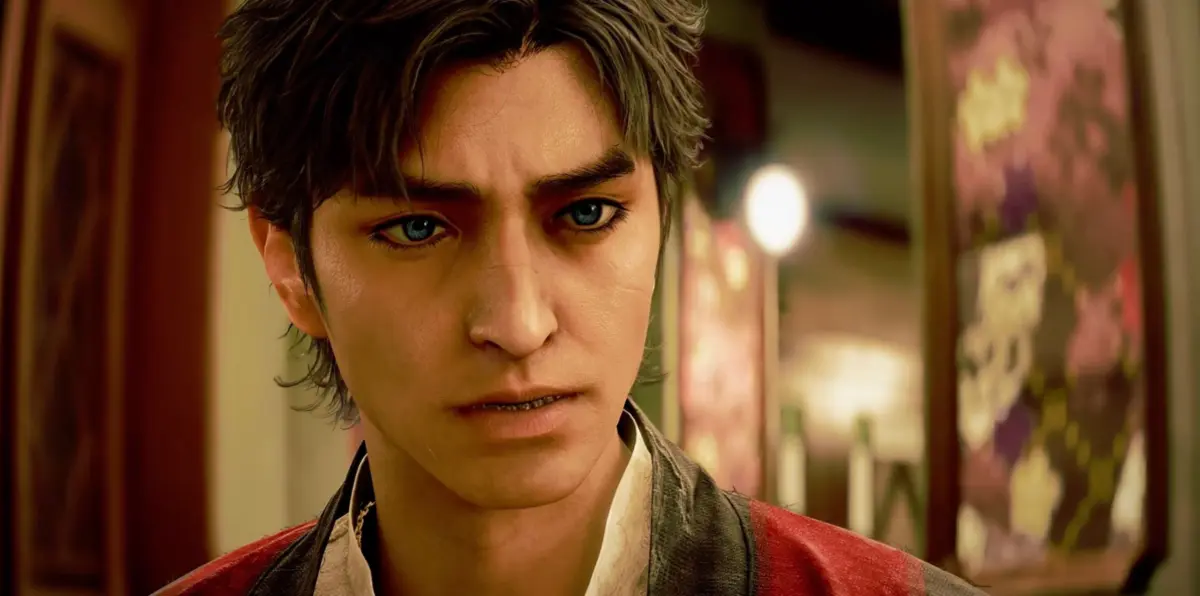
Spanning five distinct cities and an epic half-century timeline, Stranger Than Heaven represents the most audaciously scaled project in the history of Ryu Ga Gotoku (RGG) Studio, the acclaimed masterminds behind the Yakuza and Like a Dragon franchises. During an exclusive, half-day hands-on preview event held in New York City, journalists were given the opportunity to test five distinct gameplay segments spread across three of the title’s five primary historical locations. For longtime veterans of the Like a Dragon continuum, the experience was simultaneously dazzling—showcasing breathtaking period-accurate environments and complex character arcs—and deeply provocative, leaving open critical questions regarding its heavier combat mechanics and sobering narrative direction.
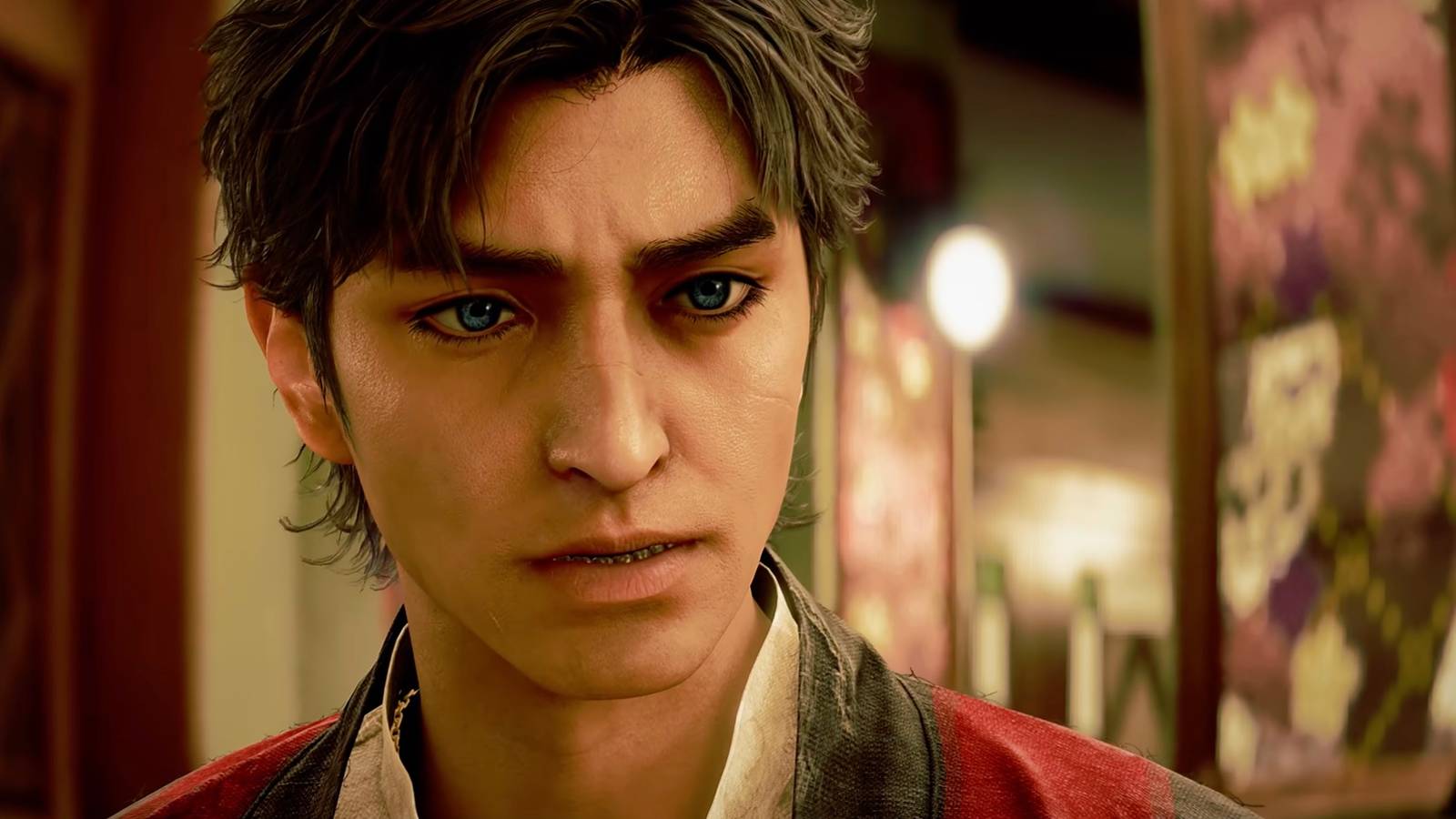
Slated for a simultaneous global release on January 15, 2027, for PlayStation 5, Windows PC, and Xbox Series X, Stranger Than Heaven diverges sharply from the series’ traditional arcade-driven brawler roots and modern turn-based RPG loops. Instead, RGG Studio is charting a gritty, historically grounded course that tackles heavy themes of alienation, systemic racism, and societal evolution. Following protagonist Makoto—an outsider caught in the harrowing gears of early-to-mid-20th-century geopolitical and cultural shifts—the game promises a sweeping narrative canvas. However, as our hands-on preview revealed, this tonal pivot brings a unique set of design challenges that could either redefine the developer’s legacy or alienate purists accustomed to the lighter, eccentric charm of Kamurocho.
Detailed Chronology & Setting Analysis
The narrative architecture of Stranger Than Heaven relies heavily on temporal progression and environmental storytelling, tracking its protagonist across a transformative period in global history.
The San Francisco Prologue
The journey begins in the prologue set in historical San Francisco. For players intimately familiar with RGG Studio’s uncanny knack for painstakingly recreating real-world neighborhoods—such as Kamurocho in Tokyo, Dotonbori in Osaka, and Waikiki in Honolulu—the American intro offers a curiously muted impression. RGG’s riff on early-20th-century San Francisco functions primarily as a linear prologue rather than a fully explorable open zone.
While the developers successfully capture a miserable, fog-drenched atmosphere of biting coastal cold at night, the narrow alleyways and architecture lean toward a somewhat generic East Coast aesthetic rather than the distinct flavor of the Bay Area. Given the historical weight of the era—such as the massive Panama-Pacific International Exposition held in San Francisco in 1915—the lack of expansive exploration in this opening act feels like a missed opportunity, though it quickly establishes Makoto’s status as a persecuted outsider facing incessant discrimination and false criminal accusations.
The Grimy Modernization of Kokura
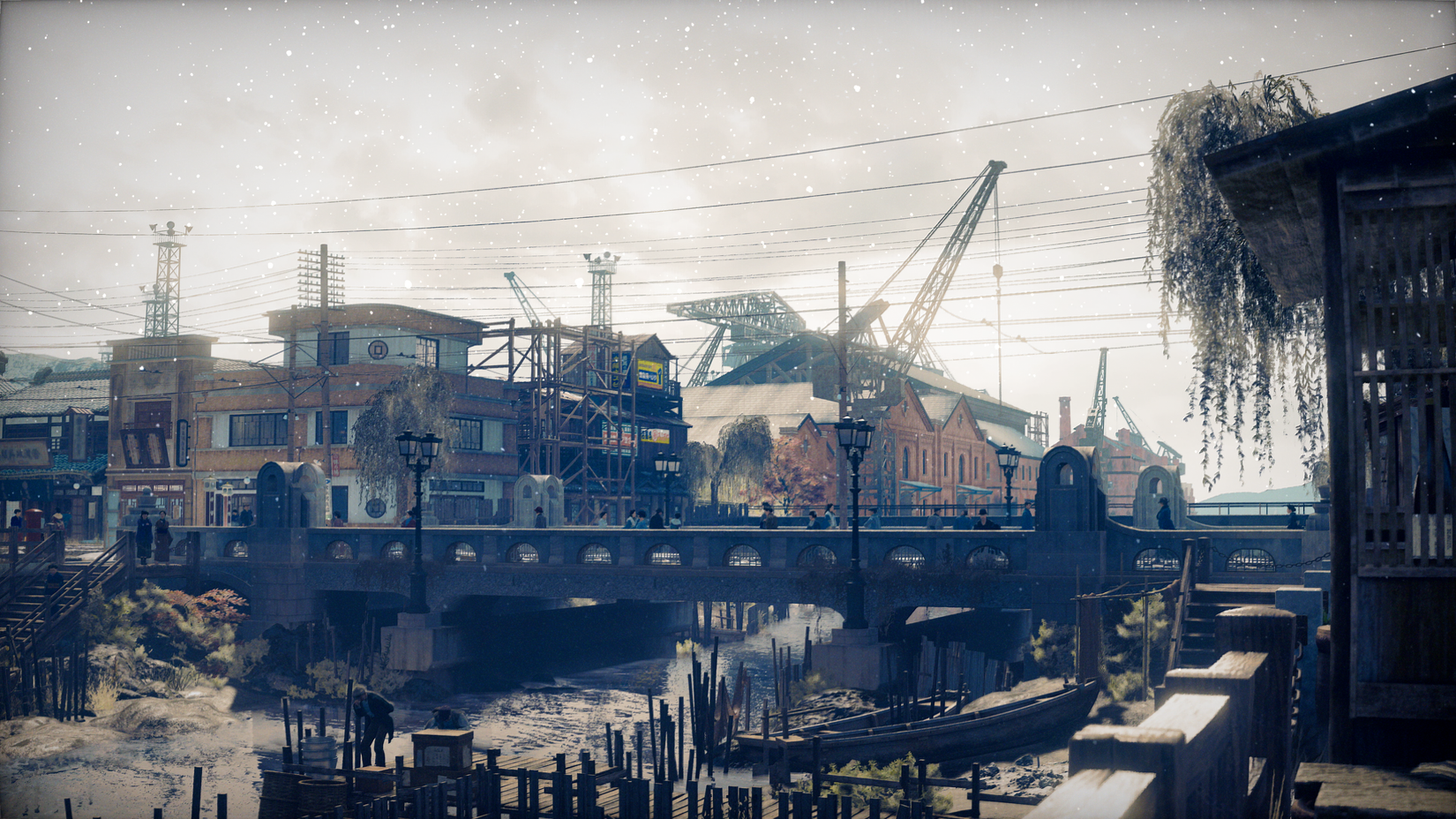
Fortunately, the world opens up exponentially once Makoto stows away on a ship bound for Japan in search of his mother’s homeland. The first major explorable hub, Kokura, is a traditional Edo-period foundry town teetering on the precarious edge of industrial modernization. The environmental design here is nothing short of breathtaking.
Unlike the polished veneer of later eras, Kokura is choked in soot. Players can push open doors and explore nearly every interior space, greeted by rich atmospheric details: locals chain-smoking while playing card games and spinning beigoma tops for petty cash, and the distinct, melodic clacking of Makoto’s wooden geta sandals against unpaved stone streets. For fans who appreciated the historical tourism of 2023’s samurai spin-off Like a Dragon: Ishin, the sheer density of immersion in Kokura amplifies the thrill of exploration by several orders of magnitude.
However, Kokura is far from a welcoming tourist trap. Seeking refuge from American prejudice, Makoto discovers that Japan harbors its own severe brand of xenophobia. Where corrupt San Francisco police officers disparaged him with anti-Asian slurs, the residents of Kokura fixate on his towering physical stature, openly hurling the derogatory term ketō—a historical slur for foreigners roughly translating to "hairy barbarian."
As players weave past glossy red trolley cars and visit local shops, NPCs frequently stop dead in their tracks, looking Makoto up and down with uncloaked hostility and disgust. This unflinching realism punctures any romanticized notions of the past, proving that Stranger Than Heaven is refreshingly unvarnished in its assessment of how unforgiving history was for outsiders.
Osaka’s Minami in the 1940s
Later segments of the demo transported players forward to the Minami neighborhood of Osaka during the turbulent 1940s. The stark visual evolution from the muddy, soot-covered industrial streets of 1915 Kokura to the glittering, neon-lit (or gaslamp-lit) entertainment districts of wartime and postwar Osaka highlights RGG Studio’s core thematic thesis: societal evolution. The glaring, bigoted crowds of Kokura gradually give way to a bustling metropolis of western-attired trendsetters, establishing a vivid visual diary of a changing nation.
Supporting Context & Mechanics: Combat, Weapons, and Narrative Risks
The Evolving Combat Paradigm
One of the most heavily debated aspects of Stranger Than Heaven ahead of its release has been RGG Studio’s pivot toward a more visceral, realistic two-handed combat system. Moving away from the kinetic, over-the-top arcade action of the mainline Yakuza titles, this new system prioritizes weight, positioning, and tactical caution.
In practice, however, this mechanical overhaul presents immediate hurdles. Even after hours of play, mapping attacks and defenses to the controller’s shoulder buttons fails to feel entirely intuitive. Players accustomed to fluid, responsive action will likely struggle with mistimed blocks and an inability to cancel recovery animations mid-strike. Defensive maneuvers—such as pressing down on the analog stick to dash—can feel frustratingly sluggish rather than satisfyingly weighty.
Recognizing these potential friction points for players accustomed to traditional brawlers, director Minoku Abe confirmed during the preview event that RGG has implemented an optional, damage-absorbing suit accessible within Makoto’s living quarters. This accessibility concession will likely be a welcome safety net for those who find the baseline difficulty spike punishing.
The Revamped Weapon Arsenal
While hand-to-hand combat requires a steep learning curve, the game’s weapon ecosystem represents a massive mechanical triumph. Players can still utilize environmental objects—such as wooden crates and planks—to bludgeon foes, but Makoto can also maintain a dedicated inventory of swords, daggers, and blunt instruments.
Unlike mainline Yakuza games where picked-up weapons degrade and shatter after a fixed number of hits, Stranger Than Heaven adopts an upgrade loop reminiscent of Like a Dragon: Ishin. Weapons can be continually upgraded at local blacksmiths, carrying over seamlessly across time periods and scaling exponentially in power. A well-placed weapon strike can easily obliterate half an enemy’s health bar.
The caveat? The artificial intelligence operates under the exact same lethal rules. During the Osaka demo segment, wandering enemies could launch sudden, unannounced ambushes from behind, dispatching Makoto in two or three strikes before the player could react. Furthermore, the game notably dispenses with the traditional Yakuza trope of flashing a dramatic title card (e.g., "Thugs" or "Assholes") to signal the start of combat, emphasizing raw, unscripted danger.
Narrative Ambitions and the "Tae" Controversy
At the center of Stranger Than Heaven‘s emotional core is Makoto’s entanglement with the local Yashima clan, leading to an assignment to embarrass a rival gang leader, Oki, by infiltrating his social circle and courting his mistress, Tae.
Tae’s introduction introduces a poignant, deeply human element. A survivor sold into servitude at the age of 12, she dreams of escaping Kokura to become a singer. Their late-night interactions—sharing beers, discussing past traumas without self-pity, and revealing the physical abuse she suffers at Oki’s hands—build a compelling chemistry.
However, this storyline has triggered immediate narrative alarm bells within the critical community. Following a traditional gang war gauntlet where Makoto successfully rescues Tae from Oki’s metalworks, the demo abruptly skips forward through the decades, leaving Tae’s ultimate fate entirely unaddressed.
Industry analysts and previewers have justifiably expressed concern over potential "fridging"—the tired narrative trope wherein a female character is harmed, traumatized, or killed purely to serve as emotional motivation or character development for a male protagonist. Given that such tragic setups mirror classic franchise tropes (such as Kiryu’s love interest Yumi in the original 2005 Yakuza), critics are rightfully demanding that a 2027 release offer a more progressive resolution for its female characters rather than weaponized trauma.
Official Statements & Developer Insights
Ryu Ga Gotoku Studio has been remarkably transparent about the creative risks driving Stranger Than Heaven. Speaking on the decision to abandon the comfort zone of modern-day Tokyo crime dramas, studio representatives have emphasized that the studio views this project as an artistic evolution.
"Spanning five cities and half a century, we wanted to challenge not only our players, but ourselves," noted director Minoku Abe during the New York preview briefings. "We are examining how identity, prejudice, and human connection transform across generations. The comfort of the familiar had to be broken down to truly capture the roughness of history."
Addressing the combat adjustments and player feedback regarding difficulty, Abe acknowledged the team’s proactive steps:
"We understand that shifting from arcade action to a more grounded, deliberate combat style is a major leap for our community. That is why we have integrated systems like the damage-absorbing suit—to ensure that players invested in Makoto’s journey can experience the narrative without hitting an insurmountable brick wall."
Future Outlook & What to Watch For
As the gaming industry looks ahead to the release of Stranger Than Heaven on January 15, 2027, fundamental questions remain regarding the game’s final identity.
Tone and Humor: Will the game successfully balance its grim historical realism with the signature, off-the-wall levity that defines the Like a Dragon brand? While the main scenario leans heavily into bleak social commentary and visceral drama, RGG Studio has yet to showcase the robust substory side-content where the franchise’s trademark eccentric humor traditionally resides.
Narrative Payoff: How will Tae’s arc conclude across the decades? Avoiding regressive tropes will be paramount for the game’s critical reception.
Combat Reception: Will the community embrace the deliberate, weapon-focused tactical combat, or will the optional damage-absorbing suits become a mandatory crutch for the majority of the player base?
Despite these lingering uncertainties, Stranger Than Heaven remains one of 2027’s most magnetically anticipated releases. Its breathtaking period recreation, bold thematic exploration of historical bigotry, and unprecedented chronological scope ensure that players will be in for a monumental ride when the game launches on PlayStation 5, Windows PC, and Xbox Series X. Whether its heavy-handed narrative gambles and mechanical departures pay off will ultimately be decided when the full curtain rises this January.