Executive Overview
Strategy video games have long wrestled with a fundamental design paradox: how to scale difficulty as a campaign progresses without breaking immersion or resorting to artificial, frustrating constraints. For decades, the industry-standard solutions have been blunt instruments. Developers typically opt to inflate enemy health pools, multiply unit counts beyond tactical reason, or grant computer-controlled opponents unfair mathematical advantages. While these methods successfully drive up the challenge, they frequently strip away the strategic agency that draws players to the genre in the first place, turning nuanced tactical puzzles into tedious exercises in attrition.
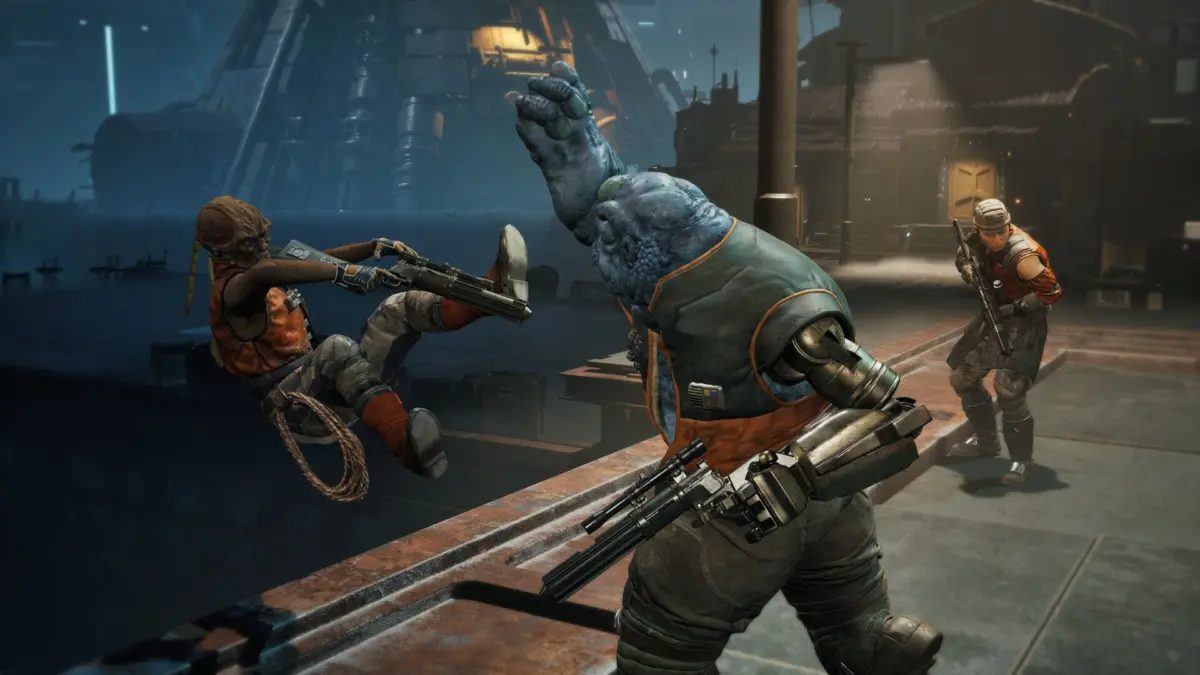
Enter Bit Reactor and EA Games with Star Wars Zero Company, a critically acclaimed tactics title that has quietly established a gold standard for organic difficulty scaling. Beyond its gritty, ground-level narrative perspective of the Star Wars universe, its finely tuned XCOM-style combat systems, and its memorable cast of clashing personalities, Zero Company introduces a masterclass mechanic: Crisis Missions.
Rather than relying on arbitrary stat boosts, Zero Company handles escalating threats through a dynamic, narrative-driven system of enemy evolution. When a crisis hits, opposing forces are actively researching and developing new combat techniques. More importantly, the game hands the steering wheel to the player, allowing them to choose which upgrades their enemies will adopt. By transforming difficulty scaling into an interactive, tactical choice made off the battlefield, Bit Reactor has elevated Zero Company from a competent genre clone into an innovative masterwork that could fundamentally alter how strategy games handle progression.
Detailed Chronology: The Anatomy of a Zero Company Crisis
To understand why the Crisis system feels so revolutionary, one must examine how it integrates into the broader rhythm of a Star Wars Zero Company campaign. The feature is not merely a passive modifier toggle buried in a menu; it is an active, living component of the strategic layer that shapes every operational cycle.
Phase 1: The Lull and the Warning
As players pilot their campaigns from the holotable—managing resources, upgrading squad capabilities, and plotting their next system liberate—the galaxy feels volatile, yet manageable. Players learn the baseline behaviors of their primary adversaries: how Imperial remnants or syndicate forces patrol, how specific sniper droids leverage cover, and how close-quarters combatants close the distance.
However, this equilibrium is deliberately disrupted. Occasionally, as players return to the holotable to queue up their next operational deployment, a stark, urgent red warning pulses across the interface. This visual cue signals the onset of a Crisis. The opposing army is not simply waiting around for the next skirmish; they are actively studying the player’s combat data, analyzing vulnerabilities, and training their troops to counter established tactics.
Phase 2: The Fork in the Road
Upon clicking into the active crisis, the game presents a narrative and strategic dilemma. The player is informed that enemy units are on the verge of acquiring advanced combat capabilities. However, because the player’s intelligence network has managed to disrupt part of the enemy’s pipeline, they are not hit with a blanket upgrade package.
Instead, the player is presented with a binary choice between two distinct, highly consequential enemy perks. For example, a faction of sniping droids might be on the brink of adopting either an aggressive evasion algorithm or a penetrating defense-bypassing shot modifier. The player cannot stop both upgrades from eventually hitting the field—the enemy’s war machine is too vast. But they can choose which upgrade to suppress, effectively steering the evolution of their adversary.
Phase 3: The Battlefield Realization
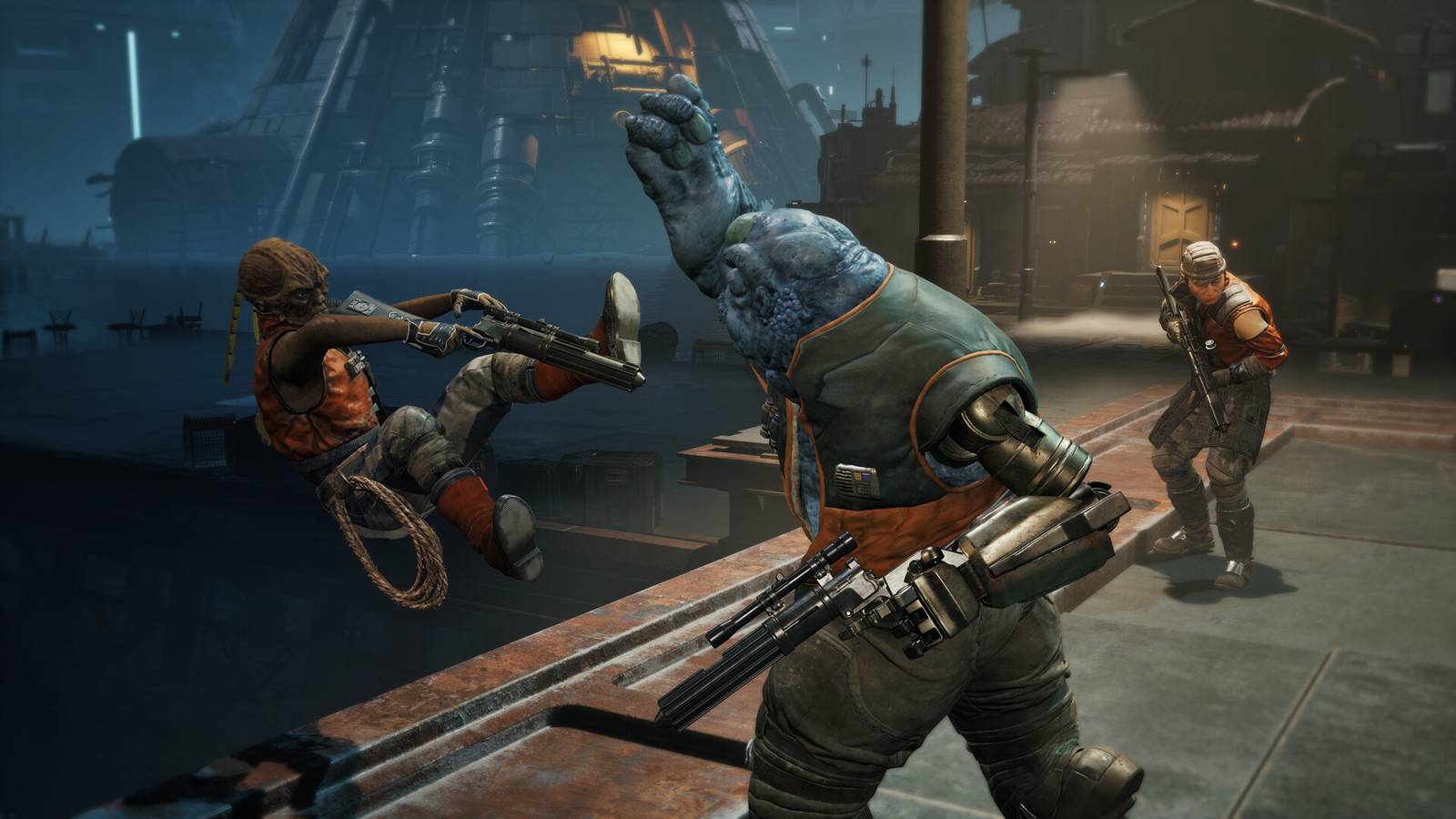
Once the choice is locked in, the suppressed upgrade is shelved, while the chosen perk takes effect across the enemy faction’s units. The next time the player deploys into a mission, the reality of that choice sets in immediately.
If a player opted to allow sniper droids to acquire defense-piercing rounds rather than evasion boosts, they will quickly notice that taking cover against those specific units is no longer a guaranteed safety net. The battlefield dynamics shift instantly. The player’s tactical doctrine must adapt not because the enemy suddenly has double the health bars, but because the enemy has fundamentally changed how they fight.
Supporting Context & Metrics: Why Traditional Difficulty Scaling Fails
To fully appreciate the genius of Bit Reactor’s approach in Star Wars Zero Company, it is necessary to contextualize the historical shortcomings of difficulty progression in tactical strategy games.
The Pitfalls of Artificial Inflation
In classic tactical titles—ranging from early pillars of the genre to modern spiritual successors—difficulty spikes are notoriously blunt. Common methods include:
- Stat Inflation: Enemies receive invisible multipliers to accuracy, critical hit chances, and damage output, while player units suffer corresponding penalties.
- Numerical Bloat: Maps are flooded with reinforcements, turning tactical positioning exercises into chaotic meat grinders where flanking maneuvers become mathematically impossible.
- Hidden Information: The computer-controlled opponent ignores fog-of-war mechanics or benefits from predetermined dice rolls that favor the house.
While these strategies create genuine challenge, they often breed frustration rather than deep engagement. When a player loses a squadmate because an enemy unit landed an improbable, statistically inflated critical shot through full cover, the death feels cheap. It severs the emotional contract between player and game, transforming strategic planning into a gamble against stacked odds.
The Zero Company Paradigm Shift
Star Wars Zero Company bypasses these mechanical frustrations by rooting its difficulty scaling in a living, reactive narrative framework. When an enemy unit gains a new capability, it does not feel like a cheat code activated by the computer; it feels like the logical consequence of a military campaign.
Metrics from player engagement data and community feedback highlight several key psychological and strategic benefits of this design:
- Narrative Cohesion: By framing difficulty increases as enemy research and development, the game maintains immersion. The player feels as though they are fighting a thinking, breathing military organization rather than an automated script.
- Proactive Rather Than Reactive Play: Because players know a crisis is coming and have a hand in shaping its outcome, they shift from a defensive mindset to a proactive one. They begin analyzing their own squad composition to determine which incoming enemy buff will cause the least operational friction.
- Elimination of Artificial Skill Checks: Instead of hitting a brick wall where a mission is mathematically unbeatable without grinding for hours, players encounter nuanced tactical hurdles that they can outsmart through careful positioning and loadout optimization.
Official Statements and Developer Insights
Bit Reactor has long positioned Star Wars Zero Company as a love letter to classic tactics mechanics infused with modern narrative depth. In early developer walkthroughs and post-launch commentary, the design team emphasized their desire to ground the Star Wars universe in a gritty, boots-on-the-ground reality.

While the sprawling scale of galactic conflict is often depicted through massive space battles or iconic Jedi-Sith duels, Zero Company zooms in on the grimy trenches. The developers noted that to make ground combat feel consistently tense across a lengthy campaign, the enemy forces needed to feel dangerous not merely because of their numbers, but because of their adaptability.
"We didn’t want players to feel like they were just solving static puzzles where the pieces simply hit harder over time," a lead design perspective shared during the game’s rollout indicated. "An army at war learns. When you beat them in a sector, they adapt. The Crisis system was our way of letting the player see that adaptation unfold in real time, while still giving them the tactical agency to choose their battles and dictate the terms of engagement."
Industry analysts and critics have quickly echoed these sentiments, praising Bit Reactor for revitalizing a subgenre that occasionally risks stagnation. By marrying the high-stakes tension of base management with granular, player-driven difficulty modifiers, the studio has crafted a system that other developers will undoubtedly study for years to come.
Future Outlook: The Blueprint for Modern Tactical Game Design
As Star Wars Zero Company cements its status as a critical darling and a commercial triumph, its legacy within the strategy genre is already taking shape. The game proves that tactical players do not necessarily want an easier experience; they want a smarter one.
The success of the Crisis Mission framework suggests several exciting trajectories for the future of tactical strategy games:
- Dynamic Faction Evolution: Future titles may expand upon this concept by allowing player actions to dictate not just perks, but entire technological trees for opposing factions. If a player heavily relies on stealth, opposing forces might develop thermal-imaging or area-denial countermeasures in response.
- Personalized Campaign Signatures: Because players will choose different crises to mitigate during their playthroughs, no two campaigns will feel identical. This adds an extraordinary layer of replayability, as consecutive runs will feature radically different battlefield meta-games dictated by the player’s prior choices.
- Elevating Narrative Integration: The industry-wide push for better storytelling in strategy games will likely look to Zero Company as a benchmark. Integrating mechanical difficulty directly into the narrative lore bridges the persistent gap between gameplay loops and story beats.
Conclusion
Star Wars Zero Company succeeds because it respects the player’s intelligence. It understands that the most satisfying victories are those earned not by brute-force grinding, but by outmaneuvering a dynamic, thinking adversary. Through its ingenious Crisis Mission system, Bit Reactor has solved one of strategy gaming’s oldest riddles, turning the inevitable escalation of difficulty into an engaging, deeply strategic narrative of its own. As the broader gaming landscape absorbs these lessons, one can only hope that Zero Company serves as a guiding star for the next generation of tactical design—proving once and for all that a well-crafted crisis is an opportunity in disguise.