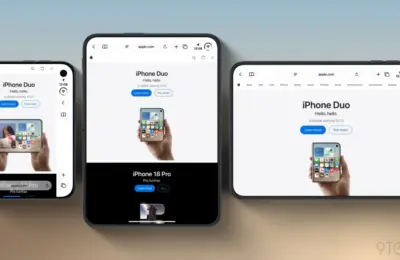
Apple’s recent hardware showcases are usually calculated exercises in defining the bleeding edge of consumer technology. However, the unexpected drop of the AirPods 5 lineup during the company’s high-profile "iPhone Duo" event has introduced a curious anomaly into Apple’s notoriously streamlined product ecosystem. While tech analysts and consumers alike spent the weeks leading up to the keynote focused on rumors of a foldable iPhone and camera-equipped wearables, Apple quietly overhauled its foundational audio products.
At first glance, the strategy looks like a consumer win: the newly minted AirPods 5 with Wireless Charging Case arrive at a remarkably aggressive price point of $149—undercutting the launch price of their direct predecessors, the AirPods 4, by $30. For this price, users gain a suite of genuinely meaningful upgrades: intuitive stem-swipe gestures for volume control, integrated Live Translation capabilities, upgraded IP57 water resistance, and enhanced Active Noise Cancellation (ANC).
Yet, a closer examination of Apple’s current retail strategy reveals a troubling pricing quirk. Apple is simultaneously offering a "regular" base model of the AirPods 5 for a mere $20 less than its fully featured sibling. By narrowing the price gap between the entry-level device and the premium variant to an insignificant margin, Apple has effectively engineered a classic consumer trap.
This article explores the architectural flaws of the new AirPods 5 lineup, analyzes the questionable tier-differentiation strategy, and explains why saving $20 on the base model is a false economy that you will regret the very first time you try to adjust your volume.
Detailed Chronology: From Rumor Mill to Keynote Reality
The unfolding of the AirPods 5 release followed an atypical trajectory, far removed from the tightly controlled, multi-year leaks that usually precede Apple’s audio hardware launches.
The Morning-Of Revelation
Leading up to the iPhone Duo event, industry insiders and supply-chain watchers were hyper-focused on mobile hardware. The consensus narrative was entirely dominated by the impending debut of Apple’s foldable device (dubbed the "Duo") and speculation regarding upcoming camera-equipped wearables. Audio hardware was barely a footnote in pre-event coverage.
That changed abruptly on the morning of the keynote. Bloomberg published a late-breaking report pointing to an imminent refresh of Apple’s base-level AirPods lineup. Veteran tech journalists immediately recognized that any sudden, unheralded hardware drop typically signals iterative updates rather than revolutionary paradigm shifts. When Tim Cook and his team took the stage, that prediction proved accurate: the AirPods 5 updates were evolutionary, not revolutionary.
The Pricing Paradox
Apple’s unveiling of the dual AirPods 5 tiers initially drew applause for affordability. The flagship base-tier upgrade—featuring wireless charging, enhanced ANC, and translation features—was priced at $149, a welcome drop compared to the previous generation’s entry costs.
However, the quiet introduction of a stripped-down "regular" AirPods 5 variant at $129 fundamentally distorted the value proposition. By compressing the price differential between the basic experience and the fully-realized model to just $20, Apple effectively cannibalized the viability of its own entry-level tier. Compounding the confusion, Apple completely scrubbed the legacy non-ANC AirPods 4 from its official storefront, leaving consumers with a false choice between two nearly identical products separated by pocket-change economics.
Supporting Context & Metrics: The Anatomy of a $20 Difference
To truly understand why the base AirPods 5 model represents poor value, one must look closely at the hardware disparity—or lack thereof—between the $129 base variant and the $149 Wireless Charging Case model.
Feature Parity Where It Hurts
Traditionally, Apple creates distinct tiers to cater to specific consumer budgets and feature preferences. With the AirPods 5, however, the company has blurred these lines to an illogical degree:
Active Noise Cancellation (ANC): Both the $129 and $149 variants feature ANC, marking a significant departure from previous generations where noise cancellation was strictly reserved for Pro models or higher pricing tiers. (Early indications suggest the ANC performance on both base models is a modest, incremental step forward rather than a transformative leap.)
Water and Dust Resistance: Both models boast the same ruggedized IP57 rating, ensuring protection against sweat, rain, and unexpected downpours.
Live Translation: Both tiers support Apple’s new on-device Live Translation suite, making both options appealing for international travelers and multilingual professionals.
What Do You Actually Lose for $20?
By choosing to save a meager two tens and a five-dollar bill, buyers of the $129 base model forfeit several quality-of-life features that dramatically shape the day-to-day user experience:
Stem-Swipe Volume Control: This is the ultimate dealbreaker. The physical capability to swipe up and down on the AirPods stem to adjust audio volume—a feature long adored by AirPods Pro users—is crippled or missing on the base variant. Every single time you reach for your phone in a crowded subway or a bustling cafe just to turn down a track, you will be reminded of the $20 you tried to save.
MagSafe and Apple Watch Charger Compatibility: The $149 model ships with a truly wireless charging case capable of snapping onto MagSafe pucks and Apple Watch chargers. The base model forces you back into the archaic friction of tethering your case to a USB-C cable.
Find My Integration with Built-in Speakers: Misplacing your AirPods case is a universal modern frustration. The upgraded charging case features an integrated speaker that emits an audible chime when triggered via Apple’s Find My network—a literal lifesaver during frantic rescue missions between couch cushions.
Battery Longevity: While exact endurance benchmarks vary, the fully featured model grants an extra hour of cumulative listening time, a margin that compounds significantly over the multi-year lifespan of a rechargeable battery.
Feature / Spec
Base AirPods 5 ($129)
AirPods 5 with Wireless Charging Case ($149)
Active Noise Cancellation
Yes
Yes (Enhanced tuning)
Water Resistance
IP57
IP57
Live Translation
Yes
Yes
Volume Swipe Gestures
❌ No
✓ Yes
MagSafe / Apple Watch Charging
❌ No
✓ Yes
Find My Case Speaker
❌ No
✓ Yes
Battery Life
Standard Base
+1 Additional Hour
Official Statements & Industry Reception
The tech journalism community has reacted to Apple’s latest audio rollout with a mix of bemusement and critical frustration. Industry analysts have pointed out that Apple’s pricing architecture violates basic consumer choice principles.
When reached for comment regarding the rationale behind the compressed pricing tiers, retail analysts noted that the strategy mirrors classic software-as-a-service (SaaS) "decoy pricing"—where companies intentionally place a marginally cheaper, inferior tier next to a feature-rich premium tier solely to make the higher-priced option look irresistible.
However, consumer advocates argue that hardware is fundamentally different from software. When a consumer purchases physical earbuds, they expect a clear architectural rationale for price variations.
"Apple has successfully eliminated any logical reason to buy the cheapest AirPods in its lineup," notes one prominent audio hardware reviewer. "When the price delta is squeezed down to the cost of a couple of artisanal coffees, the entry-level model stops being an accessible option for budget-conscious buyers and simply becomes a psychological trap designed to extract an extra $20 from unsuspecting shoppers."
Furthermore, industry watchers have questioned the timing and naming conventions. Branding the mid-tier model as the “AirPods 5 with Wireless Charging Case” feels clunky and uncharacteristic of Apple’s historical penchant for minimalist nomenclature, suggesting a rushed product-segmentation strategy hatched late in the development cycle.
Future Outlook: What Apple Should Have Done
To construct a genuinely cohesive, consumer-friendly audio roadmap, Apple missed a golden opportunity to establish clear psychological and financial boundaries across its earbud portfolio.
The Ideal Lineup Architecture
A properly structured, three-tier audio lineup would have provided clear, distinct choices for every budget tier:
The Pure Entry-Level ($99): A modern, non-ANC standard AirPods model priced cleanly at $99. By stripping out Active Noise Cancellation and advanced sensors, Apple could have targeted budget-first consumers, students, and casual listeners who prioritize comfort and price above all else. A $50 gap between tiers ($99 vs. $149) creates a meaningful financial decision point.
The Sweet-Spot Standard ($149): The true AirPods 5 featuring full ANC, wireless charging, stem gestures, and Live Translation. This should simply be called the AirPods 5, eliminating the cumbersome subtitle.
The Flagship Tier ($249+): The AirPods Pro line (culminating in the upcoming AirPods Pro 3 and rumored camera-equipped variants slated for early next year).
By maintaining a $50 interval between tiers, Apple respects the consumer’s wallet and purchasing intelligence. Instead, the current configuration forces a confusing binary where buying the cheaper option feels like a punitive compromise rather than a smart financial choice.
Looking Ahead to 2026
As rumors swirl regarding upcoming iterations—such as camera-equipped AirPods Pro featuring advanced Visual Intelligence—Apple’s focus on the audio market is clearly shifting toward spatial computing and augmented reality inputs.
In light of these sophisticated future products, muddying the entry-level waters with a pointless $129 placeholder model feels like a misstep. Until Apple corrects this pricing anomaly or phases out the base variant entirely, prospective buyers should heed the universal consensus of tech critics: skip the base model, spend the extra twenty dollars, and save yourself endless frustration the first time you attempt to swipe your volume controls into empty air.