Executive Overview
The professional networking landscape on LinkedIn is undergoing a seismic transformation. For years, marketers and creators relied on predictable formulas: keyword-stuffed profiles, high-frequency posting schedules, and automated drafting tools to maintain a steady cadence. However, the mass proliferation of low-quality, AI-generated "slop" has forced the platform to rewrite its underlying algorithms. Today, LinkedIn’s distribution mechanics heavily penalize content that lacks a distinctive human perspective, effectively throttling the out-of-network reach of generic material.
At the same time, LinkedIn has introduced a powerful suite of new features designed to reward authenticity, collaboration, and niche expertise. From the long-awaited rollout of collaborative posting tools and an expanded AI-powered people search to a newly integrated Creator Marketplace and a game-changing analytics metric tracking out-of-network impressions, the rules of professional engagement have fundamentally shifted.
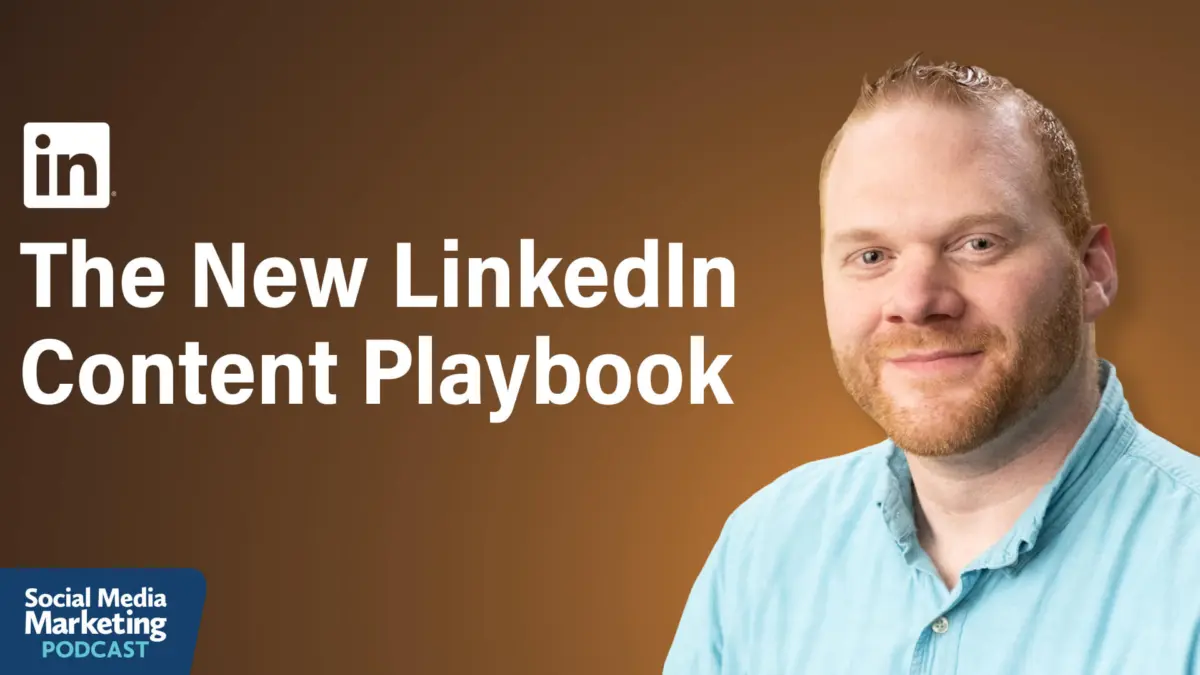
This comprehensive playbook unpacks these updates, drawing insights from industry experts AJ Wilcox, Michael Stelzner, and Jerry Potter. Whether you are an enterprise marketer trying to outsmart algorithmic filters or an independent creator looking to monetize your thought leadership, understanding these mechanics is no longer optional—it is the prerequisite for survival in the modern digital ecosystem.
Detailed Chronology & Strategic Breakdown
1. The Crackdown on "AI Slop" and the Evolution of Smart Content Creation
The irony of LinkedIn’s current algorithmic stance is not lost on seasoned digital marketers. LinkedIn was among the pioneer platforms to embed generative AI directly into its compose box, encouraging users to leverage automated tools to streamline content creation. However, the subsequent tidal wave of uninspired, formulaic text completely flooded feeds, degrading user experience and threatening the platform’s core value proposition as a hub for genuine professional discourse.
In response, LinkedIn has doubled down on penalizing "AI slop"—low-perspective, highly generic content that reads like it was spun up by a prompt in seconds. Content flagged by these parameters is systematically restricted from breaking out of an author’s immediate follower network. Because reaching new, uncaptured audiences is the holy grail of modern marketing, this algorithmic penalty directly undermines the objectives of brands and professionals alike.
+-----------------------------------------------------------------+
|               The New AI Content Quality Spectrum               |
+-----------------------------------+-----------------------------+
| AI-Assisted (Compliant)           | AI-Generated (Penalized)    |
+-----------------------------------+-----------------------------+
| • Human-led brain & perspective   | • Zero original perspective |
| • AI acts as an editor/consultant | • Formulaic, robotic pacing |
| • Current, proprietary insights   | • Floods feed with "slop"   |
| • Reaches out-of-network feeds    | • Trapped in core network   |
+-----------------------------------+-----------------------------+
Industry expert AJ Wilcox notes that while the pivot sounds contradictory, it is fundamentally necessary. If every piece of content on a professional network feels hollow, users simply stop engaging, destroying the feed’s utility.
Crucially, LinkedIn is not drawing a line against AI assistance; rather, it is distinguishing between content that communicates genuine value and content that is devoid of a distinct point of view. Successful content strategies now require the human creator to act as the cognitive architect. By injecting real-time, proprietary experiences and perspectives that large language models have not yet ingested, marketers can safely utilize AI for optimization without triggering algorithmic suppression.
The Editorial Workflow Shift
Michael Stelzner outlines a practical shift in how creators must approach AI. Initially experimenting with fully automated drafting tools trained on his personal voice, Stelzner noticed the classic red flags that both human readers and algorithmic filters easily catch: predictable structural patterns, overly formulaic phrasing, and an overarching lack of sharp, contrarian perspective.
The modern approach requires writing entirely from scratch first, capturing raw human thought, and then deploying AI strictly as a consultative editor—surfacing weak hooks, structural gaps, or missing transitions. On the paid advertising side, while LinkedIn does not algorithmically penalize paid ad distribution based on AI origins, low-quality creative inherently suffers from depressed user engagement, eroding return on ad spend (ROAS).
2. Collaborative Posts and the Rise of Trust-Based Reach
In an era where anyone can deploy a professional website and spin up five AI-generated posts a day, baseline credibility has become commoditized. Trust is now the ultimate differentiator, and LinkedIn’s new collaborative posts feature is designed to formalize this dynamic directly within the platform architecture.
Unlike traditional corporate tagging—which allows users to mention individuals without explicit consent—collaborative posts require mutual opt-in and approval from all participating parties before going live. Once published, every co-author is visibly credited at the top of the post.
[Company Page]   +   [Internal Employee / External Creator]
                      /
                     /
           v         v
     [ Collaborative Post ]  ---> Visible Co-Authorship
                               ---> Shared Network Amplification
Why Collaborative Posts Outperform Traditional Reshares
- Overcoming Corporate Reach Caps: Company pages historically struggle to achieve organic reach, and standard corporate reshares by employees yield minimal engagement.
- Leveraging Personal Networks: By inviting an employee or external partner to co-author an update, the content carries personal credibility and enters fresh, highly targeted networks.
- Strategic Partnerships: Brands can partner with non-competing organizations or thought leaders in adjacent niches, co-authoring content that captures multiple distinct audiences simultaneously.
To maximize these partnerships, marketers should initiate outreach with individuals already active within their orbit: top fans, consistent commenters, and power users. By framing collaborative pieces around mutual areas of expertise rather than heavy-handed corporate messaging, brands can bypass the skepticism readers typically hold toward traditional brand advertising.
3. Optimizing Profiles for LinkedIn’s AI-Powered People Search
LinkedIn has officially rolled out its natural language, AI-powered people search infrastructure to all US users, tearing down walls that previously restricted advanced search functionalities to premium tiers.
This search evolution moves the platform away from rigid, keyword-stuffed search queries. Users can now type complex, intent-driven descriptions to find professionals (e.g., "Find me a supply chain consultant based in Chicago who has scaled SaaS startups"). AI-powered backend summaries dynamically display a candidate’s relevance, highlighting shared professional milestones, collaborative connections, and contextual highlights.
Consequently, modern profile optimization functions similarly to traditional Search Engine Optimization (SEO). Marketers and professionals must audit their personal and company profiles to ensure they communicate core competencies in clear, natural language that parsing algorithms can accurately decode and summarize. Treating your personal profile as a testing ground—executing search queries to see how the AI summarizes your credentials—allows for rapid, iterative refinement of your digital positioning.
4. The Creator Marketplace & Thought Leader Ad Amplification
The launch of the Creator Marketplace directly inside Campaign Manager represents a major structural upgrade for B2B advertising. Brands no longer need to rely exclusively on their internal executives to generate video and text content; they can instantly discover, vet, and partner with third-party creators who are already discussing their industry niche.
The Mechanics of Thought Leader Ads
Thought leader ads allow brands to put paid media dollars behind an organic post published by an individual creator. Because these posts carry pre-existing social proof from their organic run, they consistently outperform cold, brand-sponsored ad units.
[Creator Publishes Organic Post]
             │
             ▼
[Brand Uses Marketplace to Identify Post]
             │
             ▼
[Brand Requests Sponsorship / Permission]
             │
             ▼
[Thought Leader Ad Deployed with Paid Budget & Precise Targeting]
Opportunities for Creators
- Strategic Brand Mentioning: Creators seeking brand partnerships can bypass slow corporate page notifications by tagging specific marketing or partnership personnel in relevant, high-value industry breakdowns.
- Micro-Targeting Budgets: Creators can strategically allocate portions of partnership sponsorships to amplify their own profiles. Sponsoring a post to target a niche enterprise audience of just a few hundred key decision-makers at an organization can yield outsized professional returns for minimal capital expenditure.
5. Mastering Out-of-Network Reach Metrics
One of the most valuable additions to LinkedIn’s native analytics suite is the introduction of the Out-of-Network Reach metric. Historically, creators were forced to evaluate performance through vanity metrics like total views, aggregate reactions, and comment counts—none of which answered the critical strategic question: Am I actually breaking out of my existing echo chamber?

The out-of-network metric calculates the exact percentage of total impressions originating from individuals who do not follow or connect with the author, driven instead by search optimization, reshares, and algorithmic feed recommendations.
Strategic Application of the Metric
- Validating Smaller Accounts: Micro-creators can instantly see if their core ideas have broad market appeal, even with a modest follower base.
- Establishing Feedback Loops: Tracking which specific topics consistently breach the network boundary allows content strategists to identify high-performing content formats and double down on proven vectors.
Supporting Context & Metrics
The broader industry context surrounding these algorithmic shifts is highlighted by empirical data from recent digital marketing research. According to comprehensive industry surveys tracking modern marketing teams:
- 85% of marketers experiment with and learn artificial intelligence applications entirely on their own, navigating the shifting landscape without formal corporate guidance.
- Only 7% of marketing professionals report receiving structured AI training directly from their employers.
- More than 50% of practitioners out-of-pocket fund their own generative AI tooling to maintain a competitive edge.
These metrics emphasize that mastery over algorithmic shifts—such as LinkedIn’s war on low-quality AI content and the optimization of human-led thought leadership—remains an individual imperative for modern marketing professionals.
Official Statements & Industry Insights
AJ Wilcox emphasizes the shift in paid and organic synergy:
"The enforcement mechanism isn’t purely algorithmic… LinkedIn visibility has always been driven by engagement. Low-quality organic posts have always gotten low-quality reach; the AI crackdown simply formalizes what was already happening."
On the evolution of personal branding and creative balance, Michael Stelzner notes:
"I shifted to writing entirely in his own voice first, then using AI as a consultant to identify weak spots and sharpen his hooks. The result is content that sounds like him rather than like it could have come from anyone."
Future Outlook
As LinkedIn continues to refine its platform mechanics through 2026 and beyond, the trajectory is clear: hyper-personalization, verifiable trust, and collaborative ecosystems will dictate professional visibility.
The era of mass-producing uninspired content via automated prompts is coming to an end. Platforms are successfully aligning algorithms to reward depth, real-world experience, and authentic human connections. For marketers, agencies, and independent creators willing to adapt their strategies—leveraging collaborative workflows, optimizing for AI-driven semantic search, and strategically deploying creator partnerships—LinkedIn remains the most potent B2B distribution channel in the digital landscape. The mandate for the future is straightforward: stop adding to the noise, start owning your unique perspective, and build trust that scales.