Executive Overview
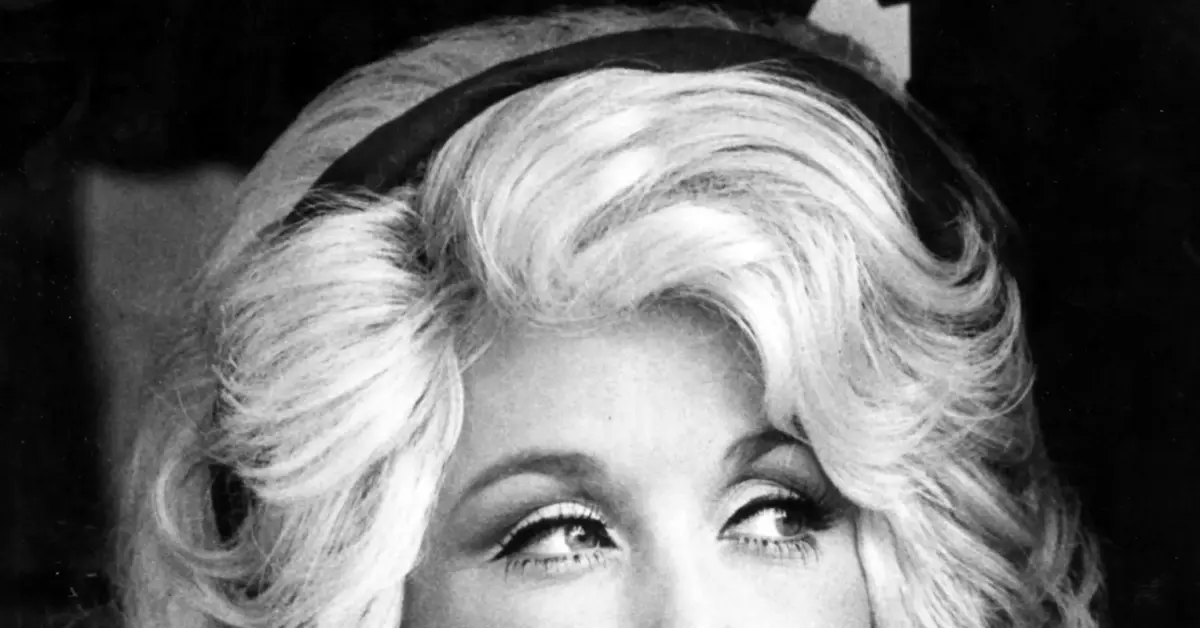
Few public figures in modern history have appeared as unmistakably, radically themselves as Dolly Parton. With her signature towering wigs, vibrant makeup, crystalline soprano, self-deprecating humor, and rhinestone-studded aesthetic, Parton has spent over half a century cultivating an image so vivid, ubiquitous, and distinct that it has long seemed inseparable from the woman herself. Yet, within this towering cultural monument lies a profound paradox. Parton constructed one of the most recognizable and enduring personas in global entertainment while retaining an extraordinary, near-flawless degree of control over what the public is permitted to know about her private life.
In an era dominated by a modern perversion of authenticity—one that equates true selfhood with radical transparency—Parton’s career stands as a compelling counter-narrative. Today’s cultural landscape is gripped by what psychological and sociological observers have termed the "cult of authenticity." This framework aggressively encourages maximum vulnerability, demanding that individuals strip away the "masks" and "defenses" that allegedly prevent others from seeing them as they truly are. Within this ecosystem, privacy is frequently viewed with immediate suspicion. Boundaries are reframed as defensive mechanisms, and withholding personal data is often interpreted as deceit, coldness, or pathology.
Yet Parton’s life and career challenge this reductionist paradigm. The public-facing Dolly Parton was never merely a disguise concealing a hidden, "true" self; nor was she a calculated deception designed to manipulate the masses. Instead, as Parton herself has repeatedly acknowledged, her public persona was an artistic, commercial, and psychological masterpiece—a deliberate creation assembled and refined over decades. The stagecraft, the glamour, the wit, and the folksy wisdom are genuinely part of her, but they constitute only a fraction of her complete identity. Beyond the carefully curated anecdotes and the familiar tropes lies a vast, fiercely guarded interior world that belongs to Parton alone.
This article explores the vital distinctions between performance, deception, and privacy, utilizing Parton’s legendary career as a lens through which to examine the sociology of self-presentation. Drawing upon the theoretical frameworks of Erving Goffman and Hannah Arendt, we examine why human flourishing does not require total exposure, how healthy boundaries actually sustain long-term public connection, and why true authenticity often lies not in endless self-disclosure, but in the sovereign right to decide what parts of oneself belong to the world and what parts remain sacred.
Detailed Chronology: The Evolution of a Masterpiece
To understand how Dolly Parton achieved this rare equilibrium between hyper-visibility and absolute privacy, it is necessary to examine the historical arc of her career, mapping how her public persona developed alongside shifting cultural expectations of celebrity.
The Appalachian Roots and Early Nashville Years (1946–1967)
Born into a family of twelve children in Locust Ridge, Tennessee, Parton’s early life was defined by rural poverty and a rich musical heritage rooted in Appalachian folk traditions. From an exceptionally young age, Parton exhibited a powerful imaginative drive and a keen understanding of theatricality. Even as a child performing on local radio stations in Knoxville, she recognized that entertainment required an element of magnification.
When Parton moved to Nashville in 1964 immediately following her high school graduation, she encountered an industry dominated by traditional expectations of female country artists. Her early professional breakthrough came as a featured vocalist on The Porter Wagoner Show from 1967 to 1974. During these formative years, Parton navigated the complexities of institutional control within the music industry. Wagoner’s audience expected a certain brand of wholesome, down-home femininity. Parton delivered a version of this expectation, but she infused it with an unmistakable, hyper-stylized exaggeration. Her decision to wear towering wigs and heavy makeup was not an attempt to hide; rather, it was an artistic choice. As she famously quipped, "It costs a lot of money to look this cheap." By leaning into the artificiality of her aesthetic, Parton paradoxically claimed ownership over it, establishing the foundational armor of her public identity.
The Crossover Era and Mainstream Ascendancy (1977–1989)
As Parton broke away from Wagoner’s television show to pursue a solo pop-country crossover career, her cultural footprint expanded exponentially. Hits like "Here You Come Again" (1977) and "9 to 5" (1980), alongside her critically acclaimed film debut in 9 to 5, transformed her into an international icon.
During this high-intensity era of global celebrity, media scrutiny intensified dramatically. Journalists routinely probed into her personal life, most notably her marriage to Carl Dean, a notoriously reclusive businessman whom she wed in 1966. While other celebrities yielded to tabloid pressures by offering unprecedented access to their domestic lives, Parton established an ironclad boundary. She spoke frequently and affectionately of Carl, but he almost never appeared publicly by her side. By maintaining this strict separation between her bustling professional universe and her quiet domestic reality, Parton demonstrated that massive public adoration did not necessitate the surrender of personal sanctuary.
Institutional Philanthropy and the Imagination Library (1995–Present)
In the latter half of her career, Parton’s public role shifted from pop-culture icon to revered national treasure. A cornerstone of this evolution was the establishment of the Dollywood Foundation’s Imagination Library in 1995, an initiative inspired by her father’s inability to read.
Significantly, Parton’s philanthropic empire expanded without ever demanding emotional reciprocity or personal confession from the public. The Imagination Library has distributed hundreds of millions of books to children worldwide, completely free of charge, asking nothing in return—not even a baseline understanding of Parton’s personal life or political beliefs. Her public persona became large enough to command global attention, yet that attention was consistently redirected outward toward artistic creation and charitable impact, rather than absorbed inward as an obsession with self-revelation.
Supporting Context & Metrics: The Sociology of Self-Presentation
To contextualize Parton’s mastery of boundaries, we must examine the theoretical foundations of human interaction, identity management, and the modern psychological traps of transparency.
Goffman’s Dramaturgical Model
Decades ago, sociologist Erving Goffman posited in The Presentation of Self in Everyday Life (1959) that human beings are inherently performers. We continuously occupy roles, adapt to shifting social circumstances, and navigate distinct social worlds. The persona an individual presents at a solemn funeral differs fundamentally from the self they bring to a festive dinner party, a corporate boardroom, or a marriage.
Goffman’s dramaturgical analysis demonstrates that the "self" is not a static object hidden beneath layers of clothing and makeup, but rather a dynamic product of the scenes that are acted out. In this light, Parton’s theatricality is not a falsification of reality; it is an honest acknowledgment of the performative nature of human social existence.
To clarify these dynamics, we can categorize human communicative behavior into three distinct modalities:
- Deception: The intentional presentation of false information designed to manipulate, exploit, or mislead others for personal gain or self-preservation at another’s expense.
- Performance: The strategic highlighting, development, and theatricalization of specific aspects of the self tailored for a designated audience, purpose, or cultural context.
- Privacy: The deliberate preservation and stewardship of those internal dimensions of the self that do not belong to the public, the employer, or the audience.
The contemporary "cult of authenticity" tends to dangerously collapse these categories. In the digital age of social media, micro-celebrity, and constant connectivity, any withholding of information is frequently pathologized. If an individual maintains boundaries, they are labeled guarded. If they exhibit different facets of their personality in different professional or social settings, they are accused of hypocrisy or inconsistency. The modern cultural imperative dictates a perpetual, progressive cycle of self-disclosure, where human worth is algorithmically tied to vulnerability.
Hannah Arendt and the Distinction Between "What" and "Who"
Philosopher Hannah Arendt, in The Human Condition (1958), drew a foundational distinction between what a person is and who a person is.
- What a person is encompasses the objective, catalogable data points of existence: demographic markers, professional achievements, public histories, physical attributes, and documented actions. This is the domain easily consumed by the public and digested by media institutions.
- Who a person is—their unique, unrepeatable human identity—cannot be captured by catalogs or confessions. It emerges indirectly through action, character, and creation over the course of a lifetime.
Throughout her career, Dolly Parton intuitively honored Arendt’s distinction. She consistently resisted the modern expectation that public visibility grants an audience unlimited, sovereign access to the private soul behind the icon. Instead of engaging in endless, confessional self-revelation, Parton permitted the world to know her exclusively through what she created, what she performed, and what she gave.
Quantitative Overview of Parton’s Public and Private Stewardship
| Metric / Domain | Public Domain (Shared Generously) | Private Domain (Strictly Guarded) |
|---|---|---|
| Aesthetic Presentation | Hyper-stylized, rhinestone-studded, larger-than-life stage persona. | Natural appearance, unadorned private moments at home. |
| Creative Output | Over 3,000 recorded songs, feature films, theme parks, and global tours. | Deeply personal emotional processing, private songwriting sessions. |
| Philanthropy | Imagination Library (332+ million books distributed globally). | Anonymous charitable contributions and localized community support. |
| Domestic Life | Warm, anecdotal references to marriage and family history. | Carl Dean’s life, daily domestic routines, immediate family sanctuaries. |
Official Statements & Cultural Commentary
The discourse surrounding privacy, boundaries, and celebrity culture has drawn commentary from psychologists, cultural critics, and Parton herself, illuminating the psychological necessity of maintaining a private self.
Dolly Parton has frequently addressed the deliberate construction of her image with characteristic wit and profound self-awareness. In numerous interviews over the decades, she has openly rejected the notion that her physical presentation represents her inner reality.
"I look totally artificial, but I am totally real," Parton famously stated, encapsulating the entire philosophy of bounded selfhood. "My look is really my own creation. I base my look on a country tramp."
In discussing her marriage of nearly six decades to Carl Dean—who famously avoids the spotlight, attending only one of her concerts in the span of their marriage—Parton has consistently emphasized that mutual respect for boundaries is the bedrock of longevity.
"Carl is a very independent person," Parton noted in a 2019 interview with Entertainment Tonight. "He doesn’t particularly care about being in the limelight. It was never his life; it was mine. We’ve been together 53 years, and we have a great mutual respect for each other and our privacy. I respect his space, and he respects mine."
Psychological researchers examining the modern digital landscape have increasingly validated Parton’s approach. Dr. David P. McAdams, a leading personality psychologist and author of The Redemptive Self (2013), has noted that human identity functions effectively as a narrative construct rather than an open book.
"The healthy human personality requires a dynamic tension between public narrative and private sanctuary," McAdams explains. "When cultural systems demand that individuals dismantle every boundary in the name of authenticity, they frequently produce a fragile, anxious ego that is entirely dependent upon external validation. True psychological integration depends upon having a territory of the self that no audience, algorithm, or institution can colonize."
Future Outlook: Redefining Authenticity for the Digital Generation
As society navigates an increasingly hyper-connected digital future—where artificial intelligence, surveillance capitalism, and social media platforms continually erode the traditional borders of personal privacy—the lessons embedded within Dolly Parton’s life and career grow increasingly urgent.
The cultural trajectory toward mandatory transparency is unsustainable. As younger generations grapple with the psychological toll of online visibility, burnout, and performative vulnerability, a counter-movement is quietly taking shape. People are beginning to recognize that boundaries are not antisocial, that privacy is not a pathology, and that selective self-disclosure is a vital form of self-preservation.
Dolly Parton’s enduring legacy offers a blueprint for navigating this modern dilemma. She proved that an individual can be fiercely theatrical, highly curated, deeply boundaried, and profoundly authentic all at the same time. Her life demonstrates that generosity does not require self-annihilation. An artist, professional, or private citizen can give the world extraordinary beauty, utility, and compassion while retaining absolute stewardship over their own soul.
Ultimately, Parton’s career reminds us of a fundamental truth that the modern cult of authenticity strives to erase: One of the most authentic things any human being can do is decide with absolute authority what parts of themselves belong to the world, and what sacred parts do not.