Executive Overview
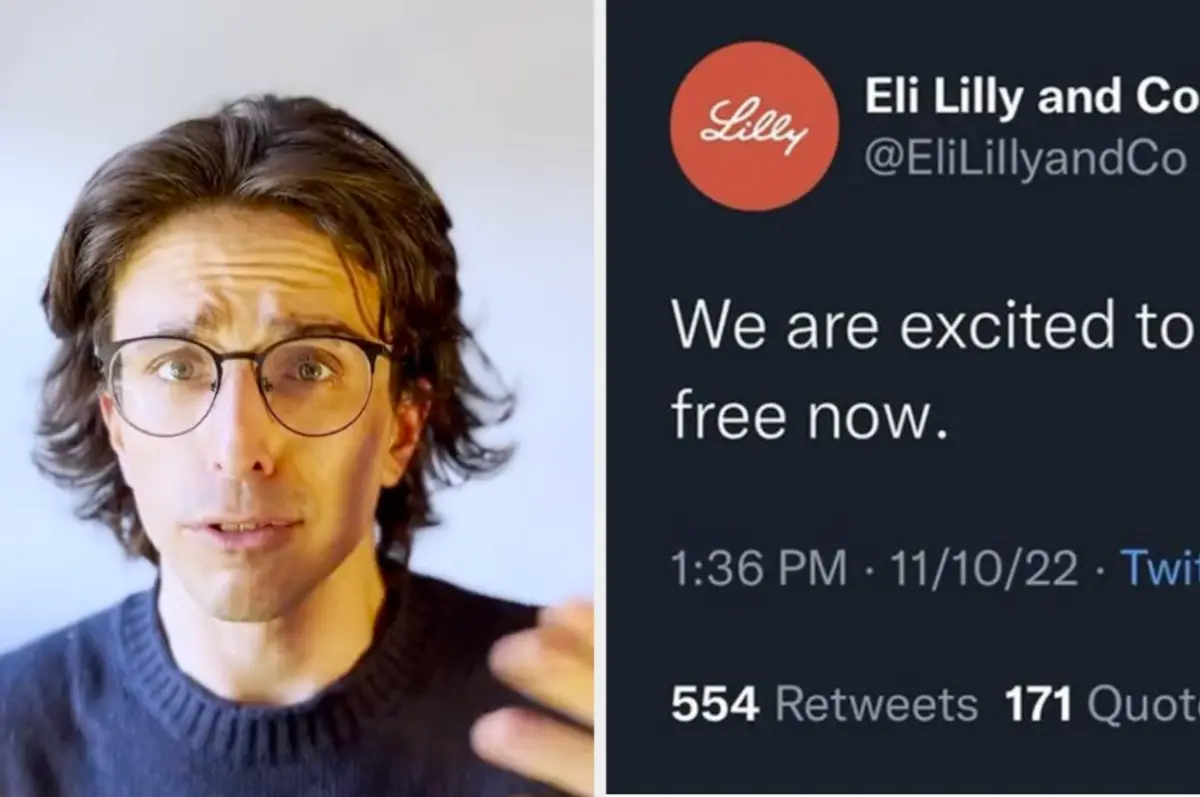
In November 2022, the intersection of corporate hubris, social media deregulation, and grassroots digital activism created a perfect storm that temporarily wiped billions of dollars off the valuation of a major pharmaceutical giant. At the epicenter of this digital earthquake was a single, subversive tweet: "We are excited to announce insulin is free now."
Posted by a verified account bearing the name and logo of pharmaceutical titan Eli Lilly, the tweet was entirely false. Yet, in the chaotic ecosystem of Elon Musk’s newly minted "Twitter Blue" subscription model, it was accepted as gospel by thousands—and recognized as a brilliant, satirical masterclass by millions more.
The prankster behind the account was Sean Morrow, a 34-year-old writer for the labor and economic justice publication More Perfect Union. Armed with nothing more than an $8 monthly subscription fee, an old novelty Twitter handle (@EliLillyandCo), and a profound disgust for the predatory pricing models governing life-saving medications, Morrow executed a hit-and-run digital campaign that exposed the profound vulnerabilities of social media verification and thrust the moral crisis of insulin pricing back into the global spotlight.
While Eli Lilly’s official stock value saw a sharp, immediate decline of over 4.37% in the wake of the incident—igniting a fierce debate over the market influence of unverified digital information—the true legacy of Morrow’s stunt extends far beyond stock tickers and algorithmic chaos. It served as a lightning rod for public outrage, amplifying decades of advocacy work by diabetic patients and healthcare coalitions who had long argued that the exorbitant cost of insulin was a man-made tragedy driven by corporate greed.
This in-depth investigative report examines the chronology of the digital hoax, the systemic failures of Twitter’s early verification rollout, the socioeconomic realities of insulin pricing in the United States, and the lasting implications of what happens when ordinary citizens weaponize corporate branding against the conglomerates that profit from human necessity.
Detailed Chronology: The Rise and Fall of the $8 Checkmark
The Prelude: Musk Takes the Reins
To understand how a satirical tweet could temporarily destabilize a $300 billion pharmaceutical enterprise, one must first examine the chaotic environment of social media in late 2022. Following his acquisition of Twitter in October 2022, billionaire Elon Musk moved swiftly to restructure the platform’s foundational features. Among the most drastic changes was the dismantling of the legacy verification system—a vetting process historically reserved for journalists, politicians, celebrities, and major institutions to confirm their identity and prevent impersonation.
In its place, Musk introduced Twitter Blue: a subscription service costing $8 per month that granted any user the coveted blue checkmark, regardless of whether their identity had actually been authenticated. Cybersecurity experts, public relations professionals, and tech analysts immediately warned that the policy was an open invitation for bad actors, scammers, and satirists to wreak havoc by impersonating trusted entities. Their warnings were swiftly ignored.
The Chaos Unfolds
By early November 2022, the predicted disaster materialized in real-time. Within days of the rollout, the platform’s timeline descended into anarchy. Impersonator accounts popped up by the hundreds, purchasing legitimacy for the price of a latte.
In one infamous instance, a verified account masquerading as corporate giant Nintendo tweeted an image of its iconic character, Mario, giving the middle finger to the camera. Other accounts impersonated defense contractors, politicians, and banking institutions, causing temporary fluctuations in public relations and stock markets. The platform’s basic social contract—that a verified badge meant trustworthiness—had been completely shattered.
Enter the Queens Writer
Amidst this digital free-for-all, Sean Morrow observed the unfolding disaster with a mix of amusement and tactical inspiration. A resident of Queens, New York, and a writer for More Perfect Union, Morrow realized that the guardrails protecting corporate reputations had been entirely removed.
Morrow looked at an old, dormant novelty account sitting idly in his digital archives. Seizing the moment, he updated the handle to @EliLillyandCo, added the corporate logo, and paid the $8 fee to secure the blue checkmark that granted him instant, unvetted authority.
At precisely 1:37 p.m. on November 10, 2022, Morrow published the now-historic post:
"We are excited to announce insulin is free now."
The response was instantaneous and overwhelming. The tweet went viral within minutes, amplified by two distinct factions: those who desperately wanted to believe that a life-saving medication had finally been made accessible to all, and those who immediately recognized the post as a biting, satirical dunk on both Eli Lilly and Elon Musk’s broken platform.
Morrow, who does not suffer from diabetes himself, was motivated not by personal medical necessity, but by a deep-seated outrage over the systemic injustices of American healthcare. Speaking to reporters shortly after the incident, Morrow reflected on his motivations: "I always saw it as one of the worst corporate exploitations of everyone else in a world of terrible corporate exploitations of everyone else."
Supporting Context & Metrics: The Human Cost and Market Impact
The Anatomy of the Stock Dip
While the internet erupted in dark humor, the corporate offices of Eli Lilly scrambled for damage control. Within hours of the tweet’s publication, Eli Lilly’s stock price plummeted by roughly 4.37%. While financial analysts debated the extent to which Morrow’s single tweet drove the sell-off—noting that broader pharmaceutical sector dips and general market fluctuations also occurred that day—the coincidence was glaring.
For the first time in modern financial history, a major corporation’s market capitalization had seemingly been dinged not by an earnings report or a regulatory failure, but by a rogue internet user wielding an $8 digital badge.
More importantly, the stunt triggered a massive wave of media coverage that forced Eli Lilly—and the broader pharmaceutical lobby—to confront an uncomfortable truth: the public viewed their pricing models not just as aggressive business strategies, but as predatory practices that placed profit margins over human lives.
The Realities of Insulin Pricing in America
To fully grasp why Morrow’s tweet resonated so deeply with the global public, one must examine the grim economic reality of insulin manufacturing. Discovered in 1921 by Canadian researchers Frederick Banting and Charles Best, the patent for insulin was famously sold to the University of Toronto for the symbolic sum of one dollar. The inventors wanted to ensure that the medication would remain accessible and affordable to everyone whose life depended on it.
A century later, that humanitarian vision has been thoroughly corrupted by corporate consolidation. In the United States, the insulin market has long been controlled by an oligopoly of three major pharmaceutical companies: Eli Lilly, Novo Nordisk, and Sanofi. Together, these companies systematically increased the price of synthetic insulin by over 1,000% across two decades, pushing the cost of a single monthly supply to hundreds—and sometimes thousands—of dollars out-of-pocket for uninsured or underinsured patients.
For millions of Americans living with Type 1 and Type 2 diabetes, insulin is not a lifestyle choice or a preventative supplement; it is an absolute biological necessity. Without it, diabetic ketoacidosis sets in rapidly, leading to organ failure, coma, and death.
This financial squeeze forced an appalling moral crisis in the world’s wealthiest nation: patients resorting to "rationing" their insulin—skipping doses, cutting doses in half, or reusing needles—to stretch their supplies, leading to entirely preventable injuries, amputations, and fatalities. For years, grassroots advocacy groups like T1International had fought tirelessly to draw attention to these abuses, often shouting into an institutional void dominated by pharmaceutical lobbying dollars.
Morrow’s satirical tweet bypassed the traditional gatekeepers of public discourse, weaponizing dark humor to accomplish overnight what years of white papers and congressional hearings had struggled to achieve: universal public awareness of corporate cruelty.
Official Statements and Corporate Fallout
Eli Lilly’s Damage Control
As the fake tweet racked up tens of thousands of retweets and likes, Eli Lilly’s corporate communications team scrambled to regain control of the narrative. The company issued a formal retraction from its genuine account (@LillyPad), stating: "We apologize to those who have been served a misleading message from a fake Lilly account. Our official account is @LillyPad."
However, the damage was already done. The internet had spoken, and the overwhelming sentiment was one of profound mockery. Commentators pointed out the absurd irony that a multi-billion-dollar corporation was more upset about a fake tweet promising free medicine than it was about the actual, millions-of-dollars barrier keeping real medicine out of the hands of dying patients.
Twitter’s Retreat
The fallout extended far beyond the pharmaceutical sector. Elon Musk’s botched Twitter Blue rollout became the poster child for corporate mismanagement. Within days of the Eli Lilly incident—and similar high-profile pranks involving Lockheed Martin, Nestle, and Tesla itself—Twitter was forced to temporarily suspend the $8 verification program.
The feature was eventually reintroduced under the "Twitter Verified Organizations" umbrella, complete with gold checkmarks for businesses and a vastly more rigorous manual verification process. Musk himself acknowledged the chaos, tweeting a cynical acknowledgment of the platform’s growing pains, while critics used the episode as a cautionary tale about the dangers of deregulating digital truth.
Morrow’s Reveal and Reflection
Two weeks after posting the viral tweet, Sean Morrow stepped forward in an interview with BuzzFeed News to publicly reveal his identity as the mastermind behind the stunt. He admitted that while he knew the pharmaceutical industry was unlikely to fundamentally alter its business model based on a prank, the cultural resonance of the moment was undeniable.
Reflecting on the subsequent policy changes and public debates sparked by his actions, Morrow offered a candid perspective:
"I did have an emotional reaction to this news. I haven’t really cried since the season finale of The Leftovers, but I felt some welling up, even if I don’t trust Lilly’s motivations here."
Future Outlook: The Enduring Legacy of the $8 Prank
Did Public Shaming Work?
In the months following the incident, the landscape of American healthcare pricing began to shift. While industry defenders argued that ongoing legislative pressures and internal corporate reviews were the true drivers of change, advocacy groups noted a distinct acceleration in public concessions from major pharmaceutical players.
Whether driven by genuine corporate conscience, fear of regulatory crackdowns, or the lingering trauma of viral public shaming, Eli Lilly and its competitors subsequently announced caps on out-of-pocket insulin costs for certain patient demographics, signaling a defensive retreat from their historically aggressive pricing postures.
The New Frontier of Digital Activism
The Eli Lilly Twitter saga represents a watershed moment in the history of digital activism. It demonstrated that in an era dominated by hyper-concentrated corporate power and unstable social media platforms, ordinary individuals can still leverage creativity, satire, and systemic vulnerabilities to punch upward.
As artificial intelligence, deepfakes, and algorithmic platforms continue to reshape the dissemination of information, the line between truth and parody will only grow thinner. Yet, the lesson of Sean Morrow’s $8 experiment remains clear: when institutional systems fail to serve the public good, the public will find increasingly inventive ways to hold them accountable—even if it takes a joke about free insulin to remind the world who holds the real power.