Executive Overview
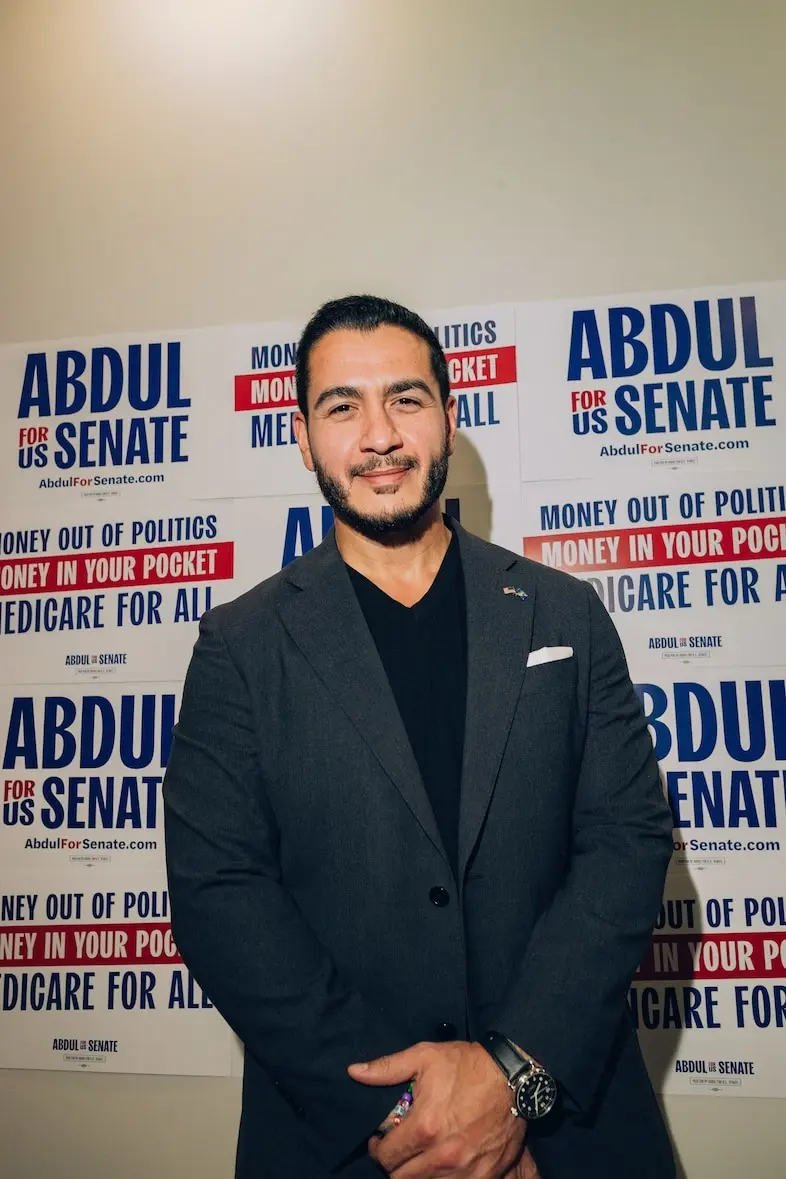
According to a time-honored adage, politics is showbusiness for ugly people. Yet, in the contemporary landscape of American governance, that cynical generalization feels increasingly obsolete. Across the Atlantic, a new generation of political figures is captivating the public imagination not merely through traditional policy platforms, but via a potent cocktail of swaggering charisma, progressive conviction, and undeniable physical appeal. From the gym-bro physique and sharp intellect of Michigan’s Abdul El-Sayed to the tailored, approachable charm of New York City political figures like Zohran Mamdani, and the boyish poise of figures such as Jon Ossoff, the United States is currently experiencing what Vogue recently declared a "Golden Age of Hot-Guy Politicians."
For observers in the United Kingdom, however, watching from across the pond resembles the plight of Victorian urchins pressing their faces against a confectioner’s window. Whatever the state of mainstream British democracy might be, an abundance of magnetic, visually striking leaders is decidedly not part of the equation.
This essay investigates the curious absence of dynamic, charismatic left-wing figures in Westminster. By examining the structural gatekeeping of British political parties, the stifling conformity of the parliamentary pipeline, and the deep psychological link between perceived physical attractiveness and political integrity, we can understand why the "crisis of sexy men" in British politics is, at its core, a profound crisis of authenticity, imagination, and democratic hope.
Detailed Chronology: The Evolution of Political Aesthetics
To understand how modern political aesthetics have evolved, it is necessary to trace the trajectory of how appearance, media, and power have interacted over the past century.
The Television Era and the American Standard
The intersection of physical appearance and political viability changed forever with the advent of televised debates during the 1960 U.S. presidential election between Richard Nixon and John F. Kennedy. While radio listeners narrowly favored Nixon, television viewers were instantly seduced by Kennedy’s youthful vitality, sharp tailoring, and cinematic confidence.
Throughout the late 20th century, the United States largely maintained a baseline expectation that its leaders possess a certain standard of visual appeal. Even accounting for exceptions—such as Gerald Ford or the George Bushes—the median level of physical presence among American leaders remained relatively high. Figures like Bill Clinton and Barack Obama leveraged their personal magnetism to project national confidence, effectively merging the worlds of celebrity and statesmanship.
The UK’s Reluctant Infatuation with "Dishy Rishi"
In contrast, British political history has historically prized understated, often deliberately dowdy aesthetics, framing excessive polish as an indicator of insincerity or elitism. While British political commentators have occasionally attempted to manufacture domestic heartthrobs—witness the Gen-X media’s brief, awkward obsession with "Dishy Rishi" Sunak, or subsequent attempts to rebrand Sir Keir Starmer as a "Downing Street Daddy" or "beefcake adjacent"—these efforts have routinely fallen flat.
Public polling on the matter has frequently resulted in comedic dissonance. A notorious survey conducted by an extramarital dating platform named Reform’s Richard Tice at the top spot and Nigel Farage at number two. While such rankings speak more to the idiosyncratic user base of the polling platform than national consensus, they underscore a stark reality: the British public possesses slim pickings when evaluating political attractiveness. British voters are left starved for leaders who combine physical vitality with genuine political dynamism.
Supporting Context & Metrics: The Mechanics of Charisma
The absence of a British equivalent to El-Sayed or Mamdani cannot be dismissed merely as a superficial matter of genetics. Physical attractiveness in politics is rarely a standalone metric; it is deeply intertwined with charisma, ideological conviction, and the perception of personal integrity.
The Anatomy of Modern Left-Wing Appeal
To dissect why certain modern figures generate intense public fervor, one must look beyond the gym memberships and well-fitted suits. Lewis Brown, host of the Enough About Me podcast and a prominent commentator on political culture, notes that the appeal of figures like El-Sayed and Mamdani is fundamentally rooted in their unwavering bravery.
"These people bring a swagger to politics, and that is rooted in integrity," Brown argues. "They’re intelligent, they’re brave and they believe in what they’re saying."
Crucially, this attractiveness is symbiotic with their radical policy positions. El-Sayed’s appeal is inseparable from his principled refusal to compromise on progressive international stances, just as Mamdani’s charm is derived from his relentless, material commitment to improving the lives of everyday New Yorkers. The underlying engine driving public adoration is not just a handsome face, but the intoxicating promise of systemic betterment and unapologetic resistance to the status quo.
The British Institutional Bottleneck
Why, then, has Westminster failed to produce a similar archetype? The answer lies in the highly centralized, tightly gatekept nature of British political parties.
Unlike the more porous, primary-driven American electoral system—where insurgent candidates can bypass party machinery to build direct, enthusiastic grassroots movements—the UK party apparatus exercises ironclad control over candidate selections. During recent general elections, aspiring left-wing candidates and independents have frequently found themselves blocked from standing due to ideological vetting, particularly concerning foreign policy stances or systemic critiques.
Instead, the traditional British parliamentary pipeline draws heavily from a homogenous pool:
- Party loyalists trained in compliance.
- Philosophy, Politics, and Economics (PPE) graduates from Oxford University.
- Career political staffers with risk-averse instincts and non-threatening views.
This structural filter has crippled British democracy by systematically weeding out unconventional thinkers, fierce debaters, and anyone possessing the kind of raw, magnetic charisma that disrupts the political establishment.
Official Statements and Expert Perspectives
The stifling conformity of the British political ecosystem has drawn sharp critiques from political analysts, cultural commentators, and researchers studying voter behavior.
Reflecting on the psychological profile of successful Westminster politicians, Lewis Brown pulls no punches:
"To make it in British politics, you have to be kind of grovelly. You have to be kind of fake. You have to be a bit of a weasel. And the people who make it through to the top tend to be like that. Politics and political media is a dorks’ club, and they circle the wagons when anyone gets too uppity."
Brown notes that the system is structurally optimized to produce technocratic managers—such as Cabinet minister Wes Streeting—while ruthlessly neutralizing charismatic insurgents. He points to the treatment of Jeremy Corbyn as a primary case study. While Corbyn may not fit the conventional mold of a Hollywood leading man, his ability to animate millions of young people provoked an immediate, hostile counter-narrative from the establishment, which weaponized accusations of a "cult of personality" to discredit his mass appeal.
Academic research reinforces the gravity of these dynamics. Studies published in behavioral journals consistently demonstrate that physical attractiveness and perceived competence provide an electoral advantage across global democracies. However, experts warn against misinterpreting the problem. The goal is not merely to install "sexier" candidates to game the electoral cycle; rather, the absence of youthful energy, bold vision, and aesthetic vitality is a symptom of a broader democratic deficit.
Future Outlook: Reclaiming Authenticity in Westminster
As the United Kingdom looks toward future electoral cycles, the lessons drawn from the intersection of aesthetics, integrity, and political machinery offer a sobering roadmap.
- Decentralization of Candidate Selection: If British parties wish to reconnect with a disillusioned electorate, they must loosen central committee controls and allow genuinely insurgent, grassroots voices to rise through the ranks without demanding ideological sterilization.
- Embracing Bold Visions over Technocratic Management: The public hunger for charismatic leadership is, at its heart, a desire for hope. Until mainstream British politics can offer leaders who display genuine moral courage and refuse to capitulate to institutional cowardice, the "crisis of charisma" will persist.
- Recognizing the Link Between Integrity and Appeal: Voters are acutely perceptive. They can distinguish between manufactured, focus-grouped public relations stunts and the organic confidence of a leader who actually believes in their mission.
Ultimately, the crisis of handsome, dynamic politicians in the UK is not about bone structure or tailoring. It is about a political system that systematically locks out youthful energy, renders popular progressive positions taboo, and denies citizens candidates who make them feel genuinely hopeful about the future. Until Westminster learns to tolerate authenticity and bravery, its political class will remain trapped in a beige, uninspiring loop—proving that while politics may not always be showbusiness for ugly people, British politics remains remarkably effective at making it deeply unwatchable.