Executive Overview
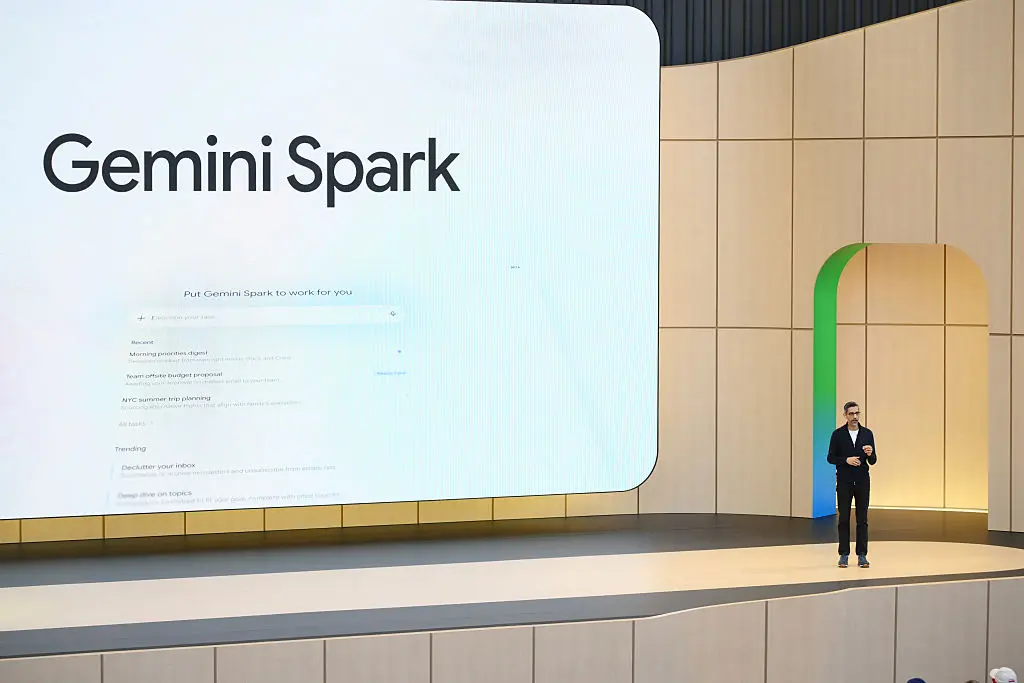
In its latest product update, Google made a bold promise regarding its newly upgraded Gemini Live voice features: "You shouldn’t have to guess whether a task requires Spark, a Daily Brief, or a quick inbox search." On paper, this statement represents a major step toward user-centric design—a promise that the Gemini application is now intelligent enough to parse natural language, evaluate user intent, and execute complex workflows seamlessly.
However, a deeper look at the actual user interface reveals a stark contradiction. While Google’s marketing department champions seamless integration, its product development team continues to fracture the user experience. The Gemini application remains cluttered with distinct, heavily branded features—such as "Spark," "Daily Brief," and standard "Chat"—each possessing its own navigation, visual identity, and operational silo.
This friction is not unique to Google. It represents a systemic issue across the generative AI landscape: the tendency of technology companies to expose their internal engineering architectures directly to consumers. Rather than hiding complex technical processes behind intuitive, unified interfaces, AI developers are forcing users to learn corporate taxonomy and switch between distinct "interaction modes." As tech giants scramble to find the elusive "killer app" for AI, this engineering-first design philosophy threatens to alienate mainstream consumers. Meanwhile, quieter, integrated approaches—such as Apple’s systemic AI features and headless, text-based messaging agents—are quietly demonstrating what a truly friction-free AI future looks like.
Detailed Chronology: The Fragmentation of Google Gemini
To understand how Google arrived at this fragmented interface, it is necessary to examine the evolution of its consumer AI strategy. Over the past two years, Google has repeatedly rebranded and restructured its AI offerings—transitioning from Bard to Gemini, and constantly shuffling its internal feature sets. The latest Wednesday announcement regarding Gemini Live voice features was meant to signal a era of consolidated capability. Instead, it highlighted a product strategy divided by internal corporate silos.
[Google AI Evolution]
Bard (Early Beta) -> Gemini Rebrand -> Feature Fragmentation (Spark, Daily Brief, Chat)
                                        |
                                        +--> User Confusion & High Cognitive Load
Currently, when a user opens the Gemini app, they are not met with a singular, omnipotent assistant. Instead, they must navigate three distinct features:
1. The "Daily Brief"
Designed to act as an AI-powered personal assistant, the Daily Brief aggregates data from across the Google ecosystem—including Gmail, Google Calendar, and Google Docs—to deliver proactive, personalized agendas.
However, in practice, the feature struggles with contextual prioritization. Rather than distinguishing between urgent, actionable items (such as an upcoming flight or a rescheduled meeting) and low-priority background noise, the Daily Brief often serves up unsolicited nudges. For example, it may prompt users to resume research projects started days prior or, more invasively, resurface past Google search queries. This design choice crosses the line from helpful assistance to digital surveillance, reminding users of Google’s pervasive data-tracking apparatus without delivering corresponding utility.
2. "Spark"
Positioned as Gemini’s action-oriented agent, Spark is technically one of the app’s most powerful tools. It is designed to perform multi-step tasks on behalf of the user, such as booking reservations, drafting emails, or organizing files.
Yet, rather than operating as an invisible, backend engine that activates automatically when a user makes a complex request, Spark has been packaged as an independent sub-brand. This forces users to make a conscious, upfront decision: Is my request a standard "chat," or does it require "Spark"? This division serves Google’s internal organizational structure far better than it serves the end user.
3. Standard "Chat"
The baseline conversational interface that handles general queries, text generation, and basic information retrieval. It remains isolated from the proactive capabilities of Daily Brief and the agentic workflows of Spark, creating a fractured experience where user data and context are compartmentalized.
Supporting Context & Metrics: The Industry-Wide UX Epidemic
The usability issues plaguing Google Gemini are symptomatic of a broader design crisis across the tech sector. Silicon Valley has historically struggled with "Conway’s Law"—the adage that organizations design systems which mirror their own internal communication structures. In the rush to commercialize generative AI, companies are shipping their organizational charts directly to the consumer app stores.
+-------------------------------------------------------------------------+
|                         THE COGNITIVE LOAD PROBLEM                      |
+-------------------------------------------------------------------------+
|  Platform    |  Mode A       |  Mode B       | User Friction Point      |
+--------------+---------------+---------------+--------------------------+
|  Google      |  Chat         |  Spark / Brief| Manual mode selection    |
|  Anthropic   |  Claude Chat  |  Claude Cowork| Fragmented memory silos  |
|  OpenAI      |  ChatGPT Chat |  ChatGPT Work | Disjointed workspaces    |
+--------------+---------------+---------------+--------------------------+
The Competitors: Anthropic and OpenAI
Google is far from the only offender in this space:
- Anthropic’s Claude: Until recently, users of Anthropic’s Claude app had to manually toggle between "Chat" and "Cowork" modes. Crucially, these two interfaces did not share a unified memory. A user could spend hours training Claude on a specific project in Chat, only to find that the Cowork interface had no record of the conversation. While Anthropic has begun addressing these memory gaps, the initial bifurcation highlights an engineering mindset that prioritizes technical segregation over user intuition.
- OpenAI’s ChatGPT: ChatGPT users face a similar dilemma, constantly navigating between "Chat" and "Work" spaces. Users must actively manage their context windows and select the appropriate workspace, turning what should be an intuitive conversational experience into an administrative chore.
The Cognitive Load of "Interaction Modes"
By forcing users to learn brand names for what are essentially different computational layers or UI surfaces, AI companies are increasing the cognitive load of their products. Mainstream consumers do not want to analyze whether their query requires an agent, a retrieval-augmented generation (RAG) pipeline, or a simple database lookup. They simply want their query answered or their task completed.
Official Statements and Industry Perspectives
While product managers defend these segmented features as necessary steps toward managing complex AI capabilities, independent analysts and venture capitalists argue that this approach misses the mark on consumer behavior.
In a recent analysis of the consumer AI landscape, Justine Moore, an investment partner at venture capital firm Andreessen Horowitz (a16z), highlighted the growing disconnect between complex AI applications and actual user preferences:
"People don’t want to open an app every time they need help — they want a contact they can text like a friend. And the gold standard is iMessage."
This perspective is driving a quiet counter-revolution in the startup ecosystem. A growing class of lightweight, text-based AI services is bypassing dedicated mobile apps altogether. Startups such as Poke, Ollie, Lindy, Orchid, Lucas, Folk, Tomo, and Instinct are building "headless" AI assistants that operate entirely via SMS or iMessage.
By leveraging text messaging—a clean, universal, and deeply understood user interface—these companies eliminate the onboarding friction, navigation menus, and branding clutter that plague platforms like Gemini. Users simply text a phone number, and the backend orchestrator figures out how to execute the request, whether that involves querying a database, invoking an agent, or drafting a document.
Future Outlook: The Battle Between Invisible AI and Ecosystem Portals
As the AI market matures, two distinct product design philosophies are emerging, setting up a major battle for consumer adoption.
                    ┌───────────────────────────┐
                    │  Future of AI Interfaces  │
                    └─────────────┬─────────────┘
                                  │
         ┌────────────────────────┴────────────────────────┐
         ▼                                                 ▼
┌─────────────────────────┐                       ┌─────────────────────────┐
│     Ecosystem Portals   │                       │      Invisible AI       │
│  (Google, OpenAI, etc.) │                       │  (Apple, SMS Startups)  │
├─────────────────────────┤                       ├─────────────────────────┤
│ • Branded Sub-features  │                       │ • Integrated into OS    │
│ • Dedicated App Hubs    │                       │ • Zero-Friction UI      │
│ • High Cognitive Load   │                       │ • Contextual Awareness  │
└─────────────────────────┘                       └─────────────────────────┘
1. The Ecosystem Portal Model (Google, OpenAI, Microsoft)
These companies view AI as a destination. They want users to open a dedicated app (Gemini, ChatGPT, Copilot) and treat it as an operating system within an operating system. To justify high subscription fees and showcase technical progress, they continually add branded features, modes, and tools. The risk of this approach is feature creep, user fatigue, and a high barrier to entry for non-technical users.
2. The Invisible AI Model (Apple, Headless Startups)
This philosophy argues that AI should be infrastructure, not a destination. The premier example of this approach is Apple’s implementation of Apple Intelligence.
Rather than forcing iPhone users to open a dedicated "Apple AI" app and choose between different writing, editing, or search modes, Apple is quietly injecting machine learning into the tools users already use. Spotlight Search becomes more intuitive, the Photos app understands natural language queries, the Camera automatically extracts text, and Siri gains system-wide contextual awareness. The user’s daily workflow remains entirely unchanged; their existing tools simply become smarter.
Conclusion
For Google and its peers to capture the mainstream market, they must move past the engineering-centric design paradigm. The success of future AI assistants will not be measured by the number of branded sub-features they contain, but by how effectively they hide their own complexity. Until Google integrates Spark, Daily Brief, and Chat into a single, cohesive, and invisible intelligence engine, Gemini will remain a collection of powerful tools looking for a unified product.