Executive Overview
The evolution of desktop display technology has long been characterized by a persistent compromise: users are forced to choose between the razor-sharp text clarity and expansive canvas needed for professional productivity, or the blistering refresh rates, infinite contrast ratios, and rapid response times required for elite gaming. Historically, bridging this divide meant managing multiple monitors or accepting sub-par performance in one of the two categories.
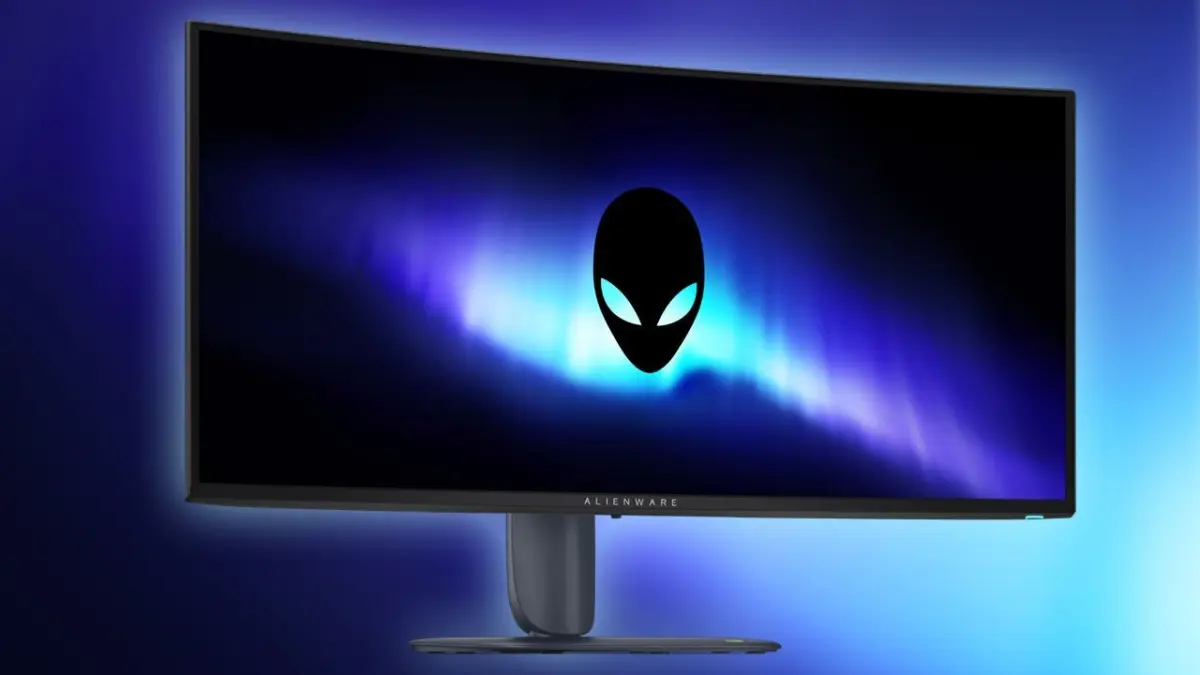
That paradigm shifted permanently with Dell’s landmark announcement earlier this year, and it has now materialized in the commercial market. The newly released Alienware AW3926QW proudly claims the mantle of the world’s first 39-inch 5K monitor equipped with RGB stripe tandem OLED technology.
Priced out of the gate at $1,099.99 directly through Dell with complimentary delivery—and aggressively discounted to $999.99 by major retailers like Best Buy for the Black Friday shopping window—this display is more than just another high-end peripheral. It is a technological tour de force. By successfully marrying advanced tandem OLED architecture with a traditional RGB stripe subpixel layout, Alienware has effectively eliminated the notorious text-fringing issues that have historically plagued OLED desktop monitors.
Boasting a stunning 5120 x 2160 resolution, a peak brightness of 1,300 nits, a fluid 165Hz refresh rate, and a comprehensive three-year warranty covering OLED burn-in, the AW3926QW positions itself as the ultimate dream display for power users, content creators, and hardcore gamers alike.
Detailed Chronology: From Concept to Commercial Launch
To understand the significance of the Alienware AW3926QW, it is essential to trace the developmental timeline that brought this cutting-edge panel technology out of the research lab and onto consumer desks.
Q1–Q2: The Blueprint and Initial Announcement
Rumors and early industry briefings regarding a revolutionary widescreen OLED panel began circulating among hardware enthusiasts early in the year. Industry insiders noted that panel manufacturers were finally cracking the code on stacking OLED materials to increase longevity and luminance without sacrificing structural integrity.
When Dell officially pulled back the curtain on its new super-ultrawide OLED roadmap, the centerpiece was a mysterious 39-inch form factor utilizing an innovative "RGB stripe tandem OLED" configuration. At the time, display analysts questioned how quickly such bleeding-edge technology could be brought to mass production, anticipating exorbitant price tags well north of traditional consumer thresholds.
Late Q3: Regulatory Filings and Specifications Leak
By the late third quarter, supply chain logs and regulatory compliance filings began detailing the exact specifications of the forthcoming monitor, designated internally and publicly as the Alienware AW3926QW. Leaks confirmed that unlike its WRGB (White OLED) predecessors, this panel would feature a native 5K resolution spread across a 21:9 ultra-wide aspect ratio, paired with a moderate 1500R curvature designed to wrap comfortably around the user’s field of view without introducing geometric distortion. Furthermore, confirmation of next-generation connectivity standards—specifically DisplayPort 2.1 and HDMI 2.1—signaled that Dell was building this display to handle uncompressed, high-bandwidth signals natively from modern graphics processing units.
Q4: Commercial Debut and Holiday Price Drops
Midway through the fourth quarter, the monitor officially transitioned from an announcement to an available product. Dell listed the AW3926QW on its official storefront at $1,099.99. Demonstrating aggressive positioning in the competitive display market, retail partners such as Best Buy concurrently launched promotional pricing, slashing $100 off the MSRP for early adopters hunting for seasonal deals. This launch strategy instantly positioned the monitor not as an unreachable proof-of-concept, but as a aggressively priced disruptor in the premium display sector.

Supporting Context & Metrics: Decoding the Technology
The engineering marvel of the Alienware AW3926QW lies in its foundational components: tandem OLED stacking, RGB stripe subpixel arrangements, and high-density 5K resolution.
Understanding Tandem OLED Architecture
Standard single-layer OLED panels have long dominated the high-end television and gaming monitor markets, celebrated for their ability to turn individual pixels completely off to achieve absolute blacks and infinite contrast ratios. However, they faced two distinct limitations: restricted peak brightness levels (which can limit High Dynamic Range [HDR] impact in brightly lit rooms) and vulnerability to permanent image retention, commonly known as burn-in.
Tandem OLED technology solves these issues by vertically stacking multiple organic light-emitting layers on top of one another. Instead of forcing a single layer to work at maximum capacity—which accelerates degradation—the electrical load is distributed across multiple layers. The direct results of this multi-layer stack are profound:
- Massive Luminance Boost: The AW3926QW achieves an eye-watering peak brightness of 1,300 nits, allowing HDR content to truly pop with blinding highlights and rich, deep shadows.
- Enhanced Longevity: Spreading the luminescence workload drastically reduces the rate of pixel wear, making the panel significantly more resilient against static desktop elements and UI burnout.
The RGB Stripe Breakthrough and Text Clarity
While tandem OLED fixed brightness and longevity, early multi-layer panels often retained the traditional WRGB (White OLED) subpixel layout. While great for video consumption, WRGB layouts frequently suffer from color fringing around high-contrast edges—most notably visible when reading black text on a white background (e.g., word processors, coding environments, web browsing). This color fringing made early OLED monitors frustrating for prolonged productivity use.
Alienware’s AW3926QW shatters this limitation by implementing a true RGB stripe subpixel layout. By aligning red, green, and blue subpixels vertically in a traditional matrix rather than relying on an extra white subpixel, the monitor eliminates color fringing entirely. The resulting text clarity is razor-sharp, matching or exceeding the clarity found on traditional IPS panels of similar pixel densities.
Pixel Density and the 5K Form Factor
With a resolution of 5120 x 2160 stretched across a 39-inch ultra-wide canvas, the AW3926QW delivers a pixel density of 143 pixels per inch (PPI). To put this into perspective, this is visibly sharper than a standard 32-inch 4K monitor, which typically hovers around 138 PPI.
Because a 39-inch ultra-wide display spans a significant physical width, Alienware integrated a 1500R curvature. This moderate curve ensures that the outer edges of the screen sit comfortably within the user’s peripheral vision, reducing eye movement fatigue while maintaining flat geometric lines crucial for digital artists, video editors, and CAD designers.
Gaming Prowess: Speed and Synchronization
Beyond productivity, the AW3926QW is a thoroughbred gaming machine. OLED technology inherently boasts near-instantaneous pixel response times (measured in fractions of a millisecond), virtually eliminating motion blur and ghosting.
The monitor elevates this performance further with a robust 165Hz refresh rate at its native resolution, paired with comprehensive variable refresh rate (VRR) technologies. It features native support for AMD FreeSync Premium Pro and is fully NVIDIA G-Sync compatible, ensuring tear-free, stutter-free gaming even during chaotic combat sequences. Connectivity is future-proofed through modern DisplayPort 2.1 and HDMI 2.1 ports, allowing users to tap into the full bandwidth of current and next-generation graphics cards without relying on signal-compressing adapters.

Official Statements and Industry Reception
Industry analysts and early hardware reviewers have been nearly unanimous in their praise for the AW3926QW, viewing it as a watershed moment for display technology.
During the initial hardware showcases, Dell’s product engineering teams emphasized that the primary goal for the AW3926QW was to eliminate the "forced compromise" narrative. In official product briefings, Dell representatives noted:
"For years, consumers have been forced to buy separate screens or compromise their workflows if they wanted true OLED black levels and motion clarity. By pioneering RGB stripe tandem OLED technology in a 39-inch 5K form factor, we are delivering a display that requires zero concessions—whether you are rendering 4K video, compiling complex code, or competing in high-refresh-rate esports titles."
Display science commentators have echoed these sentiments, highlighting that the incorporation of a 3-year manufacturer warranty covering OLED burn-in serves as a powerful vote of confidence in the tandem architecture’s durability. By backing the product against its historically most vulnerable failure point, Dell has successfully lowered the psychological barrier to entry for professional users who might otherwise have been hesitant to invest in organic light-emitting diode technology for daily office work.
Future Outlook: What the AW3926QW Means for the Display Market
The commercial release and immediate promotional discounting of the Alienware AW3926QW mark a critical turning point for the desktop monitor industry.
For years, the monitor market has lagged slightly behind television manufacturing in adopting cutting-edge OLED panel advancements, primarily due to the unique demands of desktop use (such as static taskbars, multi-window snapping, and text-heavy applications). The success of Alienware’s tandem RGB stripe implementation proves that these hurdles can be systematically engineered out of existence.
Looking ahead, we can expect competitor brands to fast-track their own iterations of tandem OLED technology. As manufacturing yields improve and production scales up, the prohibitive pricing models traditionally associated with bleeding-edge panels will likely soften, making ultra-high-resolution, burn-resistant OLEDs the new gold standard for consumer and enterprise setups alike.
For now, the Alienware AW3926QW stands proudly in a category of its own. By successfully merging workstation-grade text clarity, expansive 5K ultra-wide real estate, and elite gaming specifications into a single, cohesive package—bolstered by a comprehensive three-year burn-in warranty—Dell has set a towering benchmark that the rest of the industry will spend the foreseeable future attempting to match.