
Executive Overview
In the sprawling, often shadowy landscape of modern cybercrime, few threat actors managed to command as much notoriety and inflict as widespread destruction in 2024 as Connor Riley Moucka. A 26-year-old software engineer hailing from Kitchener, Ontario, Moucka has officially pleaded guilty to a slate of severe federal charges, including computer fraud, wire fraud, conspiracy, and aggravated identity theft. His admissions bring a temporary sense of closure to one of the most devastating corporate data extortion campaigns in recent memory—a campaign that compromised more than 165 major organizations utilizing the cloud analytics platform Snowflake.
Moucka, who operated under a shifting constellation of online aliases—most prominently “Judische” and “Waifu”—wasn’t acting alone. Alongside a cadre of international co-conspirators, including a U.S. Army soldier stationed abroad and an elusive American hacker hiding out in Turkey, Moucka orchestrated a sophisticated web of credential stuffing, data theft, and aggressive extortion. The fallout from their operations exposed the sensitive personal data of billions of individuals, including call and text history records belonging to more than 100 million AT&T customers, financial documents, social security numbers, and passport details.
The U.S. Department of Justice (DOJ) has characterized Moucka as a central node in an extensive illicit enterprise that netted over $2.5 million in extortion payments alone. More than just a traditional data thief, Moucka’s criminal methodology blurred the lines between financial extortion, targeted harassment of government officials, and digital terrorism. This deep-dive report examines the mechanics of the Snowflake breach, the collaborative multi-agency investigation that brought Moucka down, the troubling entanglement of military personnel and extremist elements, and the lingering threat of cybercriminals finding safe harbor overseas.
Detailed Chronology: From Credential Stuffing to Global Extortion
The genesis of the Snowflake breach campaign can be traced back to early 2024, though the seeds of Moucka’s criminal career were planted years prior. Investigative reports and federal indictments indicate that Moucka had been actively involved in complex data breaches and voice-phishing (vishing) campaigns targeting U.S. enterprises since at least 2020. However, it was his pivotal role in targeting Snowflake customer instances between February and October 2024 that cemented his status as a premier threat actor.
The Snowflake Campaign: Exploiting the Weakest Link
Rather than exploiting a zero-day vulnerability in Snowflake’s core infrastructure itself, Moucka and his co-conspirators leveraged a classic yet devastatingly effective vector: stolen corporate credentials. Operating on the premise that corporate security is only as strong as its weakest endpoint, the threat actors systematically hunted for customer accounts that failed to enforce multi-factor authentication (MFA).
Armed with usernames and passwords scavenged from prior, unrelated infostealer malware infections and dark web data dumps, the hackers gained unauthorized entry into cloud-hosted databases belonging to some of the world’s most recognizable brands. Household names—including TicketMaster, LendingTree, Advance Auto Parts, and Neiman Marcus—found their proprietary repositories exposed, downloaded, and weaponized against them.
Industrial-Scale Data Theft
Once inside the compromised tenant environments, the threat actors didn’t merely browse; they plundered. The DOJ notes that Moucka and his associates exfiltrated terabytes of sensitive data. This treasure trove of stolen assets included:
- Non-content call and text history records for over 100 million AT&T customers.
- Detailed banking and financial records.
- Corporate payroll files containing employee identification details.
- Drug Enforcement Administration (DEA) registration numbers.
- State-issued driver’s licenses, international passport numbers, and Social Security Numbers (SSNs).
With these massive data troves safely in their possession, the hackers initiated a ruthless campaign of corporate extortion. They threatened to publish sensitive corporate secrets and customer PII (Personally Identifiable Information) on public-facing cybercrime forums unless hefty cryptocurrency ransoms were paid.

The Climax and Capture
By September 2024, independent investigative reporting—specifically by KrebsOnSecurity—began exposing the true identity behind the moniker “Judische,” linking the online persona to a Canadian software engineer residing in Ontario. The research also revealed alarming overlaps between these high-level financial cybercriminals and extremist online subcultures known for harassing and extorting minors.
Realizing the net was tightening, Canadian authorities, acting on a provisional warrant issued by the United States, arrested Moucka at his Ontario residence in late October 2024. A subsequent search of his digital footprint and physical surroundings yielded substantial evidence linking him directly to the Snowflake and AT&T breaches. Rather than folding immediately, Moucka’s criminal network attempted to retaliate, dragging government officials and security researchers into the crosshairs of vicious re-extortion attempts using leaked data belonging to investigators and their families.
Supporting Context & Metrics: The Human and Financial Toll
To fully comprehend the magnitude of the Snowflake extortion campaign, one must examine the raw metrics and the diverse cast of characters that enabled Moucka’s operations. The enterprise was not a solitary endeavor; it relied on a syndicate of digital mercenaries whose individual skill sets intersected to maximize chaos.
The Co-Conspirators: A Snapshot of the Syndicate
Federal indictments and subsequent guilty pleas have shed light on the inner circle operating alongside Moucka:
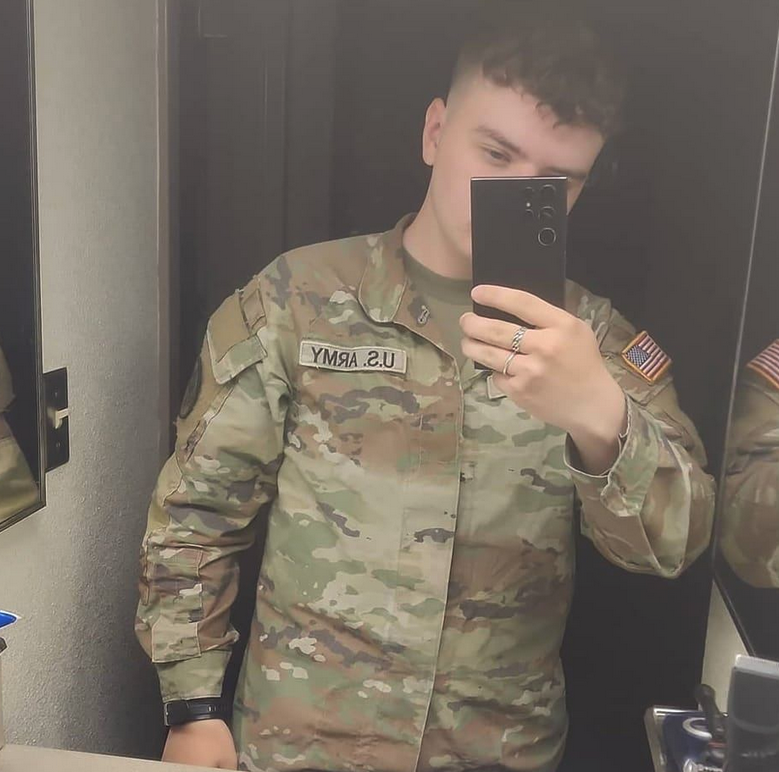
- Cameron “Kiberphant0m” Wagenius: A U.S. Army soldier stationed in South Korea, Wagenius operated within the same Telegram and Discord inner circles as Moucka. Wagenius pleaded guilty in July 2025 to extorting major telecommunications providers, including AT&T and Verizon. Demonstrating the audacious nature of the group, Wagenius engaged in "re-extortion"—a tactic where victims who had already paid were threatened anew. Notably, right after Moucka’s arrest in October 2024, Wagenius posted what he claimed were the AT&T call logs of then-President-elect Donald Trump and then-Vice President Kamala Harris on hacker forums, alongside alleged U.S. National Security Agency (NSA) schematics. Wagenius faces a maximum sentence of 25 years plus mandatory consecutive time and is scheduled for sentencing on September 3, 2026.
- John Erin Binns (a.k.a. “IRDev,” “IntelSecrets”): A 26-year-old American fugitive, Binns has long been on the radar of international law enforcement. Indicted for his admitted role in the massive 2021 T-Mobile breach that exposed data belonging to at least 76 million customers, Binns managed to evade U.S. custody for years. According to sources close to the investigation, Binns recently secured Turkish citizenship. Under Turkish constitutional law, citizens cannot be extradited to foreign jurisdictions, rendering him functionally immune to U.S. extradition requests—a glaring safe harbor issue in contemporary geopolitical cybercrime enforcement.
Financial Impacts and Extortion Metrics
- $2.5 Million+: The minimum verified amount collected by Moucka and his co-conspirators in direct ransom payments.
- 165+: The total number of unique corporate organizations compromised during the Snowflake-targeted credential-stuffing campaign.
- 100 Million+: The staggering count of AT&T subscribers whose call and text metadata were illicitly accessed and downloaded.
- 30 Years: The maximum potential prison sentence Moucka faces across his remaining conviction counts, compounded by a mandatory minimum two-year consecutive sentence for aggravated identity theft. His official sentencing is scheduled for October 27.
Official Statements and Industry Response
The fallout from the Snowflake breaches forced a radical reassessment of cloud security paradigms, supply chain vulnerabilities, and corporate accountability.
In its official statements following Moucka’s guilty plea, the U.S. Department of Justice underscored the severity of modern cyber-extortion schemes, emphasizing that transnational criminal actors cannot hide behind keyboards, VPNs, or international borders.
"Connor Moucka and his co-conspirators exploited foundational security weaknesses to inflict billions of records’ worth of damage on major U.S. enterprises, leveraging fear and extortion for personal enrichment," a DOJ representative noted in public filings. "The Department of Justice remains fully committed to dismantling these global cybercrime networks and bringing perpetrators to justice, regardless of where they operate."
Snowflake’s Security Overhaul
For Snowflake, the attacks served as an existential wake-up call regarding customer-side security configurations. While the intrusions did not stem from a breach of Snowflake’s proprietary source code or cloud perimeter, the company faced immense scrutiny over how easily attackers leveraged stolen credentials against accounts lacking robust defense-in-depth measures.
In response to the data thefts, Snowflake instituted aggressive, mandatory security updates. The company overhauled its platform architecture to:
- Significantly increase baseline password complexity requirements.
- Mandate the enforcement of Multi-Factor Authentication (MFA) across all existing and newly provisioned customer accounts.
- Deploy enhanced anomaly-detection systems designed to flag suspicious API queries and abnormal geographic login patterns in real-time.
Security analysts have widely praised these steps, noting that the breach serves as a cautionary tale for the entire SaaS (Software-as-a-Service) industry: cloud providers must actively force their client base to adopt high-standard security hygienic practices rather than leaving MFA optional.
Future Outlook: Unresolved Threads and the Shifting Cyber Threat Landscape
As Connor Moucka awaits his October 27 sentencing hearing and Cameron Wagenius prepares for his day in court in September 2026, the global cybersecurity community is left grappling with several systemic vulnerabilities exposed by this high-profile case.
The Geopolitical Safe Haven Dilemma
The ability of individuals like John Erin Binns to evade American law enforcement by acquiring citizenship in non-extradition nations like Turkey highlights a persistent Achilles’ heel in international cyber jurisprudence. As long as rogue hackers can successfully launder their legal status through sovereign states that refuse extradition, cyber syndicates will continue to operate with a degree of structural impunity. Law enforcement agencies are increasingly forced to rely on unconventional intelligence-sharing, asset freezes, and travel restrictions to pressure foreign allies into indirect enforcement actions.
The Convergence of Ideology and Cybercrime
Perhaps one of the most disturbing revelations stemming from the KrebsOnSecurity investigations into Moucka and his associates is the growing nexus between financially motivated cybercriminals and violent online subcultures. The overlap between hackers-for-hire and extremist groups specializing in the harassment, swatting, and extortion of minors suggests that the modern digital underground is increasingly populated by actors devoid of traditional moral boundaries. These individuals view digital extortion not merely as a business model, but as a mechanism for total psychological domination over their victims, often dragging investigators, family members, and public officials into the fray.
A Turning Point for Corporate Cloud Defense
Ultimately, the prosecution of Connor Moucka marks a major victory for international law enforcement collaboration—bringing together the FBI, the Royal Canadian Mounted Police (RCMP), and global cybersecurity researchers. However, it also serves as a permanent reminder that the weakest link in the cloud security chain is almost always human.
As enterprises migrate increasingly complex workloads to multi-tenant cloud environments, the lessons learned from the Snowflake extortions will reverberate for years to come. Zero Trust architectures, mandatory MFA enforcement, continuous credential monitoring, and robust threat intelligence sharing are no longer optional corporate luxuries; they are the absolute baseline required to survive in an era where actors like "Judische" and "Waifu" are capable of holding the global digital economy hostage.