Executive Overview
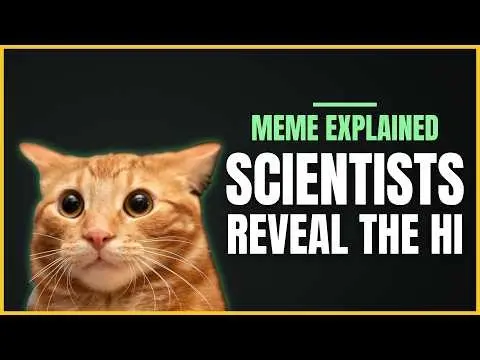
In the fast-paced ecosystem of contemporary internet culture, viral trends often defy conventional logic, mutating from niche in-jokes into inescapable cultural touchstones within a matter of days. The latest phenomenon sweeping through the algorithmic feeds of Instagram and TikTok is no exception. Centered around a deceptively simple image—an expressive orange cat juxtaposed against bold, faux-news typography reading "scientists reveal the hi"—the meme has captured the collective imagination of millions.
Stylized meticulously to mimic the high-contrast aesthetic of a BBC News video thumbnail, the image sits at the intersection of absurdity, surrealist humor, and meta-commentary on modern media consumption. While casual scrollers might easily mistake the graphic for a glitch in their feed or an AI-generated fever dream, the reality behind the meme is delightfully grounded. The photograph of the ginger feline is entirely authentic, tracing its lineage back to a genuine 2025 BBC News documentary feature exploring the genetic mysteries of why orange cats possess their distinct coloration.
However, the leap from an educational public broadcast to a ubiquitous exploitable meme format highlights the unpredictable nature of internet virality. This investigative report explores the genesis, mechanics, and cultural resonance of the "Scientists Reveal the Hi" meme. We examine how a stray piece of journalism was repurposed into an exploitable template, dissect the psychology of modern internet humor, and trace the trajectory of a trend that has rapidly become one of the defining viral formats of late 2026.
Detailed Chronology: From Biological Science to Meme Infamy
To understand how a single frame from a British public service broadcaster became an ironclad punchline across global social media platforms, one must trace the timeline of its evolution. The journey of the "Scientists Reveal the Hi" meme is a masterclass in how internet subcultures consume, deconstruct, and rebuild media content.
Phase 1: The Genesis – The 2025 BBC Feature
The story begins not in the subterranean forums of Reddit or the chaotic comment sections of TikTok, but in the thoroughly respectable halls of British journalism. In 2025, the British Broadcasting Corporation (BBC) published a multimedia science feature—complete with accompanying video coverage—designed to answer a question that has puzzled cat lovers for centuries: Why are ginger cats ginger?
As part of their standard digital packaging, BBC producers crafted a striking video thumbnail. It featured a crisp, close-up photograph of an inquisitive orange cat, paired with standard, authoritative headline text explaining the genetic mutations responsible for feline pheomelanin production. At the time, the piece performed standard metrics for a lifestyle science feature, educating viewers on feline genetics without any inkling of the digital immortality awaiting its visual assets.
Phase 2: The Extraction and Subversion
For months, the thumbnail lay dormant in the vast archives of the internet until it was flagged by memetic prospectors. The exact catalyst for the edit remains shrouded in the decentralized fog of internet history, but the initial pivot occurred when a user cropped the original BBC News graphic and aggressively altered the headline text.
Replacing a complex scientific inquiry with the monosyllabic, aggressively mundane greeting "hi" immediately created a jarring comedic dissonance. The juxtaposition of the serious, gravitas-laden BBC News branding with a hollow, meaningless salutation formed the core engine of the joke. It parodied the clickbait sensationalism of modern digital journalism, where outlets frequently tease profound revelations that amount to very little.
Phase 3: The TikTok and Instagram Explosion (October 2026)
By late October 2026, the image transitioned from a static joke into a full-fledged exploitable template. Creators across Instagram Reels and TikTok began deploying the image as a reaction macro, a shitposting staple, and a foundational element in multi-layered video edits.
The format rapidly expanded into the "scientists reveal the X" genre, where creators swapped out the word "hi" for increasingly absurd, banal, or hyper-specific phrases. Yet, the original orange cat iteration remained the gold standard. User engagement skyrocketed, fueled by the image’s inherent visual ambiguity—viewers forced to double-take at their screens to determine whether the BBC had genuinely published an article about feline greetings.
Supporting Context & Metrics: Decoding the Viral Machinery
The rapid ascent of the "Scientists Reveal the Hi" meme is supported by a confluence of platform mechanics, visual design psychology, and the unique cultural capital of orange cats online.
The Psychology of the "Fake News" Aesthetic
A critical element of the meme’s success is its precise replication of journalistic authority. By utilizing the distinct typography, color palette, and layout associated with major news networks like the BBC, the meme weaponizes institutional trust for comedic effect.
In media theory, this is a form of stylistic subversion. When a user’s brain processes the visual cues of hard news—implying high-stakes investigation, peer-reviewed science, and global importance—and is immediately confronted with the word "hi" paired with an unfazed feline, a micro-dose of cognitive dissonance occurs. This sudden resolution of tension triggers humor. Furthermore, it serves as a satirical commentary on the state of digital media, where sensationalized thumbnails ("Scientists reveal the secret to…") often lead to underwhelming content.
[BBC News Visual Branding] + [Authoritative Scientific Context]
       │
       ▼
[Subverted Minimalist Text ("hi")] + [Undaunted Orange Cat]
       │
       ▼
[Cognitive Dissonance & Comedic Resolution] ➔ [Viral Virality]
The Unmatched Cultural Capital of Orange Cats
Felines have ruled the internet since the days of dial-up, but orange cats occupy a uniquely revered tier in contemporary meme culture. Popularly stereotyped across social media as sharing a single, collective brain cell, ginger cats are universally associated with chaotic energy, unearned confidence, and lovable idiocy.
Pairing this specific archetype of feline behavior with a faux-scientific breakthrough creates an instant comedic narrative. The implication that global researchers spent millions of dollars and countless hours analyzing an orange cat merely to extract a casual greeting strikes a chord with audiences weary of over-engineered internet content.
Quantitative Reach and Platform Analytics
While early tracking data from platforms like Know Your Meme placed initial documented interest and archiving spikes around late October 2026, the secondary and tertiary ripples of the meme extended far beyond initial view counts.
- Cross-Platform Migration: The meme successfully breached the barrier between text-heavy forums and short-form video algorithms.
- Exploitable Flexibility: The structural template (
[Authoritative Source] + [Absurdly Mundane Subject]) allowed for infinite user-generated variations, dramatically lowering the barrier to entry for content creators looking to piggyback on the trend.
Official Perspectives: The Intersection of Media and Memetics
The phenomenon has also sparked subtle discourse regarding how traditional media institutions are viewed by younger, digitally native demographics.
Industry analysts note that legacy media brands like the BBC have become frequent subjects of meme culture not out of malice, but because their visual branding is so globally recognizable that it serves as an instant shorthand for seriousness. When internet subcultures take a piece of educational journalism—such as a legitimate study on feline coat genetics—and reduce it to a surrealist cat joke, it represents a complete democratization of media consumption.
"We are witnessing the total absorption of institutional media into the vernacular of internet shitposting," notes digital culture researcher Dr. Aris Thorne. "The BBC didn’t intend to publish a meme, but in the modern attention economy, any asset connected to an expressive animal and a bold headline is public property the moment it hits an RSS feed."
Representatives for platforms where the meme proliferates have observed that humor centered around linguistic subversion consistently outperforms traditional viral formats. Users are increasingly fatigued by hyper-polished influencer content, gravitating instead toward low-fi, deeply absurdist humor that mirrors the fragmented nature of modern thought.
Future Outlook: Where Does the Orange Cat Go From Here?
As October 2026 draws to a close, the burning question among digital anthropologists and meme historians is longevity: Will "Scientists Reveal the Hi" endure as a permanent fixture of internet lexicon, or will it burn out like a shooting star in the algorithmic night sky?
1. The Life Cycle of the "Exploitable"
The structural strength of the meme—its function as an open-source template (the "Scientists Reveal the X" format)—suggests it has considerable runway left. Unlike static image macros that remain rigid, templates that allow for infinite linguistic substitutions tend to mutate rather than die. We can anticipate variants appearing across professional spheres, gaming communities, and niche fandoms well into the winter months.
2. Institutional Awareness and Co-optation
A significant inflection point for any viral trend is the moment the subject of the meme becomes aware of it. While the BBC has yet to officially lean into the joke, the history of social media suggests that corporate social media managers are watching closely. Whether the original ginger cat stars in a follow-up feature or corporate accounts attempt to weaponize the format for brand synergy remains to be seen. However, heavy-handed institutional adoption often signals the beginning of a meme’s decline.
3. The Enduring Legacy of Feline Absurdism
Ultimately, "Scientists Reveal the Hi" is part of a grander, unbroken tradition of internet culture: humanity’s endless fascination with cats doing mundane things while treated with disproportionate gravitas. Long after the specific BBC thumbnail fades from active algorithmic rotation, the image of an unimpressed orange cat holding the weight of scientific discovery on its shoulders will remain an enduring monument to the delightfully weird state of twenty-first-century digital life.