Executive Overview
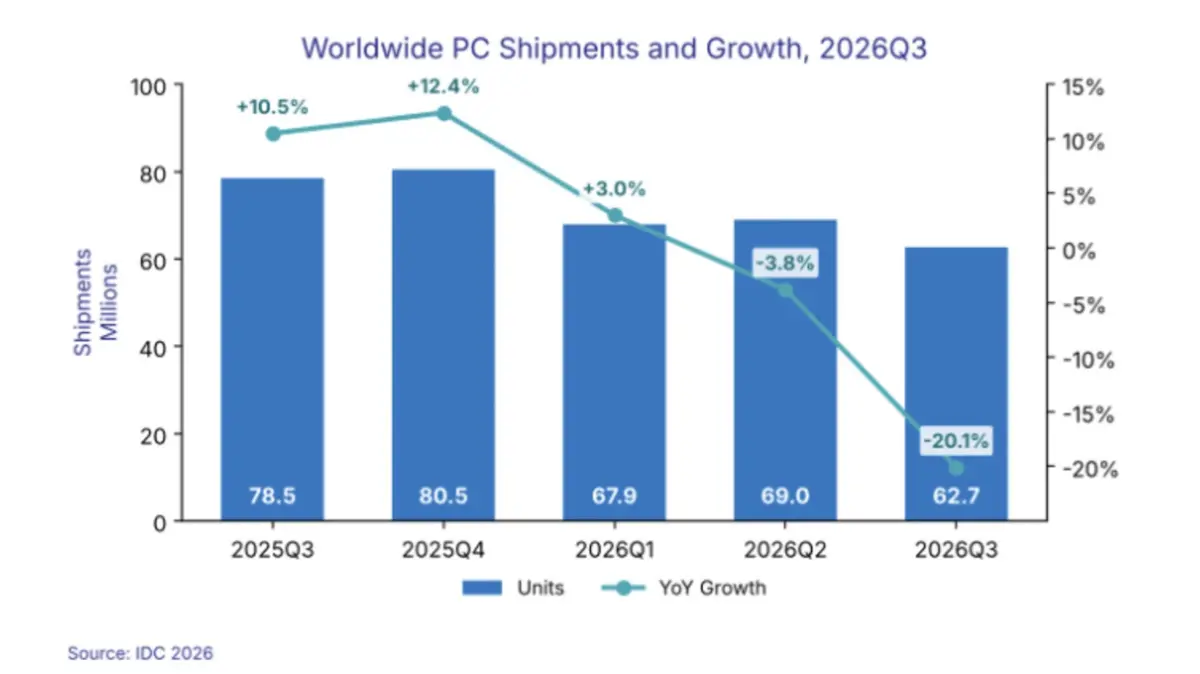
The global personal computer industry is navigating one of the most turbulent economic landscapes in its recent history. According to a comprehensive market analysis released by the International Data Corporation (IDC), worldwide PC shipments plummeted by a staggering 20.1 percent year-over-year during the third quarter of 2026. Totaling just 62.7 million units, the Q3 figures also represent a sharp 9.1 percent sequential decline from the previous quarter, compounding an already grim trajectory for hardware manufacturers, component suppliers, and retail channels alike.
Industry insiders have given this ongoing crisis a grim moniker: "RAMaggedon." Characterized by severe supply chain disruptions, soaring component costs—most notably in dynamic random-access memory (DRAM) and NAND flash storage—and dwindling consumer demand, the crisis has systematically dismantled the post-pandemic market stability that the tech sector fought hard to maintain. As macroeconomic pressures mount globally, inflation squeezes household budgets, and enterprise buyers extend their hardware replacement cycles, the PC ecosystem finds itself at a precarious crossroads.
This deep-dive investigation examines the anatomy of the 2026 market crash, tracing the chronology of the memory crunch, evaluating hard metrics and IDC data sets, analyzing expert commentary from industry leaders, and charting a realistic path forward for both enterprise procurers and everyday consumers weathering the storm.
Detailed Chronology: How the 2026 PC Crisis Unfolded
To understand the severity of the third-quarter collapse, one must examine the sequence of events that transformed a creeping supply imbalance into a full-scale market contraction. The warning signs did not appear overnight; rather, they were forged through a combination of aggressive manufacturing shifts, surging demand for specialized enterprise hardware (particularly AI-driven infrastructure), and persistent raw material shortages.
Late 2025: The First Tremors
Throughout the final quarter of 2025, murmurs began circulating within semiconductor fabrication plants regarding tightening allocation schedules for memory modules. Major memory manufacturers—including Samsung, SK Hynix, and Micron—had increasingly pivoted their production capacities toward high-bandwidth memory (HBM) and enterprise-grade server components required to fuel the relentless global expansion of artificial intelligence data centers.
While consumer-facing processors and GPUs remained adequately supplied, the foundational memory components required to assemble standard laptops and desktop towers began experiencing subtle supply constraints. At the time, PC makers were still riding the tailwinds of a relatively stable upgrade cycle, absorbing modest price increases without radically altering their retail pricing structures. However, behind closed doors, procurement executives were already sounding the alarm over rising contract prices.
Early 2026: The Slashing of Market Forecasts
By the spring of 2026, the situation deteriorated rapidly. In early reports, IDC stunned the technology sector by significantly slashing its full-year 2026 PC market forecast. The revision was not driven by a lack of consumer interest alone, but rather by the sheer impossibility of manufacturing hardware at price points that the mass market could sustain.
As component costs escalated, PC original equipment manufacturers (OEMs) were forced to pass these expenses down the supply chain. Budget-friendly and mid-range laptops—traditionally the bread-and-butter of back-to-school and enterprise deployment sales—saw their profit margins evaporate. Factories struggled to secure consistent shipments of DDR5 memory and solid-state storage controllers, leading to rolling production delays.
July 2026: Breaking a Nine-Quarter Streak
The tipping point arrived mid-summer. In July 2026, IDC data confirmed what many industry analysts had feared: global PC shipments fell on a year-over-year basis for the first time in nine consecutive quarters. This milestone effectively slammed the door on the post-pandemic recovery era.
The July data revealed that the memory shortage was no longer a temporary bottleneck; it was a systemic structural failure. Retail inventories began to bloat with overpriced hardware that consumers were increasingly hesitant to purchase, setting the stage for the catastrophic numbers recorded in Q3.
Q3 2026: The Depth of "RAMaggedon"
This brings us to the current landscape. With worldwide shipments registering at 62.7 million units for the third quarter—down 20.1 percent from Q3 2025—the industry is officially dealing with a protracted contraction. Supply issues, elevated baseline prices, and cautious inventory management have combined to create an environment where buyers are simply choosing to repair or retain their aging machines rather than invest in new systems.
Supporting Context & Metrics: The Numbers Behind the Slump
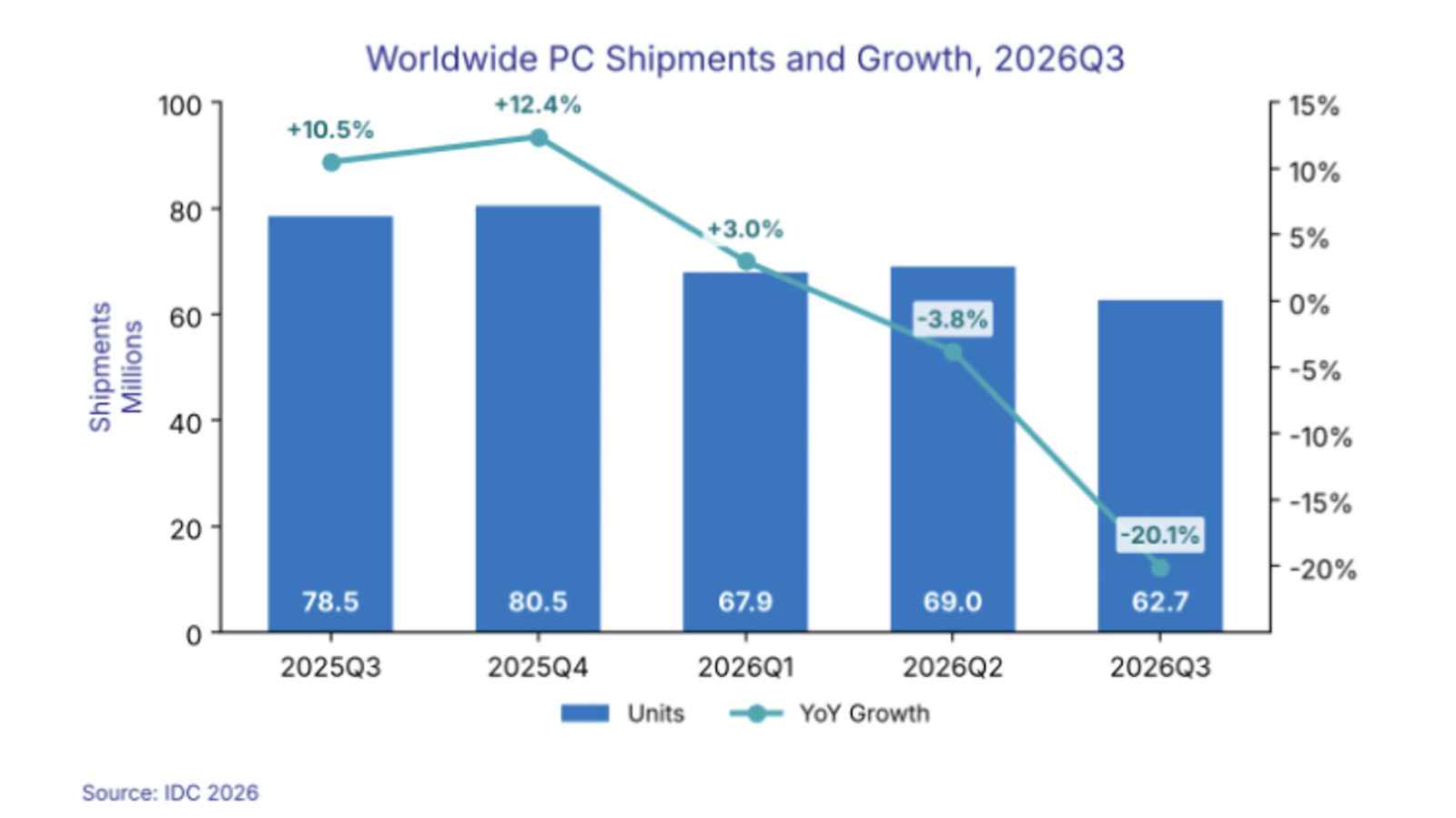
Data tells the definitive story of the 2026 PC market correction. The figures compiled by IDC’s Worldwide Quarterly Personal Computing Device Tracker paint a stark picture of a market forced into a defensive posture.
Key Metric Breakdown
- Q3 2026 Total Shipments: 62.7 million units globally.
- Year-Over-Year Decline (Q3 2025 vs. Q3 2026): 20.1 percent drop.
- Quarter-Over-Quarter Decline (Q2 2026 vs. Q3 2026): 9.1 percent drop.
- Consecutive Quarters of Growth Ended: Nine-quarter positive streak broken in mid-2026.
The Macroeconomic Factors at Play
It would be simplistic to attribute the 20 percent year-over-year drop solely to memory pricing. A confluence of macroeconomic headwinds has severely compounded the issue:
- Global Inflation and Cost-of-Living Pressures: Everyday consumers are facing elevated costs for essential goods, housing, and energy. Consequently, discretionary spending on non-essential electronics has taken a backseat.
- Enterprise Stagnation: Corporate IT budgets, which expanded rapidly during the remote-work transition of the early 2020s, are experiencing tight constraints. Organizations are squeezing extra years out of existing hardware fleets, delaying scheduled refresh cycles.
- The AI Infrastructure Pivot: The staggering capital expenditure poured into generative AI infrastructure has fundamentally altered semiconductor manufacturing priorities. Silicon real estate that once produced affordable consumer DRAM is now dedicated to high-margin enterprise AI accelerators, permanently shifting the supply-demand balance against standard PC buyers.
Official Statements and Industry Insights
The human and strategic elements behind the numbers are best understood through the perspectives of market analysts who monitor the supply chain daily.
In the official Q3 release, Jitesh Ubrani, research director for consumer devices at IDC, offered a candid assessment of the current retail climate and the mindset driving distributor decisions:
"Channels are now worried about carrying too much inventory into a market where high prices are suppressing demand," Ubrani stated. "That could translate into promotions and some short-term relief for consumers, but we don’t expect pricing anywhere near what it was a year ago. Prices will remain elevated. With macro conditions worsening, the risk is that the outlook for the next few quarters gets worse before it gets better."
Ubrani’s analysis highlights a precarious tightrope walk for retailers. Wholesalers and major electronics chains are currently overstocked with machines purchased at high component costs. To clear warehouse space ahead of upcoming holiday logistics windows, retailers may be forced to initiate aggressive, short-term promotional discounts. However, industry veterans warn that these "sales" will merely chip away at artificially inflated retail baselines, meaning buyers will still pay considerably more than they would have in 2024 or early 2025.
Furthermore, supply chain strategists point out that memory fabrication lines cannot be pivoted back to consumer-grade production overnight. Rebuilding consumer DRAM capacity requires multi-billion-dollar investments in cleanroom infrastructure and long-term wafer allocation agreements that take quarters—if not years—to materialize.
Future Outlook: Navigating the Market Ahead
For anyone currently in the market for a new computer, a laptop upgrade, or individual components to build a custom desktop rig, the strategic calculus requires patience and pragmatism.
Advice for Consumers
- Seize Genuine Clearances: As Jitesh Ubrani noted, the panic over excess retail inventory means short-term promotional sales will pop up as distributors try to liquidate stock. If you find a legitimate markdown on a machine that meets your needs, take it.
- Hold Off If Possible: If your current hardware is operational, the consensus recommendation from IDC and market analysts is to hold off on major PC purchases for at least another year. Rushing into the market today means paying a steep "RAMaggedon" premium.
- Consider Component Upgrades over Full Replacements: If performance bottlenecks are your primary issue, upgrading to a larger solid-state drive or adding secondary storage—where compatible—may buy you valuable time while component markets stabilize.
Advice for Enterprise and IT Buyers
Corporate procurement departments must re-evaluate their hardware lifecycle management strategies. With pricing volatility expected to persist through mid-2027, IT leaders should:
- Invest in comprehensive device maintenance, battery replacements, and operating system optimizations to extend the lifespan of existing fleets.
- Adopt flexible leasing models or device-as-a-service (DaaS) agreements that insulate organizations from sudden hardware price spikes.
- Prioritize modular hardware repairs where possible, minimizing the capital outlay required for complete system replacements.
Conclusion
"RAMaggedon" is more than a catchy industry buzzword; it is a structural crisis that has exposed the vulnerabilities of a global tech supply chain heavily reliant on concentrated semiconductor manufacturing. As the PC market absorbs a historic 20 percent year-over-year shipment decline, the road to recovery will be slow, measured, and dependent on broader macroeconomic stabilization. Until manufacturing capacity realigns and component pricing returns to a sustainable baseline, patience remains the most valuable asset in any tech buyer’s toolkit.