Executive Overview
To compile a definitive list of voyeuristic photographs is to confront an inescapable paradox: almost all photography is, by its very mechanics, inherently voyeuristic. From its inception, the medium has relied on the stealthy capture of a stolen moment—a fractional slice of time extracted without the subject’s explicit permission or awareness. Master practitioners across generations have frequently drawn direct parallels between the click of a shutter and the surreptitious glance cast toward something private, forbidden, or hidden.
Diane Arbus famously observed, "I always thought of photography as a naughty thing to do—that was one of my favourite things about it, and when I first did it, I felt very perverse." Similarly, Martin Parr has confronted the internal friction of his profession, noting, "I accept that all photography is voyeuristic and exploitative, and obviously, I live with my own guilt and conscience. It’s part of the test."
Yet, while all lens-based art bears a trace of this trespass, a distinct lineage of photographers leans explicitly and aggressively into the voyeuristic mechanism. Peeping at the modern world through apparatuses ranging from physical glory holes and custom-engineered pinhole cameras to global corporate surveillance networks, these artists do not merely utilize voyeurism as a practical method. Instead, they unpack, critique, and interrogate the very nature of looking, exposing the uneasy contract between the observer and the observed. This report examines five seminal bodies of work that redefine how contemporary culture negotiates privacy, intimacy, and the ubiquitous gaze.
Detailed Chronology: From Underground Surveillance to Algorithmic Panopticism
The evolution of voyeuristic photography mirrors the broader technological shifts in society, moving from physical subversion to mechanical distance, and finally into the realm of digital hyper-visibility.
1. The Cinematic Coldness of the 1960s: Andy Warhol
In the early 1960s, Pop Art pioneer Andy Warhol established a clinical blueprint for cinematic voyeurism. In avant-garde films such as Sleep (1963), Blow Job (1964), and Couch (1964), Warhol turned an unblinking, obsessive lens toward private acts and vulnerable subjects—including his lover, the poet John Giorno. Warhol’s gaze was defined by a distinct emotional remove. Rather than participating in the scenes, he watched with a detached coolness, mimicking the perspective of an invisible, hidden observer stationed just outside the room.
2. The Institutional Intrusion of the 1980s: Sophie Calle
Shifting the focus from the human body to the traces it leaves behind, conceptual artist Sophie Calle executed The Hotel in 1981 (published as a monograph in 2021). Hired temporarily as a chambermaid at a Venetian hotel, Calle was assigned twelve bedrooms on the fourth floor. During her cleaning duties, she systematically inspected the personal belongings, discarded trash, and intimate papers of transient guests. Without ever meeting the occupants, Calle constructed elaborate, speculative portraits of their lives using only the physical evidence of their temporary habitation.
3. The Panopticon of the 2000s: Jon Rafman and Google Street View
With the 2007 rollout of Google Street View panoramic cameras, the nature of surveillance underwent a structural transformation. Artist Jon Rafman recognized this shift, establishing his ongoing internet art project, Nine Eyes of Google Street View. By scouring millions of automated miles captured by corporate cameras, Rafman extracts uncanny, poetic, and disturbing moments from the global landscape: masked figures, roadside arguments, seaside bathers, and hostile pedestrians flipping off the automated lens. Rafman’s work documents a society that willingly trades its privacy for the convenience of global digital mapping.
4. Contemporary Street Prying: Jeff Mermelstein’s #nyc
In the late 2010s, Jeff Mermelstein updated traditional street photography for the smartphone era. His series #nyc focuses entirely on the glowing screens of commuters riding public transit in New York City. Standing mere inches away, Mermelstein photographs incoming text messages, browser histories, and chat threads. The resulting images expose the raw, unvarnished inner monologues of urban citizens, capturing private deliberations on everything from mundane roommate disputes to explicit sexual logistics, all played out in public spaces.
5. Radical Intimacy: Dani Lessnau’s Extimité
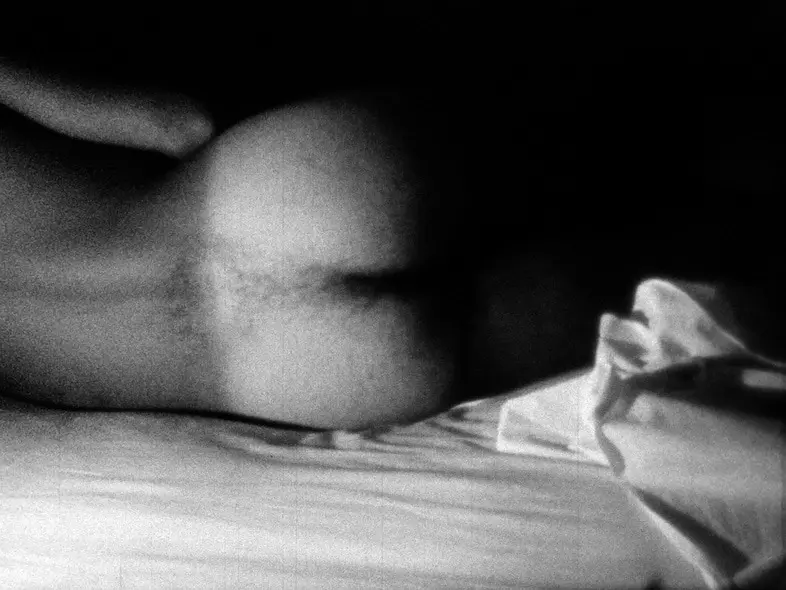
Pushing physical intimacy to its absolute technological limit, artist Dani Lessnau produced the photo series and performance Extimité by embedding a pinhole camera directly into her vagina to photograph her sexual partners. Produced entirely with informed consent, Lessnau’s images invert the traditional power dynamics of the male gaze and institutional surveillance, turning the camera inward to document bodily exploration from an unreplicable, visceral vantage point.
Supporting Context & Metrics: The Anatomy of the Look
To understand the weight of these artistic interventions, one must analyze the socio-technical metrics governing modern visibility. According to industry data compiled across digital media ecosystems:
- The Daily Image Yield: Over 4.7 billion images are captured and uploaded to global platforms daily, meaning the average urban citizen is inadvertently captured on private and public surveillance cameras dozens of times per day.
- The Smartphone Proximity Index: Urban field studies indicate that individuals spend an average of 3 hours and 15 minutes per day staring at mobile screens in public view, creating an unprecedented window of vulnerability for street-level data harvesting (as explored by Mermelstein).
- Corporate Surveillance Footprint: Projects like Rafman’s Nine Eyes draw from a global archive comprising tens of billions of geo-located panoramic photographs managed by multinational technology conglomerates.
These metrics highlight a fundamental societal paradox: while citizens express acute anxiety regarding data privacy and physical security, they simultaneously participate in mass exhibitionism, willingly feeding the apparatuses that track them.
Official Statements and Critical Perspectives
The ethical friction generated by these works has long been a subject of critical debate within the art world.
Discussing the operational logic behind Nine Eyes of Google Street View, Jon Rafman noted in a 2013 interview with Dazed:
"It represents a new type of surveillance very different from the totalitarian version depicted in books like 1984. The technology of Google Street View is for the most part accepted by this society of spectacle; as with tools like Facebook or Twitter, people participate in the sharing of their private lives and find a great deal of meaning in it."
This sentiment is echoed in the mechanics of Dani Lessnau’s Extimité, where the subjects of voyeurism actively reclaim the gaze. Describing the collaborative nature of her project, Lessnau stated:
"In relation to my individual lovers, some were awkward or shy initially, and some were less so. As we engaged in the process, we opened ourselves to the experience of a freedom unique to each of us. The sense of freedom was arousing in and of itself."
Conversely, institutional art critics point out the persistent ethical debt incurred by the voyeuristic artist. As Emily Dinsdale, art and photography editor, summarizes regarding Warhol and his contemporaries:
"In many ways, Andy Warhol is the art world’s ultimate voyeur… watching with a distinct sense of remove, or even a coldness to his gaze, as if watching from a secret hiding place." This calculated distance forces the viewer to confront their own complicity: when we look at these photographs, we inherit the artist’s guilt.
Future Outlook: The Blurring Line Between Subject and Voyeur
As artificial intelligence, facial recognition, and micro-surveillance technologies become embedded in the infrastructure of daily life, the boundary between the observer and the observed is dissolving entirely.
The works of Mermelstein, Calle, Rafman, Lessnau, and Warhol serve as essential cautionary tales and analytical tools. They remind us that the camera is never a neutral instrument; it is an extension of human curiosity, power dynamics, and desire. In the coming decades, as algorithmic eyes replace human operators, the challenge for future artists will not be finding things to look at, but rather retaining our humanity within a world that has become a permanent panopticon.