Executive Overview
The debate surrounding Artificial General Intelligence (AGI)—once the exclusive domain of science fiction and academic philosophy—has rapidly transitioned into boardrooms, venture capital portfolios, and global economic forecasts. As user adoption rates soar to unprecedented heights and private tech valuations break historical records, a singular, provocative question dominates the technology sector: What is AGI, and is it entirely irrational to suggest that it may already be here?
This paradigm shift is nowhere more evident than in the financial markets and corporate positioning of leading AI labs. Notably, Anthropic—one of the primary titans in the generative artificial intelligence ecosystem—is currently navigating market speculation regarding a targeted initial public offering (IPO) valuation that suggests the technological leap to AGI is not merely a distant theoretical horizon, but an impending commercial reality. Investors are no longer pricing these firms based on current software-as-a-service (SaaS) multiples; instead, they are betting heavily on the realization of machines that can match or exceed human cognitive capabilities across an economic spectrum of tasks.
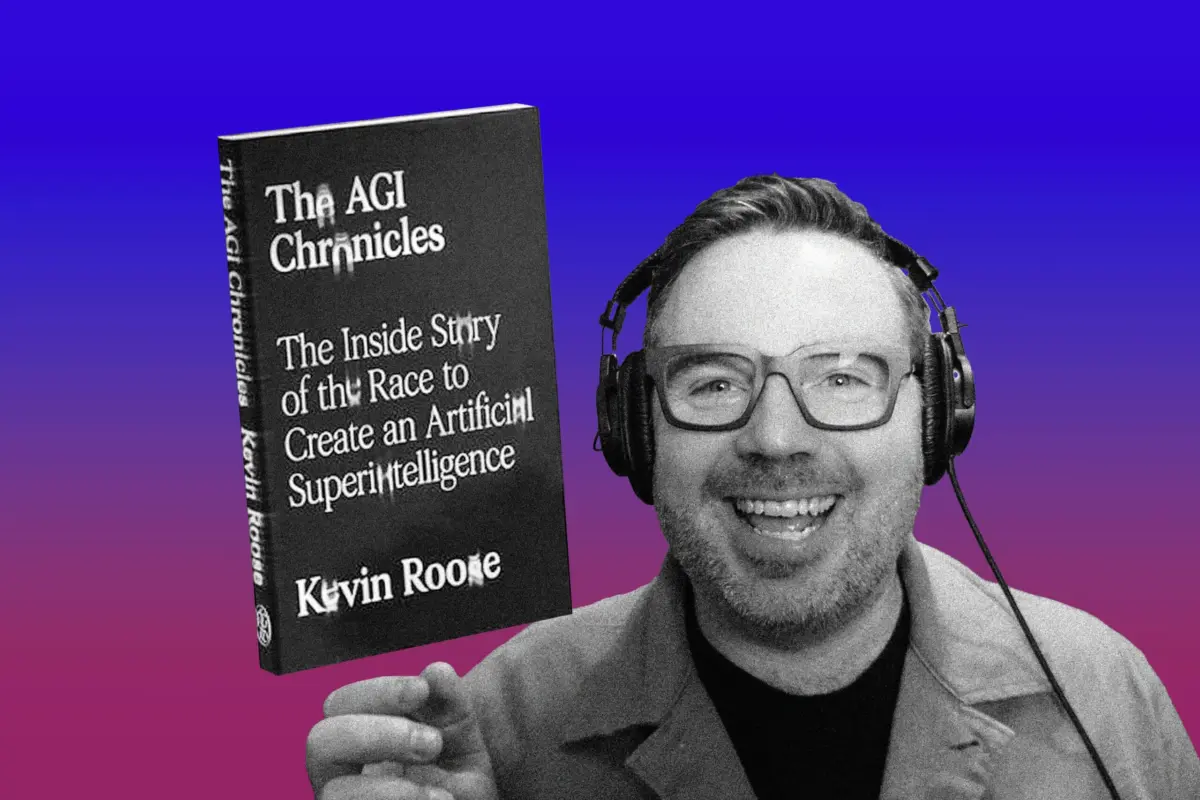
In a recent episode of the tech podcast What Next: TBD, host features and industry experts dove deep into this phenomenon, dissecting the metrics driving the boom and evaluating whether the current trajectory of artificial intelligence can sustain its exponential curve. Featuring insights from Kevin Roose—author of The AGI Chronicles, former host of The New York Times’ Hard Fork, and current host of NPR’s Machine Gods—the discussion underscores a profound tension in modern technology: while everyday users integrate increasingly sophisticated models into daily workflows, insiders and economists are grappling with the systemic risks, hyper-inflated capital expenditures, and ontological shifts that accompany the pursuit of true artificial general intelligence.
This report provides an exhaustive investigation into the current state of AGI speculation, the financial mechanics propelling high-profile AI startups toward monumental valuations, the societal implications of ubiquitous machine intelligence, and what the future holds as we race toward a post-AGI world.
Detailed Chronology: The Accidental Ascent to AGI
To understand how the conversation shifted from the theoretical foundations of machine learning to the practical inevitability of AGI, one must trace the rapid evolution of the generative AI landscape over the past half-decade.
The Transformer Breakthrough (2017–2020)
The foundational architecture for modern large language models (LLMs)—the Transformer neural network architecture—was introduced by Google researchers in 2017. Initially designed for machine translation, this architecture proved remarkably scalable. By processing vast troves of internet text through self-attention mechanisms, models began to exhibit emergent properties: capabilities that were not explicitly programmed into the software, but arose naturally as a consequence of scaling parameters and training data.
During this period, companies like OpenAI, DeepMind, and later Anthropic (founded in 2021 by former OpenAI researchers concerned about safety alignment) began training models of unprecedented scale. However, the discourse remained firmly rooted in "narrow AI"—systems capable of performing specific tasks, such as translating languages, writing basic code, or generating synthetic imagery, albeit with frequent hallucinations and logical lapses.
The ChatGPT Moment and the Mass Adoption Curve (Late 2022–2023)
The inflection point for public consciousness arrived in November 2022 with the public release of OpenAI’s ChatGPT. Reaching 100 million active users in a matter of months, it became the fastest-growing consumer application in history. Suddenly, advanced artificial intelligence was no longer confined to academic laboratories or enterprise data centers; it was accessible to anyone with an internet browser.
This mass adoption triggered an unprecedented gold rush. Venture capital firms, sovereign wealth funds, and legacy technology giants—most notably Microsoft, Google, Amazon, and Meta—poured hundreds of billions of dollars into compute infrastructure. Specialized graphics processing units (GPUs) manufactured by Nvidia became the most sought-after commodities on earth, transforming hardware availability into a geopolitical choke point.
The Commercialization and IPO Horizon (2024–Present)
As computational power scaled into the exaFLOP range, the performance delta between successive model generations began to narrow in terms of time, but widen drastically in terms of capability. Models transitioned from simple text predictors to autonomous agents capable of browsing the web, executing complex computer code, utilizing software tools, and reasoning through multi-step logic problems.
Enterprises shifted from experimentation to full-scale deployment. Concurrently, AI labs began restructuring to facilitate massive capital raises. Anthropic, which pioneered constitutional AI frameworks focused on safety and alignment, positioned itself as an enterprise-grade alternative to its competitors. Rumors and strategic maneuvers regarding targeted IPO valuations have signaled that the private market expects these entities to capture a disproportionate share of global GDP. The narrative has fundamentally shifted: AGI is no longer viewed as a speculative research milestone, but as a balance-sheet asset.
Supporting Context & Metrics: Use, Valuations, and the Economics of Compute
The urgency surrounding the AGI debate is underpinned by staggering empirical metrics that illustrate both the unprecedented momentum and the inherent financial volatility of the current AI boom.
1. Exponential Scaling and Compute Costs
The economic model of modern AI relies on the scaling hypothesis: the empirical observation that model performance improves predictably as a function of compute, data, and parameter count.
- Capital Expenditure: Building frontier AI clusters now requires multibillion-dollar data centers powered by dedicated energy grids. Major tech firms have collectively committed hundreds of billions of dollars in capital expenditures (CapEx) for 2024 and 2025 alone.
- Energy Consumption: Training a single frontier model consumes electricity comparable to the annual power usage of small towns, raising urgent environmental and infrastructure questions about grid capacity.
2. User Engagement and Enterprise Integration
Unlike previous technological revolutions—such as the transition to cloud computing or mobile applications—generative AI has achieved near-universal penetration across white-collar professions in record time.
- Productivity Gains: Studies consistently show productivity increases ranging from 20% to 50% for tasks involving coding, copywriting, data synthesis, and customer support.
- API Call Volumes: Commercial usage via Application Programming Interfaces (APIs) has grown exponentially, with billions of tokens processed daily by enterprise clients across finance, healthcare, legal, and creative industries.
3. Valuation Disconnects and Market Realities
The financial valuation of AI labs defies traditional market logic. Traditional enterprise software companies are valued based on recurring revenue multiples and profitability. Conversely, pre-revenue or early-revenue generative AI startups are commanding valuations in the tens and hundreds of billions of dollars, justified almost entirely by the optionality of achieving AGI.
- The Anthropic Factor: Market observers point to Anthropic’s strategic positioning and prospective public market valuations as a litmus test for the entire sector. If public markets validate these astronomical valuations, it signals enduring institutional confidence in the commercial monetization of advanced automation. If market skepticism takes hold, it could trigger a severe liquidity crunch across the broader technology ecosystem.
Official Perspectives and Expert Analysis
The debate over whether AGI is imminent or an exaggerated marketing myth is fiercely contested among computer scientists, economists, and cultural commentators.
The Optimist View: The Inevitability of Emergence
Proponents of the rapid-AGI timeline argue that the current architectural paradigm—scaling Transformer models with reinforcement learning from human feedback (RLHF) and synthetic data generation—has not yet hit a ceiling.
During his appearance on What Next: TBD, Kevin Roose—whose extensive body of work, including The AGI Chronicles and Machine Gods, explores the spiritual, cultural, and structural impacts of intelligent machines—addressed the psychological and economic normalization of AI systems. Roose and other industry analysts point out that as AI models seamlessly integrate into our daily digital existence, the goalposts for what constitutes "intelligence" continually shift. When a machine performs a task previously thought to require human ingenuity (such as writing a complex software patch or diagnosing a rare medical pathology), skeptics dismiss it as "just statistics," yet the economic utility remains identical to human labor.
The Skeptical View: Limitations and the Hysteresis of Hype
Conversely, a vocal contingent of cognitive scientists, hardware engineers, and economists warn of a looming plateau. These critics argue that current LLMs are fundamentally stochastic parrots—advanced pattern-matching engines that lack genuine understanding, causal reasoning, or common sense.
- Data Walls: Critics highlight that humanity is rapidly exhausting high-quality, human-generated text on the internet to train these models, forcing labs to rely on synthetic data which risks introducing algorithmic incest and model degradation.
- Economic Return on Investment (ROI): Financial analysts increasingly question whether the hundreds of billions spent on infrastructure will generate sufficient enterprise revenue to justify the CapEx, raising specters of a classic technology bubble akin to the dot-com era of 2000.
Future Outlook: Navigating the Post-AGI Landscape
As the technology sector marches toward the middle of the decade, the implications of the AGI trajectory extend far beyond financial markets, touching upon geopolitical stability, labor economics, and human philosophy.
1. The Geopolitical AI Arms Race
The race for AGI has effectively transformed into a sovereign competition between superpowers, primarily the United States and China. Control over advanced semiconductor manufacturing, algorithmic IP, and critical energy infrastructure is now viewed through the lens of national security. Export controls on silicon and diplomatic maneuvering over supply chains underscore that the nation that achieves AGI first will likely hold decisive economic and military supremacy.
2. Labor Markets and Structural Economic Transformation
If the trajectory of artificial intelligence continues unabated, the traditional social contract linking human labor to economic survival will face unprecedented stress. While optimistic economists predict a wave of post-scarcity productivity, labor advocates warn of structural unemployment and wage depression across knowledge-work sectors. Policymakers are increasingly forced to grapple with radical economic interventions, such as universal basic income (UBI) or compute-dividend structures.
3. Alignment, Safety, and Existential Risk
The commercial imperative to deploy models rapidly often exists in direct tension with rigorous safety research. Organizations like Anthropic have dedicated substantial resources to constitutional AI and alignment methodologies designed to ensure that systems remain safe and beneficial as they approach or exceed human intelligence. However, as the capabilities of these models grow autonomously, the margin for error shrinks dramatically. The future will require unprecedented international cooperation to establish guardrails against the misuse of autonomous cognitive systems.
Conclusion
Whether Artificial Intelligence has already quietly crossed the threshold into AGI or is still hovering tantalizingly out of reach, the gravitational pull of the concept is reshaping the global economy. As companies like Anthropic test the limits of public and private market valuations, and as commentators like Kevin Roose document the profound cultural shifts of our machine-driven epoch, one reality remains indisputable: humanity is navigating an irreversible transition into a new technological epoch, where the definition of intelligence itself is being rewritten in real-time.