Executive Overview
The artificial intelligence landscape has officially crossed a major evolutionary threshold. For the past few years, the public conversation surrounding generative AI has remained fixated on a singular bottleneck: prompt engineering. Users have spent countless hours obsessing over how to word queries, refine chatbot tones, and coax creative outputs out of black-box models.
However, industry leaders and enterprise strategists are realizing that conversational prompting alone is insufficient for scalable business automation. While AI excels at research, data synthesis, and document review, traditional conversational interfaces often leave the human user with a new form of administrative debt: a lengthy text summary that still requires manual interpretation, data entry, and execution.
Simultaneously, the foundational infrastructure supporting artificial intelligence is undergoing a massive structural consolidation. Major technology companies and model developers—led by Anthropic, OpenAI, and Meta—are shifting away from isolated chatbots and moving decisively toward unified, agentic ecosystems. This transformation is characterized by the integration of native desktop tools, document-authoring capabilities, sponsored conversational agents within advertising platforms, and lightning-fast foundational models capable of executing complex computer operations autonomously.
Concurrently, creative sectors are witnessing a parallel maturation. AI video generation has successfully moved past the uncanny valley of distorted geometries and glitchy artifacts, entering a phase of cinematic-grade production. However, unlocking this potential requires a fundamental departure from casual prompting toward professional, storyboard-driven workflows.

This report provides an in-depth analysis of these shifting paradigms. We explore how simple web forms are replacing prompts to trigger true autonomous automation, dissect Ross Symons’ blueprint for professional AI filmmaking, and review the major enterprise releases reshaping the artificial intelligence ecosystem.
Detailed Chronology: The Evolution of AI Architecture and Tooling
To understand where the industry stands, it is crucial to examine the sequential advancements that have defined the current AI landscape. The progression from basic text generators to fully autonomous, cross-application operating systems has unfolded rapidly across several key domains.
Phase One: The Prompt-Centric Era and Its Limitations
In the early days of widespread generative AI adoption, success was measured by a user’s ability to converse effectively with a large language model (LLM). While this democratized access to technology, it created a workflow bottleneck. Businesses quickly discovered that asking an AI to analyze customer feedback or review sales calls simply yielded more reading material. The human operator remained the necessary bridge between insight and execution.
Phase Two: The Rise of Form-Driven Structured Data
Recognizing the friction inherent in unstructured text responses, workflow architects began experimenting with reverse-engineering the AI interaction loop. Instead of treating AI as an open-ended conversational partner, developers began leveraging traditional forms as instruction-set containers.

By defining specific form fields, dropdowns, and data constraints, users turned every label into a strict algorithmic command. When an AI populates a structured form rather than writing a paragraph, the resulting output becomes clean, machine-readable data. This transition transformed AI from a passive reporting mechanism into an active trigger for automated pipelines—instantly feeding data into CRMs, triggering team alerts, and drafting outreach without human intervention.
Phase Three: The Cinematic Maturation of AI Video
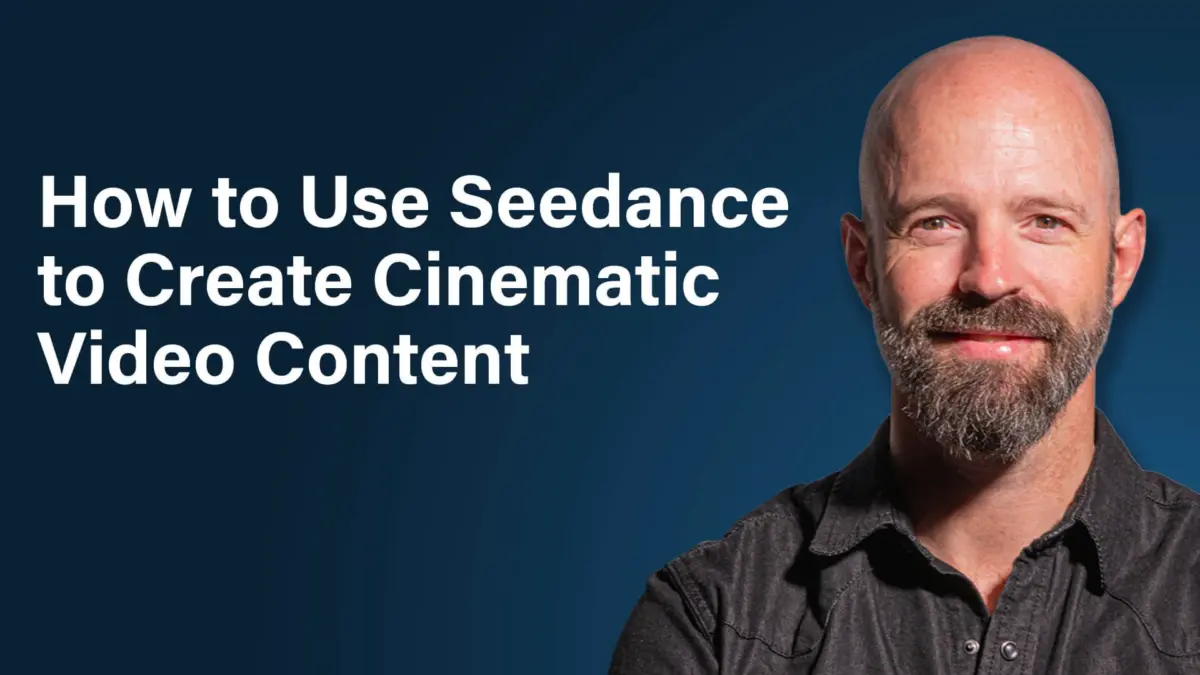
Concurrently, generative video technology transitioned from a novelty plagued by anatomical distortions (famously dubbed "spaghetti arms") into a viable production medium. Led by pioneers like Zen Robot co-founder Ross Symons, creative studios began abandoning casual, prompt-and-pray methods in favor of rigorous, director-informed pre-production frameworks. By distinguishing between diffusion models and LLMs, and by implementing storyboard-first keyframe methods, creators achieved unprecedented narrative control over multi-clip AI video sequences.
Phase Four: Unified Interfaces and Agentic Operating Systems
Most recently, major AI providers have eliminated the artificial boundaries separating chat interfaces, document editors, and desktop execution environments. Anthropic’s consolidation of its tools into a single streamlined interface, alongside Meta’s expansion of its Muse AI agent to macOS, marks the arrival of truly agentic computing. AI is no longer confined to a browser tab; it operates directly within native applications, reading files, managing calendars, and executing multi-step workflows with minimal human oversight.
Supporting Context & Metrics: The Mechanics of Autonomous Workflows
The Form-as-Trigger Paradigm
The fundamental shift from passive AI reporting to active business automation relies on a simple architectural truth: a form submission is a universal automation trigger.

Traditional business processes suffer from the "human-in-the-middle" dilemma. When an AI reviews a document, it generates a summary. The user must read the summary, open a CRM, create a record, type out notes, and assign tasks.
By designing an AI prompt that outputs directly into structured form fields, the workflow changes entirely:
- Instructional Labeling: Every field label in the form acts as a strict programmatic constraint.
- Elimination of Guesswork: Dropdown menus and strict data types prevent the AI from hallucinating or formatting text unpredictably.
- Instantaneous API Handoff: The completed form acts as a webhook payload. Popular automation platforms detect the "new form response" event instantly.
- Autonomous Execution: Downstream actions fire automatically—competitor intelligence is posted to team Slack channels, unstructured call notes are transformed into prioritized CRM tasks, and prospect research immediately generates personalized outreach drafts.
Mastering Professional AI Video: The Zen Robot Framework
While automation streamlines business operations, generative video is redefining media production. According to Ross Symons, treating AI video generation like a casual chat leads directly to generic, low-quality results. To bridge the gap between amateur experimentation and studio-grade cinema, creators must adopt a four-pillar methodology:
- Concept Before Prompt: High-end AI video starts with a clear narrative vision, often developed in collaboration with an LLM like ChatGPT to flesh out story arcs before touching a video model.
- Intentional Visual Composition: Creators must avoid the default flat, centered compositions common in generative tools by utilizing established film terminology and director styles as creative shorthand.
- The Keyframe Method: To eliminate visual inconsistencies across multi-clip videos, professionals employ start- and end-frame constraints, ensuring smooth transitions that mimic professional editing suites.
- Linguistic Precision: Understanding the mechanics behind diffusion models allows creators to communicate spatial depth, lighting, and motion dynamically rather than relying on descriptive adjectives.
Official Industry Statements & Major Releases
The rapid pace of commercial deployment is underscored by a series of monumental product launches from the industry’s leading research labs.
Anthropic Launches Claude Opus 5.5 and Unifies Workspaces
Anthropic has officially introduced Claude Opus 5.5, its new flagship model engineered specifically for complex coding, computer-use automation, advanced research, and enterprise-grade workflows. Claude Opus 5.5 delivers dramatically higher performance coupled with significantly lower operating costs and faster execution speeds. Furthermore, the model incorporates expanded, state-of-the-art safety safeguards designed to govern high-risk capabilities in cybersecurity and biological research. Anthropic has also confirmed that the Sonnet 5.5 and Haiku 5.5 iterations will roll out shortly, bringing these efficiency gains to the entire Claude lineup.
In parallel, Anthropic announced a massive structural update to its user experience: unifying Claude chat, Cowork, Artifacts, and design capabilities into a single, cohesive interface. The system intelligently routes user requests to the appropriate underlying tools on the fly.
The update introduces dedicated document and presentation workflows. Users can now collaboratively author and edit complex documents, build polished slide decks, export presentations directly to PowerPoint or PDF formats, and maintain seamless synchronization across both desktop and mobile devices.
Meta Brings Muse AI Agent to macOS
Meta has officially expanded its advanced Muse AI agent to macOS, marking a major milestone in native desktop integration. When granted appropriate permissions, Muse gains direct access to essential local workflows, including file management, messaging applications, calendars, notes, and email clients.

Unlike web-bound assistants, Muse is capable of executing multi-step actions across these native Mac applications while enforcing mandatory approval gates for sensitive administrative or communication tasks. This launch brings true agentic computing directly to everyday computer users and arrives alongside new platform features, including native voice-calling capabilities.
OpenAI Expands ChatGPT Ads with Sponsored Agents
OpenAI has announced a sweeping expansion of its advertising ecosystem, integrating conversational and generative AI capabilities directly into its platform architecture. Among the most notable updates is the introduction of Sponsored Agents. These interactive tools allow interested consumers to engage directly in live, context-aware conversations with business-sponsored AI assistants immediately after interacting with an ad.
For enterprise marketers, OpenAI has introduced natural-language campaign management tools within ChatGPT Work, enabling teams to build, optimize, and analyze advertising campaigns entirely through conversational prompts. Additionally, the OpenAI Ads Manager has been updated with AI-driven creative suggestions and contextual text customization. New native integrations with HubSpot and Shopify further bridge the gap between conversational discovery and direct commerce workflows.
Future Outlook: The Resilient Enterprise
As artificial intelligence platforms continue to evolve at a breakneck pace—with models updating weekly, pricing structures shifting, and user interfaces constantly redesigning—organizations face a common hazard: platform fatigue.

The primary vulnerability for modern businesses is building workflows that are inextricably tied to a single software vendor. When an AI platform changes its API, raises its pricing tiers, or experiences unexpected downtime, fragile setups collapse, forcing teams to restart their operational infrastructure from scratch.
Industry experts emphasize that the ultimate defense against platform volatility is workflow durability. Organizations must focus on establishing platform-agnostic agent architectures—modular pipelines built on universal triggers, standardized form inputs, and robust automation layers that can switch underlying AI models instantly without disrupting core business operations.
Looking ahead, the organizations that thrive will not be those that simply master the latest prompt engineering trick. Rather, they will be the enterprises that build systematic, agentic workflows capable of operating autonomously across unified digital ecosystems, turning raw artificial intelligence into reliable, scalable operational momentum.