Executive Overview
In the sprawling ecosystem of digital media, few moments have managed to crystallize an industry-wide identity crisis quite as effectively as a single, unassuming video interview conducted in October 2012. What began as a routine promotional conversation between Canadian video game journalist Geoff Keighley and the website LevelSave.com rapidly metastasized into a cultural lightning rod. Framed by an aggressive, inescapable wall of Mountain Dew and Doritos branding—part of a massive cross-promotional campaign between PepsiCo and Microsoft for Halo 4—Keighley became the unwitting focal point of a simmering community resentment.
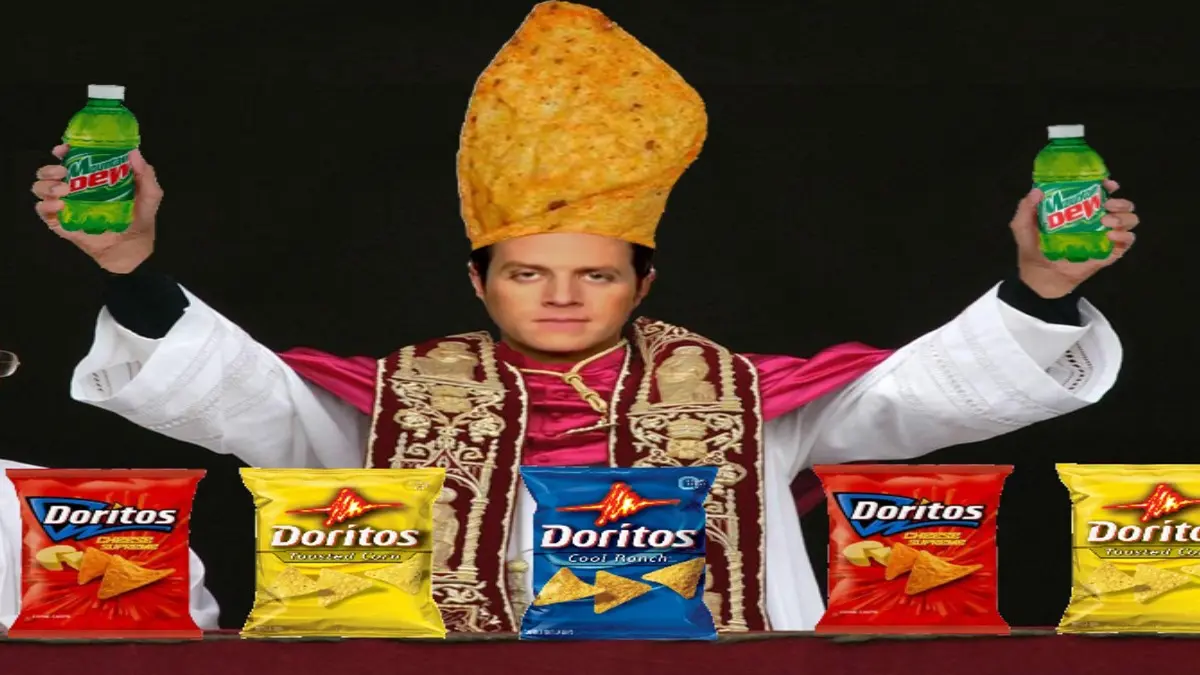
The internet, swift and merciless in its critique, christened him the "Dorito Pope."
This satirical moniker transcended mere internet mockery to become a permanent shorthand for the perceived ethical compromises, corporate cosziness, and systemic conflicts of interest plaguing traditional video game journalism at the turn of the 2010s. The fallout from the interview—popularly bundled under the banner of "Doritosgate"—triggered critical essays, viral parodies, and a profound reckoning regarding the boundary separating independent journalism from corporate advertising. This retrospective examines the origins, immediate wildfire spread, cultural aftermath, and enduring legacy of the "Dorito Pope" phenomenon, analyzing how a single backdrop altered the trajectory of media criticism in the digital age.
Detailed Chronology
October 18, 2012: The Catalyst Interview
On October 18, 2012, veteran video game journalist Geoff Keighley sat down for an interview with the gaming culture and news outlet LevelSave.com. The agenda was ostensibly standard industry fare: discussing Keighley’s firsthand experiences covering San Diego Comic-Con, sharing early insights into the highly anticipated blockbuster Halo 4, and touching upon broader trends in the gaming landscape.
However, the visual composition of the interview immediately captured the attention of viewers for all the wrong reasons. Keighley was framed against an uncomfortably dense backdrop of corporate real estate: towering displays, promotional banners, and stacks of Mountain Dew and Doritos products. The visual saturation was designed to promote "Mtn Dew and Doritos XP," a massive, high-profile multi-platform promotional campaign spearheaded by PepsiCo and Microsoft. This cross-promotion incentivized consumers by offering in-game experience point (XP) multipliers for Halo 4 through unique promotional codes printed directly inside packaging and on bottle caps.
While product integration in media was hardly a novel concept, the sheer blatancy of the branding—with a respected, high-profile journalist seemingly acting as a human billboard for junk food while discussing artistic works—struck a severe nerve. Within days, the video accumulated significant negative feedback. By May 2014, the video sat at a dismal ratio of nearly 50,000 views, accompanied by over 1,200 downvotes against a meager 125 upvotes, serving as a permanent digital archive of audience alienation.
October 24, 2012: "Lost Humanity 18: A Table of Doritos"
The internet’s silent eye-rolling transformed into active journalistic rebellion six days later, on October 24, 2012. Eurogamer.net contributor Rab Florence published an incendiary, deeply reflective column titled "Lost Humanity 18: A Table of Doritos." Florence, having observed the viral spread of Keighley’s interview across forums and social media, used the incident as a springboard to dissect the systemic rot he perceived within games media.
In the opening paragraphs of his piece, Florence zeroed in on Keighley’s corporate entanglement, questioning how a medium that purports to cover entertainment critically could maintain any shred of journalistic integrity while literally sitting knee-deep in multinational snack-food marketing. The article did not merely critique Keighley; it cast a wide net over an industry accused of trading critical distance for exclusive access, review events, and corporate-sponsored junkets. Florence’s column struck a chord so profound that it officially ignited the controversy colloquially dubbed "Doritosgate," irrevocably altering how gamers spoke about media ethics years before the arrival of subsequent industry-wide firestorms.
October 26, 2012: Satire and Remix Culture Take the Reins
As is customary in digital subcultures, the community quickly weaponized humor and remix culture to process the absurdity of the event. On October 26, 2012—just two days after Florence’s article went live—the YouTube creator known as PewpewVIDEOGAMES uploaded a satirical video titled "Double your Gaming Journalism with Geoff Keighley®."
The video was a masterclass in internet subversion. It seamlessly excised the specific segment of the interview where Keighley earnestly discussed Halo 4 and the Mountain Dew/Doritos XP promotion, juxtaposing it directly with chaotic, low-brow multiplayer footage from Halo 3. To drive the satirical point home, the gameplay footage featured a player repeatedly "tea-bagging" a downed teammate—a classic, juvenile multiplayer trope that contrasted sharply with the self-serious, highly corporate tone of mainstream games journalism. The video served as an immediate cultural touchstone, cementing the dissonance between what gamers valued and what corporate marketing departments demanded.
January 1, 2013: Retrospectives and Mainstream Parody
The narrative cemented itself further at the dawn of the new year. On January 1, 2013, prominent YouTube personality Joe Vargas—better known as AngryJoeShow—released his comprehensive video counting down the top 10 gaming controversies of 2012.
In a testament to how deeply the incident had permeated the collective consciousness of the gaming public, the "Dorito Pope" / Doritosgate scandal secured a prominent spot on the list. Remarkably, it was beaten out for the top spots only by titan-scale controversies like the intensely divisive ending of Mass Effect 3 and the geopolitical espionage arrests surrounding the development of Arma III. By canonizing the event in a year-end retrospective viewed by hundreds of thousands, Vargas ensured that the term "Dorito Pope" would permanently enter the lexicon of internet slang.
Supporting Context & Metrics
To fully comprehend why a snack-food backdrop caused a tectonic shift in gaming media discourse, one must examine the socio-economic and structural realities of games journalism in the late 2000s and early 2010s.

The Economics of Print-to-Digital Transition
During this era, traditional gaming print magazines were rapidly dying or pivoting to high-traffic digital portals. These websites relied almost entirely on programmatic banner advertising, sponsored content packages, and exclusive access deals brokered directly with massive triple-A publishers like Electronic Arts, Activision, and Microsoft.
Because publishers held the ultimate cards—revoking review copies, blocking access to developer interviews, or refusing to fly journalists out to exotic preview events for uncooperative outlets—an unspoken climate of compliance emerged. Journalists frequently found themselves walking a razor-thin tightrope: maintain rigorous, objective criticism and risk professional ostracization, or play ball with the corporate machinery and enjoy privileged access.
The Keighley interview laid this invisible machinery bare. For a weary readership that already suspected mainstream outlets of grade-inflation and corporate sycophancy, seeing a leading journalist physically boxed in by Mountain Dew and Doritos bottles was the smoking gun. It wasn’t just about chips and soda; it was a potent visual metaphor for an entire media apparatus selling access to the highest bidder.
Quantitative Impact Metrics
While comprehensive metric tracking for memes in 2012 was still in its infancy compared to modern analytics, the footprint left by the "Dorito Pope" can be mapped through several verifiable markers:
- Video Engagement Discrepancy: The original LevelSave interview skewed drastically negative, accumulating nearly 10-to-1 downvotes relative to positive approvals—a stark indicator of community backlash in an era where massive dislike ratios were far less common than they are today.
- Lexical Permanence: The moniker "Dorito Pope" entered databases like Know Your Meme and urban dictionaries, spawning hundreds of derivative image macros, photoshops, and fan-made parodies that persisted well into the late 2010s.
- Discourse Longevity: The associated "Doritosgate" conversation directly informed subsequent debates regarding influencer transparency, the introduction of Federal Trade Commission (FTC) guidelines for sponsored content, and the eventual fracturing of traditional enthusiast press in favor of independent content creators and streamers.
Official Statements and Industry Reactions
The immediate aftermath of the "Dorito Pope" phenomenon forced several high-profile figures within the games industry and media ecosystem to navigate the turbulent waters of public perception.
Geoff Keighley, who would later go on to spearhead independent, producer-funded juggernauts like The Game Awards, faced immense personal scrutiny during the height of the backlash. While Keighley largely chose to weather the storm through silence rather than engaging in defensive flame wars, the experience coincided with a noticeable shift in his career trajectory. In subsequent years, Keighley distanced himself from traditional outlet-based reporting, pivoting toward self-produced, transparently partnered live events where the line between host, producer, and curator became explicitly defined rather than implicitly blurred.
Editors and publishers across the competing games media landscape also responded, albeit with varying degrees of self-awareness. While some mainstream outlets defensively dismissed the backlash as localized internet hyperbole driven by toxic forums, others recognized that a profound trust deficit had opened up between readers and critics.
In the wake of Rab Florence’s explosive Eurogamer column and the broader Doritosgate fallout, multiple publications quietly updated or instituted clearer internal guidelines regarding sponsored content, disclosure statements, and review ethics. The episode served as an institutional wake-up call, proving that audiences were no longer willing to quietly accept advertorial content disguised as objective journalism.
Future Outlook: The Legacy of "Dorito Pope" in the Age of Influencers
More than a decade after Geoff Keighley sat before that fateful wall of junk food, the landscape of digital media has shifted dramatically—yet the core anxieties highlighted by the "Dorito Pope" meme remain entirely relevant.
Today, the traditional enthusiast press has largely been sidelined by the meteoric rise of independent content creators, Twitch streamers, and VTubers. Yet, this evolution has not eliminated the ethical minefield of corporate sponsorships; rather, it has democratized it. Modern creators routinely accept multi-thousand-dollar sponsorship deals from game publishers to stream newly released titles, often displaying prominent brand integrations that mirror—and frequently dwarf—the product placement seen in the 2012 LevelSave interview.
However, the cultural inoculation provided by moments like Doritosgate has permanently altered audience expectations. Modern audiences demand radical transparency. Disclosure hashtags like #Ad, #Sponsored, and verbal acknowledgments of financial backing are now mandatory regulatory requirements enforced by bodies like the FTC, largely owing to the persistent demand for ethical accountability born from internet counter-culture.
Ultimately, the "Dorito Pope" stands as a monumental cultural artifact of internet history. It demonstrates how a single, visually unfortunate frame can capture the zeitgeist of an entire industry’s growing pains, transforming a respected journalist into a cautionary symbol while simultaneously empowering a generation of media consumers to demand absolute integrity from the platforms they trust.