Executive Overview
The fundamental cruelty inherent in capital punishment has once again been cast into sharp, agonizing relief following the botched execution of Christa Pike in Tennessee. On September 30, the state attempted to end Pike’s life via lethal injection—a procedure that experts had warned was dangerously high-risk due to her underlying medical conditions, including small veins and a severe blood disorder. Instead of a swift, quiet procedure, the execution devolved into a medical disaster. Pike survived the initial doses of pentobarbital, which medical observers believe infiltrated her arm tissue rather than entering her bloodstream, before being rushed to a hospital, intubated, placed on a ventilator, and ultimately shackled to a hospital bed upon regaining consciousness.
This high-profile failure has reignited a grim and deeply unsettling debate among legal scholars, medical professionals, and abolitionists: If the state insists on executing prisoners, which method is truly the "least worst"? Is it the ostensibly sterile, modern illusion of lethal injection—which medical autopsies suggest actually causes prisoners to drown in their own blood—or is it a more archaic, visceral method like the firing squad?
While capital punishment remains legal in a diminishing number of American jurisdictions, the conversation is shifting toward the brutal mechanics of execution. As alternative methods like nitrogen hypoxia face fierce scrutiny and lethal injection continues to fail, the debate forces society to confront an uncomfortable truth: there is no humane way to take a human life. Yet, for those trapped on death row, the choice between harrowing alternatives has become a subject of desperate calculation.
Detailed Chronology: The Botched Execution of Christa Pike
The events leading up to, and immediately following, the September 30 execution attempt on Christa Pike offer a glaring window into the systemic vulnerabilities and administrative recklessness of modern capital punishment protocols.
The Warning Signs
Weeks prior to the scheduled execution, legal teams representing Pike enlisted medical experts to review her clinical profile. Among them was Dr. Joel Zivot, an intensive care physician and vocal critic of capital punishment methods. Zivot and other medical specialists formally warned state officials that Pike’s physiological history—specifically her small, fragile veins and an underlying blood condition—made intravenous lethal injection exceptionally hazardous. They predicted that the procedure would likely cause severe complications, resulting in excruciating physical pain and a protracted, cruel death.
The Execution Chamber
Ignoring or dismissing these warnings, the Tennessee Department of Correction proceeded with the execution protocol on September 30. Prison officials administered two doses of the sedative pentobarbital. However, rather than flowing directly into the bloodstream to induce rapid unconsciousness, the drugs allegedly pooled or entered the surrounding arm tissue.
Instead of passing away quietly behind closed doors, Pike endured the physiological trauma of a failed chemical execution. As the procedure stalled and complications mounted, emergency measures were enacted, moving her away from the execution chamber and into a standard medical facility.
The Aftermath
Upon arrival at the hospital, medical staff intubated Pike and placed her on a mechanical ventilator to sustain her life. For days, she hovered in a medical limbo—legally condemned to die by the state, yet biologically sustained by modern critical care medicine. On Tuesday, Pike regained consciousness. Rather than receiving clemency or a commutation of her sentence given the state’s failure to execute her properly, she was immediately shackled to her hospital bed, awaiting the state’s next legal and logistical move. This "hellish middle ground" has highlighted not only the incompetence often shrouding state executions but also the Kafkaesque nature of the legal apparatus governing death row.
Supporting Context & Metrics: The Illusion of Medical Modernity
To understand why the debate between lethal injection and the firing squad is regaining traction, one must examine the profound disconnect between how executions are packaged for the public and how they actually transpire inside execution chambers.
The Deception of Lethal Injection
For decades, states favored lethal injection precisely because it mirrors clinical medical procedures. By utilizing intravenous lines, chemical drips, and personnel wearing scrubs or medical-adjacent attire, the state projects an aura of clinical detachment, technological sophistication, and sanitized modernity.
This veneer, however, is a biological fiction. Dr. Zivot’s extensive research into post-mortem autopsies of executed individuals reveals a horrifying reality. Lethal injection drugs, particularly paralytics and potassium chloride or high-dose sedatives, frequently induce pulmonary edema. In layman’s terms, prisoners effectively drown in their own blood and bodily fluids while paralyzed and unable to cry out or signal distress. The public-facing serenity of lethal injection is maintained largely through the use of paralytics that mask outward signs of terror and physiological agony.
The Rise of Alternative Brutality
As pharmaceutical companies increasingly restrict the sale of drugs used in lethal injections—fearing reputational damage and moral complicity—states have scrambled to find alternative methods. Some jurisdictions have turned to nitrogen hypoxia, a method involving a gas mask strapped from hairline to chin, flooding the subject’s lungs with pure nitrogen until asphyxiation occurs.
Eyewitness accounts of nitrogen executions paint a grim picture. Witnesses report excessive foaming, bodily fluids pooling at the mask’s edge, violent thrashing, and prolonged struggles for air—turning what proponents promised would be a peaceful transition into a visceral, choking nightmare.
The Firing Squad Calculus
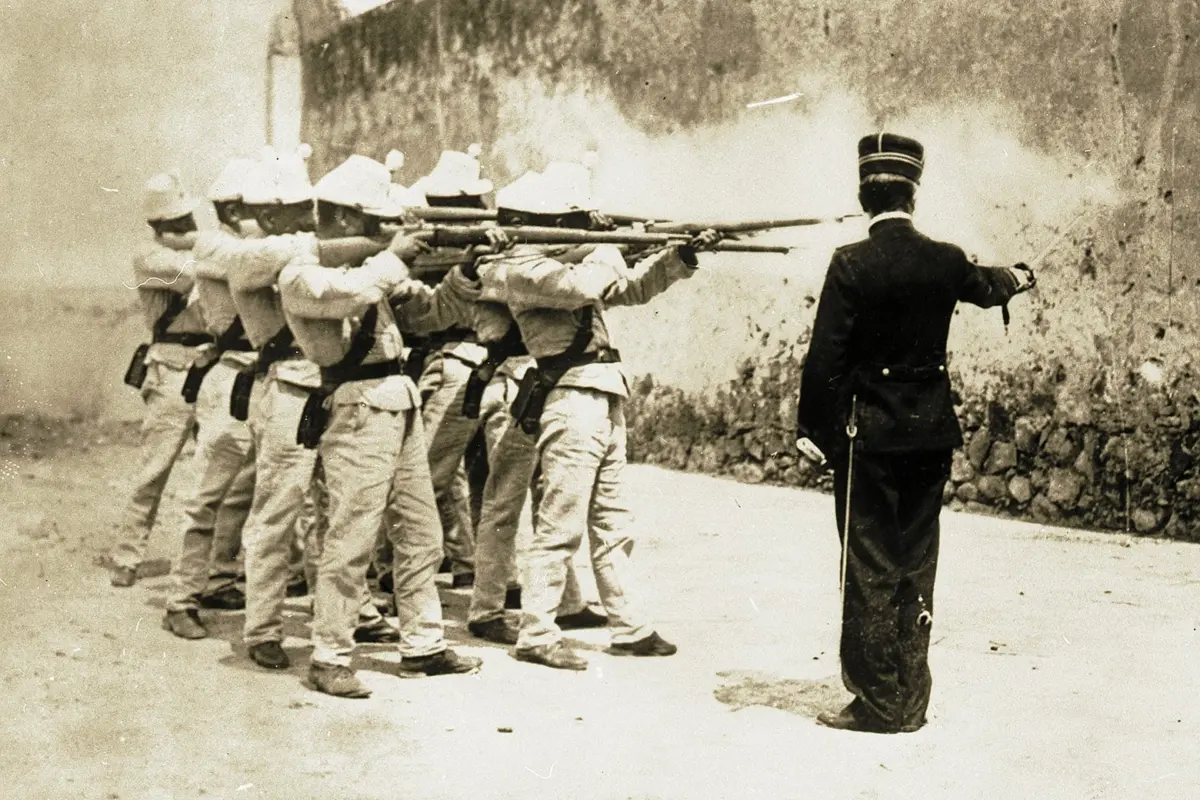
In response to these compounding horrors, a counterintuitive conversation has emerged around the firing squad. While currently authorized in only a tiny fraction of death penalty states, legal advocates and spiritual advisers who witness executions are increasingly willing to voice a stark preference for the method.
The rationale is simple, if macabre: speed and transparency. Unlike chemical cocktails that can linger for hours or nitrogen gas that induces protracted asphyxiation, a properly executed volley from a firing squad causes catastrophic physical trauma to the heart and central nervous system within milliseconds, bringing about near-instantaneous unconsciousness and death. Furthermore, a firing squad strips away the comforting clinical illusion, forcing the state, the witnesses, and the public to look directly at the raw, unvarnished violence of state killing.
Official Statements & Expert Perspectives
The discourse surrounding Pike’s botched execution and the broader ethics of execution methods involves stark warnings from medical professionals and those who bear witness to the ultimate punishment.
Medical and Ethical Condemnation
Dr. Joel Zivot has repeatedly emphasized that the involvement of medical knowledge in executions is an ethical violation of the healing arts, wrapped in a deceptive package:
"My work on autopsy analyses of executed individuals reveals that lethal injection kills not quietly and peacefully, but instead by drowning the executed prisoner in their own blood… lethal injection involves individuals with health care training, giving it a sheen of modernity, technological advancement, even sophistication."
Zivot argues that this sophisticated framing allows society to ignore the barbarism of the act, effectively outsourcing our collective moral responsibility to prison executioners operating behind closed doors.
Insights from the Execution Chamber
The Rev. Jeff Hood, a Catholic priest and founder of the Execution Intervention Project, has witnessed nearly a dozen executions across various methods. In discussions examining the hierarchy of execution cruelty, Hood provides a raw assessment of what he has observed firsthand:
"Well, none of them are good, but there are some that function certainly more systematically than others. I’ve seen, at this point, nine lethal injections and two nitrogen executions. And the nine lethal injections look like, you know, going to recess, in comparison to the nitrogen executions, which involve a gas chamber and a mask."
Describing the nitrogen mask method, Hood notes the intense psychological and physical trauma involved:
"The mask extends from the hairline to underneath the chin. It’s filled with nitrogen until the person practically suffocates to death. And so as fluids come out of the mouth and the nose, and boogers and saliva and eye gunk and all this kind of stuff is coming out, it’s catching at the front of the mask and drizzling down like a waterfall."
When pressed on whether a "good" execution can truly exist, Hood evaluates the comparative cruelty of the options:
"If I had to choose between a nitrogen execution and firing squad, I would choose a firing squad every day of the week. If I had to choose between a lethal injection and a firing squad, I would choose a firing squad every day of the week… It’s a lot quicker. I think it’s a lot more humane, to be quite frank."
At the same time, Hood acknowledges that choosing one horrific method over another ultimately misses the fundamental point about the barbarity of the institution itself:
"I think what it says is that executions are horrible no matter how they’re carried out. It forces everyone to see, to hear, to feel the execution in a way that other methods don’t."
Future Outlook: Where Capital Punishment Goes From Here
The botched execution of Christa Pike and the agonizing discussions surrounding alternative execution methods point toward an increasingly fractured and desperate future for capital punishment in the United States.
-
The Compounding Crisis of Execution Drugs: As pharmaceutical supply chains remain heavily restricted and courts scrutinize the compounding pharmacies supplying lethal injection drugs, states will continue to face severe logistical hurdles. This scarcity drives experimentation with untested or controversial methods, increasing the likelihood of future botched executions.
-
Legal Challenges and Eighth Amendment Scrutiny: Pike’s survival and subsequent hospitalization open the door for unprecedented Eighth Amendment challenges. Defense attorneys will likely argue that subjecting a prisoner to a failed, torturous execution attempt—followed by physical restoration only to face a rescheduled execution—constitutes cruel and unusual punishment under constitutional law.
-
The Normalization of Primitive Methods: As states search for reliable ways to put inmates to death amidst the failure of chemical protocols, we may see renewed legislative pushes to expand the authorization of the firing squad or electrocution. This shift forces a profound moral question upon lawmakers and the public: Will society embrace the visible, bloody honesty of older execution methods, or will the discomfort of witnessing that violence finally prompt a systemic retreat from capital punishment altogether?
Ultimately, as experts like Hood and Zivot suggest, no method of state killing can be sanitized. Whether administered via silent chemical drip, suffocating gas, or a volley of bullets, the death penalty remains an exercise in state-sponsored violence—one that becomes increasingly difficult to disguise, no matter how desperately the system attempts to perfect its lethal machinery.