Executive Overview
In an era dominated by the cartographic duopoly of Google and Apple, the digital mapping landscape has long been considered a settled frontier. However, a remarkable geopolitical dispute has catalyzed one of the most unexpected corporate resurgences in internet history. MapQuest—a pioneering brand of the early web era that many consumers assumed had long since faded into obsolescence—has secured the No. 1 overall position on the U.S. App Store.
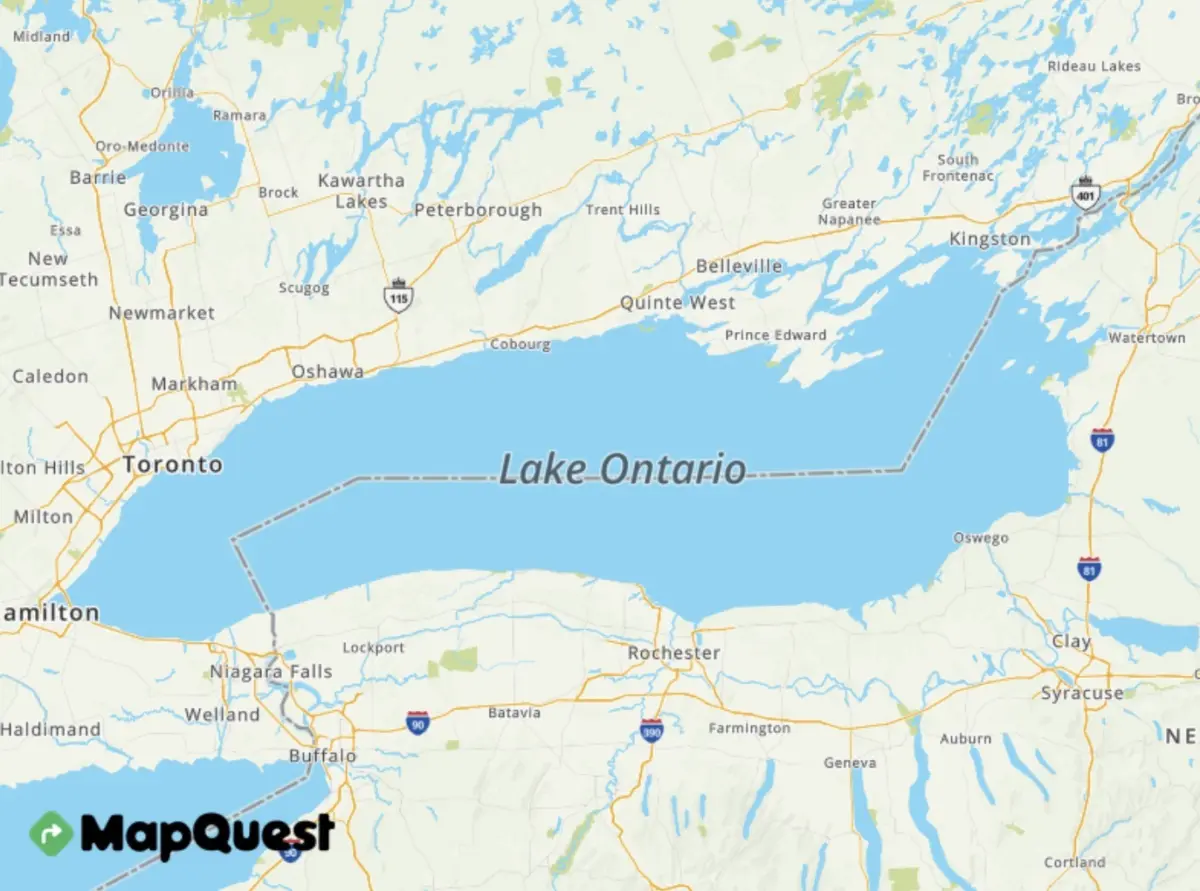
The catalyst for this dramatic realignment was not a breakthrough in navigation technology, but a high-stakes act of geopolitical defiance. On August 27, 2026, the White House issued an executive order directing federal agencies and U.S. geographic naming services to rename Lake Ontario as "Lake America," a symbolic move aligned with the administration’s ongoing nationalist trade agenda. While tech conglomerates Google and Apple swiftly complied with the federal directive to update their mapping systems, MapQuest publicly refused to alter the lake’s name.
This refusal triggered a massive wave of consumer-led digital activism. Within days, millions of users downloaded MapQuest as an act of political protest and corporate support, driving the legacy application from the depths of the App Store rankings to the absolute top of the charts. This phenomenon highlights a growing trend: the intersection of corporate policy, consumer activism, and the geopolitical realities of digital infrastructure.
App Store Rank (U.S. Overall)
▲ No. 1   (Sept 1, 2026)
▲ No. 3   (Aug 31, 2026)
▲ No. 92  (Aug 29, 2026)
▲ No. 128 (Aug 28, 2026)
Detailed Chronology: From Executive Order to App Store Triumph
The rapid ascent of MapQuest unfolded over a five-day period, sparked by a White House decree and accelerated by viral social media dynamics.
August 27, 2026: The Spark
The White House issues Executive Order 14120, titled "Honoring the American History of the Great Lakes and Renaming Lake Ontario as Lake America." The order directs the U.S. Geological Survey (USGS) and the United States Board on Geographic Names (USBGN) to officially retire the name "Lake Ontario" in domestic databases, citing a push to assert economic and cultural sovereignty amid tense trade negotiations with northern neighbors.
August 28, 2026: The Defiance and Initial Ascent
While federal agencies begin the administrative process of updating the Geographic Names Information System (GNIS), MapQuest takes a public stand. Via its official account on X (formerly Twitter), the company announces that it will maintain the name "Lake Ontario" on all its platforms, stating its commitment to historical and international cartographic standards.
- App Store Position: MapQuest sits at No. 128 overall in the U.S. App Store.
- Consumer Reaction: The social media post goes viral, garnering millions of views and sparking the hashtag
#MapQuestRebellion.
August 29, 2026: Big Tech Capitulates, MapQuest Climbs
Google Maps updates its databases to reflect the new "Lake America" designation. Public backlash against Google intensifies, prompting users to seek alternatives.
- App Store Position: MapQuest climbs to No. 92 overall, signaling the start of a coordinated download campaign.
August 31, 2026: Apple Follows Suit; MapQuest Enters the Top 3
Apple Maps silently updates its platform, renaming the shared body of water to "Lake America" for U.S. users. With both dominant navigation platforms now aligned with the executive order, MapQuest becomes the primary alternative for consumers opposing the change.
- App Store Position: MapQuest surges to No. 3 overall on the U.S. App Store and claims the No. 1 spot in the highly competitive Navigation category, displacing Google Maps and Waze.
September 1, 2026: The No. 1 App in America
By Tuesday morning, MapQuest completes its historic climb, claiming the No. 1 overall spot across all apps and games on the U.S. App Store.
Supporting Context & Metrics: Analyzing the Resurgence
To understand the scale of MapQuest’s triumph, one must look at the underlying market intelligence and the platform’s historical trajectory.
The Download Metrics
According to data provided by mobile app intelligence firm Sensor Tower, MapQuest has experienced unprecedented download velocity since the controversy began:
- U.S. Downloads (Sensor Tower Estimates): Over 632,000 installs between August 27 and September 1, 2026.
- Combined North American Installs (Internal MapQuest Data): MapQuest’s parent company reported more than 1.5 million installs across the United States and Canada combined. The significant delta between domestic estimates and internal figures points to a massive surge in Canadian downloads, where citizens and institutions strongly objected to the renaming of a shared border lake.
- Year-to-Date Impact: A staggering 56% of MapQuest’s total U.S. downloads for the year 2026 occurred during this five-day window.
- Year-over-Year Growth: Daily downloads during this period increased by 123% day-over-day and represented a 50-fold increase (over 5,000%) compared to the same period in 2025.
MapQuest Download Metrics (Aug 27 - Sept 1, 2026)
┌───────────────────────────────────────┬─────────────────────────────┐
│ Metric Source                         │ Volume / Growth Rate        │
├───────────────────────────────────────┼─────────────────────────────┤
│ Sensor Tower (U.S. iOS/Android)       │ 632,000 downloads           │
│ Internal MapQuest (U.S. & Canada)     │ 1,500,000+ installs         │
│ Share of Year-to-Date U.S. Downloads  │ 56%                         │
│ Year-over-Year Growth Rate            │ >5,000% (50x increase)      │
└───────────────────────────────────────┴─────────────────────────────┘
From Pioneer to Acquisition Target: A Brief History of MapQuest
To appreciate this comeback, it is necessary to examine MapQuest’s long journey through the digital landscape:
[1996] MapQuest Launches as Web-First Mapping Pioneer
   │
[1999] Acquired by AOL for $1.1 Billion at peak of Dot-Com Boom
   │
[2005] Google Maps Launches; MapQuest begins losing market share
   │
[2015] Verizon Acquires AOL (and MapQuest) for $4.4 Billion
   │
[2019] System1 Acquires MapQuest from Verizon
   │
[2026] Defiance of Executive Order drives MapQuest to No. 1 on App Store
Founded in 1996, MapQuest was the original consumer mapping service, famous for the printed turn-by-turn directions that defined road trips in the late 1990s and early 2000s. Acquired by AOL in 1999 for $1.1 billion at the height of the dot-com bubble, the service eventually lost its dominant position to Google Maps, which launched in 2005 with a more dynamic, AJAX-powered interface.

Over the next two decades, MapQuest changed hands as its cultural footprint shrank. In 2015, Verizon acquired AOL, bringing MapQuest under its corporate umbrella. Four years later, in 2019, Verizon sold MapQuest to System1 (NYSE: SST), an omni-channel customer acquisition and privacy-focused ad-tech company. Under System1, MapQuest operated quietly as a profitable, ad-supported utility—until the geopolitical events of August 2026 thrust it back into the cultural spotlight.
Official Statements and the Corporate Ideological Divide
The divergence in corporate behavior between MapQuest and its larger Silicon Valley rivals highlights a fundamental difference in regulatory risk and brand positioning.
MapQuest: The Agile Maverick
For MapQuest, its smaller market share has paradoxically granted it the freedom to take bold, values-driven risks that larger, publicly traded conglomerates avoid. Speaking to TechCrunch, MapQuest General Manager Doug Berger emphasized that the surge in downloads is accompanied by high levels of active user engagement:
"What’s been incredible is that people aren’t just installing our app — they care enough to communicate directly with us — making feature requests and submitting bug reports on social, and in our app reviews. Our small team has been working around the clock to build features people are asking for. We are aiming for everyone to have a great experience with the app."
MapQuest’s rebellious branding is also not entirely unprecedented. The company previously declined to rename the "Gulf of Mexico" to the "Gulf of America" during a prior trade dispute. To lean into this identity, MapQuest released a satirical web tool allowing users to customize the name of Lake Ontario to whatever they wish and share the results on social media, turning a geopolitical flashpoint into a viral marketing campaign.
Google and Apple: The Compliance of Giants
In contrast, Google and Apple have defended their compliance by pointing to standard protocols and regulatory obligations. Google issued a statement explaining that its mapping updates are governed by official government databases:
"Google Maps relies on authoritative, standardized geographic data sources to ensure accuracy and consistency for our users. When official domestic bodies, such as the United States Board on Geographic Names (USBGN) and the Geographic Names Information System (GNIS), update geographic designations, our systems automatically ingest these updates to maintain alignment with official state records."
Apple declined to comment publicly on its decision to rename the lake, but industry analysts note that Cupertino’s compliance is consistent with its long-standing policy of adhering to local laws and official state cartography in the markets where it operates. For multinational giants, defying a direct presidential executive order carries severe regulatory risks, including potential antitrust scrutiny, federal contract cancellations, or punitive oversight.
Future Outlook: Nostalgia, Activism, and the Reality of Retention
While MapQuest’s rise to the top of the App Store is a major marketing win, the long-term viability of this comeback depends on its ability to turn temporary protest downloads into permanent, active users.
The Challenge of "Protest Downloads"
Mobile app history is filled with examples of apps that spiked in downloads due to political controversies, only to see their active user bases decline once the media cycle moved on. To avoid this fate, MapQuest must address several challenges:
- Feature Parity: Modern users expect sophisticated features such as real-time public transit integration, offline vector maps, crowdsourced hazard reporting, and seamless integration with smart-car systems like Apple CarPlay and Android Auto. MapQuest’s "small team" must rapidly upgrade its infrastructure to meet these expectations.
- Monetization vs. User Experience: As a subsidiary of System1, MapQuest’s business model relies heavily on advertising. If the company seeks to retain users who transitioned from the relatively clean, ad-free environments of Apple Maps, it may need to reconsider its ad-density strategies to avoid driving away new installs.
- Geopolitical Resolution: If diplomatic negotiations between the U.S. and Canada lead to a resolution of the trade dispute and a reversal of the executive order, the unique positioning that fueled MapQuest’s surge could lose its urgency.
Conclusion: A New Era of Platform Activism
Regardless of whether MapQuest permanently reclaims its crown from Google and Apple, this episode represents a key moment in the history of digital cartography. It proves that maps are not neutral, objective records of geography, but politically charged documents shaped by state power and corporate policy.
By offering a choice in how the world is represented, MapQuest has demonstrated that even in a mature tech market, there is still room for independent platforms to challenge the status quo. For now, the "OG" of digital mapping has proven that defiance can be a highly effective strategy for growth.