Executive Overview
The paradigm of enterprise customer experience (CX) design is undergoing a tectonic shift. For decades, deploying sophisticated, AI-driven omnichannel support systems meant navigating a labyrinth of engineering tickets, complex codebases, and protracted integration timelines. Business teams—those closest to the pulse of customer sentiment, pain points, and brand voice—were routinely relegated to the role of requirement-gatherers, forced to wait months while IT backlogs cleared.
That operational bottleneck is officially under siege.
During the bustling height of the AWS Summit circuit—bridging the recent architectural workshops in New York City and the public sector innovations spotlighted in Washington, D.C.—Amazon Web Services (AWS) dropped a transformative announcement that fundamentally redefines who builds enterprise customer journeys. The introduction of the Agentic CX designer (NLX) for Amazon Connect, currently available in preview, shatters the traditional barrier between business intent and technical execution. By introducing an intuitive, no-code visual canvas, AWS empowers business users, operations managers, and customer support leaders to design, simulate, and deploy advanced, AI-powered self-service experiences independently.
This is not merely a minor feature update or a cosmetic UI refresh. It is a structural evolution that marries agentic AI (systems capable of reasoning, planning, and executing multi-step tasks autonomously) with deterministic AI (rule-based, predictable logic flows) inside a single, centrally governed architecture. Combined with the groundbreaking, patented Live Sync technology—which bridges voice conversations and digital interfaces in real time—AWS is cutting the time-to-market for complex CX deployments from months down to mere weeks.
This report provides a comprehensive examination of this landmark release, detailing its technical mechanics, the broader implications for enterprise agility, the synergy between human-led design and autonomous systems, and what this means for the future of customer engagement.
Detailed Chronology: From Summit Workshops to No-Code AI
The AWS Summit Circuit: Setting the Stage
The road to the Agentic CX designer was paved on the floor of the 2026 AWS Summit circuit. In New York City, developers and architects packed workshops like Building AI Architectures with AWS Serverless, wiring up autonomous agents and serverless backends to solve real-world problems in single-afternoon sprints. These sessions underscored a universal truth among modern builders: while the technology to build hyper-intelligent agents exists, deploying and scaling it remains needlessly complex.
As the circuit shifted to Washington, D.C.—a hub renowned for public sector modernization, strict regulatory frameworks, and security-first innovations—the conversation naturally evolved toward governance, efficiency, and scale. Public sector agencies and large enterprises alike face mounting pressure to deliver consumer-grade digital interactions without sacrificing compliance or blowing out IT engineering budgets.
The question echoed across keynote halls and breakout sessions alike: How can organizations put generative and agentic AI to work immediately, bypassing congested engineering backlogs?
The Breakthrough Reveal: Agentic CX Designer (NLX)
Answering that challenge, AWS announced the preview rollout of the Agentic CX designer (NLX) within Amazon Connect Customer. Designed from the ground up to democratize interaction design, the platform replaces rigid script-writing and code-heavy integrations with a fluid, visual, no-code canvas.
Here is how the lifecycle of a customer experience flows within the new framework:
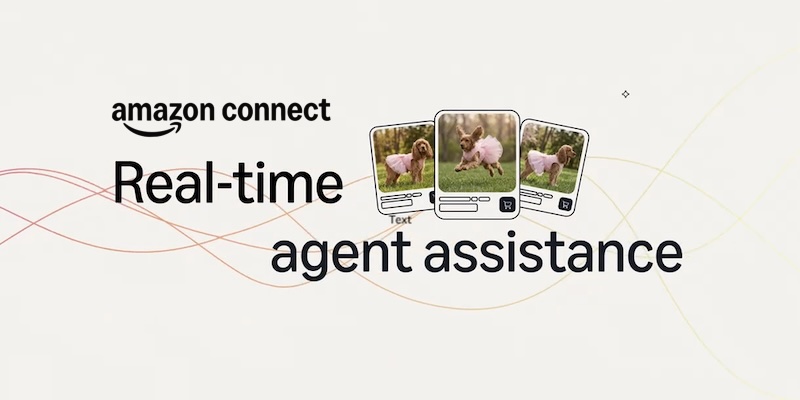
- Design: Business users drag and drop modular components onto an interactive canvas, mapping out complex voice and digital journeys. The interface abstracts away the underlying APIs, database calls, and prompt engineering.
- Test and Simulate: Before a single customer interacts with the flow, teams can run rigorous simulations. They can test edge cases, evaluate how the AI handles unexpected user inputs, and refine conversational pathways in real time.
- Govern: Crucially, freedom does not mean chaos. Enterprise IT and compliance teams retain macroeconomic control through centralized governance guardrails, ensuring that brand guidelines, data privacy protocols (such as GDPR and HIPAA), and compliance mandates are strictly enforced across all user-generated workflows.
- Deploy: Experiences that historically required months of cross-departmental coordination, code reviews, and staged rollouts can now transition from concept to production in a matter of weeks.
Live Sync: Bridging Voice and Digital in Real Time
Perhaps the most technically arresting component of the launch is Live Sync, a patented technology designed to synchronize voice and digital channels dynamically.
In a traditional contact center scenario, a customer calling support might be asked to locate a specific order form, navigate to a product troubleshooting page, or confirm their shipping address. This often results in frustrating verbal exchanges where agents spell out URLs or customers hunt blindly through mobile apps while on hold.
Live Sync fundamentally alters this dynamic. As a customer speaks or types with an Amazon Connect instance, Live Sync drives their web or mobile application interface simultaneously and in real time. If a caller mentions an issue with a recent order, the system can instantly pull up the correct product page, pre-fill necessary form fields, or display relevant troubleshooting steps directly on the user’s screen—all without requiring the customer to navigate away from the conversation or repeat information. It creates a seamless, multimodal bridge that drastically reduces Average Handle Time (AHT) while exponentially boosting customer satisfaction (CSAT).
Supporting Context & Metrics: The "Business User as Architect" Era
To fully grasp the significance of Amazon Connect’s latest capability, one must examine the macro-economic and operational realities facing modern contact centers.
The Engineering Bottleneck
For decades, customer experience design has suffered from an operational dichotomy:
- The Business Team understands the customer’s emotional state, frequently asked questions, phrasing nuances, and brand tone. However, they lack the technical capabilities to modify underlying contact center routing scripts, integrate APIs, or adjust LLM (Large Language Model) prompts.
- The Engineering Team possesses the technical prowess to wire up AWS Lambda functions, Amazon Lex bots, and DynamoDB tables, but they are chronically overburdened. They manage security patches, infrastructure scaling, and core product roadmaps, leaving CX enhancement requests languishing in months-long backlogs.
By introducing a governed, no-code canvas, AWS is officially declaring that the business user is the new architect of customer experience.
[Traditional Model]
Business Insight -> Requirements Document -> IT Backlog (Months) -> Coding -> QA -> Deployment

[New Agentic CX Model]
Business Insight -> Visual Canvas & Simulation (Weeks) -> Central IT Governance Guardrails -> Production Deployment
Blending Deterministic and Agentic AI
A common pitfall in early enterprise AI adoption was the binary choice between deterministic AI (rigid, rule-based decision trees that ensure predictable outcomes but struggle with nuance) and agentic/generative AI (flexible, reasoning-driven models that handle open-ended conversation brilliantly but occasionally "hallucinate" or drift off-script).
The Agentic CX designer bridges this divide by fusing both methodologies into a single, unified flow:
- Deterministic Guardrails: Critical operational steps—such as identity verification, financial transactions, and regulatory disclosures—are governed by strict, deterministic logic paths that cannot be bypassed by the AI.
- Agentic Flexibility: For open-ended inquiries, product recommendations, and complex troubleshooting, autonomous agents take the wheel, reasoning through the customer’s intent and dynamically generating helpful responses.
This hybrid approach ensures that enterprises do not have to choose between brand safety and conversational intelligence; they achieve both within a single governed architecture.
Official Statements and Industry Perspective
While AWS engineering leaders and evangelists have been demonstrating these architectures live across the New York and Washington D.C. summits, the broader industry response highlights a profound shift in enterprise software expectations.

Reflecting on the energy of the live workshops, AWS community leaders noted:
"It has been a busy stretch on the AWS Summit circuit… It was a lot of fun watching builders wire up agents and serverless services to solve real problems in a single afternoon. A question I hear a lot at these events is how teams can put AI to work without waiting on a long engineering backlog. This launch speaks directly to that."
Industry analysts point out that Amazon Connect has steadily evolved from a cloud-native, pay-as-you-go alternative to legacy telephony hardware into an intelligent, end-to-end customer engagement platform. By embedding sophisticated agentic workflows directly into a no-code interface, AWS is lowering the barrier to entry for mid-market companies while providing the enterprise-grade governance required by Fortune 500 corporations and public sector institutions.
Furthermore, the introduction of patented innovations like Live Sync signals Amazon’s relentless focus on reducing friction in human-computer interaction. By treating voice and digital channels not as siloed entities, but as synchronized touchpoints of a single conversation, AWS is setting a new benchmark for what omnichannel support should look like in the generative AI era.
Future Outlook: What’s Next for AWS and Enterprise CX
As the preview phase of the Agentic CX designer (NLX) and Live Sync rolls out to early adopters, the ripple effects across the contact center industry will be profound.
1. Acceleration of Self-Service Deflection Rates
With business teams empowered to iterate on conversational flows daily rather than quarterly, organizations can rapidly adapt their self-service models to emerging customer trends, seasonal shopping behaviors, or sudden product recalls. Expect to see a sharp rise in first-contact resolution (FCR) rates and a corresponding drop in live-agent escalation queues.
2. The Evolution of Contact Center Roles
As no-code tools absorb the mechanical aspects of flow design, the role of the contact center operations manager will evolve into that of an AI Orchestrator. Professionals will spend less time managing ticketing systems and more time analyzing conversational analytics, optimizing prompt behaviors, and refining customer journeys based on real-time simulation data.
3. Expansion Across the AWS Ecosystem
As highlighted by the serverless workshops on the summit circuit, the true power of AWS lies in composability. We can anticipate deeper integrations between Amazon Connect’s new agentic canvas and broader AWS services—such as Amazon Bedrock for foundation model selection, Amazon Polly for hyper-realistic voice synthesis, and Amazon Q for internal agent assistance.
Conclusion
The unveiling of the Agentic CX designer marks a watershed moment for Amazon Connect and the broader enterprise software landscape. By placing the architectural pen directly into the hands of business users—backed by bulletproof IT governance, hybrid deterministic-agentic logic, and real-time multichannel synchronization via Live Sync—AWS has transformed customer experience design from an engineering marathon into a dynamic, agile sprint.
As organizations gather at upcoming AWS Summits and explore the expanding resources in the AWS Builder Center, one thing is abundantly clear: the future of customer interaction is autonomous, multimodal, and accessible to everyone.