Executive Overview
In the high-stakes realm of real-time strategy (RTS) game development, promotional material traditionally follows a predictable, highly choreographed formula. Developers typically present their work by executing flawless build orders, leveraging tactical genius, and dismantling enemy AI with a cinematic flair designed to showcase power fantasies. However, King Art Games recently upended this industry standard. In a refreshingly transparent battlefield report for the upcoming Warhammer 40,000: Dawn of War 4, the studio’s creative director and senior game designer teamed up to take on the game’s Hard-mode AI in a 2v2 Team Skirmish PvE match—and were soundly, ruthlessly dismantled.
Stepping into the boots of the Imperium’s Adeptus Astartes, Creative Director Jan Theysen and Senior Game Designer Elliott Verbiest faced off against an AI-controlled Ork horde. Rather than scripting a triumphant victory, the developers exposed the brutal reality of Dawn of War 4‘s upper-tier artificial intelligence. The resulting matches—one ending in a humiliating four-minute collapse, the other in a 13-minute war of attrition culminating in an unceremonious surrender—have gone viral for their sheer comedic value and genuine display of systemic depth.
This deep dive examines the implications of King Art Games’ bold promotional strategy, the mechanics driving the ruthless Waaagh!, and what this brutal preview signals for RTS veterans eagerly anticipating the game’s December 3, 2026 PC release.
Detailed Chronology: Chronicles of a Foretold Defeat
To fully appreciate the scope of the developer’s defeat, one must examine the progression of the showcase video released by King Art Games. Up to this point, the studio’s developer diaries and battlefield reports had primarily focused on competitive PvP dynamics. Shifting gears toward a cooperative Player-versus-Environment (PvE) format, Theysen and Verbiest decided to test their mettle against the highest currently balanced non-cheating tier of computer opposition: the Hard-mode AI Orks.
Match One: The Four-Minute Massacre
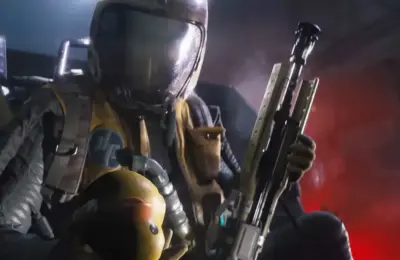
The first match served as an unmitigated disaster for the creators of the game. Deploying as the stoic Space Marines, the duo attempted to establish a standard early-game economy while contesting map objectives. However, the AI-controlled Orks executed an aggressive, early tempo that caught the developers completely flat-footed.
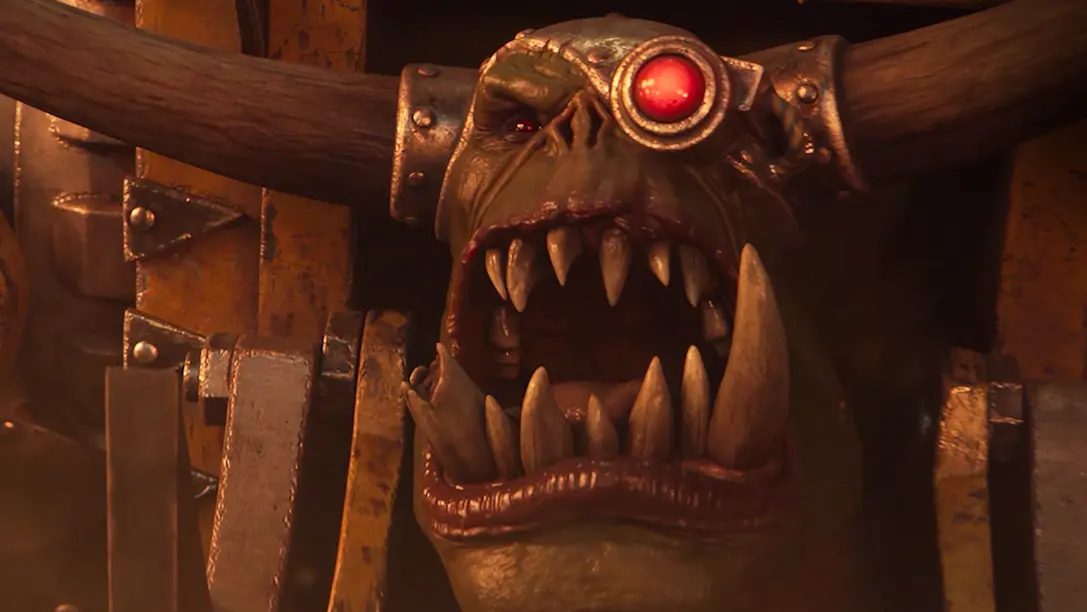
Utilizing the relentless swarming tactics intrinsic to the faction’s lore, the green-skinned horde bypassed standard strategic pacing. They flooded critical choke points, overwhelmed the Space Marine tactical squads, and dismantled the Astartes’ forward operations before reinforcements could arrive. In just over four minutes, the screen flashed with defeat text. Rather than editing out the catastrophic failure, the team leaned into the humor, dismissing the round as a "practice match"—a mere calibration run before they were officially "locked in."
Match Two: Adjusting the Parameters
Determined to salvage their dignity in the second round, Theysen and Verbiest attempted to course-correct. To insulate themselves against another rapid collapse, they deliberately adjusted the lobby settings, increasing the Victory Point threshold required to win in order to artificially extend the match duration and give themselves breathing room for a mid-game recovery.
Yet, the mathematical and behavioral adjustments did little to curb the onslaught. As the match progressed into the mid-game phase, the Orks maintained relentless pressure across multiple fronts. Despite utilizing the game’s automated unit-reinforcement systems to keep their frontline squads combat-effective, the human players struggled to maintain resource equilibrium.
Starved of critical map points and falling critically behind in the Victory Point race, the developers found themselves entirely unable to construct a viable counter-offensive army. When a massive, Waaagh-powered Ork column began its inevitable march toward their primary base structure, the writing was on the wall.

Recognizing the mathematical impossibility of a comeback, Theysen hit the surrender button moments before the AI could deliver the final structural obliteration. With a weary chuckle, Theysen officially ended the broadcast, delivering an autopsy of their own failure: "This might be the second loss in a row which tells you two things. First of all, we are not that good at our own game. And also the AI is pretty strong."
Supporting Context & Metrics: Decoding the AI Threat
The transparency displayed in King Art Games’ showcase highlights several crucial insights regarding the tactical ecosystem of Dawn of War 4. For an RTS franchise historically celebrated for its hard-hitting combat pacing and resource-denial mechanics, the performance of the Ork AI points toward a robust, highly optimized backend architecture.
The Anatomy of an Ork Rush
In the Warhammer 40,000 universe, Orks function as an unstoppable tide of biological momentum, driven by mass, aggression, and the psychic manifestation of the Waaagh! Translating this lore into mechanical RTS design often presents a balancing paradox: if they are too weak, they feel like generic grunts; if they are too strong, they break the game’s economy loop.
Based on the gameplay footage, the Hard AI in Dawn of War 4 capitalizes on several advanced directives:
- Aggressive Map Control: The AI does not wait for a passive resource-gathering phase. It aggressively contests neutral objectives, starving the human players of critical map-based income multipliers.
- Sustained Pressure: By cycling units effectively and maintaining constant micro-engagements, the AI prevents opponents from teching up or establishing secure defensive perimeters.
- Resource Optimization: Even with automated reinforcement mechanics active on the developer side, the Ork AI demonstrated superior throughput, punishing every micro-mismanagement and positioning error made by the human team.
Community Reception and Meta Expectations
The gaming community’s reaction to the developers getting wiped by their own creation has been overwhelmingly positive. Rather than drawing criticism regarding game balance, the video has successfully cultivated a sense of trust between the studio and the player base.
Historically, players approach developer-led game demos with healthy skepticism, fully aware that footage is routinely curated to make the software look accessible and forgiving. By publicly publishing a 13-minute video where they are systematically dismantled, King Art Games achieved the opposite effect: they validated the mechanical depth and punishing ceiling of the game’s higher difficulties.
Commenters across YouTube and Reddit quickly weighed in on the display, with many noting the canonical accuracy of the defeat. "I will never do hard in a Warhammer game, Orks just nuke you," noted one seasoned strategy veteran, capturing the sentiment of players who understand the historically volatile nature of green-skin factions in computer strategy titles.
Official Statements and Developer Insights
The candid nature of the broadcast prompted both Theysen and Verbiest to reflect on what the defeat means for the long-term health and reception of Dawn of War 4.
Reflecting on the hard mode balancing, Jan Theysen offered a tongue-in-cheek critique of his own development team:

"I think I have to have a stern word with our coders about the hard mode difficulty. I mean, it’s supposed to be hard, but also the boss is supposed to win!"
Despite the public embarrassment, the studio harbors few illusions about how quickly the community will conquer these seemingly insurmountable challenges. Senior Game Designer Elliott Verbiest expressed absolute confidence in the ingenuity of the strategy gaming community:
"I have no doubt that players will come back to us within like a few weeks of launch and tell us, ‘Actually, we’ve managed to beat this within two days.’"
Theysen concluded with a humorous nod to internet culture, acknowledging that the comment sections would inevitably feast on their strategic shortcomings, while doubling down on the value of authenticity in modern game marketing.
Future Outlook: Looking Ahead to December 2026
As the countdown ticks down toward the official PC release of Warhammer 40,000: Dawn of War 4 on December 3, 2026, this unexpected PR masterclass has set a high bar for post-launch expectations.
For strategy enthusiasts, the revelation that the game’s Hard AI is genuinely challenging—capable of punishing even the individuals who wrote its code—is a massive green flag. In an era where modern strategy titles often launch with toothless computer opponents that rely on sluggish decision-making trees, a genuinely threatening Skirmish and PvE ecosystem ensures long-term replayability for solo and cooperative players alike.
However, it also serves as a stark warning to anyone planning to jump straight into high-tier lobbies on launch day. If the creative director and senior designer of the game cannot survive a 2v2 Hard-mode skirmish against the Orks, mere mortals might want to heed the prevailing wisdom: start on normal difficulty, build your base defenses wisely, and pray the Emperor protects.