Executive Overview
In the sprawling, choice-driven architecture of Intelligent Systems and Nintendo’s Fire Emblem: Fortune’s Weave, few gameplay mechanics carry as much weight, urgency, and consequence as paralogues. These optional side-missions are far more than mere diversions or padding for a lengthy campaign; they are critical narrative and strategic crucibles capable of fundamentally shifting the composition of your roster, altering endgame dynamics, and providing a much-needed financial influx during times of economic strain.
However, navigating these optional chapters requires meticulous planning. Operating under strict, unforgiving time limits and rigid story-driven availability matrices, Fortune’s Weave paralogues can easily slip through the cracks of an unobservant playthrough. Missing them means forfeiting recruitment opportunities, losing invaluable assets, and leaving pivotal plot-important characters stranded outside your command.
This comprehensive guide serves as an authoritative breakdown of how paralogues function within the wider scope of Fire Emblem: Fortune’s Weave. We examine whether you should prioritize or bypass these missions depending on your chosen path, outline the mechanics governing character recruitment in Part 3, and provide a definitive analysis of every hard deadline, scheduling conflict, and strategic caveat you will encounter across the continent.
Detailed Chronology: Dates, Deadlines, and Route-Specific Constraints
One of the most complex elements of Fortune’s Weave is the shifting availability of paralogues depending on the specific Flame Lord route you have chosen. While the campaign offers immense freedom in how you tackle its sprawling geopolitical conflicts, it enforces strict chronological limitations on optional engagements.

Understanding Route-Based Availability
With rare exceptions, not every paralogue is accessible on every route. Narrative choices and the unique ways conflicts resolve across different factions often mean that alternative diplomatic or military solutions circumvent the need for a paralogue’s direct intervention. While this can streamline a specific playthrough, it poses a direct hurdle for players intent on rounding out their Part 3 rosters.
Dietrich stands as a notable exception to this rule due to the distinct progression of his campaign. Barring his own personal mission, Dietrich’s route allows players to experience virtually every paralogue in the game—provided they can manage the crushing scheduling constraints.
The Critical Case of Bertrand and Dietrich’s Route
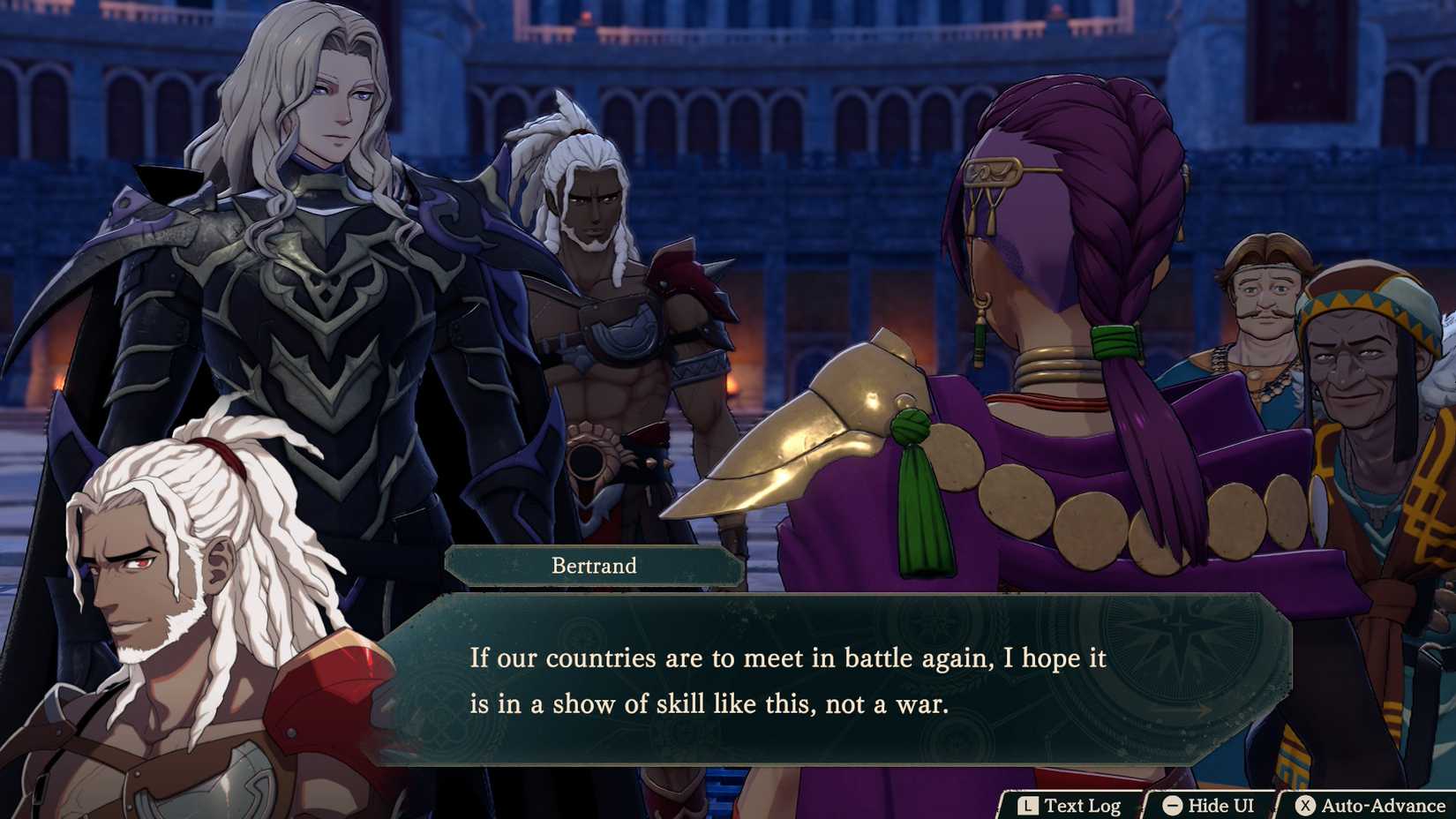
No discussion of paralogue logistics is complete without addressing the severe constraints surrounding Bertrand’s mission on Dietrich’s path.
Completing Bertrand’s paralogue is the singular method for recruiting Peppe on Dietrich’s route. More importantly, it is the only way to secure Gaitz under any circumstance, as he is entirely unrecruitable through standard progression on all other paths.

The catch? On Dietrich’s route, Bertrand’s paralogue is accessible for precisely one day: September 17.
[9/17: Bertrand's Paralogue Opens]
       │
       ├──> 5 Turns Remaining until Main Story Deadline
       │
       └──> CRITICAL WARNING: Missing this window triggers an unrecoverable Game Over.
This window leaves players with a mere five turns before the main story deadline hits—a hard threshold that immediately triggers a game over screen if unaddressed. Tacticians attempting Dietrich’s route must ensure all preparations for the main quest are complete and be ready to deploy via Mars’ Gate of the Gods before initiating Bertrand’s mission.
Theodora’s October Threshold
Another critical calendar hurdle involves Theodora’s campaign. While certain quest tracking interfaces display end dates stretching past October 24, Theodora’s final chapter reaches its definitive narrative conclusion on October 24. Consequently, all lingering paralogues, base preparations, and secondary subquests must be finalized well ahead of this hard stop.
Supporting Context & Metrics: The Mechanics of Paralogues
To master the strategic landscape of Fortune’s Weave, commanders must understand the quantifiable incentives and structural repercussions tied to completing or skipping these optional chapters.
Financial Recovery and Resource Management
In Fortune’s Weave, resources are perpetually tight. Between bribing faction leaders with rare foodstuffs, procuring tailored gift items to boost support levels, and maintaining equipment durability, players often find their treasuries depleted.
- The Gold Incentive: Every completed paralogue rewards the player with a flat 20,000 gold. For tacticians struggling to balance their ledgers, these missions serve as an indispensable economic lifeline.
Recruitment Dynamics and Guest Status in Part 3
The primary strategic driver for tackling paralogues is the impact they exert on your army composition heading into Part 3. Every Flame Lord—including non-playable entities such as Bertrand, Anatolia, Talimun, and Orchel—alongside the series staple Anna, features an associated paralogue.
- Flame Lord Paralogues (Leda, Dietrich, Cai, Theodora):
Completing the paralogue associated with these specific Flame Lords ensures they join your forces when Part 3 commences. However, they join strictly as guests. You will retain no direct control over their class paths, stat growth leveling distributions, or inventory management. - Non-Playable Flame Lord and Independent Paralogues (Talimun, Orchel, Bertrand, Anatolia, Anna):
Clearing these specialized paralogues yields far greater structural control. The targeted characters transition into Part 3 as full-fledged combatants, allowing you to reclass them, curate their loadouts, and tailor their growth curves to fit your tactical doctrine.
Cross-Route Carryover Efficiency
Mercifully, the game’s design respects the player’s time investment across multiple playthroughs. You only need to complete a given character’s paralogue once.
If you clear Cai’s paralogue while playing on Leda’s route and subsequently transition to Dietrich’s route, you can safely bypass Cai’s paralogue without incurring any narrative or mechanical penalties (though you will miss out on the associated monetary reward). This persistent tracking significantly streamlines subsequent New Game+ or alternate-route runs.

Official Statements & Developer Insights
Reflecting on the design philosophy behind Fortune’s Weave, lead developers at Intelligent Systems emphasized a desire to move away from predictable, checklist-style side content. In pre-launch developer roundtables, studio representatives noted that the team sought to make optional chapters feel like "organic fractures in the timeline" rather than arbitrary combat arenas.
"We wanted the player to feel the true weight of a continent at war," noted a senior director during a Nintendo-hosted deep dive. "When a paralogue closes after a single day, or when a choice on one route permanently seals off a tactical opportunity on another, it reflects the chaotic reality of our narrative themes. Choices must matter, and time must remain an unyielding adversary just as much as opposing armies."
This philosophy permeates every layer of the game’s design, transforming the calendar interface from a passive menu into an active strategic front where scheduling errors prove just as fatal as tactical blunders on the grid.
Future Outlook: Mastering the Campaign Ahead
As players continue to unravel the complex causality loops of Fire Emblem: Fortune’s Weave, community hubs and tactical resource databases are rapidly expanding to map out optimal route orderings.

For newcomers and veterans alike, approaching the campaign requires a shift in mindset. Rather than attempting to see and do everything in a single run, the game’s intricate web of timed paralogues, shifting alliances, and route-exclusive recruitment parameters practically demands multiple playthroughs.
By strategically selecting which paralogues to prioritize based on your desired endgame roster—and keeping a watchful eye on unforgiving calendar deadlines like Dietrich’s September 17 bottleneck—commanders can successfully master the temporal labyrinth of Fortune’s Weave. Whether you are hunting for rare recruits like Gaitz, balancing an empty treasury with a timely 20,000-gold payout, or simply trying to survive Classic mode without permanent casualties, understanding the rhythm of these side-missions is the ultimate key to victory.