Executive Overview
Immersive world-building has long been the cornerstone of Blizzard Entertainment’s massive multiplayer online role-playing game (MMORPG) empire, but modern iterations of World of Warcraft have occasionally traded tactile environmental design for streamlined convenience. With the upcoming release of World of Warcraft: Forever, Blizzard has set out to reverse this trend, anchoring its design philosophy on the premise that the open world itself should act as the primary protagonist and that the journey holds greater significance than the destination.
However, despite capturing much of the nostalgic atmosphere that players remember from the game’s formative era, the ongoing beta tests revealed a glaring omission: underwhelming, muted weather systems. Fans quickly voiced their discontent, noting that intermittent drizzles and light dustings of snow failed to capture the punishing, visceral elements of early-edition Azeroth.
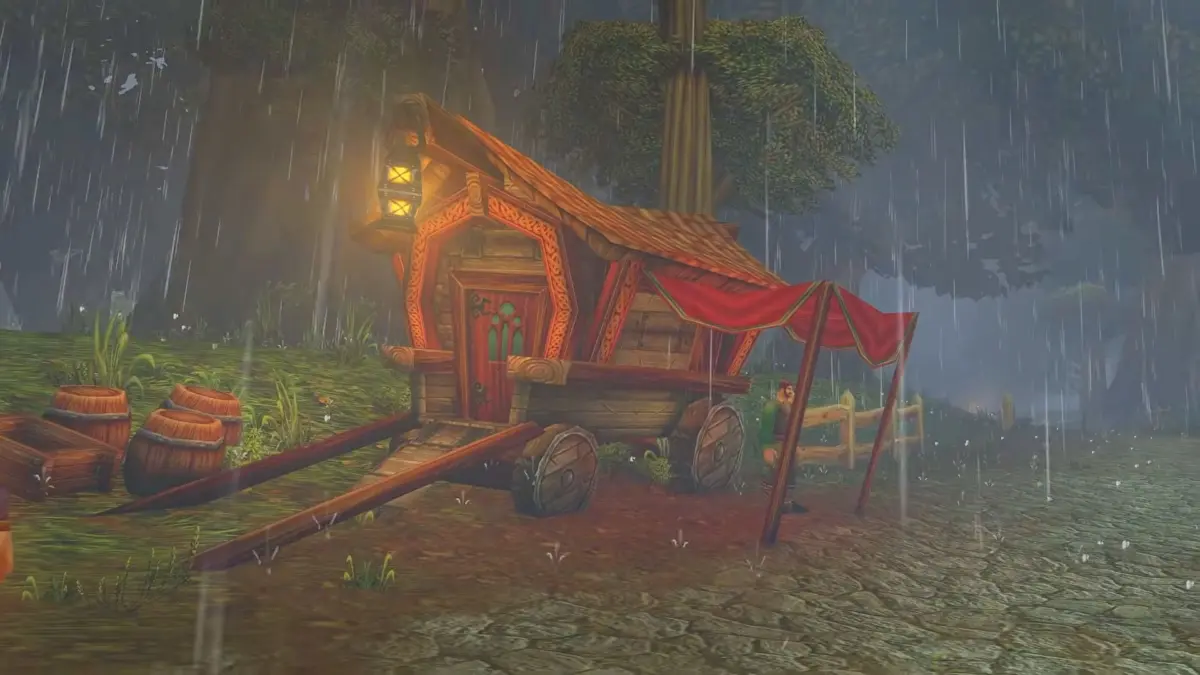
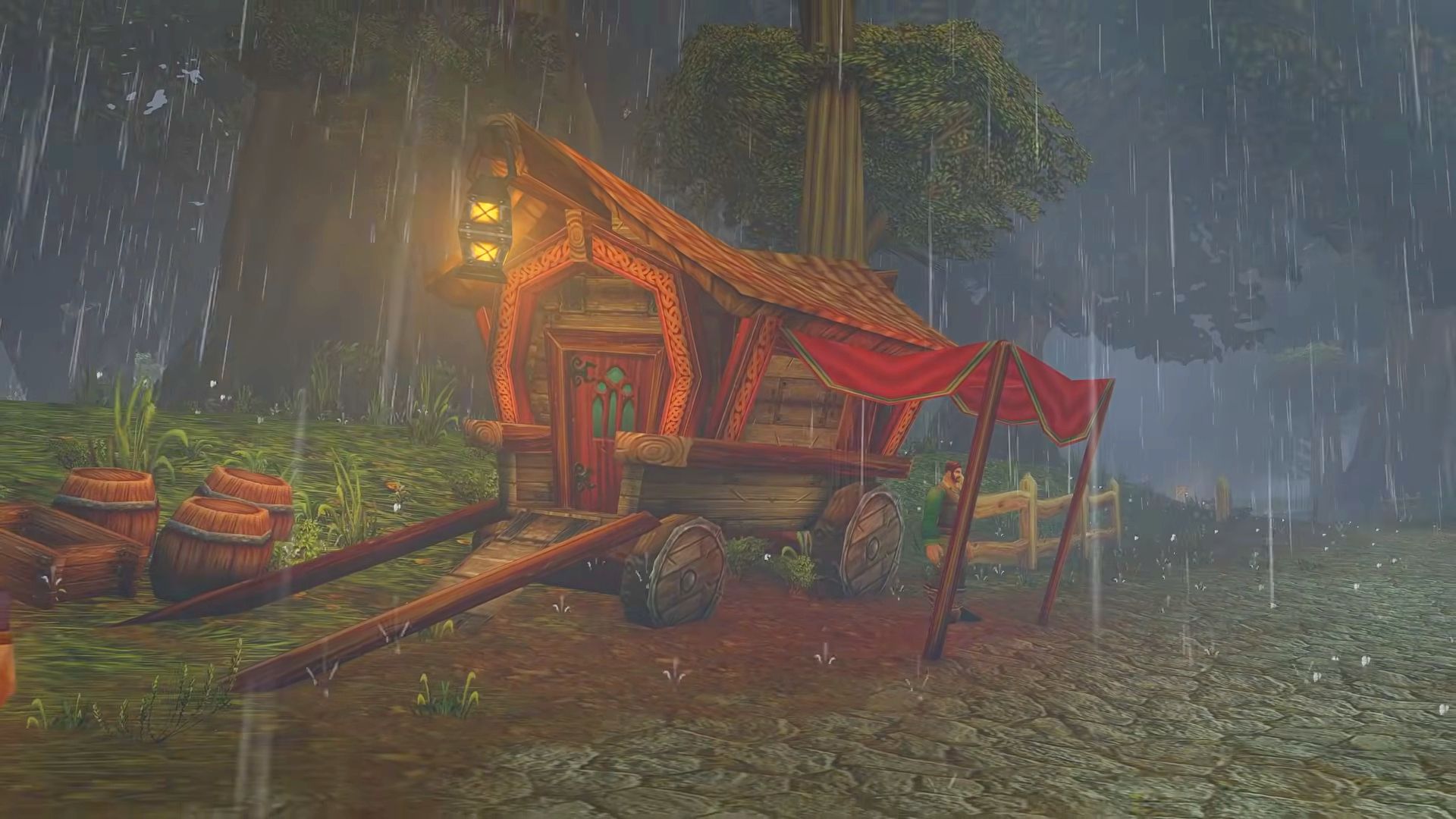
Answering this community outcry swiftly and decisively, Blizzard has confirmed that it will be drastically ramping up environmental intensity in upcoming patches, turning the dial all the way up to ten in select World of Warcraft: Forever beta zones. A newly released teaser video highlights a profound atmospheric transformation, showcasing a dense, torrential downstorm sweeping through Elwynn Forest that severely restricts visibility and evokes a genuine desire to seek shelter. This rapid development not only signals a major win for community-driven game design but also establishes an encouraging precedent as the November 4 launch date rapidly approaches.
Detailed Chronology: From Muted Skies to Community Outcry
To understand the weight of Blizzard’s recent pivot, one must examine the progression of atmospheric design within World of Warcraft and the specific trajectory of the WoW: Forever beta testing phase.
The Nostalgic Benchmark of Early Azeroth
Veterans of early-era World of Warcraft frequently point to environmental storytelling as a defining pillar of their initial MMO experiences. Traversing Dun Morogh during a heavy, howling blizzard that drastically curtailed view distance, or navigating the eerie, moonlit paths of Tirisfal Glades while ambient soundscapes reinforced a sense of isolation, were foundational memories for millions of players. These environmental conditions were not merely aesthetic overlays; they dictated gameplay pacing, forced players to navigate by landmark rather than mini-map markers, and amplified the danger of exploring uncharted territory.
Over the years, as the game expanded through subsequent expansions and prioritized mount-heavy transit systems, these weather effects were frequently toned down or overshadowed by quality-of-life adjustments. By the time development on World of Warcraft: Forever began, the explicit goal was to recapture the deliberate pacing, slower progression, and geographical friction of the past.
The Beta Disconnect
When the WoW: Forever beta went live, it garnered immediate, widespread praise for successfully nailing the foundational tone of classic exploration. More than half of the gameplay loop relied on terrestrial travel—forcing players to walk or ride across dense forests, rolling hills, and arid deserts rather than soaring effortlessly overhead via modern flying mounts.
Despite these successes, eagle-eyed players quickly identified a dissonance between Blizzard’s design pillars and the actual in-game conditions. While rain and snow were technically present in the build, their implementation felt anemic. Precipitation drifted down as a mild visual filter rather than an oppressive, world-altering event.
The tipping point arrived via community forums and social media channels. Prominent community discussions—epitomized by viral posts on platforms like Reddit, where users pleaded with developers to reintroduce punishing, immersive weather patterns—highlighted a deep-seated desire for sensory friction. Players yearned to be physically impeded or visually challenged by the elements, arguing that a storm should feel like a tangible threat rather than a minor inconvenience.
The Swift Pivot and ASMR Teaser
Demonstrating an uncharacteristically rapid turnaround for an enterprise-level game studio, Blizzard listened. Rather than waiting for the game’s full commercial launch or filing the feedback away for a post-release content roadmap, the development team responded directly via a teaser video for the title’s next major patch.
Presented in an immersive, ASMR-style montage, the footage showcased an overhauled rainstorm sweeping across Elwynn Forest. The atmospheric density was staggering: thick sheets of rain and heavy rolling fog obscured the treeline bordering Goldshire, transforming a familiar, low-level questing hub into a moody, claustrophobic landscape. The visual fidelity of the storm was so striking that it immediately sparked enthusiastic discussions across the player base, proving that Blizzard was willing to inject severe environmental challenges back into the core gameplay loop.
Supporting Context & Metrics: Analyzing the Impact of Environmental Friction
The decision to overhaul weather effects in World of Warcraft: Forever is not merely an aesthetic choice; it represents a fundamental alignment with the core design metrics that Blizzard has established for this specific iteration of the franchise.
The Pillars of WoW: Forever
Blizzard has repeatedly emphasized two primary design philosophies governing the development of WoW: Forever:
- The World as a Main Character: Azeroth must feel alive, unpredictable, and potentially hostile. Environments should demand respect and attention from the player, rather than serving as passive backdrops for fast-paced leveling efficiency.
- The Journey Over the Destination: By deliberately slowing down progression—allowing players, for instance, to spend nearly forty seconds engaging a single low-level mob with basic melee tools—the game encourages deep engagement with micro-interactions.
Muted weather effects directly contradicted these pillars. True immersion requires vulnerability. When a player can see across an entire zone regardless of atmospheric conditions, the psychological weight of the wilderness diminishes. By introducing blinding snowstorms, torrential downpours, and intense sandstorms, Blizzard reintroduces navigational hazard and tactical consideration into overland travel.
Technical Scope and Beta Limitations
With the current beta build capped at level 20, the geographical scope available to testers is naturally restricted. This limitation helps explain why Blizzard noted that these increased weather effects will initially roll out to certain zones.
| Feature / Metric | Initial Beta State | Upcoming Patch Overhaul |
|---|---|---|
| Precipitation Density | Light, translucent overlay | Heavy, opaque sheets (Rain/Snow) |
| Visibility Impact | Minimal reduction in view distance | Significant occlusion of distant landmarks |
| Audio Integration | Subtle ambient loops | Dynamic, localized storm acoustics |
| Gameplay Friction | Purely cosmetic | Environmental immersion & navigation challenge |
While Elwynn Forest has received the marquee showcase for heavy rainfall, corresponding updates for snowstorms in northern zones like Dun Morogh and sandstorms in arid regions remain in development. The technical hurdle of synchronizing these localized, high-intensity weather phenomena across high-population server shards is non-trivial, requiring meticulous optimization to prevent frame rate drops during massive open-world events.
Official Statements & Community Response
The rapid iteration cycle demonstrated by the development team has shifted the narrative surrounding the beta from cautious optimism to unbridled enthusiasm. Industry analysts and community leaders alike have taken note of Blizzard’s receptiveness.
Rebuilding Trust Through Responsiveness
Historically, MMORPG development cycles operate on rigid, months-long timelines where community feedback is triaged, cataloged, and implemented long after the initial momentum of a playtest has faded. The turnaround time on the weather system adjustments—addressed within the first few weeks of the beta—has surprised even the most cynical veterans.
Industry commentators have noted that this agility is vital for a project like WoW: Forever. Because the game relies heavily on recapturing a specific historical feeling rather than introducing cutting-edge mechanical innovations, failing to nail atmospheric details risks alienating the exact demographic the game is built for. By reacting so forcefully to player demand, Blizzard has signaled that it views the beta not as a simple stress test, but as a collaborative workshop.
Community Reactions
The reception across community hubs has been overwhelmingly positive. Content creators and veteran players have published breakdowns of the teaser footage, praising the studio’s commitment to visual depth.
"I miss running through Dun Morogh hearing the iconic music with a massive snowstorm lowering my view distance on my Dwarf hunter… picking up quests from the dwarf next to the fire and restoring my inventory," shared Reddit user Darthbobz, whose initial plea crystallized the community’s desires.
The sentiment echoed by thousands of upvotes was clear: players want a world that fights back, even if only through meteorological hostility. The prospect of having to take shelter inside a tavern because an Elwynn Forest rainstorm has made navigation treacherous captures precisely the romanticized hardship that classic MMORPG players cherish.
Future Outlook: What Lies Ahead for WoW: Forever
As the November 4 commercial launch date rapidly approaches, the implementation of heavy weather effects serves as a litmus test for the future trajectory of World of Warcraft: Forever.
Beyond the Beta Cap
As the development team lifts the level cap and opens up higher-tier zones in subsequent beta builds, the community will be watching closely to see how extreme weather scales across different environments. Desert regions like the Barrens and Tanaris are prime candidates for oppressive sandstorms that reduce visibility to mere yards, while high-altitude zones in Kalimdor and the Eastern Kingdoms demand the same blinding snow mechanics teased for Dun Morogh.
Furthermore, players are beginning to speculate whether these enhanced environmental conditions might eventually tie into gameplay mechanics—such as temporary movement speed penalties, increased stealth detection ranges, or specialized gathering opportunities tied to specific weather types. While Blizzard has not yet confirmed any direct mechanical debuffs tied to the new weather systems, the psychological impact of being visually immersed in a storm is already a massive victory for role-play and immersion enthusiasts.
A Promising Horizon
The sheer volume of praise flooding gaming forums over the past week underscores the immense appetite for deliberate, atmospheric game design. If Blizzard continues to match its development velocity with this level of attentive, community-informed polish, World of Warcraft: Forever is poised to deliver not just a nostalgic trip down memory lane, but a living, breathing virtual world that feels more hazardous and enchanting than ever before.
With patch notes detailing the full extent of the weather overhauls slated for release later this week, all eyes remain fixed on Azeroth’s shifting skies.