The paradigm of enterprise artificial intelligence has definitively shifted. For years, the prevailing strategy in generative AI development was a blunt pursuit of scale—an ongoing race where organizations deployed the largest, most computationally expensive frontier models available, regardless of whether the task demanded such immense capacity. However, as the ecosystem matures, efficiency, latency, and cost-to-performance ratios have emerged as the primary drivers of enterprise adoption.
Amazon Web Services (AWS) has underscored this industry-wide transformation with a major expansion of its managed AI service, Amazon Bedrock. In a move that redefines the intelligence-versus-efficiency curve, AWS announced the integration of several groundbreaking models: GPT-6 Sol and GPT-6 Luna from OpenAI, alongside Claude Opus 5.5 from Anthropic.
This strategic rollout addresses a critical operational friction point for modern engineering teams: matching the exact cognitive capability of a model to a specific workflow step while optimizing for cost and speed. Rather than defaulting to resource-heavy legacy systems, developers can now leverage highly specialized architectures. GPT-6 Sol is engineered for rigorous software development and operational workflows; GPT-6 Luna is optimized for high-volume, repeatable tasks at a fraction of previous operational expenses; and Anthropic’s Claude Opus 5.5 introduces token-efficient agentic coding capabilities designed for long-running execution chains.
This comprehensive report examines the architectural implications of these new model integrations, evaluates their positioning within the enterprise landscape, explores the parallel maturation of AI observability, and outlines what this means for the future of cloud-native development on AWS.
Detailed Chronology: The Evolution of Model Diversity on Amazon Bedrock
The past week’s announcements on the AWS News Blog represent a culmination of rapid, iterative model deployments designed to give enterprise architects granular control over their AI infrastructure. The chronology of these releases highlights AWS’s commitment to offering a multi-model ecosystem rather than locking developers into a single proprietary stack.
The OpenAI GPT-6 Addition: Sol and Luna
OpenAI’s transition to the GPT-6 architecture marks a substantial leap in how language models handle specialized business domains. On Amazon Bedrock, this manifests in two distinct offerings:
GPT-6 Sol: Tailored specifically for demanding, recurring workloads in software engineering and operations (DevOps). Sol is built to understand complex codebases, diagnose production anomalies, and assist in multi-step infrastructure deployments. Crucially, it arrives at a significantly lower price point than its predecessor, GPT-5.6, lowering the barrier to entry for continuous code refactoring and automated incident response.
GPT-6 Luna: Designed for high-volume, focused, and repeatable tasks. Whether an enterprise is processing thousands of customer support tickets, performing batch document extractions, or executing standardized data transformations, Luna delivers consistent, low-latency outputs. Its pricing structure makes high-throughput automation economically viable at scale.
Anthropic Claude Opus 5.5
Simultaneously, Anthropic has introduced Claude Opus 5.5 to the AWS ecosystem as the vanguard of its new 5.5 model family. Building upon the foundation of Opus 5, the 5.5 iteration achieves a higher density of comprehension while consuming fewer tokens per interaction.
Anthropic and AWS have heavily tuned Opus 5.5 for agentic workflows. In an agentic paradigm, a model is not merely responding to a single prompt; it is autonomously planning, executing tool calls, evaluating results, and correcting its course over extended periods. Claude Opus 5.5’s token efficiency drastically reduces the context-window bloat that traditionally plagues long-running autonomous tasks, making complex, multi-agent orchestration far more reliable and cost-effective.
The Shift in Enterprise Strategy
The inclusion of these models highlights a profound operational philosophy now taking root across the industry: Model Routing and Specialization.
Historically, companies routed all AI queries to a single frontier model. Today, sophisticated cloud architectures employ a tiered approach. Simple classification or data extraction tasks route to high-speed, cost-effective models like GPT-6 Luna; complex code generation and system architecture design route to GPT-6 Sol; and deep, autonomous reasoning loops leverage Claude Opus 5.5. Amazon Bedrock serves as the unified control plane for this orchestration, abstracting away the underlying infrastructure complexity while providing enterprise-grade security and governance.
Supporting Context & Metrics: The Economics of Efficiency
To understand the weight of these recent AWS announcements, one must analyze the shifting economic pressures facing enterprise technology leaders.
The Token Cost Curve
For the past three years, the cost of frontier AI generation followed a predictable curve of high capital expenditure. Enterprises realized early productivity gains, but as workloads scaled from pilot projects to production environments serving millions of daily active users, inference costs threatened profit margins.
The introduction of GPT-6 Sol, GPT-6 Luna, and Claude Opus 5.5 breaks this trend by decoupling intelligence from inflated operational expenses:
Cost Reduction: Both OpenAI’s new offerings and Anthropic’s 5.5 architecture debut at substantially reduced per-token pricing compared to their immediate predecessors (GPT-5.6 and Claude Opus 5).
Latency Optimization: By refining neural network parameter efficiency and leveraging AWS Inferentia/Trainium hardware optimizations behind the scenes on Bedrock, time-to-first-token (TTFT) metrics have dropped significantly. This is critical for real-time applications such as interactive chat interfaces and live coding assistants.
Token Economy: Claude Opus 5.5’s enhanced ability to "do more with fewer tokens" directly translates to smaller context payloads, reduced network bandwidth overhead, and cheaper long-term vector database retrievals (RAG architectures).
The Rise of Agentic Observability
As models evolve from simple text-in, text-out generators into autonomous agents capable of executing multi-step business logic, traditional application performance monitoring (APM) tools fall short. An agent might execute twenty sub-steps, invoke three external APIs, and query a relational database before returning an answer to a user. If the final output is incorrect, debugging where the agent failed requires deep, granular observability.
The convergence of advanced agentic models on Amazon Bedrock has forced a parallel evolution in cloud observability tools. Enterprises can no longer rely solely on latency and error rates; they must track semantic drift, tool-use success rates, token consumption per agentic loop, and intermediate reasoning paths. AWS has positioned its monitoring ecosystems to capture these exact telemetry streams, ensuring that as organizations deploy models like GPT-6 Sol and Claude Opus 5.5 into production, they maintain total visibility into system behavior.
Official Perspectives: The Philosophy of Choice
The overarching theme of the current tech landscape—championed by AWS leadership and echoed across the developer community—is the democratization of architectural optionality.
In editorial commentary surrounding the Amazon Bedrock updates, industry observers noted:
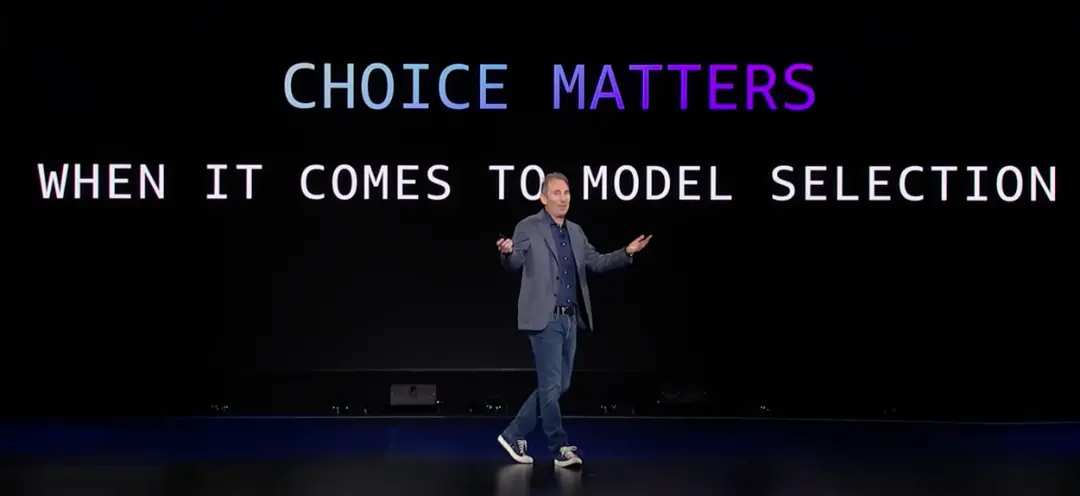
"If there’s one theme that defined last week, it’s choice. The frontier models keep arriving, and the interesting question is no longer just ‘how smart is it?’ but ‘which model fits this step, at this cost, at this latency?’"
This sentiment captures the maturation of the generative AI market. Enterprises are no longer mesmerized by raw benchmark scores that bear little resemblance to real-world business logic. Instead, CTOs and chief architects are asking pragmatic questions:
What is the exact cost per completed task?
How many milliseconds of latency can our end-users tolerate?
Does this model support native tool-calling and function execution securely within our Virtual Private Cloud (VPC)?
By integrating OpenAI’s latest technological iterations alongside Anthropic’s flagship models within a single managed service, AWS provides an unambiguous answer. Amazon Bedrock acts as an enterprise sandbox and production environment where organizations can experiment, benchmark, and deploy heterogeneous model fleets tailored to distinct business units.
Future Outlook: What’s Next for AWS Builders
As we look toward the remainder of the year, the acceleration of model releases on Amazon Bedrock signals several vital trends for cloud architects, software developers, and enterprise strategists:
1. Multi-Model Orchestration as the Standard
The era of relying on a monolithic AI vendor is drawing to a close. Future enterprise architectures will routinely combine models from different providers within the same application workflow. A customer onboarding flow might use an OpenAI model for sentiment analysis, an Anthropic model for contract summarization, and an open-source model hosted via Amazon SageMaker for internal data classification. Amazon Bedrock’s unified API framework makes this multi-model orchestration seamless.
2. Deepening Integration with AWS Developer Tools
As models like GPT-6 Sol take on heavier development and operations burdens, we can expect tighter integration between Amazon Bedrock and AWS developer services—including Amazon Q, AWS CodeWhisperer successors, and CI/CD pipelines. Automated code review, self-healing infrastructure scripts, and autonomous bug patching will transition from experimental concepts into standard enterprise automation tooling.
3. Community Engagement and Continuous Learning
To help developers navigate this complex landscape, AWS continues to expand its educational and community initiatives. Programs housed within the AWS Builder Center provide spaces for engineers to share multi-model architectures, collaborate on agentic frameworks, and access specialized technical content. Developers are encouraged to monitor the official AWS What’s New and AWS Blogs channels to stay abreast of rapid feature deployments.
Conclusion
The arrival of GPT-6 Sol, GPT-6 Luna, and Claude Opus 5.5 on Amazon Bedrock marks a defining milestone in cloud computing. By prioritizing precision, cost-efficiency, and agentic readiness over mere brute-force scaling, AWS and its foundational model partners are handing enterprises the tools they need to transition from AI experimentation to sustainable, high-ROI production deployment. For builders operating in the AWS ecosystem, the message is clear: the future belongs to those who master the art of model selection.