Executive Overview
In the fast-moving world of web development, standing still is the equivalent of moving backward. For a digital publication as historic and influential as CSS-Tricks, keeping pace with the modern web requires continuous, deliberate evolution. Recently, the platform rolled out its major version 20 (v20) theme update—the first comprehensive structural shift the site has seen in five years. In the web’s notoriously fast-paced ecosystem, half a decade is an epoch, spanning multiple generations of framework trends, design tokens, and rendering philosophies.
Rather than executing a disruptive, ground-up rebuild that risks alienating long-time readers or breaking legacy links, the v20 release is an exercise in meticulous iterative design. It bridges the gap between deep historical baggage and cutting-edge web capabilities. The overhaul successfully slashes total page weight, introduces long-requested native dark mode capabilities, incorporates bleeding-edge CSS features like shape() and dynamic random() functions, and systematically purges nearly two decades of accumulated digital debris.

This comprehensive report explores the motivations, technical implementations, architectural trade-offs, and performance metrics driving the CSS-Tricks v20 release. It highlights how a mature web property refactors its codebase without losing its foundational identity.
Detailed Chronology: Excavating Ghosts and Rebuilding the Core
Every website that survives for nearly two decades accumulates technical debt. CSS-Tricks was no exception, carrying architectural artifacts dating back to its inception 19 years ago. The development team approached the v20 release with a mindset of digital archaeology: excavating the theme layer, identifying obsolete dependencies, and performing strategic "ghost-busting."
Purging Unused JavaScript and Legacy Code
A primary target for the v20 update was the global compiled JavaScript file. Over the years, scripts had accumulated to handle features that are now either obsolete or natively supported by modern web standards and core platform updates.
- Newsletter Handlers: Legacy scripts designed to parse and manage embedded versions of early newsletters were removed once the platform transitioned to self-hosting posts.
- Flexbox Guide Relics: Specialized JavaScript toggles built to handle interactive states for the Flexbox Guide—created long before the broad browser adoption of the native HTML
<details>element—were scrubbed. - Lazy-Loaders and Polyfills: Outdated jQuery lazy-loading mechanisms were completely excised, as modern WordPress core and native browser APIs now handle image and asset loading efficiently.
- Ad-Serving Scripts: Third-party advertising integrations were dismantled following the site’s transition to self-hosted advertising models.
Through this targeted reduction, the overall uncompressed JavaScript bundle was trimmed from 151.6 KB (55.3 KB gzipped) down to 133.8 KB (48.1 KB).
Retiring the Forums
Perhaps the most monumental housekeeping task was the official retirement of the CSS-Tricks Forum. Although the forum had been placed in "archive mode" around 2018, its underlying database tables and supporting infrastructure remained active. Recognizing that decade-old development discussions held little relevance for today’s frontend landscape, the team deactivated the bbPress plugin and completely purged the database tables.
This single action carved a staggering 400 MB out of the database while allowing developers to strip away several custom templates from the active theme directory. The codebase is now significantly leaner, making future maintenance cycles exponentially faster and safer.
Modernizing the Development Workflow
For years, the underlying build process relied on a static Gulp configuration. While Gulp remains a functional task runner, leaving it frozen in a legacy state created friction every time developers initialized a new terminal session. The v20 update modernized the build pipeline, eliminating persistent startup errors and establishing a clean, lightning-fast developer experience.
Supporting Context & Metrics: Performance and Security Audits
A major theme update cannot rely solely on visual tweaks; it must demonstrate measurable improvements in performance, security, and accessibility. The v20 release approached these metrics through a blend of manual refactoring and AI-assisted auditing.

Holistic Security Hardening
Security audits are universally recognized as tedious yet critical tasks. For the v20 update, the development team utilized Anthropic’s Claude as a technical assistant. By prompting the AI to cross-reference recent WordPress security release notes against the existing theme architecture, developers were able to identify unescaped custom field calls and pinpoint areas where the theme could be hardened to align with modern WordPress security standards.
While the AI acted as a digital gopher—surfacing vulnerabilities and recommending patches—human developers maintained absolute control over code implementation. This hybrid approach allowed frontend specialists to delegate tedious security reviews while focusing their core competencies on UI architecture.
The Sass Refactor and CSS Size Reduction
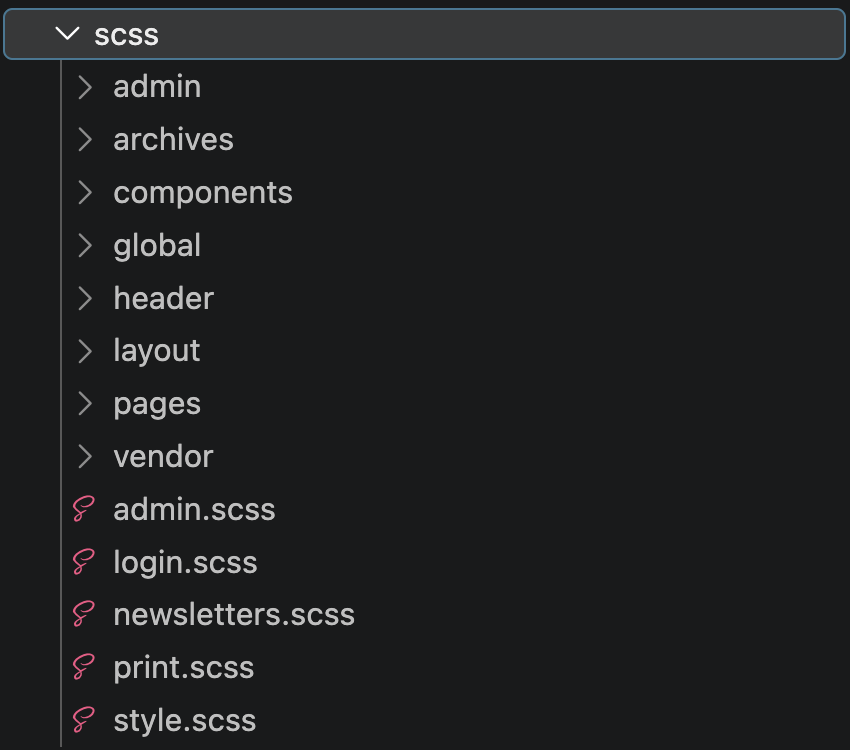
Although the long-term industry trend leans toward vanilla CSS, the CSS-Tricks codebase remains loyal to Sass for its robust partials management. The previous theme employed a relatively flat directory structure. For v20, the stylesheets were completely reorganized into a rigorous, component-driven directory tree.
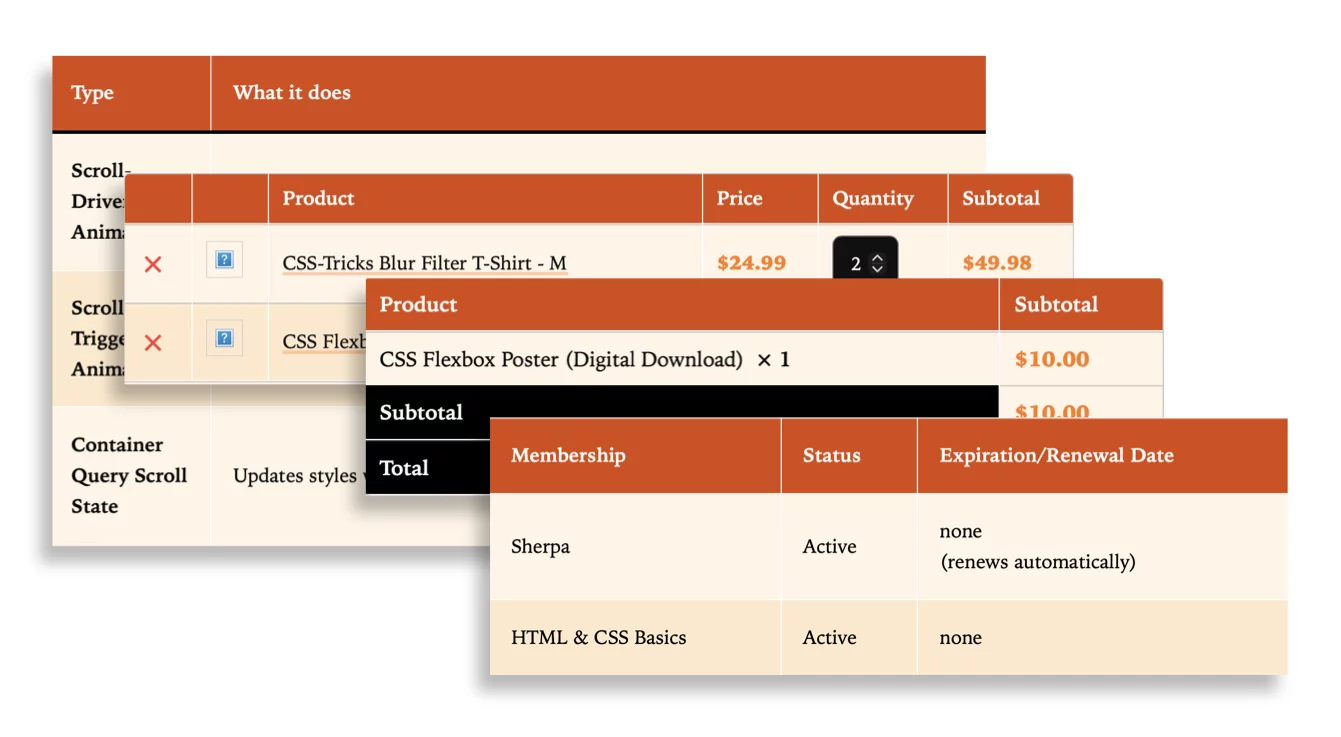
Despite adding structural organization, the total CSS footprint shrank from 180 KB (31.7 KB gzipped) down to 169 KB (24.6 KB gzipped). This reduction was achieved through strategic asset splitting—such as isolating WooCommerce, Restrict Content Pro, and Gravity Forms styles into a dedicated forms.css file that loads only on relevant pages.
Lighthouse Metrics and Performance Benchmarks
To evaluate the real-world impact of the v20 update, the team turned to Google Lighthouse. While Lighthouse scores are often viewed with healthy skepticism in the development community, they offer valuable directional feedback.
Lighthouse Scores Comparison
| Category | v19 | v20 |
|---|---|---|
| Performance | 71 | 72 |
| Accessibility | 86 | 91 |
| Best Practices | 75 | 100 |
| SEO | 92 | 90 |
Lighthouse Core Web Vitals & Metrics
| Metric | v19 | v20 |
|---|---|---|
| Largest Contentful Paint (LCP) | 8.5s | 7.2s |
| Cumulative Layout Shift (CLS) | 0.032 | 0 |
| Total Blocking Time (TBT) | 10ms | 13ms |
| First Contentful Paint (FCP) | 2.6s | 2.5s |
| Speed Index | 3.2s | 3.5s |
| Time to Interactive (TTI) | 8.6s | 4.0s |
| Total Page Weight | 2.03 MB | 1.24 MB |
The results speak for themselves. Most notably, Total Page Weight dropped by nearly 40% (from 2.03 MB to 1.24 MB), Cumulative Layout Shift (CLS) was reduced to a pristine 0, and Time to Interactive (TTI) was cut in half, dropping from 8.6 seconds down to 4.0 seconds.
Official Statements and Visual Innovations
Beyond the invisible backend optimizations, v20 introduces several striking visual and interactive enhancements that redefine the user experience.
The Long-Awaited Theme Toggle
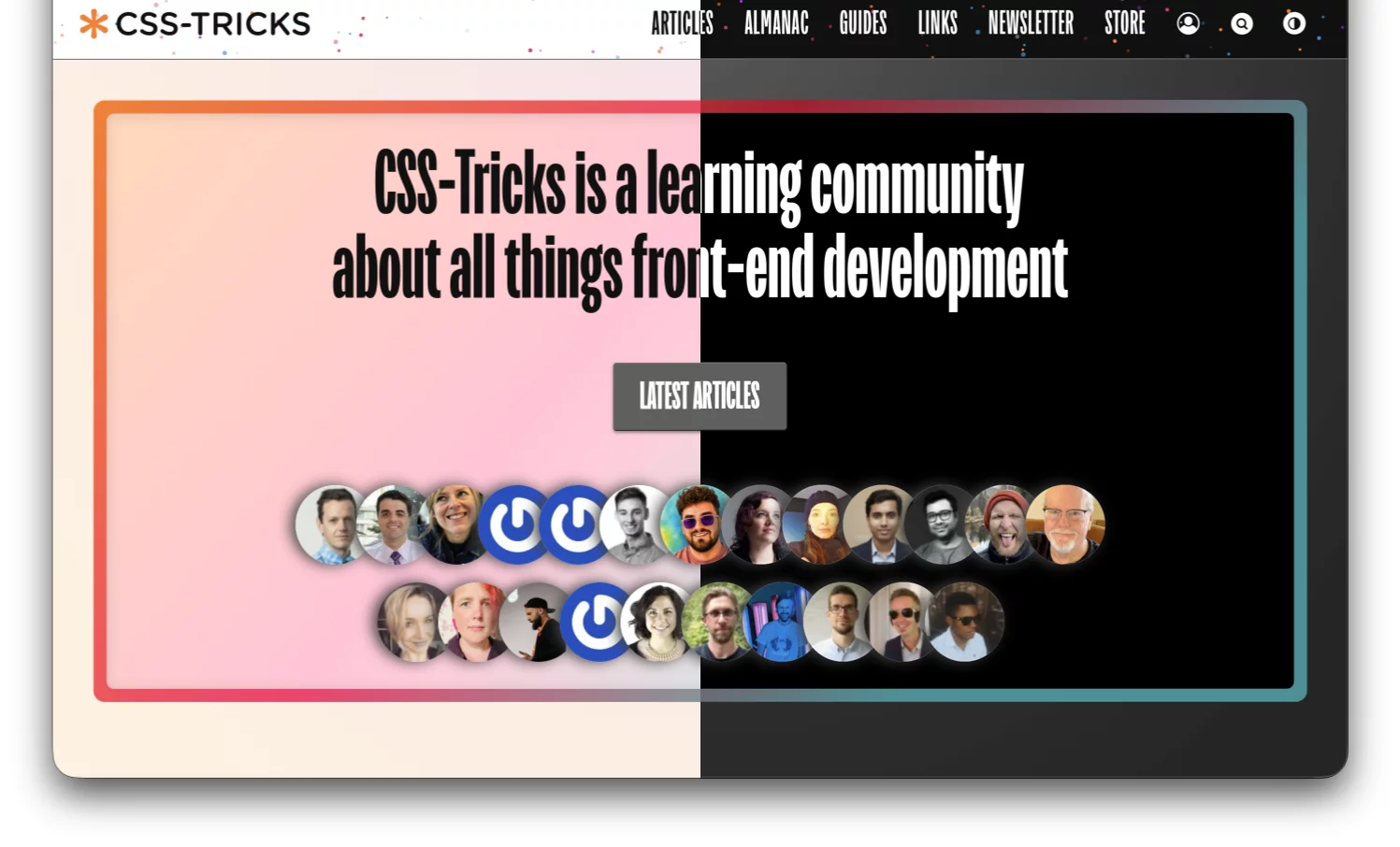
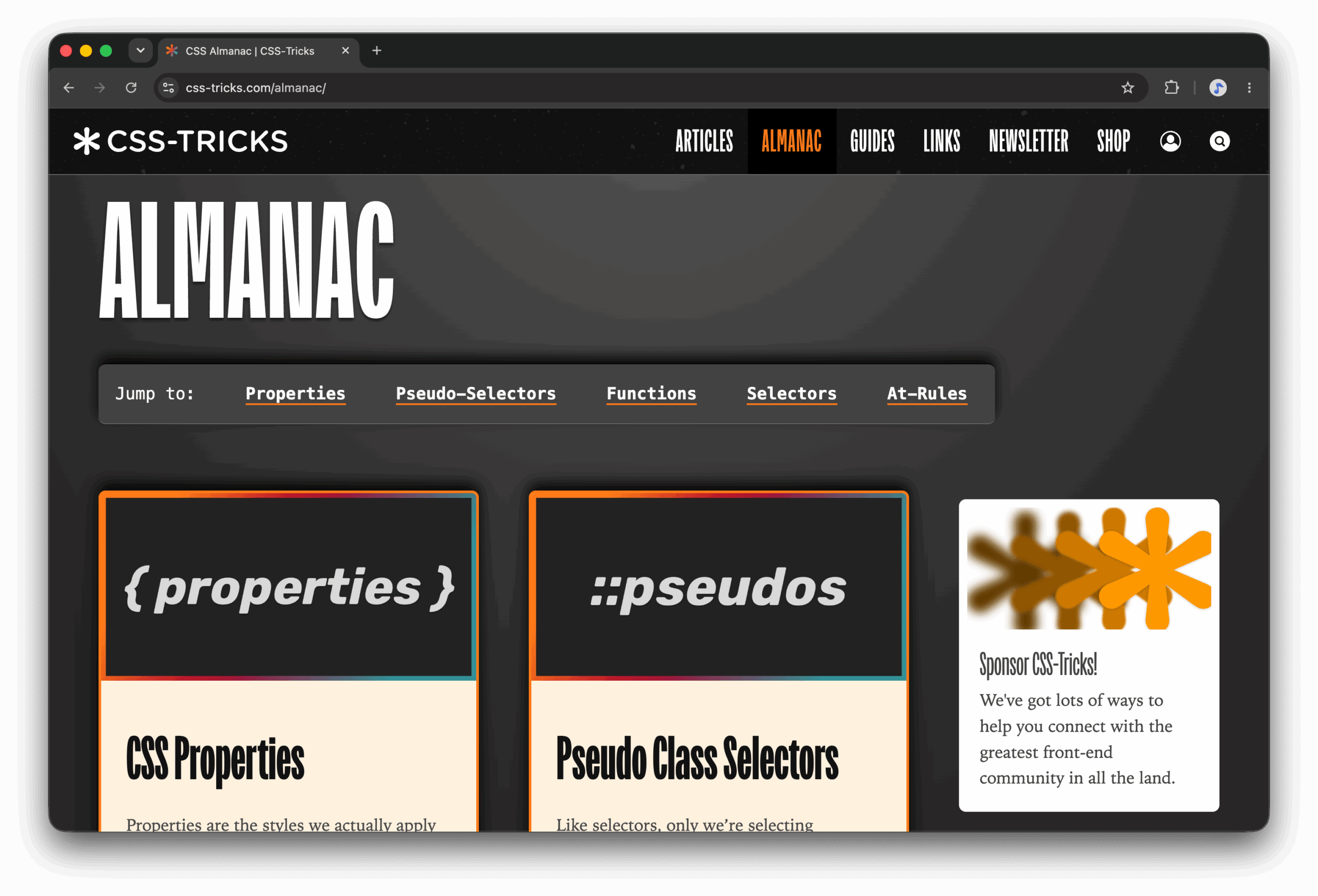
For the first time in its history, CSS-Tricks features native support for multiple color schemes. Historically, the site favored a dark structural aesthetic contrasted against bright white content containers. Version 20 introduces a creamy, refined light mode that adjusts background surfaces and component styling seamlessly.
Rather than relying on complex JavaScript state managers, the implementation utilizes modern CSS capabilities to handle system, dark, and light themes via a single toggle. Furthermore, page navigation is wired into the native View Transitions API, producing a smooth, sliding visual transition when switching themes.
The "Jawbreaker" Texture and Blobular UI
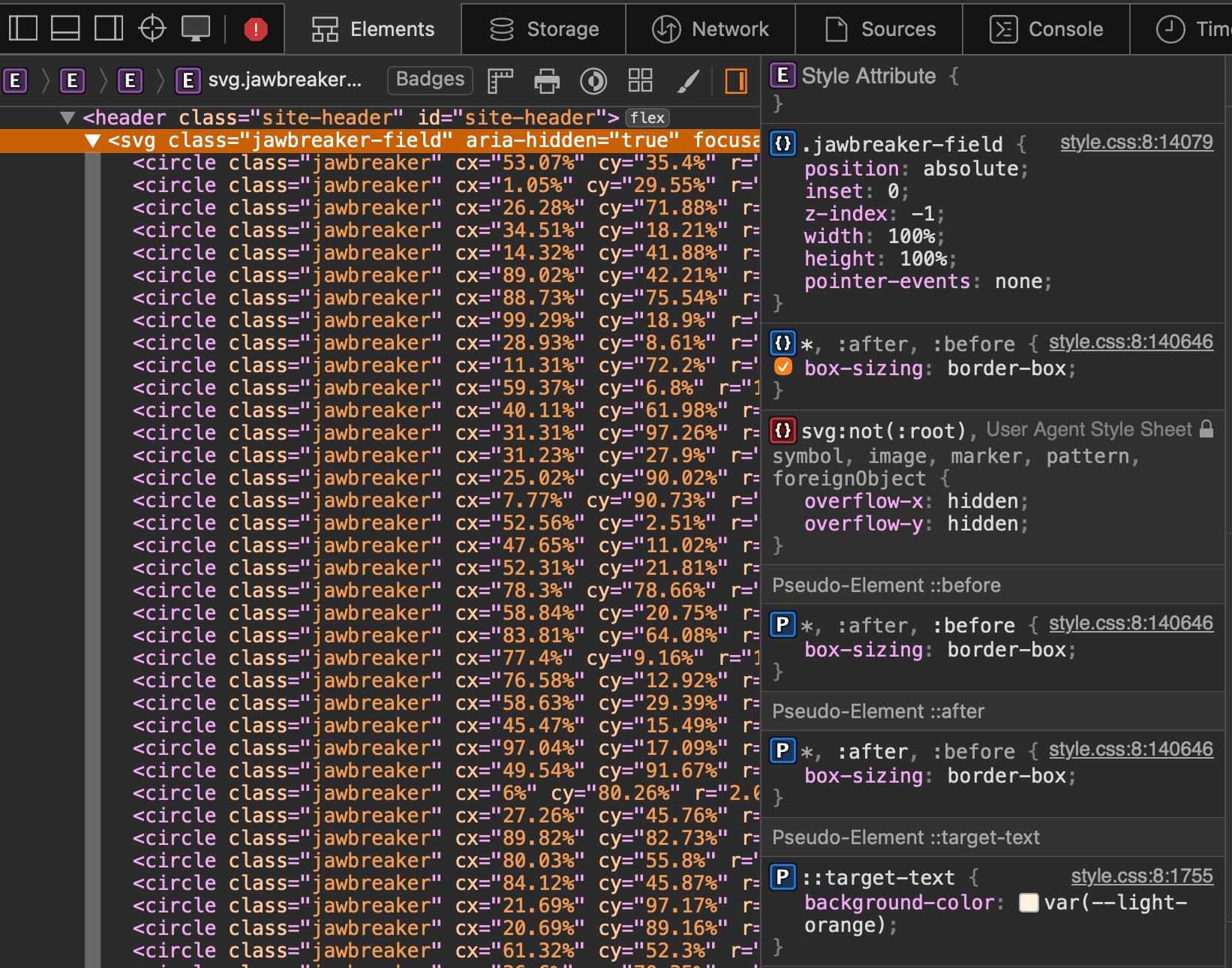
To infuse personality into the branding, the header and footer incorporate a colorful backdrop of randomized SVG dots affectionately dubbed the "Jawbreaker" texture. Because true random positioning in pure CSS requires bloated markup, the team engineered a PHP helper function (csstricks_jawbreaker_svg) that programmatically generates optimized <circle> elements with randomized inline coordinates, sizes, and animation delay variables.
Additionally, browsers supporting the experimental border-shape and random() functions (such as Chrome) will experience dynamic, morphing "blob" cards on the homepage. Hovering over these .gradient-card components triggers a fluid animation between static and randomized shape coordinates generated via Temani Afif’s blob generator algorithms.
Redesigned Core Indexes
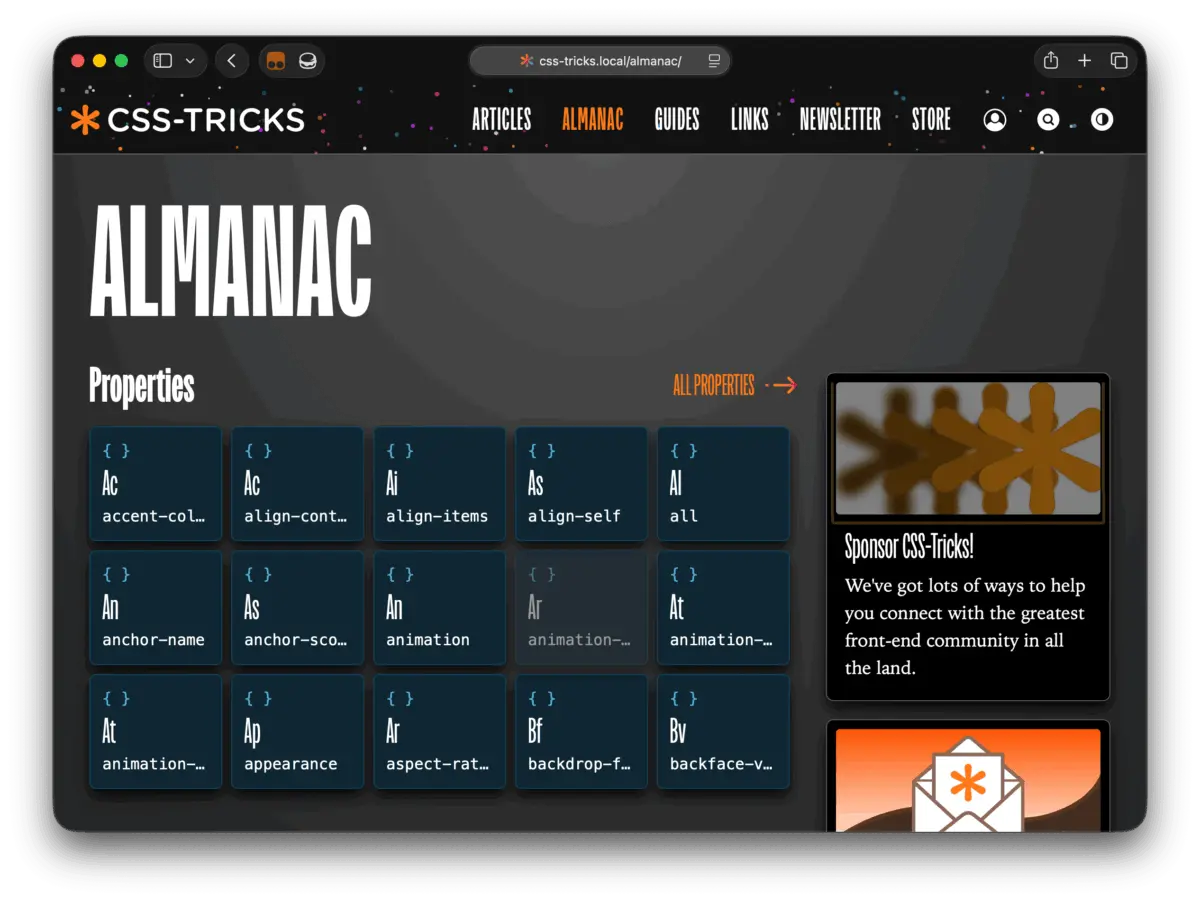
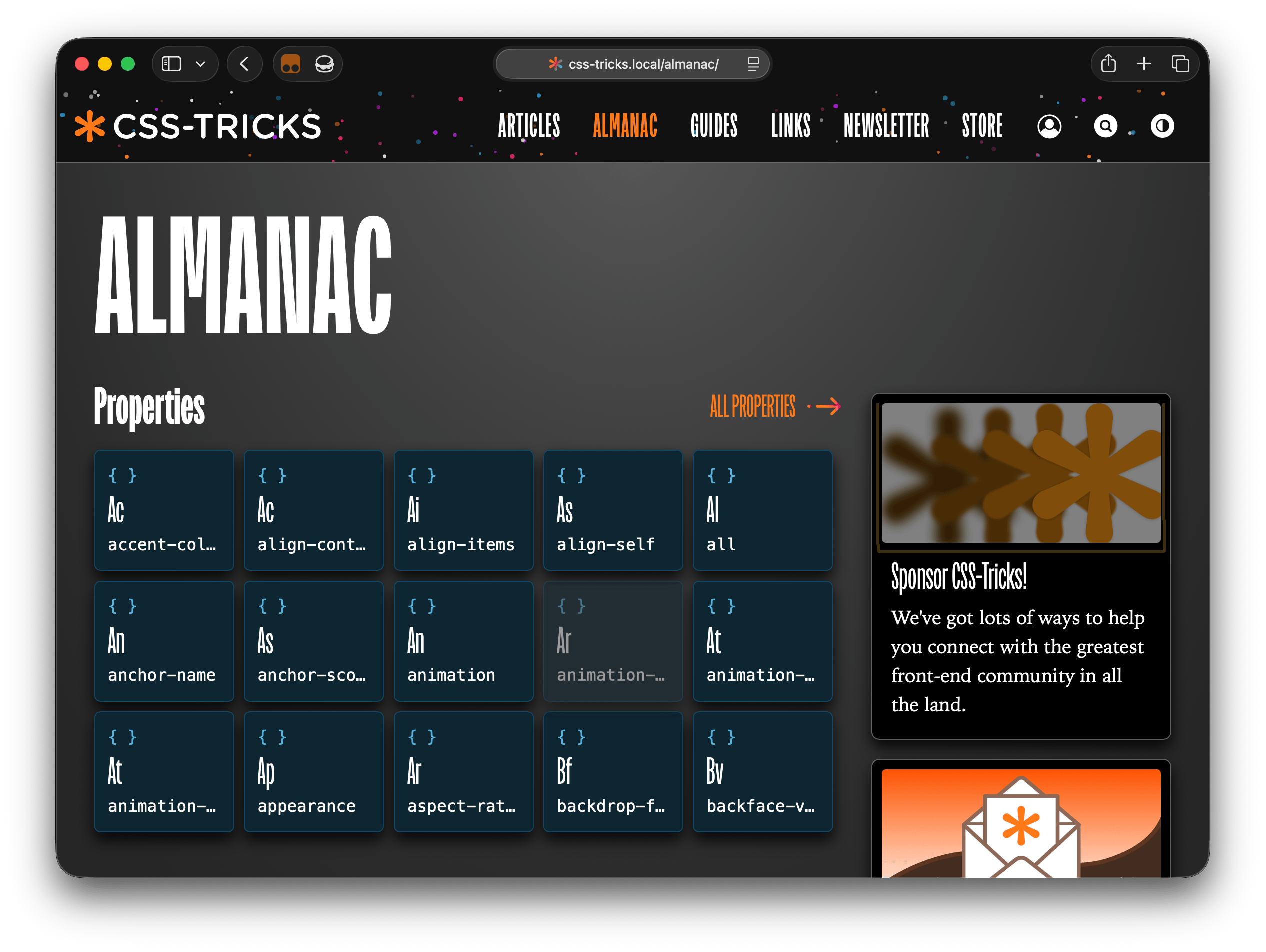
- The Almanac Index: Transforming a previously uninspired landing page, the new Almanac index adopts a layout inspired by the periodic table of elements, allowing developers to scan and navigate CSS features intuitively.
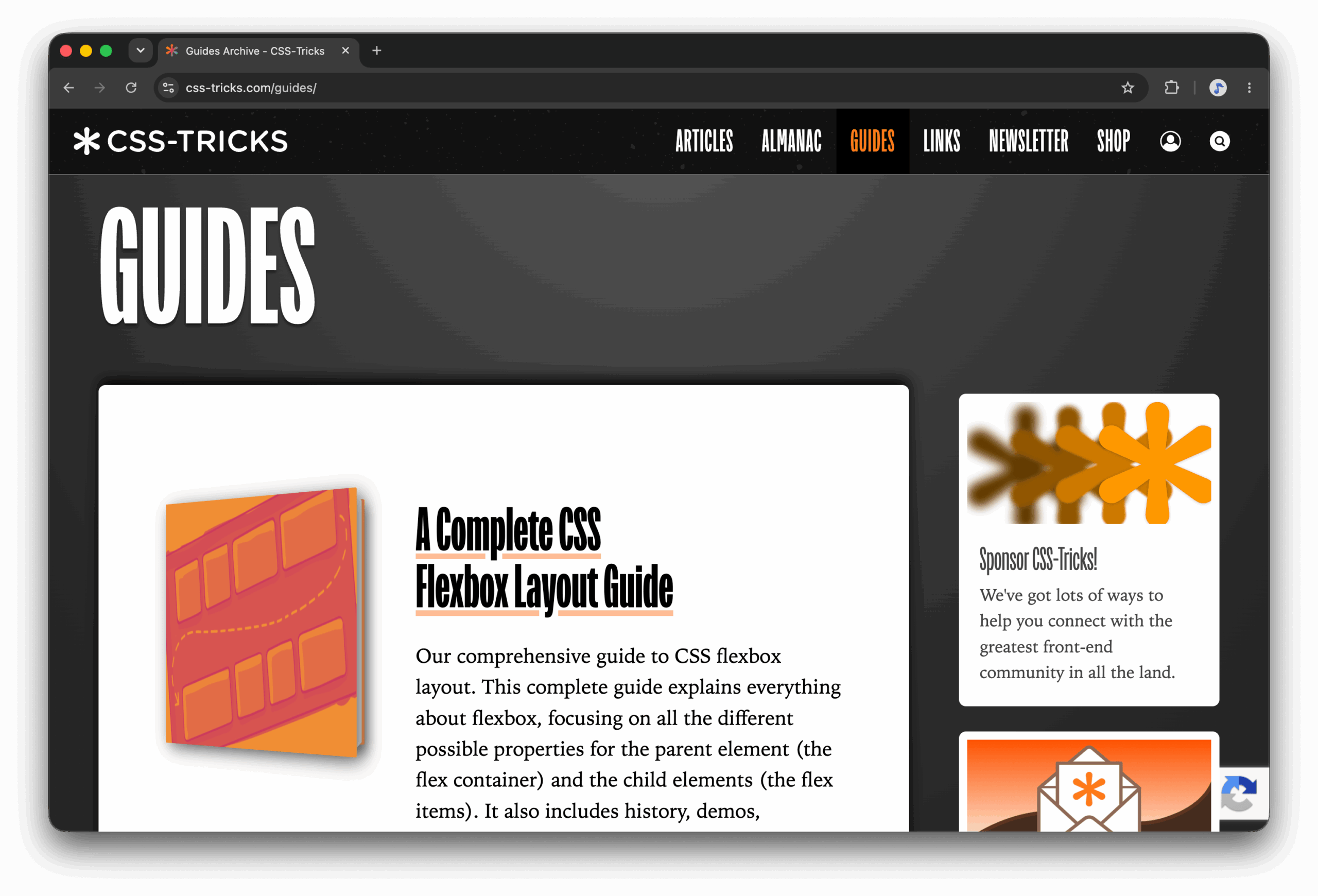
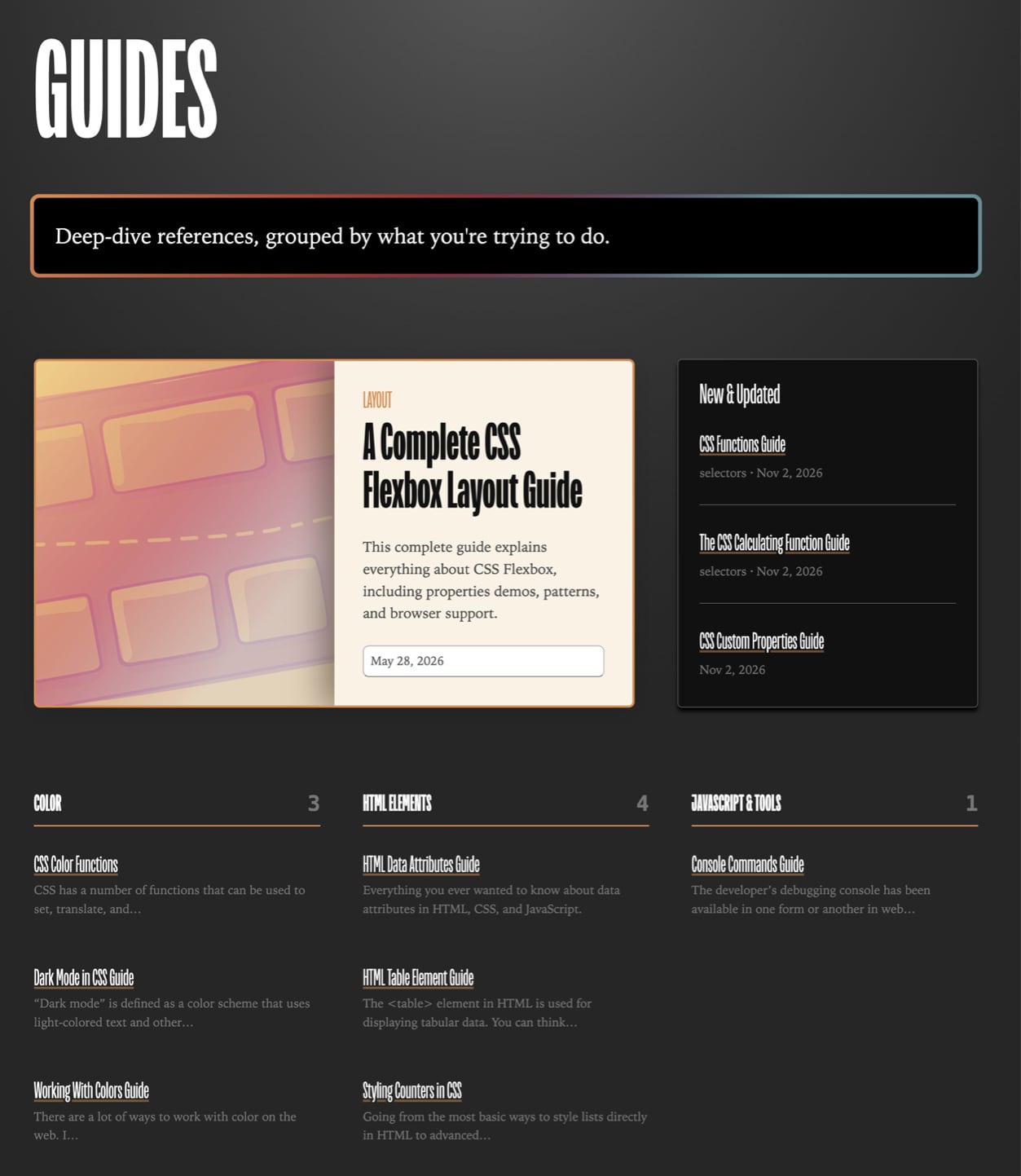
- The Guides Index: Replacing the traditional, single-file vertical book stack, the new guides layout features a highlighted featured guide, a real-time widget for newly updated content, and a cleanly categorized grid system.
- Author Pages: Sidebars have been repositioned to prioritize author biographies and imagery, letting published articles claim prime visual real estate at the top of the viewport.
Future Outlook
The launch of CSS-Tricks v20 proves that maintaining a legacy web property does not require burning down the house to build anew. By favoring iterative releases over destructive rewrites, the publication has successfully future-proofed its infrastructure, dramatically reduced page weight, and embraced cutting-edge CSS features like shape() and view transitions.
Looking ahead, the roadmap includes further refinement of Cascade Layers in Sass, optimization of the main article content container during theme switches, and a comprehensive redesign of the global Authors index. As the web platform continues to evolve, CSS-Tricks has ensured its underlying architecture is nimble, secure, and ready to document the next generation of frontend engineering.