Executive Overview
For nearly four decades, the evolution of writing technology has been viewed through the lens of mechanical efficiency. From the physical resistance of graphite on wood-cased pencils to the crisp, luminescent glow of early Macintosh word processors, digital tools were designed to accelerate output while leaving the locus of human cognition undisturbed. The interface was always a medium; the mind was always the author.
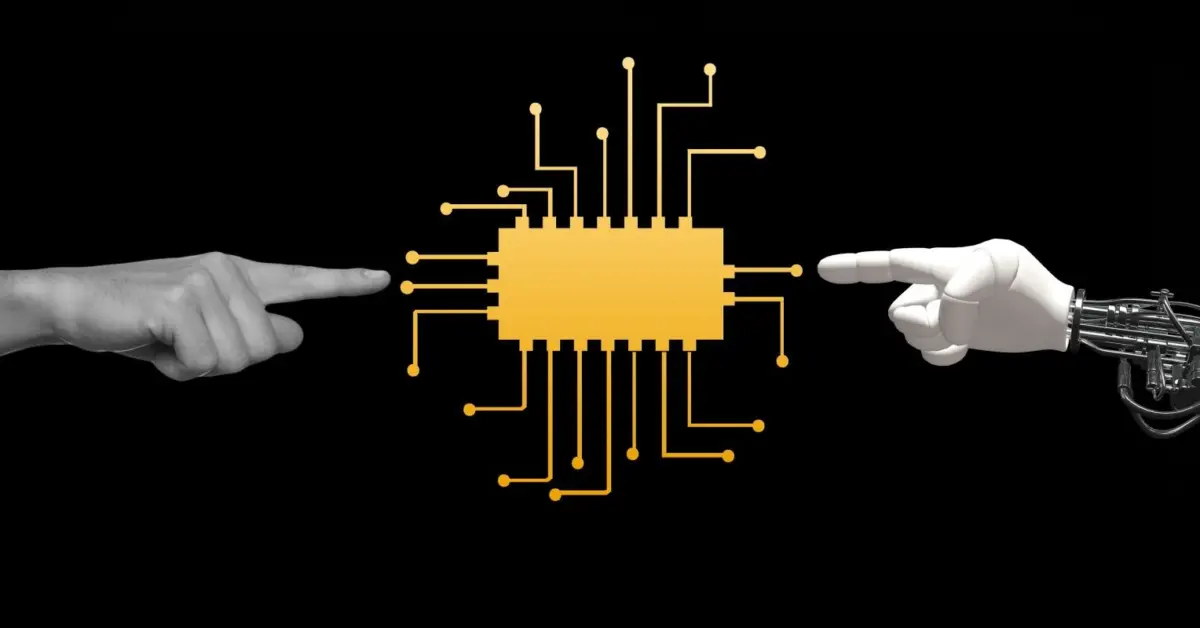
However, the advent of generative artificial intelligence and Large Language Models (LLMs) has fundamentally ruptured this paradigm. Writing is no longer merely a mechanical act of transcription; it has transformed into a dynamic, recursive collaboration between human intent and synthetic computation.
This article investigates the profound psychological and cognitive shifts occurring at the intersection of human consciousness and machine intelligence. Drawing on decades of professional writing experience, this deep dive explores the emergence of "iterative intelligence," the phenomenon of "thought losing its address," the subtle dangers of cognitive surrender, and the rise of "ghost thought." As we navigate this uncharted territory, the fundamental question facing modern knowledge workers is no longer how we write, but who is doing the thinking.
Detailed Chronology: From Mechanical Writing to Synthetic Cognition
To understand the magnitude of the current cognitive shift, one must examine the trajectory of writing tools over the past half-century.
The Era of Mechanical Friction (1985–1995)
When the author began writing professionally in 1985, the tools of the trade possessed physical mass and resistance. The pencil and paper required deliberate, linear drafting. The arrival of the early personal computer introduced the graphical user interface, shifting the paradigm from physical ink to digital pixels. Yet, despite this leap in efficiency, the cognitive burden remained strictly human. The computer did not understand a sentence; it merely stored it. If a writer stared at a blank page, no secondary intelligence waited in the wings to offer logical completions or structural alternatives. The friction of the process—the painful, iterative struggle to pull abstract thoughts into coherent prose—was entirely borne by the biological brain.
The Age of Information Retrieval (1995–2022)
As the internet matured, search engines and digital archives integrated themselves into the writing workflow. Writing became an act of synthesis, supported by unprecedented access to global information. Still, the fundamental boundary between tool and user held firm. Search engines provided raw materials, but the architecture of the argument, the conceptual leaps, and the intellectual heavy lifting remained anchored within the human skull.
The Generative Inflection Point (2022–Present)
The release of advanced Large Language Models erased the traditional boundaries of software tools. For the first time, technology was capable of interacting directly with unfinished, half-formed ideas. Rather than acting as a passive receptacle for human thought, an LLM could ingest an incomplete prompt, cross-reference massive corpuses of global knowledge, and return a structured continuation that actively altered the trajectory of the writer’s thinking. This shift turned writing from a solitary pursuit into a continuous, hypnotic feedback loop—a structural transformation that caught many early adopters off guard.
Supporting Context & Metrics: The Mechanics of the Cognitive Loop
To dismiss AI merely as an advanced spellchecker or a tool for "intellectual outsourcing" is to fundamentally misunderstand its psychological impact. The interaction between human and model operates on entirely different cognitive principles.
The Corpus Cognitionis Humanae and Iterative Intelligence
When engaging with an LLM, users tap into what can be described as the Corpus Cognitionis Humanae—the collective sum of human knowledge rendered accessible through a conversational, intuitive interface. Rather than executing rigid Boolean searches, humans now engage in dialogue with aggregated human thought.
This gives rise to iterative intelligence: a back-and-forth cognitive rhythm where a prompt is intentionally initiated with incomplete information. The LLM responds not just with an answer, but with an unexpected angle, a novel vocabulary, or a contrasting perspective. This unexpected intervention frequently steers the human thinker toward conclusions and pathways they would never have reached independently.
[Incomplete Human Prompt]
       │
       ▼
[LLM Synthesizes Corpus Cognitionis Humanae]
       │
       ▼
[Synthetic Interjection / Unexpected Insight]
       │
       ▼
[Cognitive Loop / Altered Human Trajectory]
Thought Losing Its Address
In classical cognitive science, every thought is presumed to have a biological home—a specific neural network firing within a specific human brain. However, in an intense, recursive writing loop with agentic AI, tracing the provenance of an idea becomes remarkably difficult.
When a writer initiates a thought, modifies it based on AI output, reacts to that output, and refines the resulting text, the resulting insight is born of a distributed cognitive system. This phenomenon—where thought loses its address—challenges our traditional legal, ethical, and philosophical definitions of authorship, originality, and intellectual property.
The Paradox of Cognitive Friction
For centuries, technological progress has been defined by the reduction of friction. We abandoned the manual typewriter for the word processor, and the card catalog for the search engine, all in the pursuit of speed. However, psychological research into AI integration suggests that not all cognitive friction is wasteful.
The friction of the unfinished sentence rubbing against an unfinished thought is often the very mechanism by which profound intellectual breakthroughs occur. When we bypass that friction by relying on an LLM to instantly bridge the gap, we risk sacrificing the deep, structural processing required for genuine cognitive growth.
Official Perspectives & Expert Insights
Cognitive scientists, philosophers, and digital ethicists are increasingly divided on the long-term implications of generative AI integration in creative and intellectual professions.
The Techno-Optimist Perspective
Early champions of generative technology argue that LLMs act as cognitive amplifiers rather than substitutes. Proponents point to enhanced productivity, the democratization of complex research, and the ability to overcome writer’s block instantly. From this viewpoint, human creativity is unburdened from mechanical tedium, allowing creators to focus on high-level conceptualization, emotional resonance, and strategic vision.
The Skeptic’s Warning: Cognitive Surrender and "Ghost Thought"
Conversely, growing numbers of researchers are raising alarms about cognitive surrender—a subtle, often imperceptible process wherein users gradually abdicate their analytical responsibilities to the machine. Because humans are naturally wired to favor cognitive ease, we easily slip into accepting polished machine outputs without rigorous interrogation.
This danger culminates in the concept of ghost thought. While a traditional ghostwriter writes prose on behalf of a principal while the underlying thinking remains human, generative AI introduces a deeply unsettling inversion: the machine can become the thinker as well as the writer.
As observed by seasoned writers navigating this landscape, the most alarming aspect of ghost thought is that the resulting output still feels entirely authentic to the user. The brain readily claims ownership of synthetic insights because the final product aligns with conscious desires, masking the fact that the heavy intellectual lifting was outsourced entirely to the algorithm.
Future Outlook: Navigating the Hybrid Mind
As we look toward the horizon of human-AI integration, the central challenge is no longer technological capability, but psychological and ethical navigation. The boundaries between tool and thinker will continue to blur, forcing a profound reexamination of education, professional standards, and personal discipline.
1. Redefining Intellectual Integrity
Institutions, academic bodies, and professional industries must move beyond simplistic binary definitions of "AI usage" versus "authentic work." We need sophisticated frameworks that acknowledge the reality of iterative intelligence while establishing rigorous standards for human accountability and critical oversight.
2. Cultivating Conscious Engagement
The primary defense against cognitive surrender is intentional friction. Knowledge workers must learn to recognize the seductive pull of effortless output and deliberately insert moments of critical pause into their workflows. Asking why a conclusion was reached, challenging model assumptions, and preserving space for unassisted contemplation will be critical survival skills for the future thinker.
3. Preserving the Human Spark
Technology will undoubtedly continue to evolve, offering increasingly autonomous agents capable of managing complex workflows. Yet, the core mandate for human creators remains unchanged. Whether working with a primitive wooden pencil or an advanced neural-network-driven writing assistant, the ultimate value of human expression lies in lived experience, emotional vulnerability, and authentic intent.
As the lines between human cognition and synthetic processing continue to blur, the ultimate imperative is clear: Keep your pencil sharp. Embrace the power of the loop, but never forget the responsibility of the thinker behind it.