Executive Overview
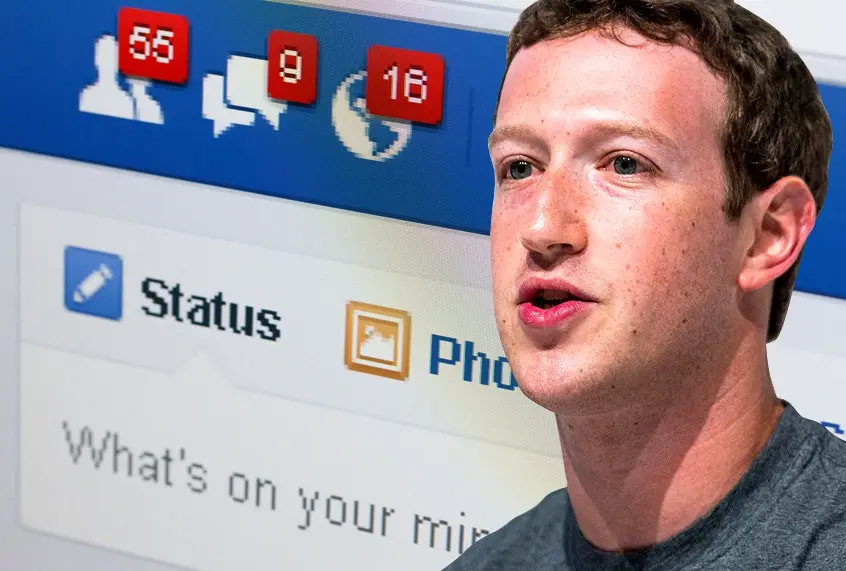
In the opening weeks of 2018, Facebook co-founder and CEO Mark Zuckerberg made a sweeping declaration that would reverberate across the global digital media landscape. Vowing to “fix” his social network, Zuckerberg introduced a monumental shift to the platform’s core architecture: the News Feed. The strategy aimed to pivot the social network away from public content—such as news articles, branded posts, and viral videos—and re-center it on interpersonal connections between friends and family.
While framed as a noble pursuit to improve users’ mental health and well-being, this algorithmic overhaul triggered an immediate crisis within the publishing industry. Legitimate news organizations, which had spent years investing heavily in building audiences and optimizing operations for Facebook’s platform, suddenly found themselves sidelined. Content deemed "passive"—such as professionally produced videos—was deprioritized, while algorithmic favor shifted toward posts that sparked intense, comment-heavy interactions.
Yet, as investigative analysis and industry insiders reveal, this high-profile restructuring contained a glaring blind spot. While authoritative, mainstream news outlets faced devastating drops in reach and engagement, purveyors of sensationalism, clickbait, and fabricated content appeared uniquely positioned to weather the storm. Because Facebook’s monetization model continued to welcome advertising revenue from junk web publishers, the economic engines driving "fake news" remained largely intact.
This deep dive examines the anatomy of Facebook’s 2018 algorithmic pivot, the immediate fallout for digital journalism, the structural flaws that left misinformation networks untouched, and the long-term implications of handing an unprecedented gatekeeping power to a single technology corporation.
Detailed Chronology: The Anatomy of a Platform Shift
The transformation of Facebook’s News Feed did not happen overnight, but the opening weeks of January 2018 marked a definitive turning point for the platform and the broader media ecosystem.
Early January 2018: The New Year Resolution
Shortly after New Year’s Day, Mark Zuckerberg published a manifesto on his personal Facebook profile, setting the tone for the year ahead. He announced that his personal challenge for 2018 was to focus on fixing the foundational issues plaguing the platform. Rather than resting on the laurels of massive global growth, Zuckerberg argued that the company needed to safeguard its community from misuse and ensure that time spent on the platform was actively beneficial to human well-being.
January 11, 2018: The News Feed Overhaul
Just over a week later, Zuckerberg detailed the mechanics of this mission. The most significant structural change was announced: "public content" from brands, businesses, and media outlets would be systematically reduced in user feeds. In its place, the algorithm would prioritize posts from friends, family, and groups.
Zuckerberg supported his decision by citing academic research linking passive social media consumption to feelings of depression, information overload, and unhealthy life comparisons. Consequently, Facebook would favor posts designed to spark "meaningful interactions" and conversations, rather than passive scrolling or superficial "likes."
January 12–13, 2018: Industry Reactions and Clarifications
The publishing industry reacted with immediate alarm. Digital media trade outlets ran headlines signaling impending doom for online publishers who had grown dependent on social referral traffic. Behind closed doors, executives expressed frustration that they had been encouraged to spend millions building audiences on a platform that could pull the rug out from under them at a moment’s notice.
In a comprehensive interview with Wired on January 13, Adam Mosseri—then the Facebook vice president running the News Feed feature—elaborated on the operational changes. Mosseri confirmed that published videos would receive lower priority because viewing them is a passive activity. Furthermore, posts generating long-form comment threads would be boosted over those merely accumulating quick likes.
Mid-January 2018: The "News Quality" Survey and Crowd-Sourced Credibility
As criticism mounted that the changes failed to address the rampant spread of misinformation and hyper-partisan clickbait, Zuckerberg issued a follow-up statement on January 19. Acknowledging the proliferation of sensationalism and polarization, he announced a new initiative: a crowdsourced survey designed to have everyday users determine the credibility of news sources. By bypassing outside experts and traditional editorial boards, Zuckerberg attempted to absolve Facebook of making value judgments, setting the stage for a new era of platform governance driven by user perception.
Supporting Context & Metrics: The Asymmetric Impact on Media
To understand why Zuckerberg’s algorithmic pivot sent shockwaves through the publishing world, one must examine the staggering dominance Facebook held—and continues to hold—over the global flow of information.
According to data from the Pew Research Center, approximately 47 percent of Americans relied on Facebook as a primary news source, with fully half of those individuals using no other social media platform for news consumption. This near-monopoly on digital attention made publishers uniquely vulnerable to sudden algorithmic whims.
The Economics of Engagement vs. Integrity
The core paradox of the 2018 update lay in its selective application. While organic reach for mainstream news organizations plummeted, paid advertising channels remained wide open.
- Legitimate Outlets: Traditional newsrooms rely on editorial independence, fact-checking infrastructure, and deep investigative reporting—all of which require high overhead costs. When organic referral traffic drops, their primary revenue streams (subscriptions and programmatic display ads) take an immediate hit.
- Fake News and Clickbait Sites: Conversely, low-quality, sensationalist, and hyper-partisan sites often operate with minimal overhead. Many of these entities had built highly lucrative business models during the 2016 U.S. Presidential Election—where several "fake news" domains outperformed mainstream giants like Fox News in sheer engagement on Facebook.
Because Facebook instituted virtually no restrictions on who could purchase ad space—disallowing ads only for specific, pre-debunked articles while happily accepting promotional cash for general site traffic—junk web publishers could easily absorb the cost of paid distribution. By paying nominal amounts to boost content or hiring individuals to generate compliance-friendly comment threads, these bad actors found ways to bypass the spirit of the new regulations entirely.
The Problem of Media Polarization and Name Recognition
Zuckerberg’s proposed "news quality" survey—intended to rank outlets based on broad societal trust rather than niche familiarity—introduced a severe structural bias, particularly concerning conservative media.
A landmark 2014 Pew Research Center study on media polarization highlighted a stark reality: many prominent conservative outlets and commentators possessed remarkably low general name recognition outside their core audiences. For example:
- Only 45 percent of respondents recognized Sean Hannity, despite decades in prime-time television.
- Only 35 percent were familiar with the conservative aggregator the Drudge Report.
- Just 15 percent had ever heard of Breitbart News.
By tying news credibility to broad public recognition, Facebook risked penalizing legitimate independent outlets and regional publications while inadvertently empowering sensationalist networks that successfully gamified user sentiment surveys through coordinated community action.
Official Statements and Industry Perspectives
The friction between Silicon Valley executives and media publishers brought competing philosophies of information distribution into sharp relief.
Mark Zuckerberg on Well-Being and Long-Term Vision
Defending the fundamental shift in user experience, Zuckerberg maintained that short-term drops in engagement were an acceptable trade-off for long-term community health:
"Now, I want to be clear: by making these changes, I expect the time people spend on Facebook and some measures of engagement will go down. But I also expect the time you do spend on Facebook will be more valuable. And if we do the right thing, I believe that will be good for our community and our business over the long term too."
Addressing the challenges of defining content quality without direct corporate censorship, Zuckerberg explained the rationale behind user trust surveys:
"The idea is that some news organizations are only trusted by their readers or watchers, and others are broadly trusted across society even by those who don’t follow them directly."
Publisher Frustration and Anonymous Critiques
Publishers, speaking both on and off the record, offered a starkly different interpretation of the platform’s motives. Speaking to Business Insider, one anonymous media executive voiced widespread industry fatigue:
"It’s kind of strange, this mass de-prioritization. We’ve been very much encouraged to build audiences here. People spend lots of money to build these operations. At some point it grows tiresome. You start thinking, over time, is this really worth it?"
Another digital publishing veteran went further, suggesting to Salon that the changes were less about mental health and more about forcing publishers to pay for access:
"The goal of Facebook for a very long time has been to keep users on its pages as long as humanly possible. These changes are really about forcing publishers to pony up."
The View from News Advocacy Groups
David Chavern, CEO of the News Media Alliance, captured the broader societal implications of the platform’s supreme authority in an interview with Poynter:
"I think that news is going to remain highly popular on Facebook because people will always want to know about the world and their communities. This change does highlight, however, the power of Facebook to decide (and alter) the kinds of information that people are exposed to. It is an incredible power that carries incredible responsibilities."
Future Outlook: The Ongoing Struggle for Digital Information Integrity
The events of January 2018 served as an unprecedented wake-up call for the global media ecosystem. They exposed the profound vulnerability of relying on private, profit-driven technology monopolies for the distribution of public-interest journalism.
As Facebook—now Meta—continued to refine its algorithms in the years following the 2018 overhaul, the fundamental tension between engagement-driven metrics and journalistic integrity remained unresolved. While platforms introduced various panels, fact-checking partnerships, and trust indicators, the underlying economic incentives for clickbait and polarization persisted.
Key Takeaways for the Future of Media
- Diversification of Distribution: Publishers learned that over-reliance on any single social media platform is an existential risk, accelerating a strategic pivot toward direct audience relationships, newsletters, subscriptions, and alternative discovery channels.
- The Limits of Algorithmic Governance: Zuckerberg’s reliance on crowdsourced surveys demonstrated that technology companies struggle to arbitrate truth without injecting systemic biases that favor majoritarian views or penalize niche, investigative reporting.
- Regulatory Scrutiny: The immense power wielded by social media gatekeepers cemented the necessity of governmental oversight, anti-trust investigations, and public policy discussions regarding the sustainability of independent journalism in the digital age.
Ultimately, Mark Zuckerberg’s 2018 mission to "fix" Facebook laid bare a sobering truth: as long as attention remains the primary currency of the internet, platforms that optimize for emotional engagement will inherently struggle to foster a healthy, informed public sphere—leaving legitimate news outlets to bear the cost while misinformation adapts and thrives.