Executive Overview
Before a catastrophic leadership crisis abruptly halted its momentum in November 2026, semiconductor giant Nvidia was well on its way to cementing its status as the most aggressive and prolific corporate venture investor in the technology sector. Operating through both its direct balance sheet and its dedicated venture capital arm, NVentures, the chipmaker poured capital into more than 120 startup funding rounds over the first ten months of the year. This aggressive deployment of capital not only shattered Nvidia’s previous annual records but positioned the firm as a central pillar of global artificial intelligence financing, with direct participation in some of the largest private venture deals in history.
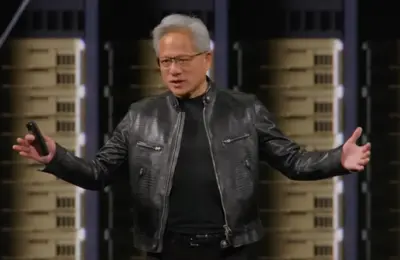
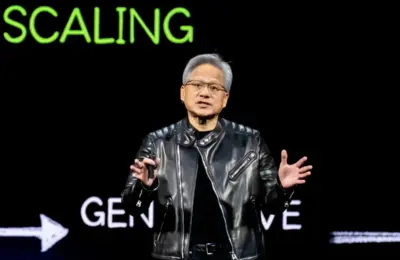
Yet, the sudden and dramatic departure of co-founder and long-serving CEO Jensen Huang has cast an immediate shadow over the company’s high-stakes investment apparatus. Huang’s exit followed intense public scrutiny surrounding multiple extramarital affairs—including relationships with subordinates and a woman whom U.S. intelligence officials have reportedly suspected of espionage on behalf of China. While Nvidia’s market capitalization continues to hover near the staggering $4 trillion mark despite a sharp share-price correction, the leadership vacuum has triggered widespread anxiety across the venture capital ecosystem.
With Chief Financial Officer Colette Kress stepping in as interim CEO—a figure reportedly known for resisting some of Huang’s most expensive, high-risk bets—the future trajectory of Nvidia’s startup portfolio hangs in the balance. As founders, investors, and Wall Street brace for upcoming earnings reports, the tech world is forced to reevaluate the sustainability of an investment machine built largely on one visionary’s appetite for boundless risk.
Detailed Chronology: The Rise and Sudden Stall of Nvidia’s 2026 Investment Spree
Nvidia’s journey to becoming a venture capital juggernaut in 2026 was marked by a relentless, escalating pace that outpaced even the frenetic funding environments of the previous two years.
Q1 2026: Setting a Record-Breaking Pace
Right out of the gate in January and February, Nvidia and NVentures established their dominance by inserting themselves into the generational mega-rounds of the AI boom. In January, NVentures participated in robot intelligence developer Skild AI’s massive $1.4 billion Series C round, alongside a $750 million Series C for autonomous driving startup Waabi.
The momentum accelerated into February with foundational investments in infrastructure and foundational model heavyweights. Nvidia backed Anthropic’s astronomical $30 billion Series G round and provided critical backing for Bedrock Robotics in a $270 million Series B financing aimed at automating heavy construction equipment.
Q2 2026: Expanding the Healthcare and Enterprise Footprint
As the spring unfolded, Nvidia diversified its deployment strategy beyond pure generative AI model training. In March, the company made headlines by participating in OpenAI’s historic $122 billion Series G round. Moving deeper into vertical applications, NVentures targeted the healthcare sector in April, leading a $150 million Series E round for medical imaging artificial intelligence pioneer Aidoc. During this period, internal data tracked by Crunchbase confirmed that Nvidia had already surpassed its total investment volume for preceding years, averaging multiple startup deals per week.
Q3 2026: Fueling Infrastructure and Frontier Models
By late summer, the focus shifted heavily toward the power-hungry infrastructure required to sustain the AI revolution. In September, Nvidia participated in a staggering $3.9 billion Series F round for AI infrastructure and energy provider Crusoe Energy Systems. Simultaneously, the company took part in a roughly $3.5 billion Series D round for European model developer Mistral AI. By the end of the third quarter, Nvidia’s total known startup funding deals for 2026 had climbed past 120, making it the single most active corporate venture investor globally.
November 2026: The Crisis at the Top
The unprecedented investment streak came to an abrupt halt in November. Amid investigative reports published by major news outlets detailing Jensen Huang’s personal conduct—including relationships with employees and counterintelligence concerns regarding a foreign national—the board of directors faced mounting pressure. On November 12, Huang stepped down as CEO, dealing what market analysts termed a monumental blow to the AI sector’s psychological confidence. CFO Colette Kress was immediately elevated to interim CEO, thrusting the financial steward of the company into the center of a geopolitical and corporate storm.
Supporting Context & Metrics: The Scale of Nvidia’s Portfolio
To fully understand the impact of Nvidia’s 2026 investment strategy, one must examine the sheer volume, breadth, and financial weight of the transactions backed by the company and NVentures.
A Widening Investment Footprint
Crunchbase data reveals that Nvidia and its venture arm participated in 121 distinct startup funding deals through the first ten months of 2026. This represents a steep upward trajectory when compared to historical baselines: the company participated in 91 known startup financings in 2025, which was itself a significant leap from the 54 deals recorded the year prior.
Nvidia Startup Investment Growth (2024 - 2026)
--------------------------------------------------
2024: 54 deals
2025: 91 deals
2026 (YTD): 121+ deals
While Nvidia is frequently associated exclusively with foundational AI labs, its portfolio spans a diverse array of sectors:
- AI Model Developers: Direct stakes in market leaders like OpenAI and Mistral AI.
- Robotics & Autonomous Systems: Multi-million-dollar commitments to Skild AI, Waabi, and Bedrock Robotics (including a subsequent $600 million Series C for Bedrock in October).
- Data Centers & Infrastructure: Heavy financial support for firms like Crusoe Energy Systems to solve the physical constraints of computing power.
- Healthcare & Life Sciences: Targeted deployments into diagnostic and imaging platforms such as Aidoc.
Beyond Deep Pockets: The Strategic Value of NVentures
For early- and growth-stage founders, securing an investment from Nvidia or NVentures has historically offered benefits that far outweigh the capital itself. According to NVentures’ official program documentation, portfolio companies gain preferential access to Nvidia’s specialized technical engineering teams, deep technology integration support for proprietary hardware and software ecosystems, and co-marketing assistance designed to accelerate enterprise customer acquisition.
Furthermore, data indicates that Nvidia or NVentures served as lead or co-lead investors in roughly 20% of their 2026 portfolio transactions. While the remaining 80% involved participating checks alongside other institutional venture capital firms, the presence of the world’s leading chip designer acted as a powerful stamp of validation across the global technology landscape.
Official Statements and Industry Reactions
The sudden evaporation of Jensen Huang’s leadership has generated widespread statements from corporate governance bodies, financial analysts, and market stakeholders scrambling to assess the fallout.
The Board’s Stance on Operational Continuity
In the immediate wake of Huang’s resignation, Nvidia’s board of directors issued formal communications designed to reassure enterprise clients, supply chain partners, and investors. The board maintained that day-to-day operations, customer commitments, and the long-term product roadmap—including upcoming architectures and data center rollouts—will proceed without interruption.
"Our technological vision, deep bench of engineering talent, and commitment to our partners remain unchanged," the board noted in an internal memo circulated to employees. However, the board noticeably omitted specific forward-looking guidance regarding the aggressive pace of corporate venture investments championed by the former CEO.
Wall Street and Internal Tensions Over Risk
Financial analysts have zeroed in on the structural friction that previously existed between Huang and his financial leadership. According to reports corroborated by Reuters citing sources close to the executive team, CFO and interim CEO Colette Kress had frequently pushed back against Huang’s increasingly large, speculative AI investments throughout 2025 and 2026.
While Huang viewed aggressive balance-sheet deployment as a necessary tactic to secure the global AI supply chain and lock in ecosystem loyalty, Kress typically championed a more disciplined, fiscally conservative approach to capital allocation. This philosophical divide places Kress in a powerful position to redefine the boundaries of Nvidia’s corporate venture strategy.
Future Outlook: What Lies Ahead for Nvidia’s Venture Arm?
As the technology sector awaits Nvidia’s upcoming quarterly earnings call on November 17, 2026, venture capitalists and startup founders are searching for concrete signals regarding the future of NVentures.
Questions for Interim Leadership
The central question facing Colette Kress and the remaining executive leadership team is whether Nvidia will maintain its role as the hyper-active benefactor of the startup ecosystem or recalibrate toward core hardware manufacturing and internal research and development.
- Venture Capital Discipline: Will NVentures continue to write checks for billion-dollar mega-rounds in unproven foundational models, or will the venture arm tighten its investment criteria in alignment with Kress’s historical financial caution?
- Ecosystem Lock-in vs. Antitrust Scrutiny: Antitrust regulators in the United States, European Union, and United Kingdom have increasingly scrutinized Big Tech corporate venture deals, questioning whether chip-supply allocations are being used as leverage to force startups into exclusive vendor lock-ins. A change in leadership could provide Nvidia with an opportune moment to voluntarily streamline its investment practices to mitigate regulatory exposure.
- Founder Confidence: For founders currently navigating term sheets with Nvidia, the immediate concern is whether the departure of the executive who championed their technologies will alter the post-investment support system promised by NVentures.
Conclusion
Nvidia’s unprecedented run as a startup investor in 2026 demonstrated the company’s unmatched financial muscle and its strategic desire to shape every layer of the modern computing stack. Yet, the abrupt termination of the Jensen Huang era serves as a stark reminder that even the most dominant corporate empires are vulnerable to the human element. As Nvidia transitions into an era led by Colette Kress, the tech industry watches with bated breath to see whether the world’s most valuable chipmaker will sustain its bold venture playbook or retreat into a more conservative posture.