Executive Overview
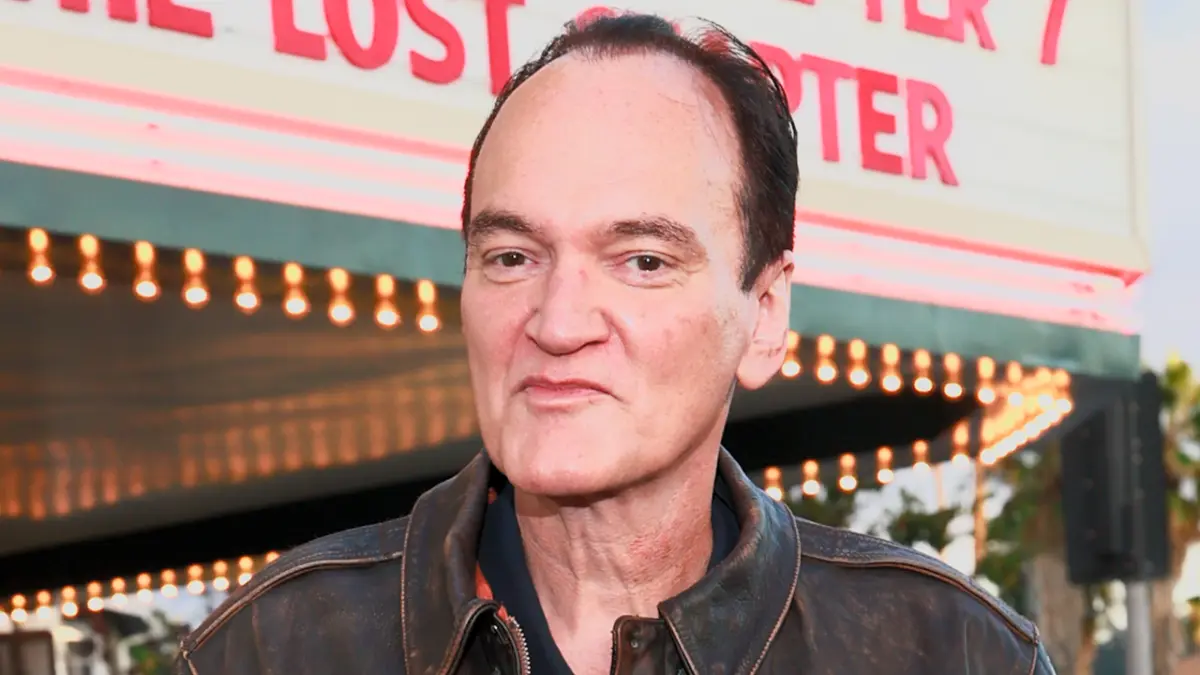
For over a decade, cinephiles around the globe have tracked the career twilight of Quentin Tarantino with a mixture of intense anticipation and lingering dread. The legendary auteur behind modern classics such as Pulp Fiction, Inglourious Basterds, and Django Unchained has long maintained a strict personal philosophy: he will cap his feature-film directing career at precisely ten movies.
During a recent, highly anticipated appearance on The Graham Norton Show, Tarantino offered a definitive update on the status of this enigmatic final cinematic project. Confirming what many fans had hoped yet doubted, the director revealed that he has officially written the script for his tenth feature—and that he "really, really likes" it.
However, before audiences begin clearing their calendars for a theatrical release, they should prepare for a significant wait. Tarantino made it clear that he has no immediate plans to dive into production. Between tackling an upcoming West End play, spending time with his family, and embracing a deliberate period of personal reinvention, the director is in no rush to immortalize his swan song on the silver screen.
Detailed Chronology: The Road to the Final Film
Tarantino’s self-imposed ten-movie limit is not a recent whim; it is a philosophy he has openly espoused for years. Long before the release of his eighth feature, The Hateful Eight, in 2014, the director argued that filmmakers often lose their creative edge in their later years. By stepping away at the height of his powers, Tarantino aims to leave behind a pristine, unblemished filmography akin to the legacies of directors who retired before their prime.
From The Hateful Eight to Once Upon a Time in Hollywood
- 2014: Tarantino first formalizes his intention to retire after his tenth film during promotional rounds for The Hateful Eight.
- 2019: Once Upon a Time in Hollywood arrives as his ninth cinematic outing, drawing widespread critical acclaim and box-office success. The milestone brings the film industry one step closer to the end of an era, sparking intense speculation over what project could possibly serve as his grand finale.
The Detours: From Star Trek to The Movie Critic
In the years following his ninth film, the rumor mill spun into overdrive regarding what project would claim the coveted tenth spot:
- The Star Trek Rumors: At one point, reports circulated that Tarantino was developing an R-rated Star Trek film. Actor Simon Pegg famously described the pitch as "bats**t crazy," though Tarantino ultimately debunked the rumors, confirming he would not helm the Starfleet adventure.
- The Cancellation of The Movie Critic: Tarantino spent considerable time developing a project titled The Movie Critic, which was heavily rumored to focus on a cynical reviewer writing for a porno magazine in 1970s Southern California. However, after months of pre-production murmurs, Tarantino abruptly scrapped the project, sending fans back to the drawing board.
Shifting Gears: The West End Play and Beyond
Rather than rushing into another high-profile Hollywood production after abandoning The Movie Critic, Tarantino pivoted entirely mediums. His upcoming West End play, The Popinjay Cavalier, is currently slated to begin previews on February 23, 2027, before officially opening on March 18, 2027.
For Tarantino, this theatrical venture is not merely a side project—it is a crucible for self-discovery. As the director mused on The Graham Norton Show:
"I’ve written a script that I could do that I really, really like, but I have to do the play and see who I am, right? I’ll finish the play, and then I’ll go back, be with my family for a while, and then live and then see what that guy wants to do."
Supporting Context & Metrics: Tarantino’s Cultural Footprint
To understand why Tarantino’s impending retirement evokes such passionate discourse, one must examine the staggering cultural footprint of his filmography. Across nine major theatrical releases, the director has redefined independent cinema, popularized nonlinear storytelling, and established a distinct cinematic language defined by razor-sharp dialogue, eclectic soundtracks, and unapologetic violence.

The Tarantino Box Office and Critical Legacy
While exact budget-to-revenue ratios vary across his catalog, Tarantino’s films have collectively grossed billions of dollars worldwide. More importantly, they occupy a rare intersection of critical adoration and mainstream commercial viability:
- Pulp Fiction (1994): Revitalized independent cinema, won the Palme d’Or at Cannes, and grossed over $213 million worldwide against an $8 million budget.
- Kill Bill: Vol. 1 & 2 (2003–2004): A masterclass in martial arts and revenge cinema homage, grossing a combined total of over $330 million globally.
- Inglourious Basterds (2009): Tarantino’s highest-grossing film at the time, pulling in over $321 million and earning eight Academy Award nominations.
- Django Unchained (2012): Broke box office records to become his highest-grossing film ever, crossing the $425 million mark worldwide.
- Once Upon a Time in Hollywood (2019): Netted 10 Academy Award nominations, grossing $377 million globally.
Fan and Industry Reception to the Retirement Clause
The announcement that his career has a hard expiration date has been met with mixed emotions by the film community. Critics and industry peers often praise his discipline, viewing the ten-film cap as the ultimate artistic statement against overstaying one’s welcome. Conversely, passionate fans have frequently expressed disappointment, arguing that cinema is losing one of its most vital and distinct narrative voices prematurely.
Yet, Tarantino’s deliberate pacing proves he is entirely unfayed by public pressure. By allowing years to pass between major directorial efforts, he ensures that every project functions as a monumental event rather than a contractual obligation.
Official Statements & Industry Insights
Tarantino’s appearance on The Graham Norton Show provided rare clarity on his mindset. By breaking down his timeline into distinct phases—the theatrical play, family life, unfiltered "living," and finally, evaluating the script through the eyes of his future self—he underscored a holistic approach to artistry.
Industry insiders note that Tarantino’s transition away from traditional studio filmmaking has been a long time coming. Frustrated by the shifting landscapes of modern Hollywood, streaming dominance, and the changing theatrical window, the director has increasingly sought creative autonomy.
However, his retirement from directing features does not mean he is leaving the entertainment industry entirely. Tarantino has continued to flex his creative muscles as a writer, novelist, and film historian. Most notably, fans will not have to wait until his mysterious tenth film to see his writing back on the big screen.
The Further Mis-Adventures of Cliff Booth—a follow-up to Once Upon a Time in Hollywood written by Tarantino and directed by acclaimed filmmaker David Fincher—is scheduled to premiere next month. The project bridges the gap between Tarantino’s universe and another master director’s lens, offering an intriguing compromise for fans starved of his distinct voice.
Future Outlook: What Lies Ahead?
As the entertainment landscape looks toward 2027 and beyond, the roadmap for Quentin Tarantino’s career remains both clear in its ultimate destination and wonderfully opaque in its journey.
- The West End Debut (Early 2027): All eyes will first turn to London’s West End as The Popinjay Cavalier begins previews on February 23, 2027, and opens on March 18, 2027. This theatrical experiment will serve as the immediate litmus test for Tarantino’s creative evolution.
- The "Living" Phase: True to his word, once the curtain falls on his play, Tarantino intends to step away from the spotlight to focus on his family and experience life away from a film set.
- The Script Evaluation: Only after this period of personal reflection will he revisit the completed script for his tenth film, assess his creative state of mind, and decide whether to pull the trigger on production.
Ultimately, Tarantino is choreographing his exit on his own terms. Whether his final film enters production in late 2027, 2028, or beyond, the director’s insistence on patience ensures that when the final curtain finally drops on his cinematic career, it will be executed with the same uncompromising precision that defined his entire body of work.