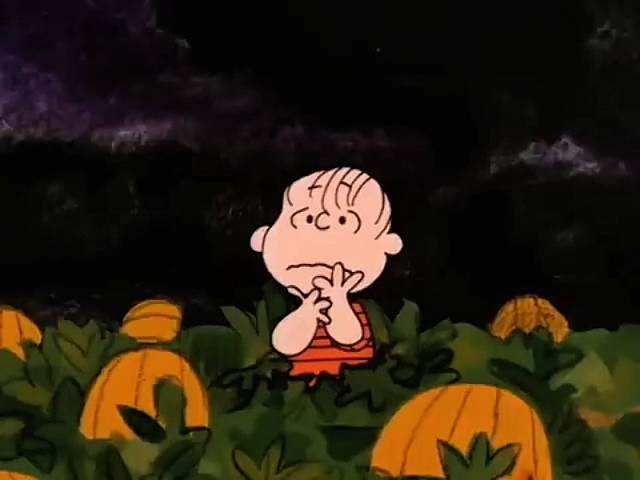
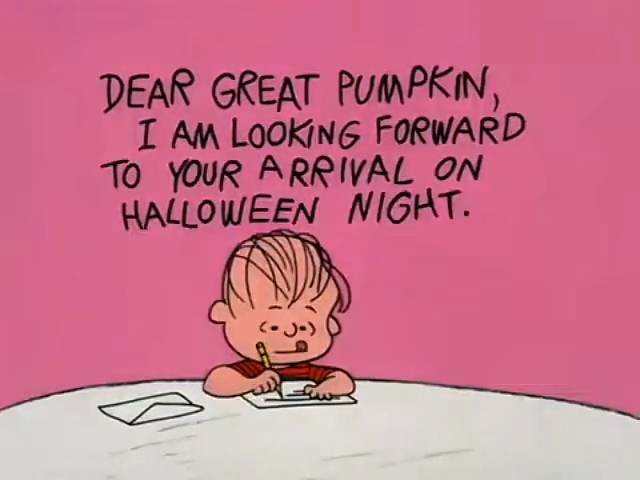
For generations of television viewers, It’s the Great Pumpkin, Charlie Brown has served as an essential autumnal ritual. Debuting on CBS in 1966, the animated special cemented itself in pop culture history, introducing millions to the tragicomic plight of Linus van Pelt. In the special, while his peers engage in traditional Halloween festivities like trick-or-treating, bobbing for apples, and carving Jack-o’-lanterns, Linus spends his evening shivering in a desolate pumpkin patch. Armed with unshakeable faith, he awaits the arrival of the mythical "Great Pumpkin," an elusive entity he believes rises from the most sincere patch every Halloween to distribute toys to children.
While the television adaptation remains a beloved seasonal milestone, it represents only a fraction of a much larger, more complex narrative tapestry. Casual fans might assume the Great Pumpkin lore begins and ends with the 1966 special, but dedicated readers of Charles M. Schulz’s Peanuts comic strip know that the mythos spans decades, featuring deep lore, financial desperation, ideological conversions, and a disastrous political campaign that rivals modern satire.
A deep dive into the historical archives of the Peanuts comic strip reveals a version of Linus van Pelt who is far more radical, obsessive, and hilariously unhinged than his animated counterpart. By examining Schulz’s serialized approach to the Great Pumpkin across October newspaper strips—particularly the brilliant, slow-burn political arc of October 1964—we uncover a masterclass in comedic timing, character consistency, and serialized storytelling that elevates the Great Pumpkin from a simple cartoon gag to a towering achievement in American comic strip history.
Detailed Chronology: The Evolution of the Great Pumpkin in Print
To understand the full scope of the Great Pumpkin mythos, one must trace its origins well before the 1966 CBS broadcast. The myth did not spring fully formed onto television screens; rather, it was carefully cultivated in daily and Sunday comic strips across seven years of meticulous buildup, comedic experimentation, and escalating absurdity.
1959: The Inception of a Myth
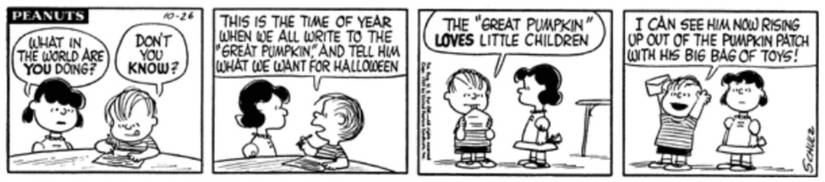
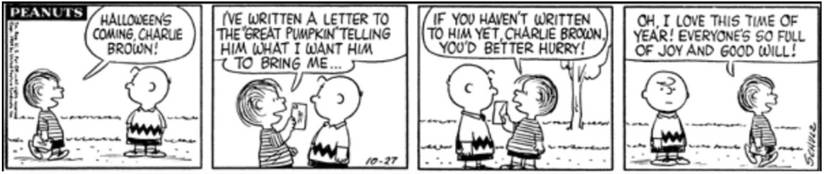
The Great Pumpkin made its historical debut in a Peanuts strip published on October 26, 1959. In the strip, Linus is discovered frantically scribbling a letter. When a bewildered Lucy asks what he is doing, Linus responds with total earnestness:
"Don’t you know? This is the time of year when we all write to the ‘Great Pumpkin’ and tell him what we want for Halloween. The ‘Great Pumpkin’ loves little children. I can see him now, rising up out of the pumpkin patch with his big bag of toys!"
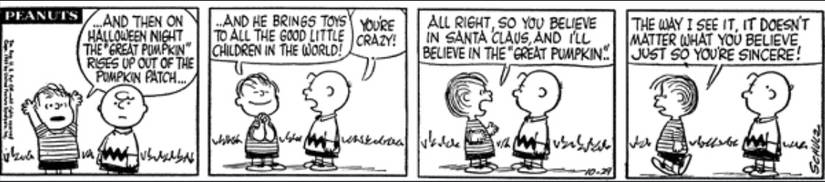
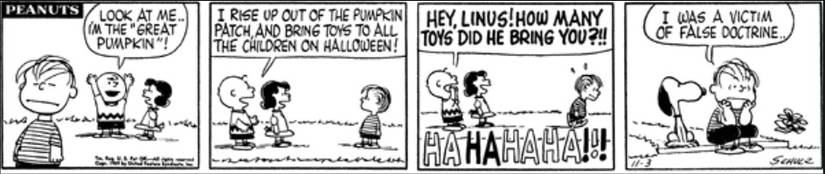
Lucy’s reaction—a long, unbroken stare of utter dumbfounding silence—established the comedic dynamic that would define the trope for years: Linus preaching fervent, messianic zeal to an audience of intensely skeptical, exasperated peers. The very next day, Schulz published a follow-up strip featuring Linus continuing his breathless monologue while Charlie Brown stood by, staring blankly. Soon, other characters joined the chorus of disbelief, with Charlie Brown eventually delivering the blunt diagnosis: "You’re crazy."
1960–1961: Expanding the Lore and Economic Realities
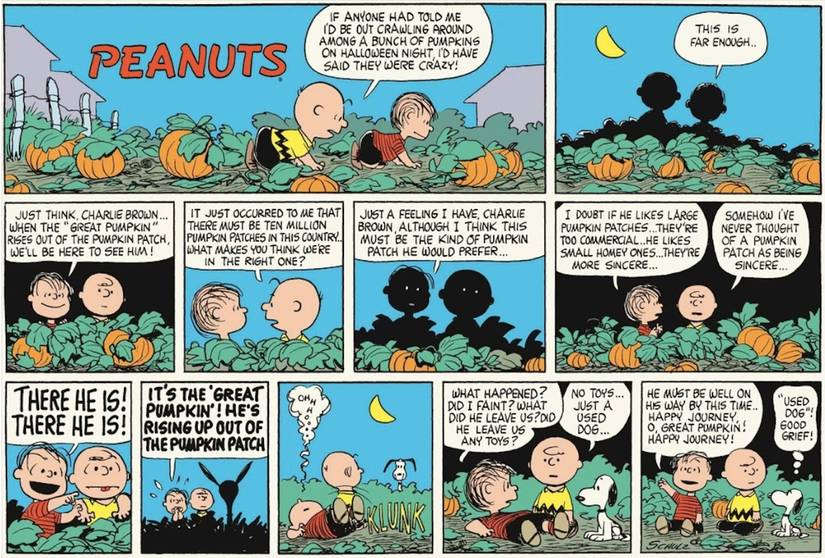
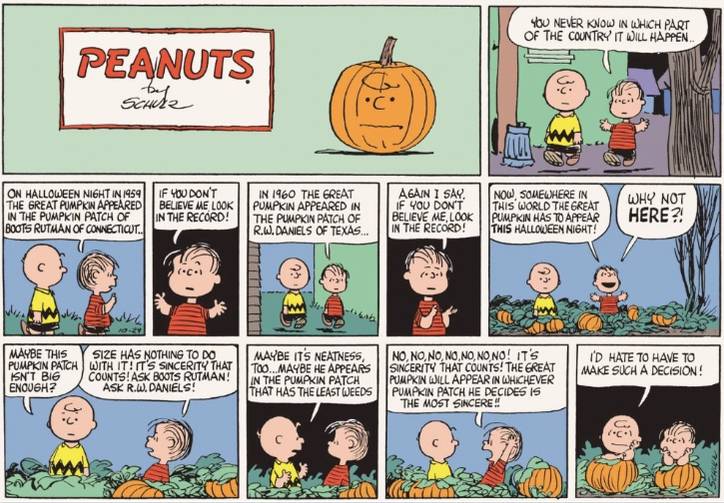
As Schulz returned to the premise each October, he steadily expanded the internal mythology of the Great Pumpkin. In 1960, Linus successfully ropes Charlie Brown into waiting out in the cold with him, prompting Charlie Brown to voice a logistical nightmare: "It just occurred to me that there must be ten million pumpkin patches in this country… What makes you think we’re in the right one?"
By 1961, the lore grew even more absurdly specific. Linus began citing pseudo-historical precedents for the Great Pumpkin’s past appearances, solemnly informing his friends that on Halloween night in 1959, the entity appeared in the pumpkin patch of "Boots Rutman in Connecticut," and in 1960, it visited the patch of "R.W. Daniels of Texas." The staggering specificity of these fictional accounts added a layer of faux-journalistic authority to Linus’s delusions.
During this same era, Schulz introduced a financial dimension to Linus’s faith. In a strip that anticipates modern meme culture, Linus defends his obsession to Lucy by revealing that he has already sent out 57 "pumpkin cards." With deadpan seriousness, Linus declares: "It would be economically disastrous for me not to believe it!"
1962–1964: Conversions, Hypocrisy, and Political Ruin
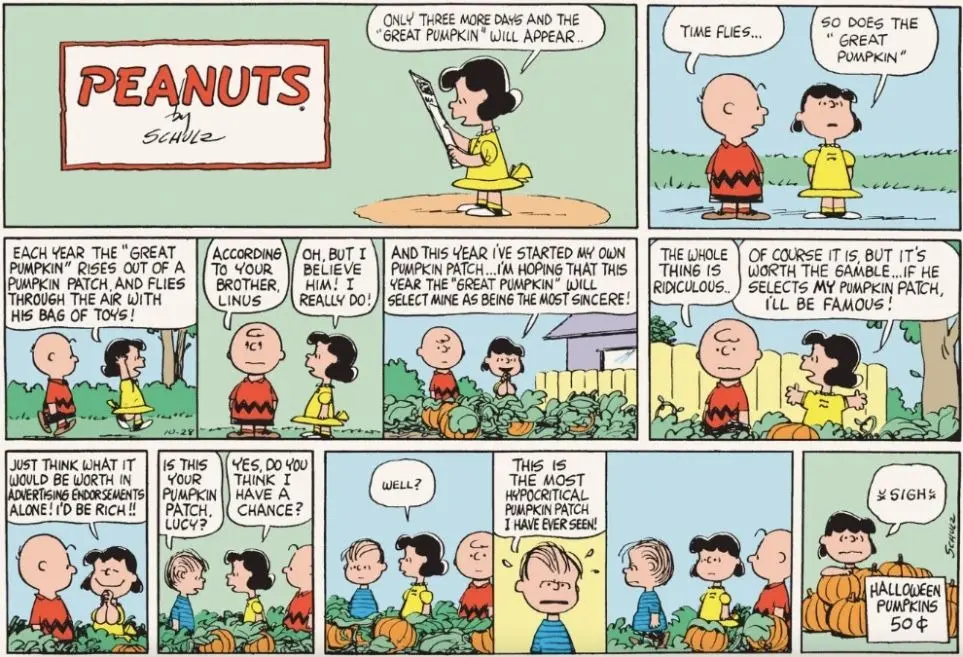
Perhaps the most surprising archival discovery for modern fans is that Linus briefly succeeded in converting an adherent. In 1962, Lucy—driven by sheer greed and the promise of free presents—sets up her own rival pumpkin patch. However, Linus promptly denounces her enterprise as entirely "hypocritical," leading a disgusted Lucy to abandon theology for capitalism, packing up her gourds to sell them for a profit instead.
The apex of Schulz’s print storytelling regarding the Great Pumpkin arrived in October 1964. Capitalizing on the real-world United States presidential election cycle, Schulz launched a multi-week storyline on October 5, 1964, following Linus’s campaign for class president.
For two solid weeks, the Peanuts strip focused entirely on classroom politics. Linus proved to be an electrifying, magnetic candidate, delivering fiery, revolutionary speeches that mobilized his classmates and sent his poll numbers soaring. Victory seemed absolute. But on October 21, Schulz delivered a masterstroke of narrative subversion. During his final, impassioned pre-election address—a speech that had his constituents ready to rally behind him—Linus abruptly pivoted to preaching the gospel of the Great Pumpkin. The resulting silence and subsequent plummet in support destroyed his political career instantly.
To fully appreciate the genius of the 1964 class president storyline, one must examine the structural mechanics of Charles Schulz’s daily syndication model.
Year
Milestone / Major Narrative Shift
Significance to the Mythos
1959
First mention (Oct. 26)
Establishes the premise; introduces Lucy’s deadpan skepticism.
Linus references fictional sightings in Connecticut and Texas.
1962
Lucy’s brief conversion
Highlights the intersection of religious fervor and capitalist greed.
1964
Class President Arc
A multi-week slow burn that weaponizes the Great Pumpkin to tank a political campaign.
The "Madman" vs. "Quirky Kid" Dichotomy
When viewers consume It’s the Great Pumpkin, Charlie Brown in a solitary 30-minute viewing, Linus is framed as a whimsical, romantic eccentric. His behavior reads as an innocent childhood phase, complete with a touching moment of redemption where Charlie Brown comforts him after another failed night in the patch.
However, reading the October comic archives back-to-back completely reframes the character. Stripped of the soft animation and Vince Guaraldi’s melancholic jazz score, serialized print strips transform Linus into an obsessive, relentless zealot. Day after day, year after year, he corners unyielding friends, manufactures elaborate theological excuses, and faces total social alienation without ever wavering. This relentless consistency transforms him from a cute kid into a comedic force of nature.
By utilizing a two-week blackout on the subject in October 1964—where readers were entirely absorbed in a grounded, highly realistic student election—Schulz weaponized reader expectations. When Linus torpedoed his own campaign at the 11th hour by invoking the Great Pumpkin, the comedic whiplash was unprecedented. It showcased Schulz’s supreme patience as a writer: investing weeks into a completely unrelated plotline solely to set up a devastating, punchline-driven character flaw.
Official Statements and Archival Legacy
While Charles Schulz passed away in 2000, his profound influence on American cartooning and the enduring legacy of his creations continue to be analyzed by comic historians, cultural anthropologists, and archivists at the Charles M. Schulz Museum and Research Center in Santa Rosa, California.
In historical reflections on his creative process, Schulz frequently noted that his strips worked best when anchored in the authentic emotional realities of childhood—even when those realities ventured into surrealism.
Jean Schulz, the cartoonist’s widow and president of the board of directors of the Schulz Museum, has often emphasized how deeply Charles Schulz embedded his own philosophies, quirks, and observations into his characters:
"Sparky [Schulz] never talked down to his audience, whether they were reading the daily paper or watching a prime-time special. He understood that children possess intense, sometimes irrational convictions, and he respected that intensity enough to mine it for profound humor. Linus’s unwavering belief in the Great Pumpkin wasn’t just a joke about a fake holiday mascot; it was an exploration of faith in the face of universal skepticism."
Animation historians also credit the 1966 CBS special—written by Schulz himself and directed by Bill Melendez—as a rare example of a creator successfully translating the minimalist, melancholic tone of a print page into motion. Yet, as contemporary comic scholars frequently argue, overlooking the print archives means missing the true depth of Schulz’s comedic architecture. The multi-week narrative build-ups found exclusively in the newsprint editions represent a serialized storytelling format that television animation of the era simply could not replicate.
Future Outlook: The Enduring Cultural Footprint of the Great Pumpkin
Decades after its inception, the cultural footprint of the Great Pumpkin remains as vibrant as ever. As media consumption habits shift toward digital streaming, archived comic collections, and omnibus graphic novel formats, new generations of readers continue to discover the vast, unedited history of Linus’s crusade.
Preservation and Digital Accessibility
Institutions dedicated to the preservation of comic strip history, alongside official syndication platforms, have made strides in ensuring that the complete runs of Peanuts are accessible to modern audiences. Digital archives allow fans to experience October comic blocks precisely as readers did in 1959, 1961, and 1964. This ability to binge-read decades of strips has fueled a re-evaluation of characters like Linus, shifting public perception from the sanitized television versions to the sharper, more satirical edges of Schulz’s original newspaper drawings.
Modern Relevance in Satire and Fandom
The structural brilliance of the 1964 election storyline—where a promising candidate self-destructs due to an unyielding, bizarre ideological fixation—has aged with startling relevance. In an era dominated by hyper-polarized political discourse and internet-driven subcultures, Linus’s inability to read the room and his stubborn refusal to abandon an indefensible position serve as a timeless caricature of human stubbornness.
As long as autumn leaves fall and children draft holiday wish lists, the Great Pumpkin will endure. But for those willing to look beyond the glowing screen of the annual television broadcast and into the ink-stained pages of newspaper archives, a richer, funnier, and far more eccentric world awaits—proving that Charles Schulz’s creation was, and remains, an untouchable masterpiece of American wit.