Executive Overview
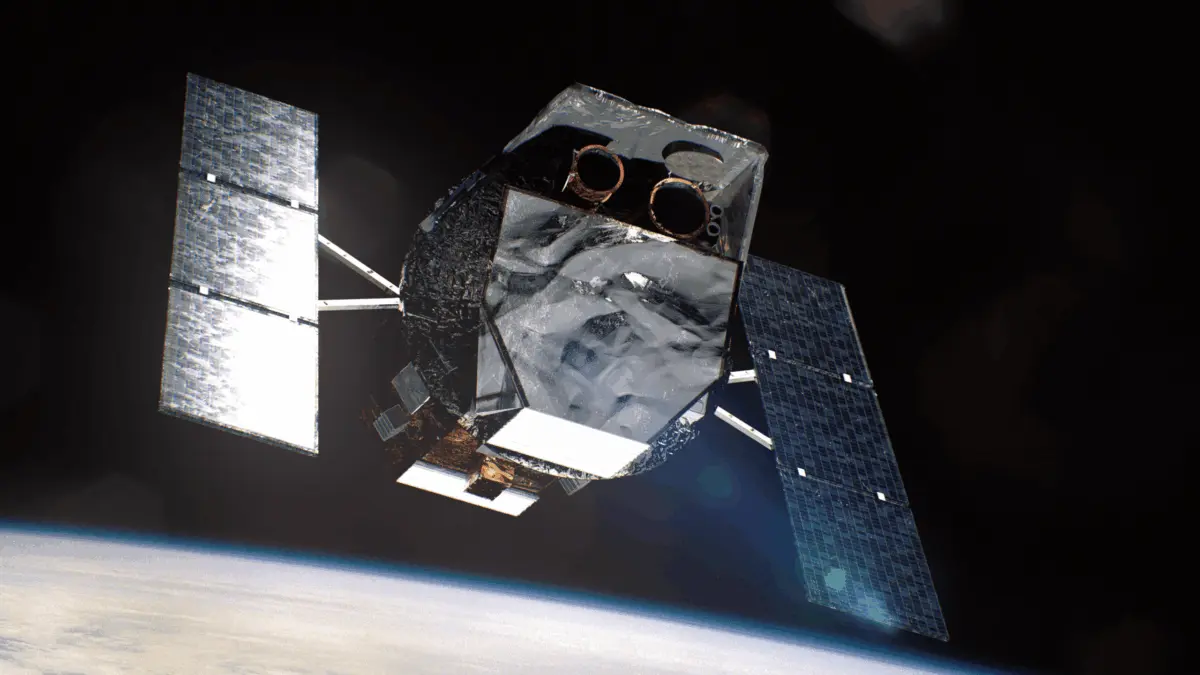
For over two decades, the Neil Gehrels Swift Observatory has stood as humanity’s primary cosmic sentinel, watching the universe for sudden, violent, and fleeting phenomena. From the blinding flashes of distant gamma-ray bursts to the cataclysmic destruction of stars devoured by black holes, Swift has transformed our understanding of transient astrophysics. However, the legendary space telescope is now living on borrowed time.
Following the failure of an ambitious, high-stakes robotic rescue mission launched in July, NASA has abandoned its efforts to save the aging observatory. The mission—a technological moonshot that relied on an experimental servicing probe known as LINK, developed by Katalyst Space—suffered critical attitude-control malfunctions shortly after reaching orbit. Because Swift was never engineered to be serviced, grabbed, or towed in the harsh vacuum of space, the operation was always defined by program leadership as a "high-risk, high-reward" endeavor.
With the rescue attempt officially scrapped, Swift’s fate is sealed. Compounding the natural atmospheric drag that steadily pulls all low-Earth-orbit satellites downward, intense recent solar activity has caused Earth’s upper atmosphere to swell. This accelerated decay means Swift could reenter the atmosphere and burn up as early as the end of this year—years ahead of initial projections.
Yet, rather than going quietly into the night, the satellite is experiencing a remarkable second act. Empowered by mission operators who have brought two of its three primary telescopes back online, Swift is currently racing against time. As it sinks toward a fiery demise, it is squeezing every last ounce of science out of its final months, capturing stunning imagery of ancient supernova remnants and reminding the scientific community of its unmatched, enduring value.
Detailed Chronology: From Orbital Glory to the Failed LINK Mission
To understand the gravity of Swift’s current predicament is to trace a 21-year timeline of remarkable space exploration, followed by a sudden, cascading series of technological and environmental challenges.
Launch and Golden Years (2004–2020)
Launched in November 2004, the Swift Observatory—later renamed in honor of the late NASA astrophysicist Neil Gehrels—was tailor-made for a specific, fast-paced mission profile: catching explosions in space. Before Swift, detecting gamma-ray bursts (GRBs) was a haphazard affair. Swift changed the paradigm by operating on an automated swivel system, allowing it to autonomously detect a flash, pivot its instruments toward the source within seconds, and broadcast coordinates to ground-based astronomers worldwide. Over the years, it expanded its portfolio, observing comets, tidal disruption events, and extragalactic supernovas across ultraviolet, optical, X-ray, and gamma-ray spectra.
The Accelerating Decay (2020–2025)
Like all spacecraft operating in low-Earth orbit (LEO), Swift was never immune to the invisible friction of Earth’s thermosphere. Air resistance saps orbital energy, causing spacecraft to gradually spiral downward. Initially, NASA’s orbital mechanics models projected that Swift would not encounter critical, terminal atmospheric densities until roughly 2030.
However, space weather intervened. Unprecedented and prolonged solar maximum activity over the past several years superheated Earth’s upper atmosphere, causing it to puff outward like an inflating balloon. This unexpected expansion dramatically increased drag on LEO satellites. Swift’s altitude began to plummet far faster than anticipated, forcing mission planners to weigh drastic intervention strategies.
The Conception of Project LINK
Faced with the premature loss of a flagship asset, NASA turned to private-sector innovation. The agency partnered with Katalyst Space to design an experimental rescue probe named LINK. The blueprint was audacious: launch an autonomous spacecraft equipped with advanced robotic arms and high-powered thrusters, rendezvous with the unserviceable Swift, physically latch onto the telescope’s exterior framework, and use a sustained burn to shove the 21-year-old observatory back into a safe, higher orbit.
The July Launch and Subsequent Failure
The LINK probe blasted off in July, carrying the immense expectations of the global astrophysics community. But space is unforgiving. Shortly after achieving orbit, the probe experienced severe technical anomalies within its altitude control systems—the precise mechanical and software architecture required to navigate, stabilize, and dock with a target in motion.
Without reliable attitude control, a high-precision orbital rendezvous became impossible. Recognizing the catastrophic risk of a botched docking attempt—which could have resulted in a high-speed collision, generating a dangerous debris field—NASA and Katalyst Space made the difficult decision to abort the mission entirely. The rescue robot was left stranded in its own compromised state, and Swift was left to its fate.
Supporting Context & Metrics: The Anatomy of a Doomed Observatory
To appreciate why Swift’s descent represents a major milestone in modern space science, one must examine the metrics of its design, its unique multi-wavelength capabilities, and the orbital mechanics dictating its final months.
Multi-Wavelength Capabilities
Swift’s scientific dominance stems from its payload suite, which integrates three complementary instruments:
- The Burst Alert Telescope (BAT): A wide-field, coded-mask imager that scans a massive swath of the sky to catch sudden gamma-ray flashes.
- The X-Ray Telescope (XRT): A high-resolution instrument that quickly follows up on BAT detections, pinpointing the X-ray afterglow of cosmic explosions with arcsecond accuracy.
- The Ultraviolet/Optical Telescope (UVOT): A co-aligned telescope that provides simultaneous imagery and spectroscopy in visible and ultraviolet light.
This triad allowed scientists to study the lifecycle of transient phenomena from milliseconds after an explosion to weeks of fading afterglow. Over two decades, Swift data underpinned thousands of peer-reviewed papers, fundamentally rewriting textbooks on stellar evolution and cosmology.

Orbital Metrics and Atmospheric Dynamics
- Initial Launch Altitude: Approximately 600 kilometers (372 miles).
- Current Critical Threshold: Below 300 kilometers (185 miles), at which point atmospheric drag accelerates exponentially and attitude maintenance becomes nearly impossible.
- Projected Reentry Window: Originally slated for the 2030s, the timeline has collapsed due to solar-cycle-induced atmospheric expansion, with atmospheric reentry now expected as early as late 2025.
[2004: Launch] ---> [2010s: Peak Operations] ---> [2020s: Solar Activity & Atmospheric Expansion] ---> [Late 2025: Projected Reentry]Official Statements and Industry Perspectives
The failure of the Swift rescue mission has sparked frank discussions across NASA and the commercial aerospace sector regarding the feasibility of orbital servicing, the limits of legacy spacecraft design, and the calculated risks of modern space exploration.
Reflecting on the intrinsic architecture of the telescope, Ghonhee Lee, CEO of Katalyst Space, addressed the fundamental mismatch between modern robotic ambitions and historical engineering paradigms just prior to the probe’s launch:
"Swift wasn’t designed to be serviced."
This single reality dictated the immense technical hurdles faced by the LINK team. Unlike modern modular satellites outfitted with standard grapple fixtures, refueling ports, and docking rings, Swift was built in an era when once-in-a-lifetime missions were launched with the expectation that they would simply operate until failure, never to be touched again.
Weighing in on the programmatic philosophy behind the endeavor, Shawn Domagal-Goldman, director of NASA’s astrophysics division, acknowledged the calculated gamble at the heart of the project:
"This was a high-risk, high-reward mission."
While the reward would have been an extended multi-year lease on life for an irreplaceable scientific instrument, the risk—inherent in attempting complex robotic maneuvers on hardware that was never meant to be handled—ultimately materialized as attitude-control failure. Rather than viewing the outcome as an unmitigated disaster, agency insiders view it as a vital stepping stone for future in-space servicing architectures, which will be essential as low-Earth orbit becomes increasingly congested.
Future Outlook: A Blazing Finale for an Undying Sentinel
With the rescue mission officially consigned to the history books, the Swift operations team has pivoted to an inspiring, if bittersweet, endgame: squeezing every final drop of scientific utility out of the observatory before it succumbs to atmospheric friction.
Prior to the attempted rescue, operators had implemented aggressive power-saving protocols. In an effort to minimize aerodynamic drag and preserve critical power reserves while the spacecraft drifted downward, the team had powered down the observatory’s sensitive telescopes, keeping its solar panels locked in a low-drag orientation.
However, following the cancellation of the LINK mission, engineers recalculated their strategy. With nothing left to lose, they successfully restarted two of the observatory’s three primary telescopes. The X-ray telescope immediately proved it had lost none of its prowess, capturing breathtaking, highly detailed images of the Tycho supernova remnant—the expanding debris cloud of a historic stellar explosion located roughly 13,000 light-years away in the constellation Cassiopeia.
Simultaneously, engineers are working on complex software and power adjustments to safely bring the currently dormant Burst Alert Telescope back online. If successful, the team hopes to resume full transient-alert operations within the coming weeks, allowing ground teams to react to deep-space explosions right up until the bitter end.
As Swift’s altitude dips below the critical 185-mile threshold, maintaining stable telescope pointing will become an exercise in extreme orbital gymnastics. The friction will become too great, the descent too swift, and the friction-induced heat will eventually consume the spacecraft as it plunges into the denser layers of Earth’s atmosphere.
Yet, for an observatory designed to study things that burn brightly and vanish into the dark, a fiery final descent feels strangely fitting. Until the very last second of its orbit, the Neil Gehrels Swift Observatory remains what it has always been: humanity’s watchful eye on the violent, beautiful mechanics of the cosmos.