Executive Overview
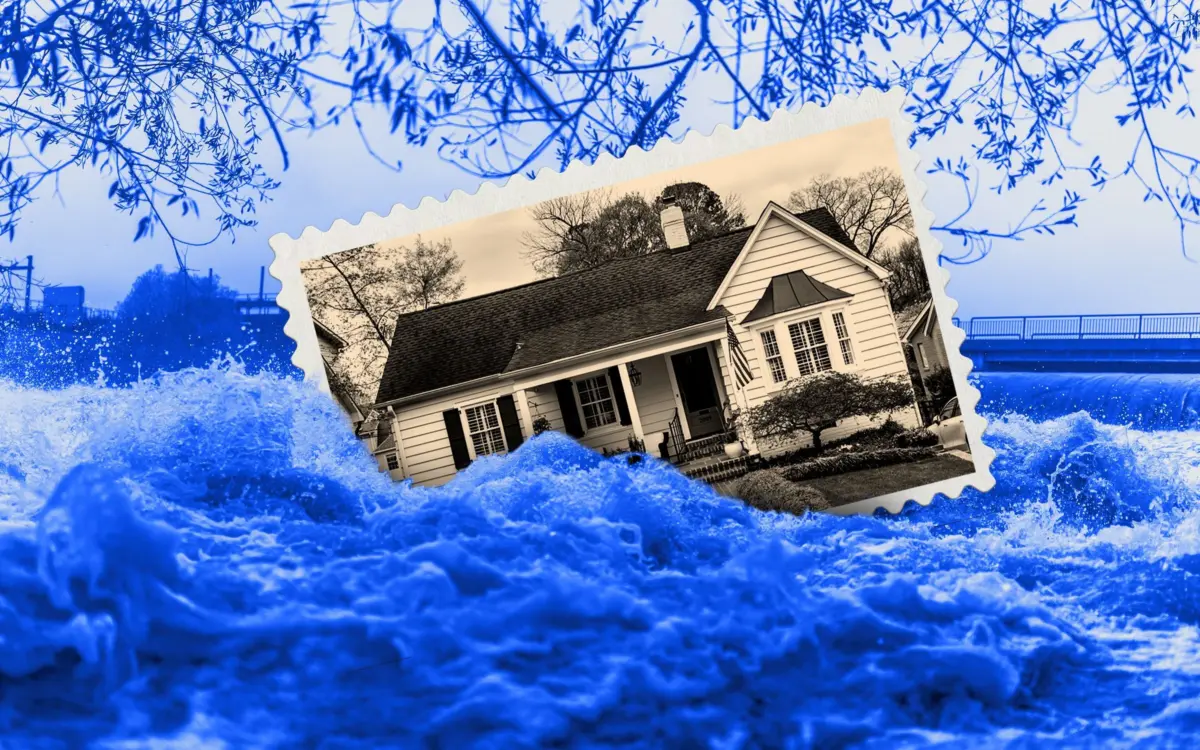
For generations, the traditional American Dream has been anchored by a singular, concrete aspiration: a suburban home framed by a manicured lawn, secured by a mortgage, and protected by an insurance policy. Promoted for over a century as the ultimate vehicle for intergenerational wealth-building, this model promised that home equity would eventually fund children’s educations and secure comfortable retirements. Today, however, that foundational promise is fracturing under the compounding weight of climate change.
As intensifying hurricanes, historic wildfires, and catastrophic inland floods ravage communities across the United States, the traditional calculus of homeownership is transforming. What was once considered a safe investment has, in many regions, become a compounding liability. Skyrocketing property insurance premiums, plummeting property values in hazard-prone areas, and the physical destruction of communities are threatening the stability of the housing market.
Recent data underscores a profound psychological shift among Americans. Exclusive polling conducted by Data for Progress reveals that 58 percent of likely U.S. voters—including 42 percent of Republicans—believe climate change will actively hinder their ability to achieve the American Dream over the next two decades. This widespread anxiety is no longer theoretical; it is reshaping real estate markets, influencing political landscapes, and forcing a fundamental cultural reckoning over what prosperity and security mean in a warming world.
Detailed Chronology: A Near Miss and a Reality Check in Asheville
The intersection of the climate crisis and the housing market is best understood through the lived experiences of individuals caught in its path. In 2022, Sierra Isley, then 26, and her girlfriend, Jamie, decided to leave Philadelphia for the scenic mountains of Asheville, North Carolina. Like many young adults, Isley viewed buying her first home as the ultimate rite of passage.
"The house in the suburbs is just what you’re taught growing up," Isley recalled. "You know, that’s what you see on TV. It’s that big dream that everybody has as a kid."
After an exhaustive search, the couple found a promising three-bedroom brick house boasting abundant natural light and a sprawling tree in the front yard. With financial support from their families, their offer was accepted. However, just as they prepared to sign the closing papers, a massive title lien surfaced. Following legal consultations, Isley and Jamie made the difficult decision to terminate the contract and pivot to renting an apartment in Asheville.

At the time, walking away from the purchase felt like a devastating setback. A month later, it proved to be a stroke of immense fortune.
In September 2024, the remnants of Hurricane Helene stalled over the Blue Ridge Mountains, dumping nearly 14 inches of rain across Asheville in just three days. The French Broad River overtopped its banks, inundating neighborhoods, obliterating sections of the town’s historic River Arts District, and transforming the supposed "climate haven" into a disaster zone.
While Isley and Jamie were still unpacking boxes, their apartment basement flooded. Yet, compared to neighbors who lost everything, they were fortunate. The storm damaged more than 74,000 homes across western North Carolina. Because only about 4 percent of those properties carried flood insurance, the region suffered an estimated $9.5 billion in uninsured residential property losses.
The weeks following the storm tested the couple’s resilience. Without power or clean running water, Isley hauled water from the flooded basement to flush toilets and cooked meals using a Crock-Pot lined with disposable plastic bags because municipal water was unsafe for washing dishes. They eventually evacuated to Atlanta, holed up in a room with their cats before returning to a changed city.
Two years later, the psychological scars remain. Though Isley still browses real estate listings on Zillow for recreation, her perspective has fundamentally shifted. "Now I have that fear in the back of my mind," she admitted. "Anywhere near a river, or even a stream, if there’s a little bit of water on the map, I’m like, ‘Oh, no.’"
Supporting Context & Metrics: The Staggering Financial Toll
Isley’s experience mirrors a broader national crisis. Across the United States, the economic scaffolding supporting homeownership is groaning under the weight of environmental risk.

According to a landmark report by First Street titled Property Prices in Peril, climate risks threaten to knock nearly $1.5 trillion off the value of American residential real estate by 2055. Real estate markets are already beginning to price in these hazards. A 2023 study published in Nature Climate Change revealed that homes located within FEMA high-risk flood zones sell for an average of 2.8 percent less than comparable properties outside those zones. However, the researchers noted that homes exposed to flood risks remain collectively overvalued by between $121 billion and $237 billion, with the Appalachian region identified as a primary hotspot for market overvaluation just prior to Hurricane Helene’s arrival.
Asheville’s housing market reflects this post-disaster correction. Average home prices in the city have declined roughly 5 percent over the past year, running counter to national trends where average values experienced modest gains.
The Insurance Crisis and the "Climate Opportunist"
Compounding the drop in property values is a systemic failure in the insurance market. Douglas Heller, director of insurance at the Consumer Federation of America, describes property insurance as "the safety net for the American Dream." Today, that safety net is shredding.
Since 2020, property insurance costs nationwide have surged by nearly 80 percent, with the average single-family mortgage holder now paying $209 per month just for coverage. Homeowners in high-risk zones face exponentially higher costs, while insurers in states like California have wholesale dropped policyholders in wildfire-prone areas. Meanwhile, severe storm activity has driven up insurance pricing in the Midwest faster than any other region.
Heller argues that the crisis is driven by more than just extreme weather. "We are, for a lot of people, on the edge of a dysfunctional insurance marketplace," he said, suggesting that the insurance industry has acted as a "climate opportunist," leveraging environmental narratives to justify exorbitant rate increases.
The squeeze extends directly to vulnerable populations. Andrew Engler, CEO of Rock Rose Risk, points to fixed-income seniors living in condominiums around Lake Tahoe who are facing crushing homeowners association (HOA) fees levied to cover soaring wildfire insurance costs. Trapped on limited Social Security checks, these homeowners find their properties virtually unsellable because prospective buyers are deterred by the massive recurring HOA liabilities. Economists at the National Bureau of Economic Research estimate that climate-linked insurance hikes have already suppressed home price growth by more than $40,000 in the nation’s most hurricane- and wildfire-prone ZIP codes.

Renters are similarly unprotected. Caroline Nagy, associate director of housing policy at Americans for Financial Reform, notes that rising landlord insurance costs are directly passed down through increased rents. "Whether you are a homeowner or a renter," Nagy said, "we’re all paying for living under the increased risks of climate change."
Official Statements and the Political Battleground
The erosion of the climate-vulnerable American Dream has triggered a fierce ideological debate over the role of fossil fuels and government regulation.
Historically, the American "way of life" has been inextricably linked to fossil fuel consumption. For over a century, oil and gas enterprises spearheaded campaigns to tie their products to domestic comfort and upward mobility—a cultural narrative that continues to be deployed by political figures to resist climate regulations.
The administration of Donald Trump has frequently framed environmental protections as a direct threat to the American Dream. When the administration dismantled Biden-era vehicle emissions standards and rolled back the Environmental Protection Agency’s regulatory authority over climate change earlier this year, officials promoted the move as "restoring the American Dream."
Conversely, climate scientists and sociologists argue that the fossil-fueled status quo is actively dismantling the very prosperity it claims to protect. Greenhouse gas emissions continue to drive unprecedented environmental precarity, generating conditions that the Intergovernmental Panel on Climate Change (IPCC) warns "imperil the quality of life" across communities nationwide.
Sociologist Rebecca Elliott of the London School of Economics observed that for a growing segment of the population, "the American dream of homeownership may become a nightmare." Elliott warns that many residential properties risk becoming "economically worthless even before they are physically uninhabitable."

Future Outlook: Reimagining Prosperity
As traditional notions of security erode, communities are being forced to adapt. The concept of the "climate haven"—cities thought to be insulated from environmental degradation—has lost its credibility following disasters in places like Asheville.
"I think we have to just reckon with the fact that we’re going to have to make people secure in the places that they live," Elliott emphasized, noting that the idea of simply packing up and moving away from harm is increasingly impractical.
This realization is driving a generational evolution in how success is defined. Polling data from Ipsos highlights a stark demographic divide: while 46 percent of baby boomers associate homeownership with the core of the American Dream, only 13 percent of Generation Z share that view.
For individuals like Sierra Isley, survival has catalyzed a profound personal transformation. Having witnessed firsthand the fragility of municipal infrastructure and the vital importance of mutual aid during Hurricane Helene, Isley has pivoted her career path entirely. She is currently applying to graduate programs to pursue a master’s degree in public health, with a specific focus on emergency preparedness.
"I think I owe it to people like me, people in other rural communities who are going to face the same kind of climate change emergencies, to use my skills to help combat climate change and natural disasters," Isley reflected. "I just feel such a calling."
Ultimately, the future of the American Dream may no longer rest on the illusion of rugged independence symbolized by a single mortgage-backed house behind a white picket fence. Instead, as communities band together in the wake of disaster, a new definition of prosperity is emerging—one built not on isolated wealth accumulation, but on collective resilience, community adaptation, and shared survival.