Executive Overview
The electric vehicle (EV) landscape is undergoing a profound and structural transformation. For years, the prevailing wisdom among legacy automakers and market disruptors alike was that bigger was inherently better. Massive vehicles equipped with enormous battery packs were billed as the ultimate flex of technological capability, capable of hauling heavy loads while offering unprecedented acceleration. However, the market is aggressively correcting course.
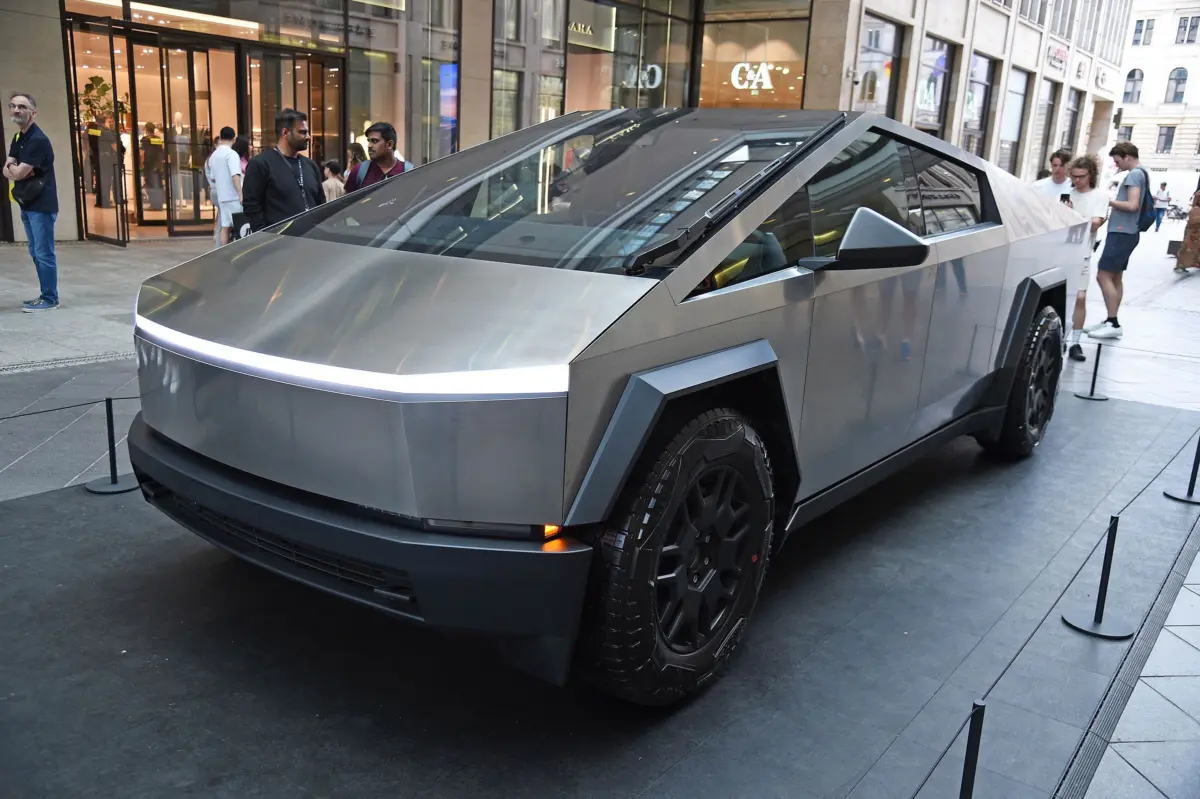
Tesla’s recent announcement that it will terminate production of the polarizing Cybertruck at its Texas Gigafactory next year is not an isolated casualty; it is the definitive nail in the coffin for the era of the mega-EV. This decision mirrors the fate of Ford’s F-150 Lightning, which was quietly discontinued late last year after struggling to find sustained profitability and mainstream adoption. Together, these high-profile cancellations signal a definitive retreat from oversized, ultra-heavy electric trucks and SUVs.
The demise of these automotive monoliths is driven by a convergence of factors: plunging consumer demand for hyper-expensive, polarizing designs; persistent supply chain pressures; regulatory shifts; and economic realities that make vehicle affordability paramount. As automakers pivot toward compact crossovers, sub-$30,000 compact pickups, and extended-range electric vehicles (EREVs), the industry is rediscovering the merits of efficiency. By shrinking battery sizes, manufacturers can drastically reduce production costs, alleviate strain on critical mineral supply chains, and manufacture vehicles that align much closer to how consumers actually use them.
Detailed Chronology of the Mega-EV Decline
To understand how the electric vehicle market arrived at this pivotal crossroads, it is necessary to examine the timeline of ambition, overextension, and eventual correction that defined the early 2020s.
The Rise of the Supersized EV (2019–2023)
The modern push for large electric trucks began with a wave of grand promises. When Tesla unveiled the Cybertruck in late 2019, its stainless-steel exoskeleton and aggressive, angular lines captivated headlines. Competitors quickly followed suit. Ford invested heavily in electrifying its crown jewel, the F-150, promising a workhorse that could double as a mobile generator. Rivian introduced its R1T and R1S platforms, aiming squarely at the high-end adventure market with luxury price tags.
During this period, automakers prioritized range and power above all else. To achieve 300 to 400 miles of range in a vehicle weighing upwards of 7,000 pounds, engineers packed these platforms with colossal battery arrays. The Cybertruck and the F-150 Lightning both relied on batteries hovering around 123 to 131 kilowatt-hours (kWh), with the battery packs alone weighing roughly 1,600 pounds—equivalent to the weight of an entire compact economy car.
The Friction Point: Recalls, Culture Wars, and Slowing Sales (2023–2024)
Cracks in the mega-EV strategy began to show as these vehicles transitioned from concept hype to driveway reality. The Cybertruck quickly accumulated a toxic reputation, driven in equal parts by its divisive, polarizing design, recurring software and mechanical recalls—such as the infamous accelerator pedal glitch—and the increasingly contentious public profile of Tesla CEO Elon Musk.
Concurrently, mainstream buyers balked at the price tags of vehicles like the F-150 Lightning and high-end trims of the R1S. While early adopters eagerly secured initial units, the broader truck-buying public remained hesitant to swap gasoline convenience for a heavy, expensive EV that suffered significant range degradation when towing or driving in cold weather.
The Pivot and Purge (2024–Present)
The inflection point arrived rapidly. In late 2024, Ford pulled the plug on the F-150 Lightning, shifting its capital investments toward hybrid technology and smaller, more accessible platforms. Ford also scrapped plans for a large three-row electric SUV, acknowledging that consumer appetite did not support the high manufacturing costs.
Now, Tesla’s impending termination of the Cybertruck production line cements the trend. Musk has framed the move as a necessary reallocation of factory space to ramp up production of the Cybercab, a dedicated autonomous vehicle featuring a modest 48-kWh battery. The message from the boardroom is clear: the era of the 7,000-pound lifestyle truck is yielding to economic gravity.
Supporting Context & Metrics: The Physics and Economics of Battery Sizing
The retreat from oversized EVs is governed by basic laws of physics, supply chain realities, and macroeconomic pressures.
The Battery Cost and Weight Dilemma
The single most expensive component of any electric vehicle is its battery pack. When automakers build a vehicle like the Cybertruck or F-150 Lightning, they are committing massive amounts of lithium, nickel, cobalt, and manganese to a single chassis.
Consider the stark contrast in resource allocation:
- Tesla Cybertruck / Ford F-150 Lightning: Utilizes a ~123 to 131 kWh battery pack weighing roughly 1,600 pounds.
- Hyundai Ioniq 5 (Standard Range): Accomplishes daily commuting, grocery shopping, and family transit with a battery roughly half that size.
- Tesla Cybercab: Slated to run on a streamlined 48-kWh battery pack.
According to Cox Automotive, the average transaction price for a new EV remains stubbornly high at $55,800. By shedding pounds and utilizing smaller battery architectures, automakers can significantly reduce production expenditures. This allows them to pass savings onto consumers at a time when inflation and rising interest rates have strained household budgets.
Infrastructure and Safety Pressures
Supersized EVs have also faced mounting scrutiny from urban planners and safety advocates. Vehicles weighing three to four tons with high, blunt front ends present a disproportionate risk to pedestrians, cyclists, and occupants of smaller passenger cars. Furthermore, the immense weight of these trucks accelerates road wear and tear, forcing municipalities to rethink infrastructure maintenance budgets.
From an efficiency standpoint, hauling 1,600 pounds of battery just to transport a single commuter to an office job is fundamentally inefficient. It places an unnecessary burden on the global battery supply chain—a network that is already scrambling to secure critical raw materials as EV adoption scales globally.
Market Dynamics: Shifting to Smaller, Smarter Alternatives
As the big truck bubble deflates, a new wave of right-sized electric and hybrid vehicles is capturing the market’s attention.
The Sub-$30,000 Pickup Revolution
Automakers are racing to fill the void left by discontinued mega-trucks with agile, affordable alternatives:
- Ford Fathom: Slated for release next year, this sub-$30,000 electric pickup matches the physical footprint of Ford’s compact gas-powered Maverick. While battery specifications across trims have not been finalized, industry analysts expect a lean, efficient configuration far removed from the F-150 Lightning. Ford also plans to reintroduce the Lightning moniker as a dedicated extended-range model.
- Slate EV: This startup has generated viral interest with its ultra-compact electric pickup truck, which features modular components allowing it to convert into an SUV. With a bare-bones base model priced below $25,000 and a featherweight battery pack, Slate has logged significant pre-order numbers, signaling intense pent-up demand for affordable utility vehicles.
- Rivian R2 and R3: Moving down-market from their flagship R1 platform, Rivian’s newly launched R2 SUV utilizes an 88-kWh battery weighing approximately 1,200 pounds—substantially smaller and lighter than the R1S. The company has also teased the even more compact R3 and R3X crossovers, charting a deliberate course toward smaller form factors.
The Macroeconomic and Political Landscape
The evolution of the EV market is occurring against a backdrop of geopolitical and regulatory turbulence. Following the repeal of federal EV consumer incentives under the Trump administration, new EV sales experienced a temporary contraction. However, subsequent spikes in oil prices—exacerbated by international conflicts such as the war in Iran—have periodically renewed consumer interest in electrified transport, driving a parallel boom in the used hybrid and EV markets.
While federal policy hostility toward clean energy programs remains a headwind, automakers positioning themselves with smaller, cheaper vehicles are inherently insulated against policy shifts. By lowering the entry barrier to EV ownership, these companies are capturing a broader demographic of buyers who view cars as functional tools rather than political statements or luxury status symbols.
Future Outlook: Efficiency as the Ultimate Luxury
The automotive industry has reached a mature phase in its electrification journey. The initial phase—marked by extravagant flagship models, exorbitant price tags, and brute-force engineering designed to shock and awe—has run its course.
The impending cancellation of the Cybertruck and the quiet exit of the F-150 Lightning mark the end of automotive hubris in the EV sector. Moving forward, success will not be measured by who can build the heaviest, fastest, or most polarizing truck. Instead, the future belongs to manufacturers who can master efficiency: delivering functional range, versatile utility, and sleek design packaged within lightweight, affordable architectures.
As the market stabilizes around right-sized crossovers, compact pickups, and extended-range hybrids, the electric vehicle ecosystem is finally maturing into a sustainable, accessible reality for the masses.