Executive Overview
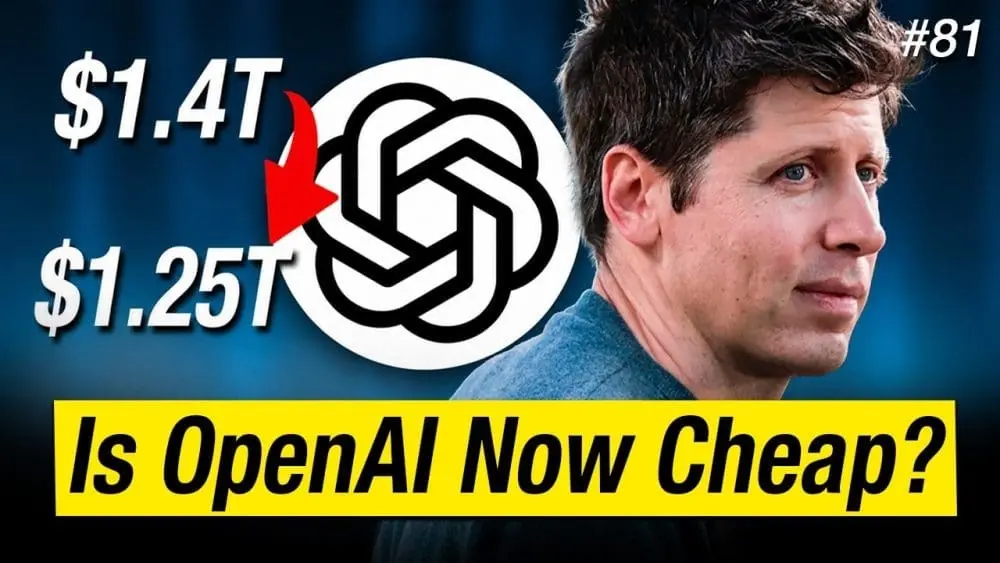
The technology and venture capital landscapes have rarely experienced a week as tumultuous, contradictory, and defining as this one. Over the past seven days, the artificial intelligence trade—long considered an unstoppable train carrying stratospheric valuations—wobbled dramatically under the weight of harsh market realities. Alphabet shed roughly $500 billion in market capitalization in its worst single day in a decade; OpenAI lowered its funding round expectations from $30 billion at a $1.4 trillion valuation down to $20 billion at a $1.25 trillion price tag; and Anthropic’s latest S-1 financial amendments revealed a sharp deceleration in quarter-over-quarter revenue growth, cutting it roughly in half.
Yet, even as public equities punished missed guidance and existential threats loomed, private markets continued to aggressively funnel capital into emergent winners. Kalshi secured a massive $40 billion valuation just a day after facing criminal charges from the State of Utah. Cohere locked down up to $1.14 billion in sovereign backing from the Canadian government, and staggering new funding discussions pushed early-stage powerhouses like Cognition, Baseten, and Physical Intelligence to valuations that would have sounded entirely unhinged twelve months ago.
Meanwhile, high-stakes M&A reshaped the landscape. In a massive consolidation play, DoorDash agreed to acquire Instacart for $17 billion—less than half of Instacart’s 2021 private peak—while Salesforce moved to acquire voice-first customer experience platform Cresta. Amid these blockbuster transactions, tech leaders Harry Stebbings, Rory O’Driscoll, and Jason Lemkin convened on their podcast to unpack the carnage, dissect the metrics, and debate which high-profile startup they would actually take to an Investment Committee (IC) today.
Detailed Chronology of a Volatile Week
1. The OpenAI Valuation Adjustment and Public Market Jitters
OpenAI’s much-anticipated funding round has hit a reality check. Having secured approximately $11 billion of its targeted $30 billion, the company adjusted its strategy to raise up to $20 billion at a $1.25 trillion valuation, according to reports from the Wall Street Journal, Financial Times, and CNBC. Financial Times notes that OpenAI had initially floated a $1.4 trillion figure before quietly dialing it back just a week prior to its deadline—a retreat heavily influenced by a broader tech sector sell-off triggered by weaker-than-expected earnings reports from Google, Amazon, and Intel.
Industry analysts are sharply divided on what this means. Rory O’Driscoll has urged observers to dispense with the narrative that the "AI wave is cracking," arguing instead that the adjustment is a simple exercise in public and private pricing comparisons. Investors are currently weighing two competing assets: one is a massive, fast-growing, profitable enterprise about to go public with liquid shares valued between $1.5 and $2 trillion; the other is a smaller, slower-growing, cash-burning, illiquid entity. Naturally, the latter must price below $1.5 trillion.
Conversely, Jason Lemkin highlights underlying nervous energy across the broader market. With AI stocks shedding trillions of dollars in value within a single week, CoreWeave debt commanding 15% yields, and Broadcom backing Anthropic’s debt, the underlying financial plumbing is showing strain. Whether these short-term market wobbles matter in 12 to 18 months remains to be seen, but the immediate pricing pressure is palpable.
2. Alphabet’s Historic Slump Amid Cloud Surge and Search Cannibalization
Alphabet suffered a punishing 12% drop in its stock price, marking its worst day in roughly ten years. This occurred despite Google Cloud posting its fastest growth on record: revenue skyrocketed 103% year-over-year to $30.7 billion.
The stellar cloud performance, however, was completely overshadowed by cracks in Google’s core search business. Search revenue growth slowed to 12% ($63.4 billion), its lowest rate of expansion since 2023. Compounding investor anxiety, Alphabet reported a negative free cash flow of $9.07 billion—its second consecutive negative quarter—driven by soaring capital expenditures of $51.36 billion that far outpaced incoming cash.
For years, market analysts have warned of search cannibalization by generative AI tools. This quarter marked the moment those theoretical risks finally materialized in hard financial figures, colliding directly with a broader market-wide capex panic.
3. Anthropic’s Growth Deceleration Points to Pricing Pressure
Anthropic’s updated S-1 filing revealed GAAP revenues of roughly $5 billion in Q1, $11 billion in Q2, and $17 billion in Q3. While absolute bookings continued to rise, net new revenue actually dipped slightly from Q2 to Q3, representing a drop in quarter-over-quarter (QoQ) growth from approximately 100% down to 50%.
While the bull case points out that a 50% QoQ growth rate still compounds to an impressive 5x annual trajectory, the bear case questions whether growth will inevitably slide further to 25% next quarter. Analysts like Lemkin argue that this slowdown is fundamentally driven by pricing pressure rather than a drop in end-user demand. With OpenAI offering equivalent enterprise products at steep discounts—and open-weight models undercutting proprietary pricing—the days of commanding outsized margins are facing stiff resistance. Lemkin noted that migrating application workflows to cheaper model mixes like Haiku 5.5 recently slashed total operating costs by 72% without sacrificing speed or quality, signaling that application-layer deflation has officially arrived.
4. Software Fatigue: The Decline of Legacy SaaS and Design Tools
The software-as-a-service (SaaS) sector is experiencing a profound identity crisis. Amid reports of flat growth and impending layoffs at design giant Canva—alongside Squarespace announcing a 20% workforce reduction—industry veterans are questioning the long-term viability of static digital tools.
Lemkin announced he had officially discontinued his 12-year subscription to Canva, noting that automated AI agents running on modern video and image generators bypass traditional creative suites entirely. When mainstream tools face structural pullbacks because generative platforms like ChatGPT and Grok have become "good enough" for everyday assets, incumbent software companies face a stark choice: aggressively integrate agentic workflows or slide quietly into obsolescence.
5. The Brutal Economics of Consumer AI Agents
Persistent consumer agents—such as Muse and Instinct—are scaling rapidly, but their underlying infrastructure costs are astonishingly high. Elon Musk reportedly had to cap free usage of xAI’s consumer agent product due to unsustainable compute expenses, and Replit CEO Amjad Masad declared that the era of free agent subsidies is officially coming to an end.
While basic virtual machine management has driven down the cost of basic agent interactions to around $4 to $5 per user monthly, fully persistent, always-on consumer agents can cost upward of $20 to $50 per month to maintain. For companies attempting to build consumer subscription models around these heavy compute loads, the unit economics are currently brutal, forcing a reliance on rapid technological deflation to preserve margins before funding runs dry.
6. DoorDash Acquires Instacart for $17 Billion
In one of the week’s biggest corporate moves, DoorDash announced it will acquire Instacart for $65 per share—a 26% premium over its October closing price—valuing the equity at approximately $17 billion. This valuation sits at less than half of Instacart’s 2021 private market peak.
Interestingly, DoorDash also disclosed that AI agents have thus far generated only a few hundred orders on its platform—a microscopic fraction of its 3 million daily deliveries. While skeptics argue that consumers still prefer the tactile visual experience of browsing restaurant menus and scrolling through food apps, industry insiders warn that agentic shopping poses an existential threat to delivery aggregators. By automatically routing orders through direct restaurant pickup channels or independent delivery options, advanced agents could systematically bypass aggregator fees, rendering middlemen obsolete.
Supporting Context & Metrics
To fully comprehend the seismic shifts occurring across the tech ecosystem, it is vital to examine the quantitative realities defining these market movements:
- Alphabet Market Cap Loss: ~$500 billion wiped out in a single session following a massive capex report and search growth deceleration.
- OpenAI Funding Adjustment: Revised from a targeted $30 billion at a $1.4 trillion valuation down to $20 billion at a $1.25 trillion valuation.
- Google Cloud Performance: Achieved record growth, jumping 103% year-over-year to reach a quarterly revenue of $30.7 billion.
- Anthropic GAAP Trajectory: Reported $5B (Q1), $11B (Q2), and $17B (Q3), with QoQ growth decelerating from ~100% to ~50%.
- DoorDash / Instacart Deal: $17 billion equity valuation ($65/share), representing a 26% premium over prior closing prices but a steep discount from its 2021 private peak.
- Kalshi Momentum Round: Secured $1 billion at a $40 billion valuation led by Sequoia Capital and Wellington Management, mere days after facing criminal charges in Utah.
- Cohere Sovereign Backing: Secured up to $1.14 billion from the Canadian government, boasting a 165% year-over-year ARR growth in Q3.
Official Statements and Industry Perspectives
The divergence of opinion among top venture capitalists and founders highlights the profound uncertainty characterizing the current market cycle:
"Drop the ‘AI wave is cracking’ story. People are projecting their own biases onto what is really a simple pricing question. The demand side is what decides it. If AI demand holds, every GPU and data center gets used."
— Rory O’Driscoll, Partner"The market is nervous AF right now… Any metric that misses gets punished. For the first time in 30 or 40 years, nobody knows what five years out looks like."
— Harry Stebbings, Venture Capitalist"If mature apps everywhere are seeing that kind of deflation, Anthropic’s ability to charge a premium may have hit a local maximum. The Borg can’t even assimilate you until you hit $100M in revenue; until then, you’re too small."
— Jason Lemkin, Founder of SaaStr
Future Outlook: The 2026 Investment Committee Showdown
As the dust settles on an extraordinary week of macroeconomic whiplash, the venture capital community is forced to look ahead. The closing debate of the week centered around a classic Investment Committee (IC) hypothetical: Which high-flying private giant would you back with the final deployment of a fund—Serval at a $3 billion valuation, Cognition at $80 billion, or Baseten at $30 billion?
- The Cognition Bull Case: Backing the undisputed momentum of coding agents. Despite operating in a fiercely competitive landscape behind Codex, Claude Code, and Cursor, the IP synergies and market capture potential offer unmatched multi-fold upside for funds desperate for trillion-dollar category leaders.
- The Serval Bull Case: Pure multiple arbitrage and hyper-growth enterprise adoption. By targeting the massive back-office footprint currently dominated by ServiceNow, Serval presents a clean, sales-efficient path to massive enterprise scale.
- The Baseten Counter: As inference infrastructure remains the ultimate bottleneck of the generative AI era, specialized compute platforms are capturing massive enterprise spend, though valuation multiples remain a constant point of contention among conservative LPs.
Ultimately, the events of this week signal that the easy-money era of hyper-inflated valuations and unproven unit economics is officially giving way to a more disciplined, highly skeptical market epoch. Whether founders are navigating looming cybersecurity threats via open-source tools like ARTEX, restructuring legacy legal practices in the wake of Weil Gotshal’s dissolution, or fighting for survival against aggressive M&A machines, one truth remains absolute: adaptability, sustainable unit economics, and undeniable product utility are the only currencies that matter in the modern tech economy.